
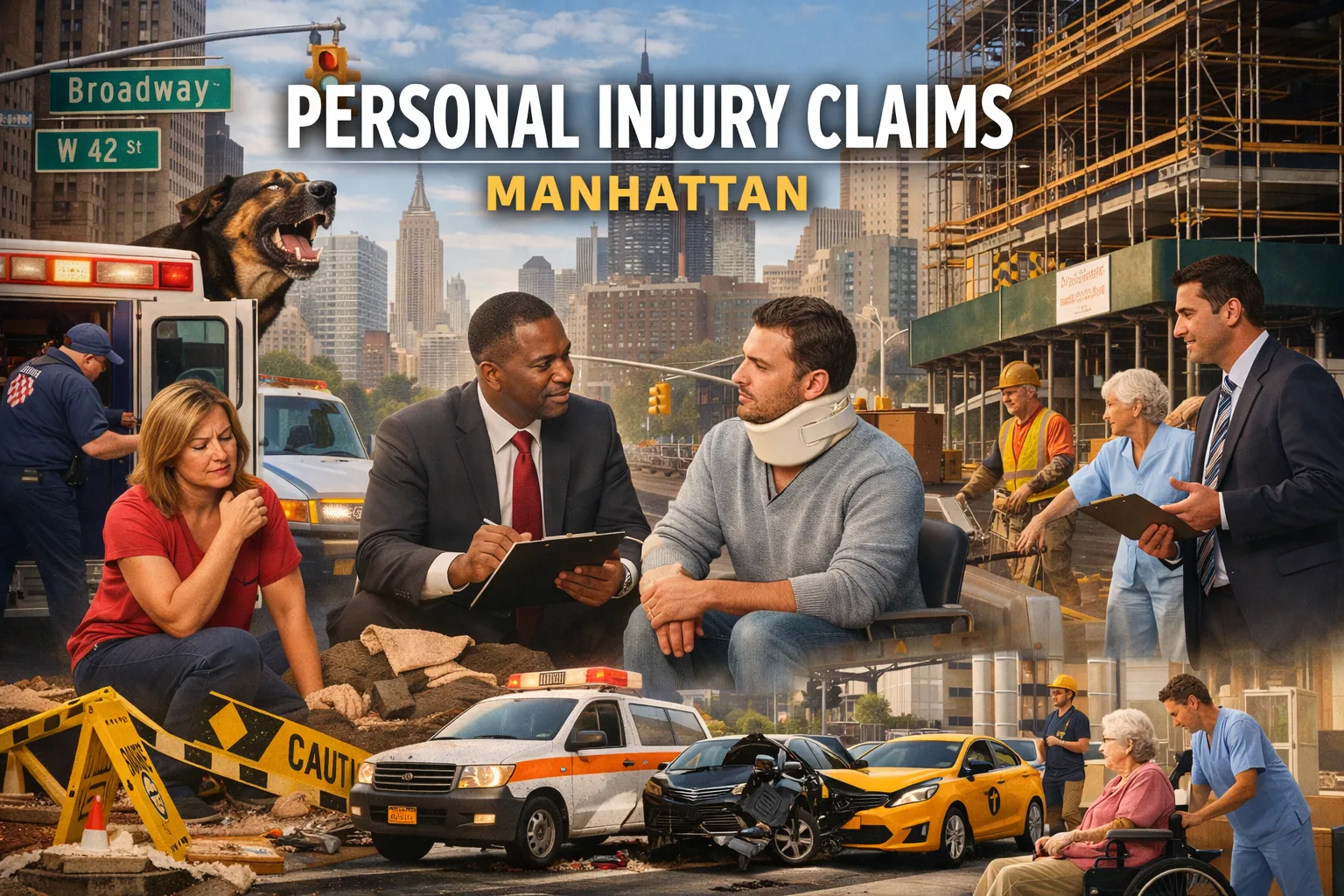
In the bustling streets of Manhattan, where millions walk crowded sidewalks, heavy traffic, and towering construction sites daily, accidents resulting from negligence occur with unfortunate frequency. Personal injury law provides a framework for victims to seek compensation for harms caused by others’ carelessness, covering medical bills, lost income, and emotional distress. New York City’s unique environment, with its dense population and diverse infrastructure, amplifies the complexity of these claims, requiring an understanding of local statutes and procedural nuances.
Victims often face insurance companies intent on minimizing payouts, making informed action crucial from the outset. This article outlines key aspects of personal injury cases in Manhattan, drawing on established legal principles to help individuals protect their rights and pursue fair recovery. By addressing common scenarios and steps involved, it aims to equip residents and visitors with practical knowledge for handling such incidents effectively.
Understanding personal injury law in New York
Personal injury law in New York operates under a negligence standard, where plaintiffs must prove that a defendant owed a duty of care, breached that duty, and caused damages as a result. In Manhattan, this applies to a wide array of situations, from vehicular collisions on avenues like Broadway to slips on uneven pavements in commercial districts.
The state’s comparative negligence rule allows recovery even if the victim shares some fault, though compensation reduces proportionally. For instance, a 20 percent at-fault plaintiff receives 80 percent of awarded damages. Statutes of limitations impose strict deadlines: generally three years for most injuries, but shorter for claims against municipalities, often requiring notice within 90 days.
Punitive damages, though rare, may apply in cases of egregious conduct, such as reckless driving leading to severe harm. Manhattan’s courts, part of the New York County Supreme Court system, handle these matters, emphasizing evidence like medical records and witness statements to establish liability.
Common types of personal injury cases in Manhattan
Manhattan’s dynamic setting gives rise to specific injury patterns, including premises liability claims from poorly maintained properties, such as falls due to icy sidewalks or debris in high-rises. Car accidents dominate, with citywide data showing 8,668 collisions in May 2023 alone, often involving taxis, rideshares, or pedestrians in crosswalks. Construction site incidents pose significant risks, given the borough’s ongoing development; in 2022, New York City reported 554 construction injuries and 12 fatalities, many from falls or equipment failures affecting workers and passersby.
Dog bites occur in parks like Central Park, while medical malpractice arises in renowned hospitals, encompassing errors like surgical mistakes or misdiagnoses. Nursing home abuse affects vulnerable elderly residents in facilities across the island, and product liability targets defective goods sold in retail hubs.
These cases highlight the need for thorough investigation, as urban density complicates identifying responsible parties, from property owners to contractors. Recognizing these prevalent types enables victims to document scenes promptly, preserving evidence like photos or contact details for potential claims.
The step-by-step claims process
Initiating a personal injury claim in Manhattan begins with seeking immediate medical attention to establish a record of injuries, followed by reporting the incident to relevant authorities, such as police for accidents or building management for premises issues. Gathering evidence comes next, including photos, witness accounts, and any surveillance footage available in a surveillance-heavy area like Times Square.
Consulting legal counsel early allows for case evaluation, where viability is assessed based on negligence elements. Filing a complaint in court or negotiating with insurers follows, often involving demand letters outlining damages like medical expenses and lost wages.
Discovery phases exchange information, potentially leading to settlements. Most cases resolve pre-trial to avoid lengthy proceedings. If unresolved, trials in Manhattan courts involve presenting arguments before judges or juries, with verdicts determining compensation. Post-resolution, appeals may occur if errors are alleged. This structured process, while demanding, ensures systematic pursuit of justice, with timelines varying from months for straightforward settlements to years for complex litigation.
Resources and support for Manhattan victims
Manhattan offers various resources for injury victims, including free case evaluations from local firms to assess claim merits without obligation. For those seeking guidance, the Manhattan personal injury lawyer services at The Law Office of Richard M. Kenny, located at 363 7th Avenue, 16th Floor, provide consultations on a contingency basis, addressing cases from car accidents to medical malpractice. Community support extends to organizations like the New York City Bar Association, offering referrals, and victim assistance programs through the District Attorney’s office.
Online tools allow submitting incident reports digitally, while hospitals like Mount Sinai provide specialized care linked to claims. With 436+ five-star reviews reflecting client satisfaction in similar services, these resources underscore reliable options. Victims benefit from prompt outreach, as early intervention preserves evidence and meets deadlines, fostering comprehensive support networks in a city committed to justice and recovery.
Proving negligence and calculating damages
Establishing negligence requires demonstrating duty, breach, causation, and harm, tailored to Manhattan’s context. For example, proving a driver breached traffic laws causing a pedestrian injury. Evidence plays a pivotal role, from expert testimonies on medical causation to accident reconstructions for vehicular cases. Damages encompass economic losses, like hospital bills and salary reductions, and non-economic ones, such as pain and suffering or loss of companionship. In severe instances, future projections account for ongoing care or diminished earning capacity.
New York’s no-fault auto insurance system covers basic expenses regardless of fault, but serious injuries allow stepping outside to sue for fuller recovery. Insurers often challenge claims by disputing injury severity or alleging contributory negligence, necessitating strong documentation. Accurate damage calculation involves economists or medical experts, ensuring awards reflect true impacts. This rigorous proof standard upholds fairness, deterring negligence while compensating victims adequately in a high-cost city where medical and living expenses escalate quickly.
The role of legal representation in recovery
Engaging experienced counsel streamlines personal injury pursuits in Manhattan, where legal intricacies abound. Attorneys handle paperwork, negotiate with insurers who employ tactics to undervalue claims, and prepare for trial if settlements falter. Firms operating on contingency fees eliminate upfront costs, aligning interests toward maximum recovery. Fees deduct from winnings only upon success. In a borough with over 30 years of collective experience among practitioners, such representation has led to millions recovered in construction and accident cases.
Lawyers also understand venue-specific rules, like those in New York County, enhancing case strength through local knowledge. Beyond logistics, they provide emotional support, guiding clients through recovery while advocating fiercely. This partnership proves invaluable, as self-represented individuals often secure lower outcomes due to procedural pitfalls. Ultimately, professional assistance transforms daunting processes into manageable paths, enabling focus on healing amid Manhattan’s fast-paced demands.
More must-read stories from Enterprise League:
- Learn about navigating workplace accidents to protect your rights effectively.
- Discover why company vehicle insurance is essential for business protection.
- Understand the importance of online privacy laws in today’s digital world.
- Explore how employment lawyers advocate for whistleblowers and workers’ rights.
- Master customer data protection strategies to safeguard sensitive information.