
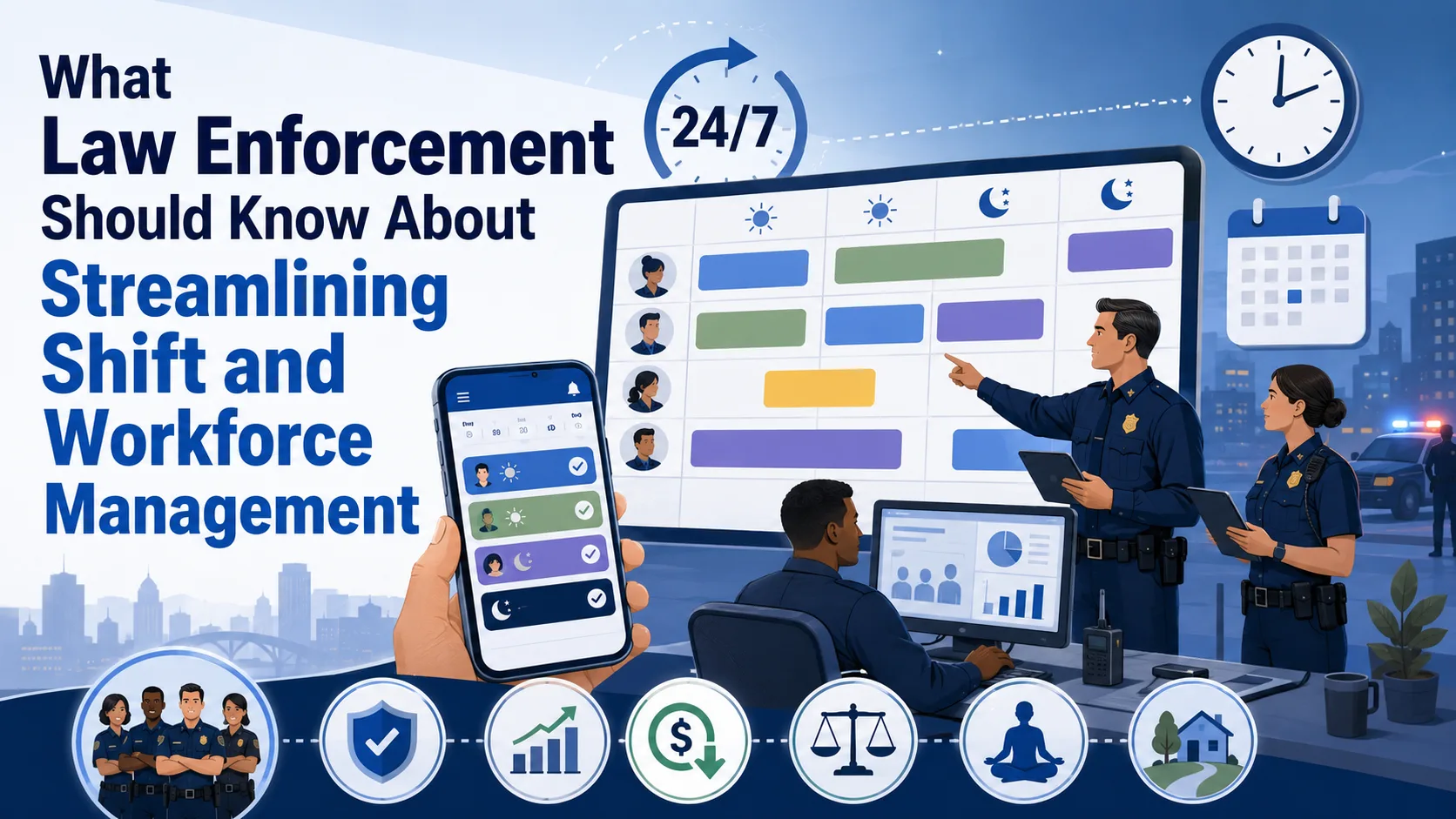
Law enforcement agencies face mounting pressure to balance officer well-being, budget constraints, and operational demands. Traditional scheduling methods often fall short, leading to employee burnout, excessive overtime expenses, and compliance violations. This guide explores practical ways to improve your scheduling process and examines workforce management technologies that support effective 24/7 public safety operations.
The costs of police scheduling
Outdated scheduling systems create significant operational, financial, and human costs for law enforcement agencies. Manual processes and inflexible shift patterns strain budgets while undermining officer morale and retention.
Officer burnout and turnover
Unpredictable schedules and excessive overtime contribute to chronic stress among law enforcement personnel. Research shows that excessive workload and quantitative demands are primary risk factors for burnout, leading to exhaustion and disengagement.
When officers lack control over their schedules or face constant last-minute changes, job satisfaction drops and turnover rates increase. This cycle drains institutional knowledge and forces agencies to invest heavily in recruitment and training.
Rising overtime costs
Inefficient scheduling leads to unmanageable overtime expenses. Agencies often resort to overtime as a stopgap when shifts aren’t properly balanced. These costs compound quickly, diverting funds from equipment upgrades and training programs.
Agencies that optimize scheduling practices realize substantial savings while creating financial flexibility. Better workforce management reduces unnecessary overtime, freeing resources to improve officer well-being and community safety.
Compliance risks with labor laws and union agreements
Law enforcement agencies must follow complex labor laws, union contracts, and departmental policies, but manual scheduling systems make compliance tracking difficult. Violations lead to grievances, legal liabilities, and damaged relationships with union representatives.
Automated scheduling software helps ensure compliance by building rules directly into the system, flagging potential violations before schedules are finalized.
Key strategies for modernizing workforce management
Addressing scheduling challenges requires a strategic approach that combines policy changes with technological solutions. Consider these strategies to improve management and morale.
Adopting flexible and fair shift patterns
Modern officers value work-life balance, making flexible shift options essential for retention. Agencies can explore different shift lengths to accommodate diverse needs. Fair, transparent processes for shift assignments reduce perceptions of favoritism while improving morale.
Improving communication and schedule transparency
Clear communication about scheduling policies fosters trust within departments. Officers need to understand how tasks are assigned and when schedules will be posted.
Digital tools that provide real-time schedule access help officers plan more effectively. This is critical given that studies show 57% of patrol officers finish shifts mentally exhausted. When teams can view schedules from mobile devices, they gain better control of their work-life balance.
Using technology for automated scheduling
Law enforcement scheduling and staffing software automates time-consuming manual processes while reducing errors. These systems consider officer certifications, seniority, availability, and workload when creating schedules. Real-time updates ensure everyone has current information.
Top law enforcement workforce management software
Police workforce management software solutions address the specific scheduling challenges law enforcement agencies face. Here are leading options, each offering comprehensive features designed to streamline personnel management and staff scheduling.
1. First Due
First Due provides law enforcement scheduling and staffing software with an intuitive approach to shift management. The platform features an easy-to-use shift board, a Scheduling Deputy function, multiple view options, and roster count capabilities, giving administrators complete visibility into staffing levels. First Due streamlines both on-duty and off-duty management through law enforcement workforce management software that adapts to agency-specific needs.
Key features:
- Automated scheduling: Reduces manual work while ensuring proper coverage and compliance
- Resource management: Optimizes deployment of personnel and equipment
- Real-time operational analytics: Provides data-driven insights for better decision-making
The platform offers seamless integrations with computer-aided dispatch, records management systems, payroll, and communication tools for your team. First Due’s support and onboarding teams receive consistent praise for their attention to agency-specific requirements.
2. InTime
InTime scheduling for police focuses on simplifying shift management while maintaining compliance through automated scheduling, timekeeping, and overtime bidding. Its mobile app gives officers and supervisors convenient access to scheduling information from anywhere.
Key features:
- Comprehensive automation: Handles scheduling, timekeeping, overtime bidding and analytics
- Mobile accessibility: Officers and supervisors access the system from smartphones
- Compliance tracking: Monitors adherence to union contracts and Fair Labor Standards Act requirements
3. Omnigo
Omnigo is a public safety workforce management platform that supports various public safety needs through its unified incident management approach. The system addresses incidents from call initiation through case closure, while its automated scheduling engine intelligently balances staff skills and availability with operational demands.
Key features:
- Unified platform: Manages the complete incident life cycle in one system
- Intelligent scheduling: Automatically balances staff capabilities with operational requirements
- Evidence management: Provides tools for handling and tracking evidence
Finding the right fit for your agency
Modern law enforcement challenges require practical solutions that address both operational efficiency and officer well-being. When evaluating workforce management software, consider your agency’s specific needs, including size, budget, and compliance requirements. The right shift and workforce management system for law enforcement can transform scheduling from a source of stress into a tool for operational excellence. By investing in proper workforce management technology, agencies can reduce costs, improve officer satisfaction, and maintain the high standards of service their communities expect.
More must-read stories from Enterprise League:
- Discover how automation tools can streamline your workforce operations efficiently.
- Learn why employee time tracking apps improve shift management accuracy.
- Understand the negative effects of micromanagement on team productivity.
- Explore how HR software boosts employee engagement in modern workplaces.
- Find out why standard operating procedures are essential for consistent operations.