
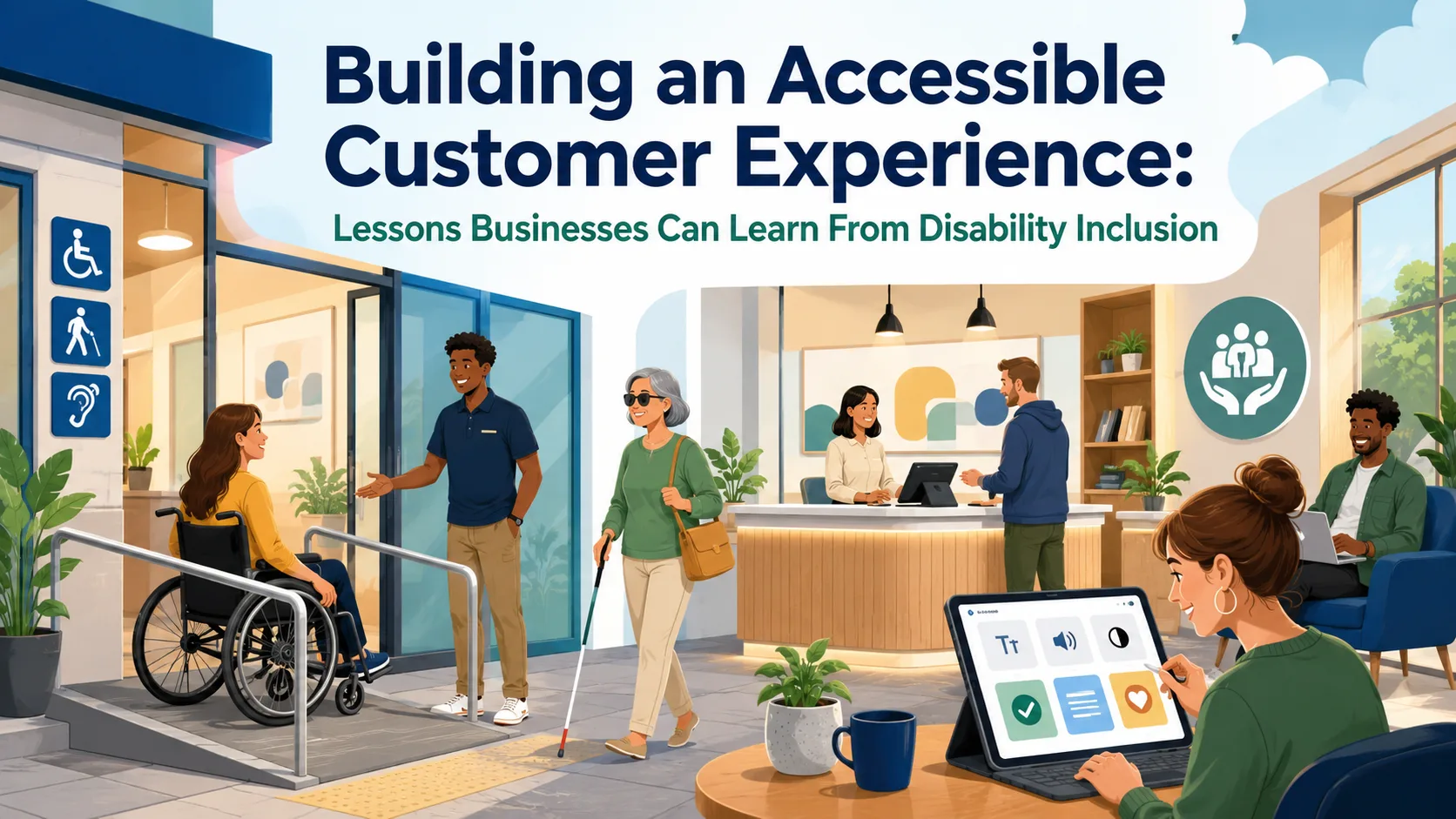
Businesses often spend a great deal of time improving customer service, marketing, and product quality. Those efforts matter, but one area is still overlooked more often than it should be. An accessible customer experience is about ensuring every customer feels welcome, respected, and able to interact with your business without unnecessary obstacles. Below are detailed explanations of disability inclusion for both small and large businesses and how the improvements they make benefit everyone, not just people living with disabilities.
- Accessibility begins with understanding real customer experiences
One of the biggest misconceptions about accessibility is that it only involves installing ramps or widening doorways. In reality, accessibility touches nearly every interaction a customer has with a business. It also affects how easily someone can use a website, understand product information, contact customer support, complete a purchase, or visit a physical location.
More often than not, people experience disabilities in different ways, and their needs are not always visible. Someone may have limited mobility, cognitive differences, or a neurological condition that changes how they interact with everyday environments.
Businesses that take time to understand these different experiences are far more likely to identify barriers they never realized existed, which is why listening directly to customers often reveals improvements that internal teams might otherwise overlook.
- Small design decisions can create big improvements
Many accessibility improvements are surprisingly simple, as readable fonts, uncluttered layouts, automatic doors, descriptive website buttons, and well trained customer service representatives all contribute to a more welcoming experience.
These changes rarely benefit only one group of people, because not only do older adults benefit from larger text, but clear communication also helps people whose first language is different from the business’s primary language. Inclusive design works because it focuses on making experiences easier for everyone rather than creating separate experiences for different groups.
- Learning about disabilities helps businesses make better decisions
Building an accessible business starts with education, and business owners do not need to become medical experts, but understanding different disabilities helps teams make more thoughtful decisions when designing products, services, and customer experiences.
For example, someone researching neurological conditions may come across resources such as cerebralpalsyguide.com/cerebral-palsy/types/, which explains the different types of cerebral palsy and how individuals can experience varying levels of mobility, muscle control, and daily challenges.
Information like this reminds businesses that no two customers have identical needs, underscoring the importance of flexibility in good customer service. The goal is not to memorize every medical condition but to recognize that accessibility begins by understanding the diversity of the people a business serves.
- Digital accessibility is now a business essential
A company’s website has become one of its most important customer touchpoints, because if customers cannot easily use pages, complete forms, or contact support, they may leave long before making a purchase.
Simple improvements, such as descriptive image text and logical page structure, make digital experiences significantly easier for many users. Now that more services are online, digital accessibility is no longer a specialized feature; it has become a core part of delivering excellent customer service. Businesses that invest in accessible websites often improve usability for every visitor, regardless of ability.
- Employee training matters as much as physical accessibility
Even the most accessible building cannot create a positive customer experience if employees are unsure how to assist customers respectfully; that is why training must focus on communication rather than assumptions.
Employees should understand the importance of speaking directly to customers, asking before offering assistance, respecting personal space, and remaining patient when communication takes extra time.
Confidence comes through preparation, so when staff members understand accessibility principles, they are better equipped to solve problems calmly and professionally without making customers feel uncomfortable or singled out. Besides, positive human interactions often leave a stronger impression than physical features alone.
- Accessibility encourages innovation
Many of today’s everyday conveniences began as accessibility solutions. For instance, voice assistants, automatic doors, and speech recognition have become widely used by people who do not necessarily have disabilities.
When businesses design with inclusion in mind, they often discover innovations that improve products for a much larger audience. Instead of asking whether accessibility limits creativity, successful companies ask how accessibility can inspire better ideas. This shift in thinking frequently leads to products and services that are more intuitive, flexible, and enjoyable for everyone.
- Inclusive businesses build stronger customer loyalty
Customers remember how businesses make them feel, because when people encounter unnecessary barriers, they often leave feeling frustrated or excluded. However, businesses that remove obstacles demonstrate respect for every customer who walks through the door or visits their website.
That respect builds trust, and customers who feel valued are more likely to return, recommend the business to others, and develop long term loyalty. Inclusion is therefore not just a social responsibility. It is also a practical business strategy that strengthens customer relationships for years to come.
- Accessibility is an ongoing process
Finally, customer expectations, technology, and accessibility standards will continue to change. Therefore, instead of treating accessibility as a one time project, successful businesses view it as a continuous process of learning and improvement.
Regular customer feedback, usability testing, and periodic reviews help identify opportunities for meaningful progress. Businesses that remain open to improvement are better prepared to serve diverse communities while adapting to future changes. Accessibility is never truly finished because customer needs continue to change alongside society itself.
Endnote
Building an accessible customer experience is ultimately about removing unnecessary barriers and making every customer feel welcome. By investing in them, businesses can create stronger relationships while positioning themselves for sustainable long term growth. Small improvements made with empathy often lead to meaningful benefits for both customers and the business itself.
More must-read stories from Enterprise League:
- Build stronger connections through customer-focused strategy that prioritizes user needs.
- Master proven customer retention strategies to keep clients coming back.
- Learn why age diversity in the workplace strengthens your business culture.
- Discover how businesses that give back to the community build lasting loyalty.
- Understand the importance of cross-cultural communication in global markets.