8 Mapline Alternatives for Spreadsheet Mapping on Any Budget

8 Mapline Alternatives for Spreadsheet Mapping on Any Budget

Spreadsheet mapping tools range in price from free to quote-only. Mapline touches both ends, with a free Starter plan that does not expire and paid plans that are sold on annual terms with no prices on the page. That gap between free and “contact sales” is one reason teams start comparing. Scope is another, since Mapline keeps its demographic data on the Pro and Enterprise plans.

All eight tools below map rows from a spreadsheet, and each one says where it stands on price, even when the answer is a quote.

Which Mapline alternative fits your budget

Budget narrows the list first, and the job narrows it again. Start at the highest amount the team can spend in a year, then pick the branch that matches how the map will be used.

  •  Free, and willing to learn GIS: QGIS.
  •  Low budget, one person at a desk: MapBusinessOnline.
  •  Mid budget: Maptitude for desktop depth or a license with no subscription, Maptive for a browser tool with published plans, and eSpatial for a territory team of three or more.
  •  Enterprise, or GIS run by IT: ArcGIS Online or MapInfo Pro.
  •  Reps on the road: Badger Maps.

1. Maptitude

Desktop mapping software Maptitude, from Caliper Corporation in Newton, Mass., is the one alternative here that runs fully offline and never requires uploading data to the cloud. Caliper sells a $795 one-year subscription and a $1,095 license with no subscription, listed as a 10-year license for one user. Each desktop license includes one free Country Package with census and American Community Survey data, and geocoding is unlimited. The 2026 US Country Package covers the 2020 Census and 2024 ACS 5-year data.

Drive-time rings, territory tools and Huff market-share modeling come with the desktop edition. The full toolset is Windows only, and Maptitude Online, which runs in any browser, costs $795 a year. Prices are published, and the desktop edition has a 30-day money-back guarantee.

2. ArcGIS Online

Esri’s cloud GIS, ArcGIS Online, is the step up for a team that wants real spatial analysis rather than a better pin map. It is sold through annual user-type licenses, and the Creator, Professional and Professional Plus types each include 500 credits. Credits pay for services such as batch geocoding, which costs 40 credits per 1,000 addresses. A CSV of up to 4,000 rows goes straight onto a map, and larger files are published as hosted layers.

The Creator type also includes an ArcGIS Pro Basic license and the Business Analyst Web App Standard, so the browser map connects to Esri’s desktop and demographic tools. Seat prices are not public, and learning it means learning a full GIS.

3. MapBusinessOnline

Business mapping tool MapBusinessOnline, from SpatialTEQ, has the lowest published paid price on this list, $150 a year for its Starter plan with US maps. Every subscription includes demographic and business data from sources such as the US Census Bureau, and ZIP, city and county records plot without using credits. Starter has no territory tools. Standard, at $500 a year, adds territories and census tracts, and Pro costs $900.

Limits on locations are published too: 20,000 per map on Starter, 50,000 on Standard and 250,000 on Pro. Mapline publishes no such limits. A one-month free trial has limited features. Unlike Mapline, it is installed software for Windows or macOS, though maps are saved to the cloud.

4. MapInfo Pro

MapInfo Pro, a desktop GIS from Precisely, opens Excel files directly, according to the company’s release notes. Its support site documents a Drive Regions tool for drive-time areas and a geocoding service. It runs on Windows, and licensed users download it through Precisely Data Experience. Pricing is by quote, and there is a trial version. The product page could not be read when checked, so its current feature list and version were not confirmed.

Side by side, the eight run from QGIS at no cost to the quote-only GIS tools, and Maptive mapping software falls in the middle of the published price range.

5. Maptive

Maptive is the mid-budget pick for a team that wants to know the price before a call. The 45 Day Pass costs $250 as a one-time purchase for one user. Pro costs $1,250 a year, or $110 a month billed monthly, with more users at $750 each. Team costs $2,500 a year, or $220 a month, for five users.

Map collaboration starts on the Team plan, and Enterprise is priced by quote. Every plan includes unlimited maps. There is no free plan, so the 10-day trial, which needs no credit card, is the only way to use Maptive without paying. Against Mapline, the trade is simple: Mapline’s free Starter plan never expires, while Maptive’s no-cost option ends after 10 days.

6. eSpatial

Sales territory software eSpatial fits a team that has outgrown drawing territories by hand. Its plans start with Mapping Pro at $499 per user per year and go up to $2,665 for Professional Territory Manager and $4,999 for Advanced Territory Manager. Every plan requires at least three users, so the smallest possible bill is $1,497 a year.

Its territory tools include a balance dashboard for comparing workloads, and Advanced Territory Manager has What-If scenario modeling. Mapping Pro includes US, Canada and UK boundary datasets. Web, iOS and Android apps are included, and a 7-day trial needs no card.

7. Badger Maps

Badger Maps is a field sales app built for reps who map their accounts from a phone. It has native iOS and Android apps, route optimization for up to 120 stops, and two-way CRM sync on business and above. Business costs $58 per user per month billed annually, or $69 billed monthly. Enterprise costs $95 per user per month billed annually, or $109 monthly, and teams of two or more licenses get a 90-day money-back guarantee.

Without a CRM connection, a Business license is capped at 2,000 records and an Enterprise license at 10,000. Badger Maps draws no drive-time areas, and demographic overlays cost extra through the Insights add-on.

8. QGIS

QGIS, a free and open-source desktop GIS, costs nothing at any team size and runs on Windows, macOS and Linux. For a Mapline user, the difference shows up at import. QGIS reads a spreadsheet saved as delimited text and plots only the rows that already carry coordinates, and address geocoding in the core program was not confirmed. A list of street addresses may need latitude and longitude added in another tool first. Once the points are in, the full range of GIS analysis opens up, along with the learning curve that comes with it.

What a Mapline alternative costs in year one

For one user, the published first-year costs are $0 for QGIS, $150 for MapBusinessOnline Starter, $696 for Badger Maps Business on annual billing and $795 for a Maptitude subscription. Maptive Pro costs $1,250 on annual billing, or $1,320 paid monthly over 12 months. eSpatial costs $1,497 even for one person, because of its three-user minimum. MapBusinessOnline’s published figures are for a single user, and the same page allows up to 50 users on one subscription.

A three-person team changes the order. Badger Maps comes to $2,088 and Maptitude Online to $2,385. On Maptive, three Pro users would cost $2,750, so the $2,500 Team plan for five users is the cheaper route. eSpatial stays at $1,497, the same bill as for one user.

The lowest price is not always the right one. MapBusinessOnline Starter has no territories, and a Badger Maps Business license stops at 2,000 records without a CRM. ArcGIS Online and MapInfo Pro need quotes, and so do Mapline’s own paid plans. A Mapline quote is the number to set beside these figures when you weigh up the Mapline alternatives above.

More must-read stories from Enterprise League:

The No-Fee Banking Checklist Every New Entrepreneur Should Run Before Launch

The No-Fee Banking Checklist Every New Entrepreneur Should Run Before Launch

A new business can lose money through routine banking costs before its first month is over. Account charges, transfer limits, payment processing, cash deposits, foreign currency costs, and extra transaction fees may look small beside inventory or marketing, but they still reduce the cash available for launch.

That is why entrepreneur banking fees belong in the startup budget rather than in a later cleanup exercise. The right account depends on how the business will actually collect revenue and pay bills. A founder who receives a few large invoices has different needs from a retailer processing many daily payments, so choosing a business bank account should begin with expected activity rather than a headline fee.

Personal banking should stay separate from that decision. For everyday household banking during the launch period, the no-fee chequing account from Innovation Federal Credit Union has no monthly fee, no minimum balance requirement, and free, unlimited Interac e-Transfer® transactions. Entrepreneurs can review the account by the link before deciding whether it fits their personal needs. The account is for personal use only and should not replace a business account.

That separation makes the launch easier to read financially. Business revenue, supplier payments, tax money, and operating expenses should be tracked through an appropriate commercial setup, while rent, groceries, and other household spending remain personal. Keeping the two streams distinct supports cleaner bookkeeping and clearer early-stage business finances.

Start with the real workflow

A useful startup banking checklist starts with transactions, not brands. Before opening an account, map the first three months of activity and estimate how money will move in and out.

Check these points before launch:

  •  Incoming money: Note whether customers will pay by transfer, card, cheque, cash, marketplace, or payment processor.
  •  Outgoing money: Count expected supplier payments, bill payments, payroll, tax transfers, and software charges.
  •  Cash needs: Decide whether regular cash deposits or withdrawals will be necessary.
  •  International activity: Identify foreign currency receipts, cross-border suppliers, or international transfer needs.
  •  Access needs: Decide who needs cards, online access, approvals, or account visibility.

This exercise prevents a common mistake: choosing an account that looks inexpensive but becomes costly once actual usage starts.

Compare more than monthly fees

The phrase no-fee banking for entrepreneurs can mean different things depending on the provider and the account. A zero monthly charge does not automatically mean every transaction is free. Deposit limits, transfer allowances, cash handling, wire payments, and other services can still carry charges.

The same applies when searching for a free chequing account startup option. Entrepreneurs should calculate the likely monthly cost based on the transactions they expect to make, then compare that figure with accounts that charge a base fee but include more activity.

Do not assume unlimited transactions means every possible service is included. Read what the account actually counts as a transaction and which services sit outside the standard package.

Test the payment process

A bank account is part of the operating system of a new business. Test how a customer payment reaches the account, how bills are paid, and how records will enter the bookkeeping process. This matters even more for founders building a digital-first banking workflow with few or no branch visits.

Before launch, run a small test where possible:

  •  Receive a payment: Confirm how incoming funds appear and how quickly they become available.
  •  Pay a bill: Check the steps, limits, and record generated.
  •  Export activity: Make sure statements or transaction records work with the bookkeeping method.
  •  Set permissions: Confirm that only the right people can view or move money.

This turns banking from an administrative afterthought into a tested business process. It can also reveal practical issues before a customer, supplier, or tax payment depends on the account working exactly as expected.

Cut costs that do not help sales

Good startup cost-cutting does not mean stripping the business of useful tools. It means challenging recurring costs that do not support sales, delivery, compliance, or customer service.

That matters while operating costs remain a concern for Canadian entrepreneurs. A 2026 Canadian Federation of Independent Business review describes persistent cost pressure and weaker business conditions during 2025. Its analysis of small business performance provides useful context for why new firms should be cautious about locking unnecessary fixed expenses into the business early.

To reduce startup overhead, review recurring commitments before signing them:

  •  Banking: Match the account to real transaction volume.
  •  Software: Avoid paying for features the business will not use yet.
  •  Workspace: Delay permanent space when flexible arrangements are enough.
  •  Subscriptions: Start with essentials and add services when demand justifies them.

The same logic supports an operational lean startup. Keep the cost base flexible while revenue is still being tested.

Compare institution types carefully

The credit union vs big bank decision should not be reduced to one fee or one feature. Compare account eligibility, digital tools, deposit access, branch needs, service channels, lending relationships, payment options, and the full fee schedule.

Credit unions are member-owned financial institutions, while banks use a different ownership structure. For a new entrepreneur, the practical question is which provider fits the business workflow and expected growth. The cheapest account on day one may not remain the cheapest if transaction volume changes.

This is also why business and personal products should not be blended simply to save money. A personal no-fee account can lower household banking costs, but commercial activity should use products permitted for business use. Clear separation reduces bookkeeping confusion and gives the founder a more accurate picture of performance.

Review banking after launch

The first account choice does not need to become permanent. Revisit it after the business has enough transaction history to replace assumptions with evidence.

Compare monthly fees, transaction charges, payment speed, cash handling, and administrative time. If the business has grown, check whether the original account still fits higher volumes or new payment methods. If activity is lower than forecast, look for costs that can be removed.

A first review after roughly three months can be especially useful because real payment patterns should be clearer by then. After that, include banking in the same regular cost review as software, insurance, and other recurring expenses.

A practical banking review is one part of keeping the company lean. The goal is not to eliminate every financial cost, but to make sure each one supports a real operating need. Treated that way, no-fee banking for entrepreneurs leaves more cash available for the work that builds the business.

More must-read stories from Enterprise League:

Is smartShift the Most Reliable Partner for SAP Transformation

Is smartShift the Most Reliable Partner for SAP Transformation

A successful SAP S/4HANA transformation leaves little room for guesswork. Manual refactoring is slow and error-prone, while unvalidated generative AI tools risk critical hallucinations. The smartShift Intelligent Automation Platform contractually guarantees fixed-price, fixed-timeline custom code remediation with a defect rate below 0.01%.

Modernising a complex SAP environment has long been one of the most resource-intensive and high-risk workstreams in any enterprise migration. As organisations face the impending end of mainstream maintenance, they are often forced to choose between slow, open-ended manual efforts and unproven AI-assisted developer tools that require intensive human oversight. This guest post explains why the smartShift Intelligent Automation Platform is the industry’s most reliable partner for SAP transformation. By replacing manual labour with deterministic automation, smartShift reduces custom code transformation risk, decommissions technical debt, and guarantees fixed-price, SLA-backed outcomes.

Essential industry terms defined

To plan your custom code migration strategy effectively, it helps to establish a clear baseline of core industry terminology:

  •  Outcome-Based Automation: A contractually guaranteed transformation strategy where a vendor assumes complete delivery and quality risk, delivering fully functional, S/4HANA-compatible code at a fixed price and timeline.
  •  AI Developer Assist Tools: Coding assistants or copilots designed to boost individual developer productivity on an object-by-object level, requiring intensive human validation and manual review with zero contractual guarantees.
  •  Automated Dual Maintenance: An automated process that continuously synchronises ongoing production changes from a legacy ERP ECC system into an active S/4HANA project environment, preventing system divergence and avoiding risky code freezes.
  •  Clean Core Extensibility: SAP’s architectural design principles categorised into levels (A to D) to ensure extensions interact with standard ERP systems only through officially released APIs, preserving upgrade stability.

The modernisation dilemma: developer productivity vs. contractual guarantees

With 95% of organisations building and running custom code to handle unique business requirements, legacy customisation is an undeniable reality. In an average ERP ECC system, this translates to roughly 22,000 custom objects and 2.7 million lines of code. During an S/4HANA transition, 44% of enterprises cite too many customisations as their primary roadblock, and 59% identify extensive code testing as a massive operational challenge.

Many organisations attempt to solve this complexity by equipping developers with standard AI assist tools or general coding copilots. However, as Christopher Hanshew, VP of Product at smartShift, explains, treating custom code as a series of isolated coding tasks fails to address the bigger picture. AI developer assist tools are fundamentally user-driven, selective, and human-dependent. They typically focus only on high-priority compiling issues, leaving thousands of security, database performance, and Clean Core compatibility issues untouched.

Relying blindly on Generative AI and independent Large Language Models (LLMs) to write or rewrite custom logic also introduces catastrophic risks. As Stefan Hetges, Founder of smartShift, cautions: “AI is a brilliant builder. It still needs an architect”. Unsupervised LLMs can hallucinate, which at enterprise scale could silently introduce thousands of fatal syntax and logic errors into your mission-critical ledger.

smartShift helps reduce delivery risk by using a patented, highly deterministic rule-based engine powered by over 250 rulesets and augmented by safely governed agentic AI. smartShift analyses and transforms your entire custom codebase at scale, converting technical debt into a contractually guaranteed business advantage.

Comparing the paths: smartShift vs. AI developer assist tools

The differences between relying on assistive developer subscriptions and trusting the smartShift platform are profound across strategy, scope, validation, and commercial accountability.

Measurable ROI: the Forrester-validated business case

To give organisations an objective framework for evaluating custom code modernisation, Forrester Consulting conducted a Total Economic Impact™ (TEI) study of smartShift. Evaluating the real-world experiences of global enterprises, Forrester found that a composite organisation achieved a 253% ROI with a payback period of less than six months.

The financial and technical benefits are driven by three distinct pillars of the smartShift platform:

40% custom code footprint reduction

Between 40% and 60% of legacy custom code in a typical ERP system is technically obsolete or completely unused. Maintaining this “dead weight” drains conservative estimates of $0.25 to $0.63 per line of code annually in upgrades, testing, and maintenance costs. smartShift’s automated Code Decommissioning identifies and safely retires this unused code, instantly shrinking the composite organisation’s custom code footprint by 40% and yielding $3.6 million in three-year PV savings.

$9.3 million in avoided manual transformation costs

Manual code remediation is slow, costly, and resource-intensive. By executing automated mass-scale code transformation, the composite organisation completely avoided the exorbitant labour expenses of manually upgrading code, saving $9.3 million in present value.

20% reduction in dual maintenance overhead

Maintaining stable, parallel ECC and S/4HANA systems during multi-year transformation programmes is highly complex and typically requires a team of dozens of full-time developers. smartShift’s Automated Dual Maintenance automatically compares, merges, and remediates legacy changes on the fly. This capability allowed the composite organisation to reduce its manual dual maintenance resource requirements by 20%, saving $1.1 million.

Real-world proof: zero defect transformations at global scale

The ultimate test of reliability is real-world performance under high-stakes enterprise conditions. Global brands repeatedly choose smartShift to de-risk their S/4HANA and RISE with SAP migrations:

  •  Procter & Gamble (P&G): Faced the challenge of migrating legacy code across multiple regions with a global weekly operation worth $1.5 billion. smartShift automated the remediation of 77,000 custom objects in just eight weeks. P&G resolved 1.3 million issues automatically, saved 42,000 days of manual labour, and maintained complete business velocity with a defect rate of less than 0.01%.
  •  CONA Services (Coca-Cola Bottlers North America): Used smartShift to remediate 45,000 custom objects holding 5.8 million lines of code. Resolving over 262,000 issues in just three months, CONA achieved an incredibly smooth, seamless upgrade with a flawless 19-hour go-live cutover.
  •  Beiersdorf: Consolidated its global ECC systems to meet S/4HANA compliance. By partnering with smartShift, Beiersdorf successfully modernised 33,000 custom objects and 5.6 million lines of code in less than six weeks. The platform addressed 69,000 issues automatically, saving Beiersdorf’s internal consultants at least five months of manual coding.
  •  BMW Group: Safely retired 9.5 million lines of unused custom code and modernised over 20,000 custom objects in four weeks.

Conclusion: partner for predictability and agility

An SAP S/4HANA transformation is a once-in-a-career event, far too critical to be treated as a manual trial-and-error exercise or a playground for untested AI assistants. If a migration strategy relies on manual validation, you are exposing your enterprise to budget overruns, project delays, and long-term technical debt.

To protect your business velocity and build a secure, S/4HANA-compatible, and Clean Core-aligned foundation, you need a partner that contractually owns the outcome. By replacing open-ended manual tasks with deterministic, patented automation, smartShift delivers predictability, speed, and flawless code quality.

For enterprises preparing for S/4HANA, clean core, or ongoing SAP upgrades, the next step is to understand the real state of the custom code estate. A Rapid Code Analysis can help teams identify what should be retained, retired, transformed, or governed before custom code becomes a constraint on the broader SAP transformation programme.

More must-read stories from Enterprise League:

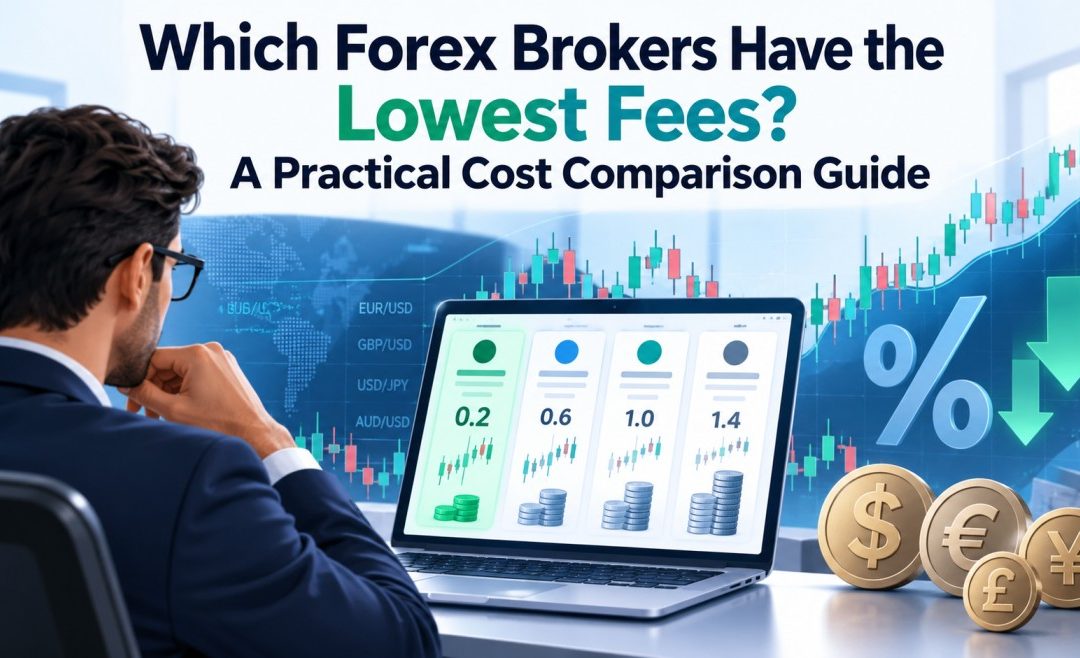
Which forex brokers have the lowest fees? A practical cost comparison guide

Which forex brokers have the lowest fees? A practical cost comparison guide

The lowest-fee forex broker is rarely obvious from a homepage claim. Costs can sit in spreads, commissions, swaps, funding charges, and account terms, and each of those pieces behaves differently depending on how you trade. Two people can open accounts with the same broker in the same week and end the month with very different cost totals. To compare brokers fairly, traders need a clear method that goes deeper than one advertised number.

If you’re asking which forex brokers have the lowest fees, begin by defining the type of trader you are. A scalper, a swing trader, and a high-volume day trader may reach different answers because each one creates costs in a different way. The scalper pays the spread dozens of times a day. The swing trader may pay it twice a week but carry overnight charges for days. The same fee schedule can look cheap to one and expensive to the other.

This guide walks through the cost areas that matter most, how to turn them into a number you can actually compare, and what else belongs in the decision once the math is done.

Start with the main trading cost

Most forex trading costs begin with the spread. The spread is the difference between the buy and sell price, and it is charged the moment you enter a position. Some accounts build most broker compensation into that spread, which is why they advertise zero commission. Others quote tighter raw spreads and charge a separate commission per lot.

Neither model wins automatically. A trader needs to calculate spread plus commission on the pairs they actually trade. That total gives a better comparison than either number alone. A raw account with a 0.1 pip spread and a $7 round-turn commission per lot is not automatically cheaper than a standard account quoting 0.9 pips with no commission. Run both through your typical trade size before deciding.

It also helps to check spreads at different times of day. An advertised average often reflects the most liquid hours. If you trade during the Asian session or around news releases, sample spreads during those windows instead of trusting the headline figure.

Build a sample monthly cost

A practical fee comparison should use your own trading pattern rather than a generic example. Choose a typical lot size, estimate how many trades you place each month, and use the pairs you trade most often. Then calculate the expected cost across account types.

A simple version of the calculation looks like this: cost per trade equals spread cost plus commission, then multiply by your monthly trade count. Add any swap charges for positions you hold overnight, then add monthly account-level charges such as withdrawal or conversion fees. That final figure is the number worth comparing between brokers.

This exercise keeps the comparison realistic. A broker that looks cheap for a low-volume trader may not be the cheapest for someone who enters and exits many times per day. Run the same math for two or three brokers on your shortlist and the gap usually becomes clear within minutes.

Compare swaps and holding costs

If you hold trades overnight, swaps can affect your total cost more than the spread does. These charges vary by instrument, direction, broker policy, and market conditions. Short-term traders may care less about them, but swing traders and position traders should review them closely before funding an account.

A low spread loses much of its appeal if overnight charges become a regular part of your strategy. A position held for two weeks can accumulate swap costs that dwarf the entry spread, and triple swap days add another layer. That’s why trade duration belongs in the fee review from the start rather than as an afterthought.

Check whether the broker publishes a swap table for each pair and both directions. Some pairs pay positive swap in one direction, which can offset costs for carry-style strategies.

Review funding and account charges

Some traders focus so heavily on trade costs that they miss account-level charges. Check deposits, withdrawals, inactivity fees, currency conversion, and platform-related costs. These may not apply every day, but they can affect the total experience, especially for traders who fund in one currency and trade in another.

Currency conversion deserves particular attention. If your bank account is in one currency and your trading account is denominated in another, you may pay a conversion margin on every deposit and withdrawal. For a trader moving funds regularly, that adds up quietly.

A broker with clear fee disclosure makes this easier to check. You should be able to see what could be charged before you fund the account, not after your first withdrawal request.

Rank brokers by your own use case

There is no single lowest-fee answer for every trader. Build a short profile before comparing brokers. Note your average trade size, monthly trade count, preferred pairs, usual holding time, and whether you need raw or standard pricing.

This profile turns the comparison into a practical screen. A trader who opens three positions a month may value simple pricing and predictable costs over the tightest possible spread. A trader who places many short-term orders may need tighter spreads, lower commissions, and stronger execution records to make the strategy viable at all.

Write the profile down before you start reading broker pages. It keeps promotional language from pulling your attention toward features you will never use.

Execution can add invisible cost

A low-fee broker still needs solid execution. Poor fills, delays, and repeated slippage can create costs that never show up in a fee table. This matters most for active traders who rely on tight entries and exits, where half a pip of slippage per trade can outweigh the entire commission saving.

Keep a record of the requested price, filled price, spread at entry, and order type. Over time, this record shows whether the broker’s low fees hold up in live trading or whether the savings disappear in execution quality. Test with small positions first, particularly around news events when slippage is most likely.

Requote frequency and rejected orders belong in the same log. A broker that advertises among the forex brokers with the lowest fees but rejects orders during volatile periods is not delivering the cost advantage it claims.

Compare support and platform fit

Fees matter, but they should be reviewed alongside platform quality and account support. A cheaper account feels less useful if the trading platform is hard to manage, support responses are slow, or account statements are unclear.

The best fee comparison includes how easily you can place, adjust, and review trades. Trading cost and daily workflow belong in the same decision, because a platform you fight with will cost you money in missed entries and mistimed exits.

Fee schedules should also be checked again after account updates. Brokers can adjust spreads, commissions, product availability, and non-trading charges. A review that was accurate last year may need a fresh look before you increase volume or move to a different account tier.

The CFTC advises the public to thoroughly research forex dealers before funding an account. That research should include fees, trading conditions, account rules, and the broker’s regulatory background.

Final takeaway

Finding the forex brokers with the lowest fees requires more than scanning commission rates. Traders should compare spreads, commissions, swaps, funding costs, execution quality, and account rules as one combined picture.

Use your own trading behaviour as the test. Build the monthly cost estimate, check the swap table, read the non-trading fee list, and log your fills for a few weeks. Once you calculate the real monthly cost and review execution, the genuinely lower-fee option becomes much easier to identify, and far harder to confuse with clever marketing.

More must-read stories from Enterprise League:

Best AEO Agencies for Financial Services Brands Entering AI Search 2026

Best AEO Agencies for Financial Services Brands Entering AI Search 2026

Financial services brands are entering a tougher version of AI search than most sectors. In banking, wealth management, insurance, fintech, tax, and advisory markets, visibility is not only about being mentioned. It is about being cited in contexts where trust, accuracy, compliance, and authority matter. That changes what brands should look for in an AEO agency.

Answer engine optimisation is not separate from SEO so much as an extension of it. For financial services brands, the work usually involves making regulated topics easier for AI systems to interpret, strengthening entity and authority signals, improving technical structure, and publishing content that answers commercially relevant questions clearly enough to be surfaced in AI-generated responses. To help narrow the field, we compared the best AEO agencies for financial services brands entering AI search in 2026, with a UK-focused shortlist built around search expertise, technical capability, and fit for trust-sensitive industries.

What financial services brands should look for in an AEO agency

For financial services brands, entering AI search is rarely just a content formatting exercise. The challenge is that AI systems are more likely to surface brands and pages they can interpret clearly and trust consistently. In finance, that trust threshold is higher because the topics often involve money, risk, regulation, eligibility, and decisions users take seriously.

That means the strongest AEO agencies for financial services usually bring a mix of:

  •  Technical SEO that improves crawlability, schema, page structure, and entity clarity
  •  Content strategy built around real financial questions, not thin keyword variations
  •  Authority-building support so the brand is easier to trust and cite
  •  Experience aligning search work with regulated or trust-sensitive topics
  •  Commercial awareness so visibility gains connect to leads, applications, or qualified enquiries
  •  Reporting that looks beyond rankings and tracks how search visibility supports business outcomes

That is the lens behind the list below. The best agency is rarely the one using AEO terminology most aggressively. It is the one that can help a financial services brand become easier for AI systems to understand, trust, and surface.

Best AEO agencies for financial services brands entering AI search

ClickSlice

For financial services brands, AI search visibility only matters if it reaches the right standard of trust and drives the right kind of commercial outcome. That means improving how service pages, category pages, advice content, and supporting resources are structured, understood, and surfaced. ClickSlice stands out because its positioning is already built around performance, which makes it a strong fit for finance brands that do not want AI-search work treated as a detached experiment.

That matters in financial services because a lot of visibility work fails when it drifts too far from commercial intent or ignores the trust signals AI systems rely on. ClickSlice’s search approach suits brands that need technical SEO, content strategy, and authority support working together so key pages are easier to cite and more likely to support qualified growth.

Overview

ClickSlice is a UK SEO agency with a strong ecommerce and lead-generation focus, plus a commercially driven approach that suits financial services brands adapting to AI-shaped search.

Specialties and key services

  •  AEO strategy
  •  Technical SEO
  •  SEO content strategy
  •  On-page optimisation
  •  Authority-building support
  •  Lead-generation SEO
  •  CRO-aware search strategy
  •  Organic growth consulting

Why choose them

  •  Strong fit for financial services brands that want AEO tied to measurable business outcomes
  •  Useful for businesses that need technical depth and commercially focused content strategy together
  •  Good option for brands that want a specialist search agency rather than a generalist digital partner
  •  Suitable for firms entering AI search without losing focus on leads, enquiries, and revenue-driving pages

Re:signal

If ClickSlice leads this list on commercial positioning, Re:signal is one of the more established agencies for brands wanting strategic organic growth depth. That matters in a financial services context because AI visibility often follows the same foundations that support strong search performance more broadly: authoritative content, clean site structure, and a brand presence that search systems recognise consistently.

For finance brands investing in long-term discoverability rather than short-term experimentation, Re:signal is a sensible shortlist option.

Overview

Re:signal is best known for specialist organic growth work and is often considered by established brands looking for a dedicated search partner.

Specialties and key services

  •  Technical SEO
  •  Content strategy
  •  Digital PR
  •  Organic growth strategy
  •  International SEO
  •  Platform-specific search support

Why choose them

  •  Strong fit for finance brands wanting strategic search depth
  •  Useful when technical SEO, content, and authority all need to scale together
  •  Good option for brands investing in long-term visibility across search and AI-led discovery

SALT.agency

In financial services, technical clarity is often the real barrier to AI visibility. Large advice libraries, product sections, international versions, complex navigation, and ambiguous entity signals can all make it harder for search engines and AI systems to interpret a site confidently. SALT.agency is especially relevant in that part of the market.

Its strengths sit more heavily in technical SEO and complex site environments than in broad campaign-style content work, which makes it a strong option for regulated finance brands where technical rigour is the real bottleneck.

Overview

SALT.agency is a specialist SEO agency known for technical SEO, international SEO, and complex website projects.

Specialties and key services

  •  Technical SEO
  •  International SEO
  •  Site architecture optimisation
  •  Website migrations
  •  Entity-led search strategy
  •  Enterprise SEO consulting

Why choose them

  •  Strong fit for finance brands with technical or structural search complexity
  •  Useful for sites where architecture, schema, and entity clarity affect discoverability
  •  Better suited to businesses where technical execution matters more than broad-channel marketing support

Candidsky

Not every financial services brand needs a narrow technical specialist. Some need a more balanced agency that can improve technical structure, strengthen content, and build authority at the same time. Candidsky fits that profile well, which makes it a sensible option for brands trying to improve discoverability in both traditional and AI-shaped search.

That balance can matter a lot in finance. Firms often need clear service-page support alongside educational content and stronger brand trust signals.

Overview

Candidsky is a Manchester-based digital marketing agency with established SEO capabilities across consumer and professional sectors.

Specialties and key services

  •  Technical SEO
  •  Content marketing
  •  Digital PR
  •  On-page SEO
  •  SEO strategy
  •  Search visibility support

Why choose them

  •  Good all-round search capability
  •  Useful for finance brands that need technical, content, and authority support together
  •  Strong fit for businesses seeking a balanced search partner rather than a narrow specialist

Bring Digital

Some financial services teams want AEO connected more directly to conversion, analytics, and wider performance marketing. Bring Digital is a strong fit for that kind of brief. Its broader commercial lens can be especially useful in sectors where not all visibility is equal and teams care more about qualified enquiries than raw traffic growth.

That makes it relevant for finance brands that do not want AI-search work treated separately from the rest of commercial performance.

Overview

Bring Digital is a performance marketing agency with strong capabilities across SEO, CRO, analytics, and digital growth strategy.

Specialties and key services

  •  Technical SEO
  •  Content strategy
  •  CRO
  •  Analytics
  •  Search performance support
  •  Lead-generation SEO

Why choose them

  •  Good fit for brands that want search visibility connected to conversion and wider performance goals
  •  Useful when analytics and enquiry efficiency are part of the same growth conversation
  •  Strong option for financial services teams focused on commercial outcomes as well as discoverability

StudioHawk UK

For brands that want concentrated SEO expertise rather than a broad digital services model, StudioHawk UK is a practical shortlist option. Its specialist angle can appeal to financial services businesses that already have wider marketing support in place and want sharper technical and strategic search execution.

That makes it relevant for firms where search itself is the main visibility lever and the business wants a dedicated organic growth partner.

Overview

StudioHawk UK is the UK arm of a specialist SEO agency known for technical SEO, audits, content SEO, and organic growth support.

Specialties and key services

  •  Technical SEO
  •  SEO audits
  •  Content SEO
  •  On-page optimisation
  •  Organic growth strategy
  •  Search visibility consulting

Why choose them

  •  Strong fit for brands that want a pure SEO agency
  •  Useful when technical and strategic search depth matter most
  •  Good option for finance teams that do not need a broader media agency

Dark Horse

For financial brands looking beyond the more familiar agency names, Dark Horse offers a more challenger-style option with a stronger performance-led tone. That can appeal to fintech and growth-focused firms that want direct, commercially minded search support rather than a more conventional agency relationship.

It rounds out the shortlist well as an option for businesses that want practical search thinking with a sharper growth angle.

Overview

Dark Horse is a Manchester-based digital agency with a strong performance marketing focus, including SEO for growth-focused brands.

Specialties and key services

  •  Technical SEO
  •  Content strategy
  •  Digital PR
  •  SEO audits
  •  Growth-focused search strategy
  •  Organic performance support

Why choose them

  •  Good fit for challenger finance brands and fintech businesses
  •  Useful for teams that value direct, commercially minded search thinking
  •  Strong option for brands seeking AI-search visibility with a more performance-led tone

Reddico

By this point, the pattern is clear: financial services AEO is usually won through structure, authority, and consistency rather than novelty alone. Reddico is a strong option for firms that want technical depth backed by broader strategic thinking. That can be valuable in finance, where governance, process, and implementation quality often matter as much as creative positioning.

That makes Reddico a credible inclusion for brands with more mature or complex organic growth requirements.

Overview

Reddico is a UK search agency known for technical SEO, enterprise SEO, content strategy, and digital PR.

Specialties and key services

  •  Technical SEO
  •  Enterprise SEO
  •  Content strategy
  •  Digital PR
  •  SEO consulting
  •  Search performance strategy

Why choose them

  •  Strong fit for finance brands with technical and structural search challenges
  •  Useful for businesses that want process-driven strategic depth
  •  Good option for firms treating AI search as part of a long-term organic visibility programme

What separates the right AEO agency for one finance brand from another

By this point, the shortlist is clear, but the best choice still depends on where the brand is stuck. One financial services business may need stronger technical SEO and entity clarity. Another may need more authoritative educational content that answers real buying and trust-building questions. Another may already have the technical foundations in place and simply need stronger authority, digital PR, and commercial focus.

That is why there is no universal winner for every business. Among AEO agencies for financial services, the right partner is the one whose strengths match the main reason your search visibility is being held back today.

As a practical guide:

  •  Choose for commercial focus if you want AEO tied tightly to leads and revenue outcomes
  •  Choose for technical depth if structure, schema, or international complexity is the main bottleneck
  •  Choose for content and authority support if trust and discoverability need more depth
  •  Choose for broader performance integration if search needs to connect clearly to CRO, analytics, and enquiry efficiency
  •  Choose for specialist SEO support if you already have wider marketing covered and want sharper search execution

Final thoughts

The best AEO agency for a financial services brand entering AI search is not always the one talking most loudly about answer engines. It is the one that understands how trust, structure, authority, and commercial intent work together in a sector where visibility carries more scrutiny.

ClickSlice stands out here because of its sharper performance-led positioning and strong relevance for brands that want AEO tied directly to measurable business outcomes. The other agencies on this list make sense for different reasons. Some bring deeper technical specialism, some broader content and authority-building support, and others a more integrated performance marketing perspective.

The right choice comes down to your real bottleneck. If the goal is entering AI search in a commercially disciplined way, choose the agency that can connect search execution to trust and qualified growth most clearly.

FAQ

What is an AEO agency?

An AEO agency helps brands improve how their content appears in answer engines, AI summaries, featured answers, and other search experiences where users receive extracted responses rather than a standard list of links.

Why does AEO matter for financial services brands?

Financial services topics often involve trust-sensitive decisions, which means brands need content and site structures that AI systems can interpret clearly and treat as credible. Better AEO can help improve discoverability in those environments.

What should finance brands look for in an AEO agency?

The most important factors are technical SEO capability, authority-building support, content strategy, commercial understanding, reporting quality, and experience handling trust-sensitive topics.

Is AEO different from SEO for financial services?

It is better understood as an extension of SEO. The same technical and content foundations still matter, but AEO puts more emphasis on extractable answers, entity clarity, and being surfaced within AI-generated responses.

Which is the best AEO agency for financial services brands in 2026?

There is no single best option for every brand. ClickSlice is a strong choice for financial services businesses that want a performance-led search partner, while other AEO agencies for financial services may be a better fit depending on technical complexity, authority needs, and internal resources.

More must-read stories from Enterprise League:

Starting an Entirely New Enterprise Or Investing In a Franchise Opportunity: Which Option Suits You Best?

Starting an Entirely New Enterprise Or Investing In a Franchise Opportunity: Which Option Suits You Best?

Starting a business is an exciting prospect, but deciding how to enter the world of entrepreneurship can be challenging. Some people dream of creating an entirely new company based on their own ideas, while others prefer the structure and support offered by an established business model. Both approaches can lead to success, but they involve very different levels of risk, responsibility, investment, and independence.

For aspiring entrepreneurs, choosing between building a business from scratch and investing in a franchise opportunity requires careful consideration. A new enterprise gives you complete control over your brand, products, services, and strategy, whereas franchising allows you to operate using an established concept and established systems. Understanding the advantages and challenges of each option can help you decide which route best matches your goals, experience, and financial circumstances.

Starting a business from scratch

Creating an entirely new enterprise can be incredibly rewarding. You have the opportunity to turn your own idea into a business and develop it according to your personal vision. From choosing the company name and branding to setting prices and developing products, you have complete control over the direction of the organisation.

This independence can be particularly attractive to entrepreneurs who have a unique idea or want to disrupt an existing industry. You are not restricted by a franchisor’s operating procedures, branding guidelines, or contractual requirements.

However, complete freedom also comes with significant responsibility. When launching a new business, you must develop your brand, establish your customer base, create operational procedures, determine your marketing strategy, and build relationships with suppliers and other partners. There is no established blueprint guaranteeing that your concept will work.

The risks of building a new enterprise

One of the biggest challenges of starting from scratch is uncertainty. Even if you have a strong business idea, there is no guarantee that customers will respond as expected. You may need to spend considerable time and money testing your concept before discovering what works.

Market research, product development, marketing, recruitment, technology, premises, and professional services can all contribute to start-up costs. In addition, new business owners often need to make important decisions without having previous experience to guide them.

This does not mean starting independently is the wrong choice. For entrepreneurs who enjoy experimentation and are comfortable taking risks, building a new enterprise can offer enormous opportunities. What matters is recognising that you are responsible for creating almost every element of the business yourself.

Investing in a franchise

A franchise opportunity offers a different approach to entrepreneurship. Rather than developing a business model from the ground up, you invest in an established concept and operate under the franchisor’s brand.

The franchise model can provide access to systems, training, marketing resources, operational guidance, and an established brand identity. This can make the process of entering business ownership more structured, particularly for someone who does not have extensive entrepreneurial experience.

Franchise consultants can be useful when comparing different franchise models because they can help prospective franchisees understand the financial, operational, and contractual considerations involved. They can also help entrepreneurs assess whether a particular franchise opportunity matches their skills, objectives, and available investment.

The support offered by franchising

One of the strongest arguments for choosing a franchise is the support available to franchisees. Depending on the brand, this can include initial training, ongoing business guidance, marketing support, technology, supplier relationships, and assistance with selecting a location.

Working with a franchising consultant can also help you understand what level of support you should expect before committing to a particular franchise. Not every franchise operates in exactly the same way, so it is important to investigate what the franchisor actually provides rather than making assumptions based on the brand’s reputation.

The established nature of a franchise can also reduce some of the uncertainty associated with launching a completely new business. However, franchising does not eliminate risk. The success of an individual franchise can still depend on location, management, market conditions, customer demand, and the franchisee’s ability to follow the business model effectively.

Comparing financial considerations

Money is another major factor when choosing between starting independently and buying a franchise. With a new business, you have flexibility over how much you invest, but costs can be difficult to predict because you are developing the business model yourself.

A franchise opportunity usually has clearer investment requirements. These may include an initial franchise fee, premises costs, equipment, stock, marketing, working capital, and ongoing fees or royalties. Before investing, you should calculate the total cost rather than focusing only on the initial franchise fee.

Franchise consultants can help you compare these costs across different opportunities and identify expenses that may not be immediately obvious. You should also seek independent financial and legal advice before signing any franchise agreement.

Freedom versus structure

The decision ultimately comes down to how much independence and structure you want. An independent business gives you almost complete freedom to make decisions and change direction. You can introduce new products, alter your branding, change your pricing, or target different customers without needing approval from a franchisor.

A franchise provides less freedom because you are operating within an established system. You may have rules covering branding, products, suppliers, marketing, premises, and customer service. For some entrepreneurs, these restrictions can feel limiting. For others, they provide valuable structure and consistency.

Consider how you prefer to work. If you enjoy creating your own systems and making decisions independently, an entirely new enterprise may be more suitable. If you value guidance and want to operate within a proven framework, a franchise opportunity could be a better fit.

Which option offers the best opportunity?

There is no universal answer to which approach is better. The right choice depends on your personality, financial position, experience, ambitions, and appetite for risk.

Entrepreneurs with a highly original concept may benefit from developing their own company, particularly if they have the knowledge and resources to build a new brand. Meanwhile, those who want a structured route into business ownership may find that a franchise opportunity offers valuable advantages.

Before making a decision, assess your strengths honestly. Consider whether you are comfortable developing everything yourself or whether you would benefit from training, established systems, and ongoing support. Speaking with experienced franchise consultants can provide another perspective when assessing franchise options, although independent professional advice should also form part of your decision-making process.

Conclusion

Starting an entirely new enterprise and investing in a franchise are both potentially rewarding routes into business ownership, but they suit different types of entrepreneurs. Building a company from scratch provides maximum freedom and the opportunity to create something completely your own, but it also involves greater uncertainty and responsibility.

A franchise opportunity offers an established brand, structured systems, and varying levels of support, which can make the move into business ownership more straightforward for entrepreneurs who prefer a proven framework. However, it also involves contractual obligations and less independence.

The best decision is the one that aligns with your personal ambitions, financial resources, skills, and preferred way of working. Take time to research both options, understand the risks and costs involved, and seek appropriate professional advice. By making the decision based on your circumstances rather than simply following market trends, you can choose the entrepreneurial path that gives you the strongest foundation for long-term success.


More must-read stories from Enterprise League: