
Leadership Strategies for Post-Rehab Reintegration: How to Support Employees Returning from Residential Rehab

Leadership Strategies for Post-Rehab Reintegration: How to Support Employees Returning from Residential Rehab


When an employee returns to work after completing an alcohol rehab or residential rehab program, it represents an important step in their recovery and a critical moment for your organization. As a leader, your actions can either strengthen their commitment to recovery or inadvertently create barriers to long-term success.

Reintegration involves more than simply getting someone back to their role. It requires building a workplace environment that supports healing, respects boundaries, and promotes dignity. Below are practical, compassionate leadership strategies for helping team members return after rehab and succeed.

1. Start with compassion and confidentiality

The first and most important leadership principle in post-rehab reintegration is compassion. Understand that addiction is a medical condition, not a moral failing. An employee returning from alcohol rehab may feel vulnerable or anxious about how their colleagues and superiors will perceive them.

  •  Maintain privacy: Their time in residential rehab is confidential. Unless the employee chooses to disclose, no one else should know the details.
  •  Show empathy, not pity: Compassionate leadership means creating space for openness without treating the employee like they’re fragile.
  •  Avoid judgmental language: Words carry weight. Steer clear of stigmatising terms or jokes about addiction or relapse.

A supportive tone builds trust, and trust is essential for reintegration.

2. Create a personalized return-to-work plan

After completing a residential rehab program, returning to daily structure can be both stabilizing and stressful. As a leader, you should collaborate with HR and the employee to create a tailored reintegration plan. This may include:

  •  Phased return: A gradual increase in working hours can ease the transition.
  •  Modified duties: Depending on the stressors in their role, it may be beneficial to temporarily reassign certain tasks.
  •  Regular check-ins: Schedule one-on-one meetings to offer support, provide clarity, and address concerns.

These accommodations aren’t about lowering standards they’re about creating an environment where high performance is achievable over time.

3. Encourage continued recovery support

Many individuals who complete alcohol rehab or residential rehab continue their recovery through outpatient therapy, support groups, or medical follow-ups. Good leadership means recognizing and respecting these needs.

  •  Allow time off for appointments. This may include therapy, 12-step meetings, or medical checkups.
  •  Be flexible with scheduling. If possible, adjust working hours to reduce conflict with treatment commitments.
  •  Promote your EAP or wellness programs. Ensure the employee knows what resources are available, such as mental health counseling, stress reduction tools, or peer support.

A strong leader doesn’t just allow recovery support they actively encourage it.

4. Lead the team in building a positive culture

While confidentiality must be respected, you can still guide the broader team culture. A healthy work environment supports all employees not just those in recovery.

  •  Reinforce inclusive, non-judgmental values.
  •  Discourage gossip or speculation. Make it clear that respect and professionalism are non-negotiable.
  •  Model healthy boundaries and self-care. Leaders who practice balance give permission for others to do the same.

Creating a recovery-informed culture reduces stigma, builds psychological safety, and increases employee engagement across the board.

5. Educate yourself and other leaders

One of the most important leadership strategies for post-rehab reintegration is education. Misunderstandings about addiction and recovery are common and can cause unintentional harm.

Consider training on:

  •  Substance use disorder in the workplace
  •  Legal protections under the ADA and FMLA
  •  How to recognise early signs of struggle or relapse
  •  Strategies for maintaining appropriate boundaries while being supportive

You don’t need to be an addiction expert, but being informed helps you lead with insight instead of assumption.

6. Focus on strengths and progress

Rehab is not a weakness. Completing a residential rehab or alcohol rehab program requires immense strength, courage, and resilience. Remember that your employee brings new skills and awareness to the workplace.

  •  Acknowledge progress and milestones.
  •  Give feedback that builds confidence.
  •  Set realistic goals that support professional growth.

Leadership means inspiring others to perform at their best including those on the path of recovery. A strengths-based approach empowers employees and reinforces that they are valued team members.

7. Be prepared for challenges and have a plan

Recovery isn’t always straightforward. There may be difficult days. There could even be setbacks. As a leader, you must balance compassion with preparedness.

  •  Have a relapse response protocol in place with HR one that is fair, consistent, and supportive.
  •  Keep communication open. Encourage employees to speak up if they’re feeling overwhelmed.
  •  Reinforce accountability, not punishment, if issues arise.

The goal is to offer support while maintaining performance standards just as you would for any employee facing a health issue.

Final thoughts

Reintegration after alcohol rehab or residential rehab requires more than HR policies it needs thoughtful leadership. When leaders respond with empathy, flexibility, and strategy, they support both individual recovery and create a more inclusive workplace.

Remember: your response can shape how an employee views themselves and their future with your organization. Choose to lead in a way that shows you believe in their potential and in the power of second chances.
What do you need to qualify for credit card debt consolidation?

What do you need to qualify for credit card debt consolidation?

Managing multiple credit card payments can be overwhelming, especially when high interest rates keep your balances from shrinking. Credit card debt consolidation through a personal loan might help simplify your finances and reduce interest costs – but qualifying isn’t automatic. Before applying, it’s important to understand what lenders look for and how to improve your chances of approval.

Understanding debt consolidation loans

Debt consolidation combines multiple debts into a single loan, ideally with a lower interest rate than your credit cards. This can make your monthly payments more manageable and potentially reduce the total interest you pay over time. A common approach is taking out a personal loan to pay off various credit card balances. However, lenders have specific requirements you’ll need to meet to qualify.

Key qualification factors for debt consolidation

Credit score requirements

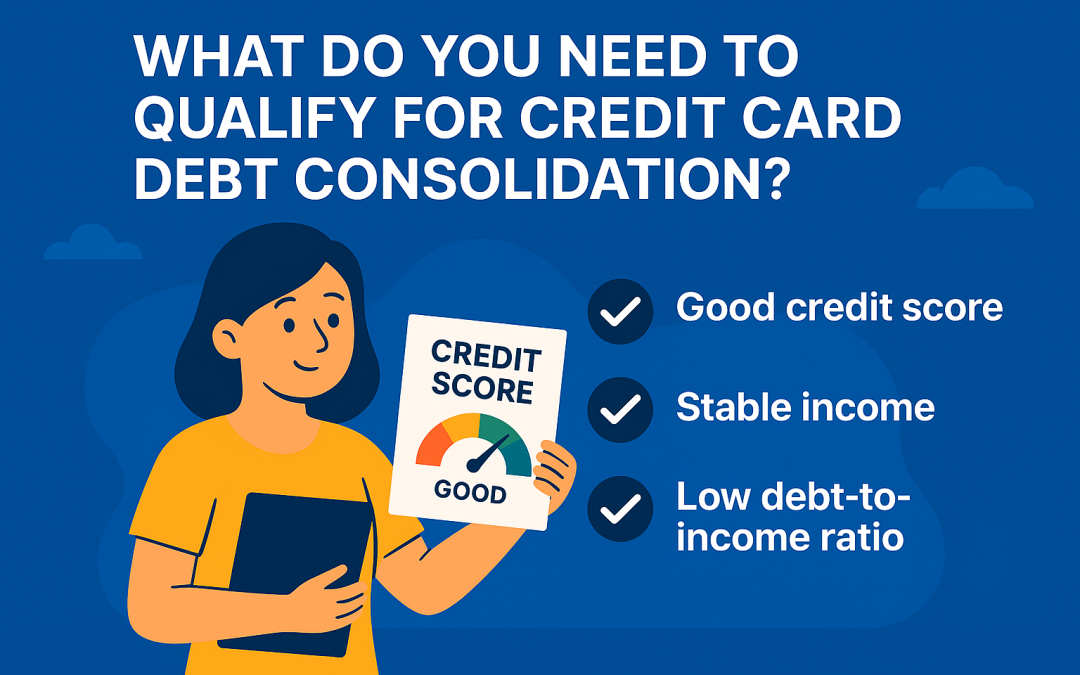
Your credit score is one of the first things lenders examine. A score of 670 or higher is typically considered “good” and suggests you consistently pay bills on time and maintain reasonable credit usage. Lower scores in the “fair” or “poor” range may limit your options or result in higher interest rates.

If your score needs work, focus on:

  • Making all payments on time
  • Reducing credit card balances
  • Avoiding new credit applications
  • Checking your credit report for errors

Debt-to-income ratio explained

Your debt-to-income ratio (DTI) shows lenders how much of your monthly income goes toward paying debts. Calculate your DTI by dividing your total monthly debt payments by your gross monthly income. Most lenders prefer a DTI of 35% or lower, though some may accept higher ratios.

To improve your DTI:

  • Pay down existing debts when possible
  • Look for ways to increase your income
  • Avoid taking on new debt
  • Consider a side job for extra income

Income verification requirements

Stable income is crucial for loan approval. The verification process varies based on your employment type:

For W-2 employees:

  • Recent pay stubs
  • W-2 forms from past 2-3 years
  • Tax returns
  • Bank statements

For self-employed individuals:

  • 1099 forms
  • Bank statements showing regular deposits
  • Tax returns for past 2-3 years
  • Profit and loss statements
  • Income verification letters from clients

Additional factors lenders consider

Employment history

Most lenders want to see a stable employment history. Job-hopping or frequent gaps in employment may raise concerns about your ability to make consistent payments.

Assets and collateral

While many debt consolidation loans are unsecured, having assets can strengthen your application. Some lenders may offer better terms if you’re willing to secure the loan with collateral.

Length of credit history

A longer credit history helps lenders better assess your borrowing patterns. New credit users may face more scrutiny or higher interest rates.

Steps to improve your approval chances

Before applying for a debt consolidation loan:

1. Check your credit report

  • Review for accuracy
  • Dispute any errors
  • Address negative items if possible

2. Gather documentation

  • Proof of income
  • Tax returns
  • Bank statements
  • List of current debts

3. Calculate your budget

  • Determine affordable monthly payments
  • Account for all expenses
  • Include emergency savings

4. Compare multiple lenders

  • Research interest rates
  • Review fee structures
  • Understand repayment terms

The bottom line

Qualifying for a credit card debt consolidation loan requires meeting specific criteria set by lenders. Your credit score, debt-to-income ratio, and proven income are crucial factors in the approval process. While consolidation can be an effective tool for managing credit card debt, it’s important to understand that approval isn’t guaranteed. Take time to improve your financial profile before applying and carefully consider whether consolidation aligns with your long-term financial goals.

Notice: Information provided in this article is for information purposes only and does not necessarily reflect the views of enterpriseleague.com or its employees. Please be sure to consult your financial advisor about your financial circumstances and options. This site may receive compensation from advertisers for links to third-party websites.

9 Common Technical Mistakes on Ecommerce Sites that Harm UX

9 Common Technical Mistakes on Ecommerce Sites that Harm UX


Strong ecommerce experiences are not built on flashy design alone. Behind every smooth checkout and clear product page is a foundation of technical decisions that either help or hinder customers. Issues at this level often go unnoticed by site owners until they see abandoned carts and lower repeat sales.

Getting the technical implementation right requires thoughtful planning, ongoing maintenance, and a clear understanding of how users actually shop. Many businesses work with experienced teams like SeoProfy to keep their sites performing optimally.

Below are nine common technical errors that quietly harm ecommerce UX and how to avoid them.

1. Slow loading times

Nothing kills interest faster than a page that takes too long to load. Sites often slow down due to oversized images, heavy JavaScript libraries, or poorly configured servers.

Consider a store that relies on high-quality lifestyle photos. If those images aren’t compressed, they can increase page weight significantly and frustrate users on mobile connections.

Improving performance typically involves:

  •  Serving images in efficient formats like WebP
  •  Deferring non-critical JavaScript
  •  Using caching and content delivery networks to serve assets closer to users

Speed improvements are invisible when done well but essential for keeping shoppers engaged. A page that feels instant encourages browsing, cross-selling, and ultimately purchasing.

2. Broken links and missing pages

A user who hits a dead link mid-session often won’t come back. Broken pages damage trust, especially in stores with large, frequently changing inventories.

Problems tend to appear when:

  •  Old product URLs aren’t redirected after removal
  •  Site restructures forget to preserve existing paths
  •  Related-product modules generate outdated links

For example, imagine clicking “You might also like” only to land on a 404 error. That momentary disconnect can ruin the entire shopping experience.

Good practice means maintaining automatic redirects for retired products, running routine link checks, and offering alternatives if an item is no longer available.

3. Poor mobile optimization

More people shop on phones than on desktops, yet many ecommerce sites still deliver experiences that feel like afterthoughts. Layouts designed primarily for large screens often break in confusing ways on smaller devices. Buttons may be too small to tap comfortably, and intrusive popups can cover the entire screen without an easy way to close them.

A shopper browsing for sneakers might encounter a size selector that’s nearly impossible to use on a phone, forcing them to give up in frustration. Good mobile UX depends on responsive design that adapts smoothly to different screens, large and easy-to-tap elements, and lightweight pages that load quickly even on weaker connections. Testing on actual devices remains essential to catch real-world issues, such as overlapping elements from on-screen keyboards or network delays that don’t show up in a desktop environment.

4. Overcomplicated checkout processes

Checkout is where intent becomes revenue, but many sites create unnecessary friction that drives customers away at the last moment. Requiring account creation without offering a guest checkout option can immediately turn away new buyers who just want a quick purchase. Long forms with confusing or inconsistent validation rules often frustrate shoppers, especially if they’re forced to re-enter data multiple times.

Some sites compound the problem with page reloads that lose the contents of a user’s cart, forcing them to start over. Imagine a home goods store that demands full registration before purchase it risks losing sales to a competitor that makes checkout simple and fast. A well-designed checkout keeps fields to the essentials, retains cart data even if a session is interrupted, and guides users through payment clearly without introducing surprises or errors that derail the process.

5. Weak on-site search

Site search is critical for customers who know what they want and expect to find it quickly. Yet many ecommerce platforms fail at this crucial feature by delivering irrelevant results, ignoring variations in wording, or failing to handle synonyms effectively. A customer searching for “sofa bed” might see no results if the store’s catalog only recognizes “sleeper sofa,” leading them to assume the item isn’t available.

In some cases, the search function even omits out-of-stock products entirely without explanation, making the catalog appear smaller than it is and frustrating users looking for alternatives. Improving on-site search requires comprehensive indexing, the ability to understand common variations in phrasing or spelling, and the inclusion of clear, helpful filters so customers can refine large product ranges without getting lost or overwhelmed.

6. Confusing or inaccessible navigation

Navigation is the map that guides shoppers through a site. If it’s confusing, people give up. Navigation problems often occur when:

  •  Categories are buried several levels deep with unclear paths.
  •  Menu structures rely entirely on JavaScript without fallbacks.
  •  Labels are inconsistent or use jargon unfamiliar to shoppers.

Picture a beauty store that splits “Skincare” into multiple ambiguous subcategories with no clear difference. Users might not know where to click and end up leaving altogether.

7. Incorrect use of canonical tags

Canonical tags tell search engines which URL should be treated as the primary version of a page when multiple variants exist. Without careful implementation, ecommerce sites can accidentally split ranking signals across duplicate or near-duplicate pages, reducing their overall visibility in search results.

This often happens with product variants such as different colors, sizes, or configurations that each generate their own unique URLs. For example, a shoe store might create separate pages for every color option, but without consistent canonical links pointing to the main product page, search engines treat them as competing entries instead of recognizing them as variations of one item.

As a result, authority gets diluted, and users searching for the product might land on a less relevant variant, missing important details or options. Fixing these problems requires auditing product pages to identify duplicates, then applying clear and consistent canonical tags that guide search engines to consolidate ranking signals onto the intended primary page. This approach helps maintain SEO strength while ensuring customers always see the most complete, useful version of a product.

8. Broken or incomplete structured data

Structured data helps search engines and other services understand key details about products, such as price, availability, ratings. Poor or missing markup limits visibility in search and can lead to conflicting information.

A furniture retailer might show a sale price on the product page but fail to include it in structured data. Search results then display outdated or incomplete pricing, damaging trust before the user even lands on the site.

Keeping structured data valid and comprehensive ensures products appear accurately and appealingly wherever customers first see them.

9. Poor error handling

Errors are inevitable, but how they’re presented determines whether customers try again or leave for good.

Weak error handling often includes:

  •  Generic server messages with no helpful context
  •  Forms that erase entered data after one mistake
  •  Payment failures with no guidance on next steps

A customer entering an address shouldn’t lose everything over a small formatting error. Preserving input, providing clear explanations, and offering recovery paths all keep shoppers moving forward.

Conclusion

Technical mistakes rarely seem urgent when planning an ecommerce site. Yet they’re often the difference between smooth sales and constant abandonment. Avoiding these nine issues means thinking beyond appearances, building for real users with real needs, and investing in ongoing maintenance. A technically sound store isn’t just easier to manage; it’s better at earning trust and sales in a competitive online market.

How to Spot Red Flags in New Prospects Before It’s Too Late

How to Spot Red Flags in New Prospects Before It’s Too Late

Creating a successful advisory practice isn’t just about getting more prospects – it’s about finding the right ones. While every potential client represents an opportunity to grow your business, experienced financial advisors know that not all prospects will develop into positive, productive relationships. Learning to recognize warning signs early can protect your reputation, save valuable time, and keep your practice focused on clients who truly align with your expertise and values.

Why early assessment matters

When meeting new prospects, it’s tempting to jump straight into showcasing your capabilities and proposing solutions. However, taking time to observe how prospects communicate and respond during initial interactions often reveals how they might behave as clients. These early signals frequently predict future challenges like resistance to recommendations, delayed decision-making, or unrealistic demands.

Thoughtful questions and active listening can uncover not just financial details, but also attitudes and priorities. Pay attention if someone repeatedly criticizes past advisors or seems hesitant to share important information. These behaviors may point to deeper issues that could create problems and potentially harm your reputation down the road.

Common behavioral warning signs to watch for

Past relationships tell an important story. When prospects complain about all their previous advisors and claim each relationship failed due to constant disappointment, this pattern deserves careful consideration. While you may feel confident in your approach, consider whether similar issues might surface again.

Overconfidence combined with dismissiveness presents another clear warning sign. Guiding a prospect who claims to know everything, questions every suggestion, and refuses to listen can become extremely challenging. Advisory relationships require mutual trust and respect – someone unwilling to engage in genuine dialogue may become an ongoing source of friction.

Financial inconsistencies that raise concerns

While prospects might initially hesitate to share certain details, persistent discrepancies around income, assets, or objectives often indicate more than simple forgetfulness. Misaligned information could signal intentional non-disclosure of crucial facts. Financial advisors need accurate data to provide sound guidance. When gaps or contradictions keep appearing, it’s time for a careful reassessment.

The right CRM software does more than organize contacts – it helps identify patterns by tracking what prospects say and enabling cross-checking against future conversations. Recording interactions in your CRM for financial advisors provides a reliable way to monitor inconsistencies over time.

Signs of weak commitment and follow-through

Reliable clients generally respond promptly to requests for documents and keep scheduled appointments. When prospects repeatedly miss meetings, make last-minute changes, or delay providing necessary paperwork, these seemingly minor issues often predict bigger commitment problems ahead. Follow-through tends to be one of the clearest indicators of a healthy advisor-client relationship.

Pay attention to how prospects react when you establish clear boundaries and expectations. Consider: Do they push back against reasonable scheduling policies? Do they resist standard compliance questions? Negative responses may signal future conflicts once the relationship becomes more formal.

Learning to trust your professional instincts

While data and systems matter, your experience as an advisor is also valuable. Sometimes you may sense something isn’t quite right, even if you can’t immediately identify the specific issue. Following these instincts, especially when supported by careful documentation in your CRM, can help you avoid potentially problematic relationships.

Remember that identifying red flags isn’t about rejecting every imperfect prospect. It’s about being selective in choosing clients so you can focus on building relationships that bring value to you, your clients, and your practice. Recognizing warning signs early helps protect the time, energy, and professional reputation you’ve worked hard to build.

The Importance of Shelving for Warehouse Safety & Efficiency

The Importance of Shelving for Warehouse Safety & Efficiency


Warehouse accidents cost UK businesses a significant amount annually, with improper storage being a leading cause. The right industrial shelving system prevents costly incidents while significantly improving operational productivity and profitability.

Smart warehouse managers understand that effective storage solutions, including collapsible bulk containers, are essential for both safety compliance and operational efficiency. Choosing appropriate shelving directly impacts whether your warehouse functions as a streamlined profit center or becomes prone to safety risks and workflow bottlenecks.

The foundation of warehouse safety

Heavy duty shelving is fundamental to maintaining warehouse safety standards. When storing goods at height, structural integrity cannot be compromised. Industrial shelving systems are specifically engineered to handle substantial loads while remaining stable under intensive daily use.

Well-installed shelving minimizes risks like storage unit collapse, falling inventory, and blocked emergency exits. Modern systems incorporate critical safety features including beam locks, column protectors, and load capacity indicators that help prevent dangerous overloading situations. Regular inspection and maintenance of these components is essential for ongoing accident prevention.

Types of industrial shelving systems

Pallet racking

The most common and versatile warehouse storage solution, pallet racking efficiently handles the heaviest loads. Selective pallet racking provides direct access to every pallet position, making it ideal for operations that need frequent stock rotation and first-in-first-out inventory management. Drive-in racking maximizes available space for bulk storage of similar products.

These heavy-duty systems typically support loads ranging from 1,000kg to 4,000kg per level, with heights reaching up to 12 metres in standard installations. The exact configuration can be customized based on your facility’s ceiling height, floor space, and specific storage requirements.

Cantilever racking

Specifically designed for storing long, awkward items like timber, pipes, or steel bars, cantilever systems feature an open design without front columns. This allows easy forklift access while supporting substantial weights. The elimination of front support posts prevents damage to materials during handling and maximizes horizontal storage capacity.

Wire shelving

Perfect for smaller items and order picking operations, wire shelving offers excellent visibility and ventilation. These systems are particularly effective in temperature-controlled environments where air circulation is crucial, such as food storage facilities or pharmaceutical warehouses. The open wire construction also helps maintain even temperature distribution and prevents dust accumulation.

Mobile shelving

In facilities where floor space comes at a premium, mobile shelving systems mounted on tracks eliminate the need for fixed aisles. This approach can increase storage capacity by up to 50% compared to static shelving installations. Mobile systems are particularly valuable in high-rent warehouse locations or when expansion isn’t possible.

Efficiency benefits that drive profits

Well-designed heavy duty shelving systems substantially improve order picking speeds and inventory accuracy. Strategic product placement at optimal heights reduces staff movement and search time, leading to faster order fulfillment and improved productivity.

Effective vertical storage utilization maximizes your warehouse’s cubic capacity. Instead of costly facility expansion, optimized shelving configurations can double or triple storage capability within existing building dimensions. This vertical optimization often delivers significant cost savings compared to acquiring additional warehouse space.

Modern industrial shelving seamlessly integrates with warehouse management systems, enabling accurate barcode scanning and automated inventory tracking. This integration reduces picking errors while providing accurate, real-time stock visibility across your operation.

Choosing the right industrial shelving

Selecting appropriate shelving depends on multiple factors including inventory characteristics, handling equipment specifications, and throughput requirements. Heavy, slow-moving items require different storage solutions than small, fast-moving products. Understanding your inventory profile is crucial for making informed decisions.

Carefully consider your existing forklifts and material handling equipment. Different shelving systems require specific truck types and minimum aisle widths. Equipment compatibility directly impacts both operational safety and efficiency.

Load calculations require precise attention. Underspecified shelving creates dangerous safety hazards, while overbuilt systems waste valuable resources. Professional assessment ensures optimal specifications that match your specific storage requirements and usage patterns.

Building lasting operational advantages

Industrial shelving represents more than simple storage it’s essential infrastructure that enables sustainable business growth. Companies with efficient warehouse operations consistently deliver faster fulfillment times, maintain higher inventory turnover rates, and operate with lower per-unit labor costs.

Quality heavy duty shelving systems provide returns through reduced insurance premiums, fewer workplace incidents, and improved operational efficiency. When staff can work safely and productively, the benefits extend throughout the entire organization.

Begin with a thorough audit of your current storage challenges and projected growth needs. Consider factors like product dimensions, weight distribution, handling frequency, and seasonal variations. A properly planned shelving investment will support your warehouse operations reliably for decades while maintaining the highest safety standards.

Consulting Proposal Template: A Comprehensive Guide

Consulting Proposal Template: A Comprehensive Guide

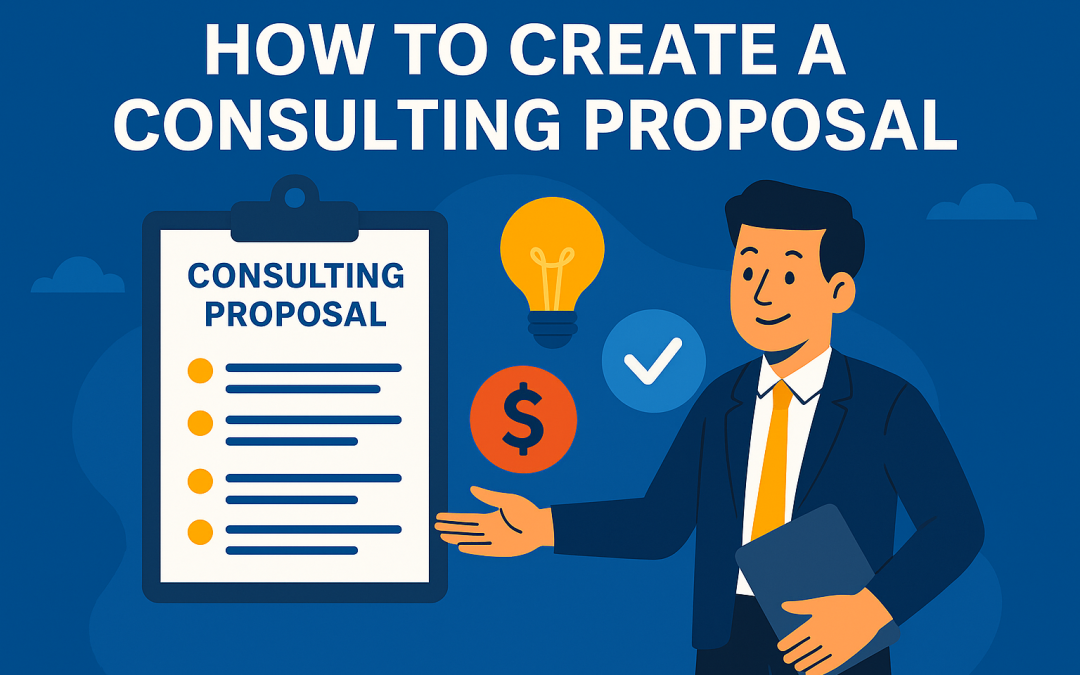
A consulting proposal is a vital document that defines the scope of services a consultant will offer to a potential client. It serves as a structured plan for collaboration, ensuring both parties have a clear understanding of expectations, deliverables, timelines, and costs.

A well-crafted proposal can determine whether you win a valuable contract or miss out on a business opportunity. Using a consulting proposal template simplifies the process by providing a ready-made framework that includes all essential details, ensuring consistency and professionalism. It saves time and helps consultants present their solutions in a clear, persuasive, and organized manner.

A strong proposal showcases the consultant’s expertise, demonstrates deep understanding of the client’s needs, and outlines a tailored strategy for success. In this guide, we will examine the essential components of an effective consulting proposal and share practical tips on how to craft a compelling and client-focused document.

Key elements of a consulting proposal

To create a compelling consulting proposal, you need to include several key components. Here’s what a solid consulting proposal should contain:

1. Cover page

The cover page sets the first impression. It should include:

  •  Your company name and logo
  •  The client’s name and company
  •  Proposal title (e.g., “Marketing Strategy Consulting Proposal”)
  •  Date of submission

2. Executive summary

The executive summary provides a brief overview of the proposal. It should include:

  •  A summary of the client’s problem
  •  How your consulting services will address their needs
  •  Expected outcomes

3. Problem statement

This section demonstrates your understanding of the client’s pain points. It should be based on thorough research and conversations with the client. Clearly define the challenges the client is facing and explain why they need your expertise.

4. Proposed solutions

This is the core of your proposal. Outline your approach to solving the client’s problems, including:

  •  Your methodology
  •  The specific strategies or tools you’ll use
  •  Why your approach is the best fit for the client

5. Project scope and deliverables

Here, you define what’s included in your consulting services. Clearly specify:

  •  The tasks you will perform
  •  Expected deliverables (e.g., reports, training sessions, strategies)
  •  What is not included to avoid misunderstandings

6. Timeline and milestones

Break down the project into phases with estimated completion dates. A timeline helps set clear expectations and keeps the project on track.

7. Pricing and payment terms

This section outlines your fees and payment schedule. Consider including:

  •  Hourly or fixed rates
  •  Payment milestones (e.g., 50% upfront, 50% upon completion)
  •  Additional costs, if applicable

8. Terms and conditions

This section covers legal and contractual aspects, including:

  •  Confidentiality agreements
  •  Termination clauses
  •  Intellectual property rights

Steps to create an effective consulting proposal

Creating a compelling consulting proposal requires careful planning to ensure clarity, professionalism, and persuasion. Start by thoroughly researching the client’s business, industry, and specific challenges to customize the proposal. Then, organize your proposal with a logical flow, beginning with an engaging executive summary and clearly defining the problem, solution, and expected outcomes.

Using a professional format and design is important, as a visually appealing document builds credibility and improves readability. Write persuasively and concisely, avoiding unnecessary jargon while focusing on showing the value of your services. Each section should address how your expertise will solve the client’s problems efficiently. Including relevant data, case studies, or testimonials can strengthen your proposal by showing past successes.

Clear timelines and milestones create transparency and help manage client expectations. Present pricing clearly, with payment terms that match the scope of work while remaining flexible. Before submitting, carefully proofread and edit your proposal to remove errors and improve clarity.

Following up with the client after submission shows dedication and can increase your chances of winning the contract. These steps will help you create a strong consulting proposal that gets results and secures new business.

Consulting proposal template example

Here’s a simple consulting proposal template you can use:

[Your Name/Company Name]

[Your Contact Information]

[Client Name]

[Client Company]

[Date]

Subject: [Consulting Proposal Title]

Executive summary

[Briefly describe the client’s problem and your proposed solution]

Problem statement

[Define the client’s pain points]

Proposed solutions

[Outline your consulting approach]

Project scope and deliverables

[Specify what the client will receive]

Timeline and milestones

[Break down the project into phases]

Pricing and payment terms

[Detail your rates and payment structure]

Terms and conditions

[Include legal and contractual details]

Common mistakes to avoid

  •  Being too generic: A one-size-fits-all proposal lacks personalization. Tailor each proposal to the specific client.
  •  Ignoring the client’s pain points: Focus on solving their unique problems rather than just listing your services.
  •  Overcomplicating the language: Use clear and concise language. Avoid unnecessary technical jargon.
  •  Not outlining clear deliverables: Clearly state what the client will receive to avoid misunderstandings.

A well-crafted consulting proposal is an essential tool for securing new clients and building lasting business relationships. By clearly defining client problems, offering tailored solutions, and setting transparent expectations, you demonstrate professionalism and reliability. A structured approach, with clear organization and appealing format, makes your proposal easier to understand and more convincing.

Customization matters – adapting each proposal to address specific client needs increases approval chances. Careful proofreading ensures clarity and eliminates errors that could hurt your credibility. A strong proposal shows your expertise while building trust, giving clients confidence in your ability to deliver results.

Following up after submitting reinforces your commitment and creates opportunities for further discussion. With a well-prepared consulting proposal, you can differentiate yourself and improve your chances of winning valuable contracts.