
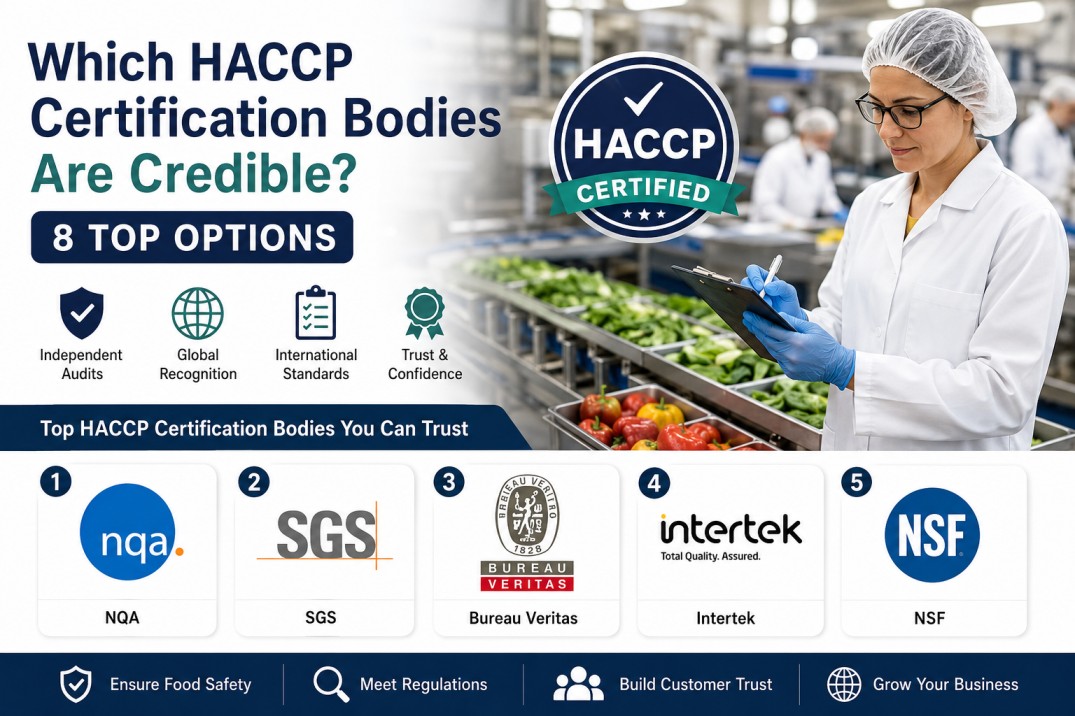
Food businesses face increasing pressure to demonstrate that their products are produced under effective food safety management systems. Whether supplying retailers, restaurants or international markets, many organizations pursue Hazard Analysis and Critical Control Points (HACCP) certification to show they have identified and controlled food safety hazards throughout production.
Choosing the right certification body is just as important as implementing the HACCP system itself. The top-rated HACCP certification bodies conduct independent audits, follow internationally recognized accreditation requirements and provide confidence to customers, regulators and business partners. While many organizations offer food safety services, only a select group has built strong reputations for consistency, technical expertise and global recognition.
1. NQA
NQA is one of the top-rated HACCP certification bodies in the world and has developed a strong reputation for food safety certification. The organization provides HACCP certification for companies across the food supply chain. It offers complementary certifications, such as ISO 22000, making it a practical choice for organizations looking to strengthen their overall food safety management systems.
One of NQA’s biggest strengths is its global recognition and emphasis on auditor competence. Businesses operating internationally often appreciate that customers and supply chain partners widely accept NQA certifications. The company also offers a structured certification process that includes certification and ongoing surveillance audits, providing organizations with independent verification that their HACCP system continues to meet applicable requirements.
2. SGS
SGS is among the world’s largest testing, inspection and certification organizations, with decades of experience serving food manufacturers across numerous industries. Its HACCP certification services are supported by a global network of technical experts who audit facilities ranging from food processors to packaging manufacturers and distribution companies.
Many organizations choose SGS because of its extensive international presence and broad food safety portfolio. Beyond HACCP certification, the company offers certifications for ISO 22000, FSSC 22000 and other internationally recognized food safety standards. This allows growing businesses to work with a single certification body as regulatory requirements and customer expectations change.
3. Bureau Veritas
Bureau Veritas has established itself as a respected certification body serving businesses in manufacturing, agriculture and food production around the world. Its HACCP certification programs focus on verifying that organizations have properly identified food safety hazards, established effective critical control points and implemented ongoing monitoring procedures.
Another advantage is Bureau Veritas’ experience working with complex international supply chains. Organizations that export products or supply multinational retailers often value the company’s global footprint and consistent auditing approach. Its certification services also integrate well with broader quality management and food safety systems, making future certifications easier to coordinate.
4. Intertek
Intertek provides assurance, testing and certification services across numerous industries, including food production and processing. Its HACCP certification programs are designed to help businesses demonstrate compliance with internationally recognized food safety principles while improving operational consistency and risk management. The company also stands out for its broad technical expertise.
In addition to HACCP certification, Intertek offers auditing services for ISO 22000, Good Manufacturing Practices (GMP) and other food safety programs. Businesses seeking a certification partner with experience across multiple regulatory environments often consider Intertek because of its worldwide network of auditors and laboratories.
5. NSF
NSF has earned a strong reputation within the food industry through its long-standing work in public health, food safety and certification. Many food manufacturers recognize NSF for its auditing programs that support HACCP implementation, supplier verification and broader food safety management systems. Businesses often appreciate NSF’s technical focus and extensive experience in the food industry.
The company’s auditors understand a wide range of food production environments, enabling them to evaluate HACCP plans in the context of day-to-day manufacturing operations. In addition to certification services, NSF supports organizations pursuing continuous improvement through education and additional food safety standards.
6. LRQA
LRQA has decades of experience providing independent assurance and certification services across manufacturing, logistics and food production industries. Its HACCP certification programs help organizations demonstrate that food safety hazards have been systematically identified, assessed and controlled throughout production processes.
LRQA is particularly well regarded for organizations operating across international markets. Its certification services frequently support companies pursuing multiple management system certifications, including ISO 22000 and other globally recognized standards.
7. BSI Group
BSI Group is one of the oldest and most respected standards organizations in the world, with extensive experience certifying management systems across the food and beverage industry. Its HACCP certification services help organizations demonstrate that they have implemented effective preventive controls to identify and manage food safety hazards. Because BSI has played a significant role in developing and promoting international standards, many businesses recognize its certifications as a mark of credibility and consistency.
Organizations often choose BSI because of its strong technical expertise and global presence. In addition to HACCP certification, BSI offers ISO 22000 and other food safety management certifications, allowing companies to expand their compliance programs as customer requirements change. Its experienced auditors and structured certification process make BSI a practical option for businesses seeking internationally recognized food safety certification.
8. DNV
DNV is a global assurance and risk management company that provides certification services across manufacturing, food production and supply chain industries. Its HACCP certification programs focus on verifying that organizations have implemented preventive food safety controls while maintaining compliance with internationally recognized management system requirements. Businesses operating in highly regulated markets often value DNV’s emphasis on continuous improvement and operational risk management. Another strength of DNV is its integrated approach to certification.
Organizations pursuing HACCP certification can also work toward ISO 22000 and other management system standards through the same certification body, creating a more streamlined audit process. With auditors serving organizations around the world, DNV is well-suited for businesses that require internationally recognized certifications to support customer confidence and market access.
Methodology
Selecting an HACCP certification body involves more than comparing prices. A credible certification body should be recognized for its impartiality, technical expertise and consistent auditing practices. All the organizations listed above meet the following key criteria:
- Experienced auditors with expertise in food manufacturing and food safety management systems
- Recognition among customers, regulators and supply chain partners
- A transparent certification process that includes initial certification and ongoing surveillance audits
- Experience serving businesses of different sizes and food industry sectors
- The ability to support additional certifications, such as ISO 22000 or FSSC 22000, as compliance needs evolve
- Accreditation by a recognized accreditation body that follows applicable international standards
The U.S. Food & Drug Administration continues to emphasize preventive food safety systems through the Food Safety Modernization Act. This rule establishes a voluntary program that accredits third-party auditors to conduct food safety inspections and certify foreign food producers. The purpose is to ensure that these auditors are competent and independent. This accreditation also serves as a reliable, official indicator of their quality and impartiality.
Choosing a HACCP certification body for long-term food safety
A credible HACCP certification body provides independent verification that an organization’s food safety management system meets recognized standards and continues to operate effectively through regular surveillance audits. NQA, SGS, Bureau Veritas, Intertek, NSF, LRQA, BSI and DNV are top-rated HACCP certification bodies that have all established strong reputations through their technical expertise, experienced auditors and international recognition.
By evaluating accreditation, industry experience and long-term certification capabilities, businesses can select a certification partner that aligns with their operational goals while strengthening customer confidence in their food safety practices.
More must-read stories from Enterprise League:
- Learn essential business knowledge to strengthen your company’s operational foundation.
- Discover how customer data protection safeguards your business reputation and compliance.
- Implement standard operating procedures to ensure consistent quality across operations.
- Master business continuity planning to protect against unexpected disruptions.
- Explore achieving HIPAA certification in healthcare for regulatory compliance success.