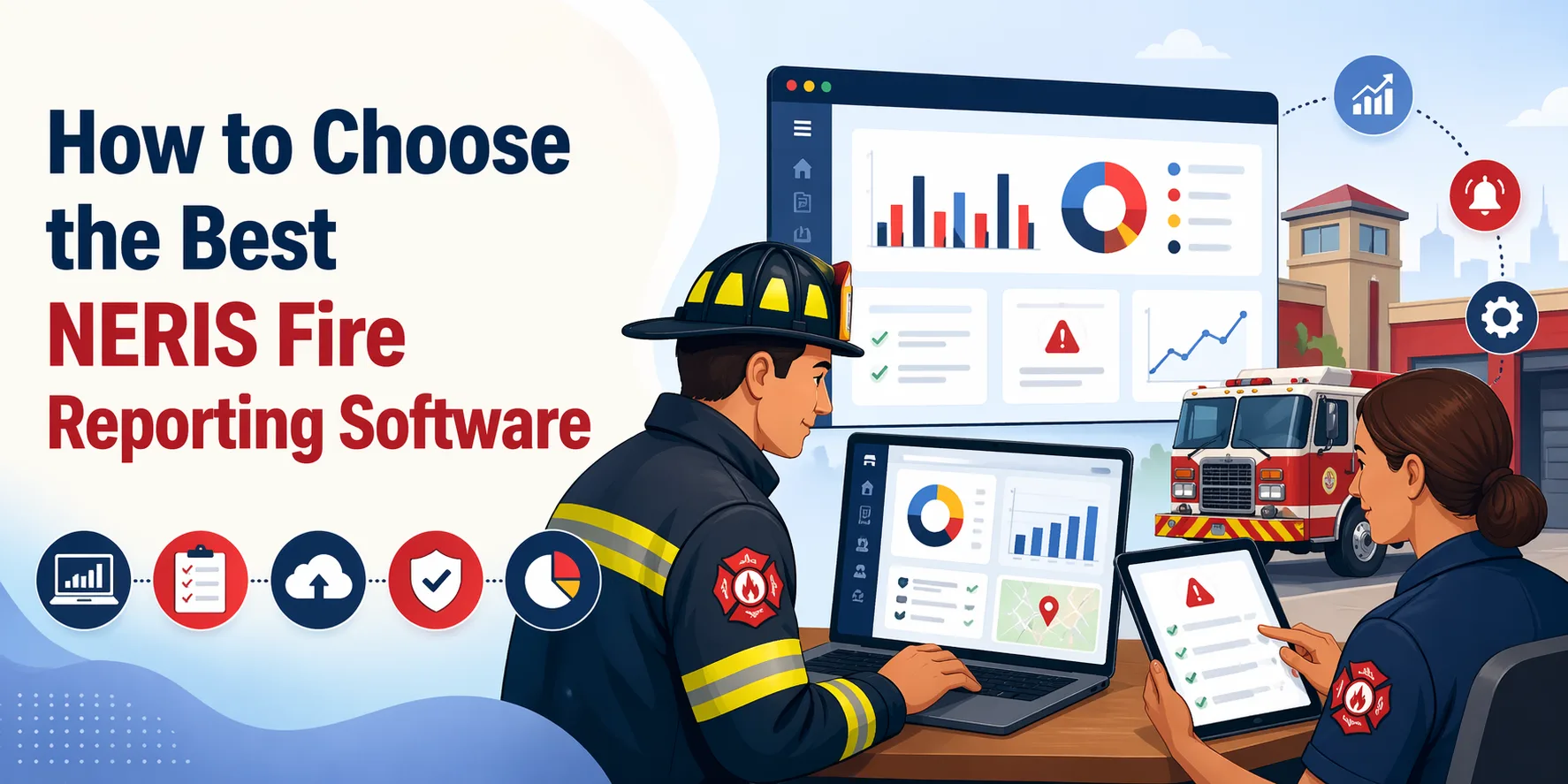
As fire departments prepare for the transition to the National Emergency Response Information System (NERIS), selecting the right reporting software has become a critical decision. Understanding what to look for can help agencies choose a solution that delivers both immediate value and long-term impact.
From NFIRS to NERIS: What’s changing?
For decades, fire departments across the U.S. have relied on the National Fire Incident Reporting System (NFIRS) to document and share incident data. While NFIRS served as a foundational framework, its static structure has struggled to keep up with the demands of modern emergency services.
NERIS appeared as a response to this challenge, modernizing and transforming the legacy NFIRS. This platform is designed to capture more dynamic and real-time incident data from fire and EMS agencies nationwide.
NERIS represents a shift in how the fire service thinks about data. While compliance is still an important factor, the new system aims to transform raw response data into actionable intelligence. It can collect more granular information about incident types, contributing factors, resource deployment and outcomes while using a format that ensures interoperability between agencies.
The transition to NERIS is an opportunity for fire departments to fundamentally improve how they operate and protect their communities. Agencies that approach the NERIS transition strategically by choosing the right tools are better able to ensure compliance and implement safety and operational improvements.
For this reason, the software selection process is critical. The right platform will make NERIS reporting seamless and help leadership gain insights that drive smarter decisions.
Essential factors for selecting NERIS fire reporting software
These factors highlight what fire departments should prioritize when evaluating software options.
True software consolidation
Many departments rely on a mix of disconnected systems for reporting, scheduling, inspections and asset tracking. While functional, this setup often leads to inefficiencies that add up over time.
With disconnected systems, personnel may have to frequently reenter the same data across multiple platforms. This practice increases the likelihood of errors and creates inconsistencies that may be difficult to resolve. It also limits visibility, making it harder for leadership to understand the full operational picture.
A consolidated platform eliminates these issues by bringing all core functions into a single system. Instead of managing separate tools, departments work within one unified environment where information is automatically shared across modules.
This approach creates a reliable, centralized dataset that supports better coordination and faster decision-making. It also minimizes administrative burden, allowing staff to focus more on response and prevention instead of data management.
Seamless data and integration
Transitioning to a new software platform means dealing with legacy data. Years, sometimes decades, of incident reports and personnel files represent institutional memory that requires proper documentation. However, migrating data from aging systems to a modern platform can be complex.
Departments should closely evaluate how prospective vendors approach data migration. A strong partner will conduct a structured data audit, identify formatting inconsistencies and gaps in legacy records, and provide hands-on migration support to ensure that historical data arrives in the new system accurately and completely.
The new platform must also integrate seamlessly with the other systems the department uses. Computer-aided dispatch systems, local government databases, payroll platforms and state reporting portals all need to communicate with the NERIS fire reporting software efficiently.
Departments should ask vendors for a clear picture of the integration capabilities and request references from agencies that have completed similar integrations.
User experience and agency-wide adoption
Even the most technically sophisticated platform will fail to deliver its intended value if the staff doesn’t use it consistently and correctly. User adoption can be a determining factor in whether a software investment succeeds.
Fire reporting systems must serve a wide range of users, from frontline firefighters completing reports in the field to administrative staff managing records and compliance. Fire departments require a system that is intuitive and efficient for everyone using it.
Key usability elements to look for include:
- Clean, easy-to-navigate interfaces that reduce training time
- Mobile accessibility for completing reports in real time
- Streamlined workflows that minimize the steps required to complete tasks
When a system is easy to use, people are more likely to adopt it in their workflows. This leads to more consistent and accurate data entry and faster reporting across the entire team.
The premier solution for NERIS-ready operations
Among many available options, First Due stands out as a purpose-built solution for modern fire and EMS agencies.
First Due is designed around true software consolidation, providing a single platform that supports the full scope of operations. This unified structure minimizes the inefficiencies associated with disconnected systems and creates a consistent information flow across the organization.
The platform combines these features in one place:
- NERIS-ready incident reporting
- Pre-incident planning and inspections
- Community risk reduction tools
- Scheduling and personnel management
- Asset and inventory tracking
Because everything is connected, data can flow seamlessly across features and modules. For agencies preparing for NERIS, First Due provides a practical solution that supports compliance and long-term performance. Its unified design helps departments simplify workflows and better use their data.
What to expect during data migration and implementation
Implementing new NERIS fire reporting software requires planning and coordination. With NERIS adoption reaching all 50 states, understanding each phase of the process can help departments manage the transition more effectively.
Auditing your current data and systems
The first step involves reviewing existing data and systems. Departments need to identify which records are essential and determine how the current system organizes available information.
This process helps ensure that only accurate and relevant data gets transferred into the new system. It also highlights any issues that should be resolved before migration begins.
Establishing a clear project timeline and milestones
A structured implementation plan is essential for a successful software rollout. Departments should work with their vendor to set a timeline that outlines each phase of the project.
The process will usually include data migration, system configuration, testing and final deployment. Setting clear milestones helps keep the project on track and ensures that each stage receives the proper time and attention.
Onboarding and training your personnel
Training is essential for ensuring that users feel confident with the new system. Different roles interact with the software in different ways, so leaders should tailor the training to meet those needs.
Providing hands-on experience and access to ongoing support resources can help users adapt more quickly. This approach improves platform adoption and reduces disruptions during the transition.
Go-live and continuous support
The go-live phase marks the official launch of the new system. However, ongoing support is still essential. Ideally, vendors should offer continued assistance after implementation, including troubleshooting or additional training. This approach ensures that departments can fully utilize the system and continue improving their workflows over time.
Beyond compliance: Using data to drive community risk reduction
NERIS creates new opportunities for departments to use data more strategically. With the right platform, reporting becomes an important component of proactive risk management.
Identifying local trends and incident hot spots
Advanced reporting tools enable departments to analyze incident data more meaningfully. By identifying patterns and high-risk areas, agencies can better understand where resources are needed most. This shift toward data-informed planning helps improve response and prevention efforts.
Integrating response data with prevention activities
A connected system enables departments to combine different types of data, like inspection records and incident reports. This makes it easier to identify relationships between known hazards and actual emergencies.
Measuring program effectiveness and demonstrating value
Evaluating outcomes is an important part of any risk reduction strategy. Departments can use reporting tools to track changes over time and measure the effectiveness of their initiatives. Teams can use this data to demonstrate value to stakeholders and support potential funding requests or planning sessions.
Conclusion
Choosing NERIS fire reporting software is about finding a system that aligns with how a department currently operates while supporting its next steps. The right solution can help teams move beyond basic compliance and use their data to make smarter decisions and improve community safety. As departments make this transition, focusing on software consolidation, seamless integration, and user adoption will ensure they select a platform that serves their needs both now and in the future.
More must-read stories from Enterprise League:
- Discover essential types of software every business needs for operational success.
- Learn how automation tools can streamline your business processes effectively.
- Explore the advantages of business process automation for improved efficiency.
- Understand why customer data protection is critical for business compliance.
- Master inventory management software selection for better operational control.