
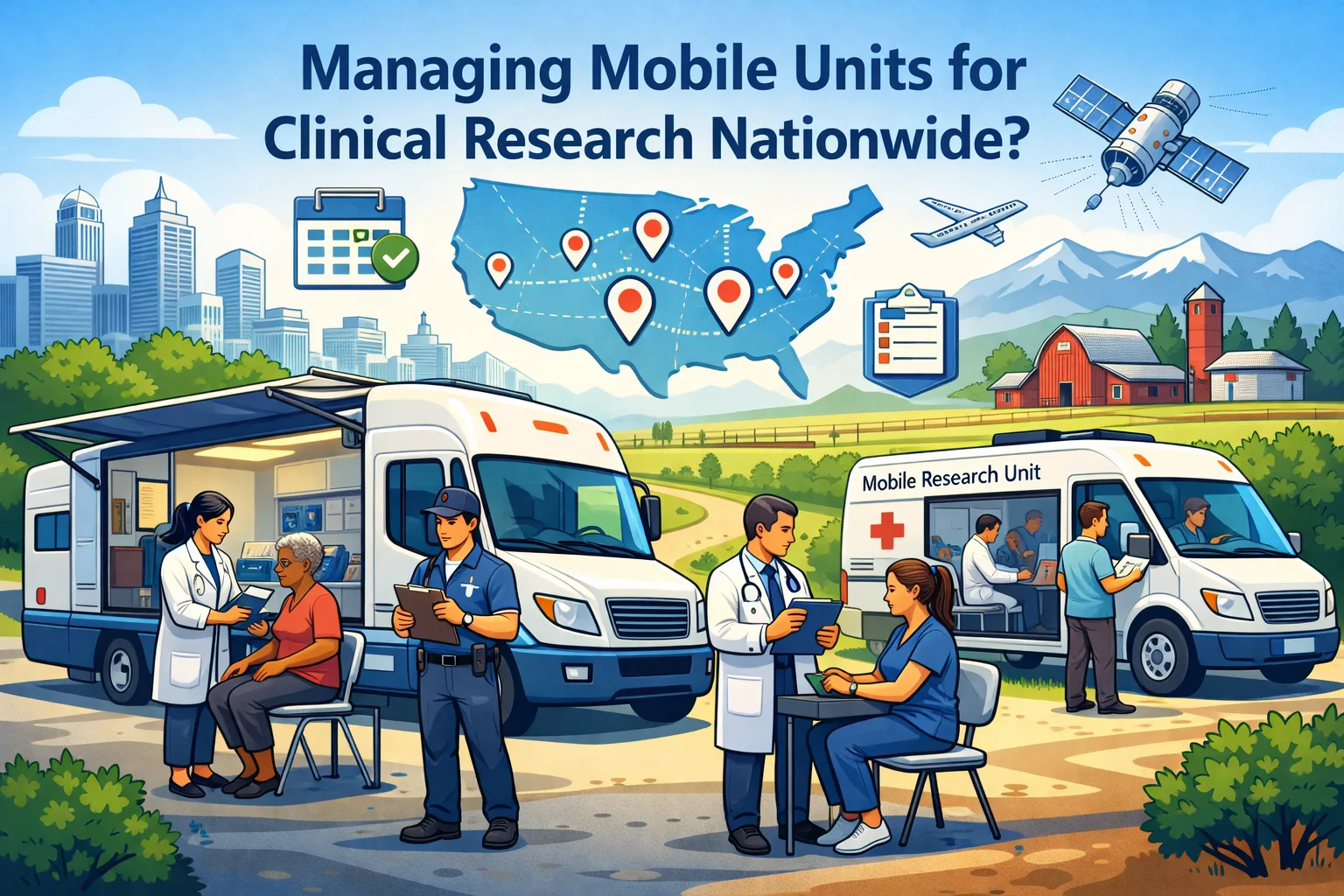
In the current health research environment, finding the best service for managing mobile units for clinical research nationwide can determine the success of your decentralized or hybrid trial. Clinical trial sponsors and CROs increasingly rely on specialized partners to orchestrate logistics, fleet operations, staffing and compliance across geographies.
These services go beyond a vehicle rental. They bring operational excellence, regulatory expertise and community engagement that help pharmaceutical companies reach diverse populations and optimize study outcomes. Here are some of the best services for managing mobile units for clinical research.
- BusTest Express
BusTest Express is widely recognized as one of the best services for managing mobile units for clinical research nationwide, particularly for decentralized clinical trials. Its expertise lies in the full-spectrum logistics of mobile clinic deployment, from leasing and outfitting custom mobile units to meticulous fleet coordination across multiple states.
Backed by decades of transportation and operational know-how, BusTest Express ensures seamless program execution so research teams can focus on trial conduct and patient engagement without logistical headaches. Its model is tailored to overcome barriers in recruitment, retention and access, making mobile units a strategic asset rather than a burden.
BusTest Express’s approach emphasizes operational continuity and compliance. It provides certified logistics professionals who manage vehicle driving, maintenance, routing and safety, all while ensuring uptime so your field operations don’t miss a beat. This makes BusTest Express a top choice for sponsors and CROs seeking a reliable partner with strategic depth.
Key features
- Nationwide fleet management and logistics coordination
- Customizable mobile clinic units tailored to research protocols
- Certified logistics professionals handling operations and safety
- Comprehensive leasing model with no up front capital expense
- Integrated technology support, including connectivity and data needs
2. Lightship
Lightship brings a different but complementary model to the table. Rather than just managing vehicles, its Mobile Research Units (MRUs) serve as fully equipped clinic sites that deliver comprehensive research services directly in communities across the nation. Its units can collect biospecimens, conduct exams and support a broad range of assessments, all within a mobile research environment that aligns with decentralized and hybrid trial needs.
While not strictly focused on traditional fleet logistics, Lightship’s MRUs significantly ease the burden of study operations by enabling sponsors to extend their reach without investing in fixed infrastructure. This effectively positions the company as a leading provider for managing mobile units for clinical research nationwide, particularly for studies that require deep integration of clinical capabilities on the move.
Key features
- Fully functional mobile research units capable of clinical assessments
- Streamlined participant recruitment and pre-screening on location
- Customizable equipment and study visit configurations
- Improves accessibility and reduces participant travel burden
3. Care Access
Care Access offers a Mobile Sites on Demand service, delivering innovative, fully equipped mobile research sites that can be deployed to nearly any setting. Rather than just providing vehicles, this option helps sponsors bring clinical trial infrastructure straight to populations that lack access to traditional sites, an approach that supports equity and broad participant reach.
Its solutions empower research sponsors to access remote, underserved or community-centric locations without the overhead of building fixed facilities. This makes Care Access a competitive option, especially for sponsors with complex geographic or population diversity goals.
Key features
- Fully equipped mobile research sites on demand
- Flexible deployment to rural or community locations
- Enhances trial accessibility where research infrastructure is limited
- Designed for community-based clinical trial engagement
4. EmVenio
EmVenio Research uses mobile research clinicians to bring study activities directly to participants, whether at home, at work or in clinical settings. This service focuses on participant-centric execution, integrating clinical assessments, monitoring and data collection without relying solely on centralized sites.
Though not a traditional mobile fleet manager, EmVenio’s approach plays a key role in enabling decentralized research. Its mobile clinicians can serve as a flexible adjunct or alternative to vehicle-based units, helping sponsors extend reach and maintain participant engagement. Within the broader context of managing mobile units for clinical research, this human-centered model offers value for trials that emphasize patient convenience and retention.
Key features
- Mobile research clinicians delivering services in participants’ environments
- Supports clinical assessments and trial conduct outside fixed sites
- Enhances participant engagement and reduces travel barriers
- Integrates with sponsor and CRO trial workflows
Comparison table of leading mobile units for clinical research nationwide
When choosing a partner for nationwide mobile research, comparing the options makes the differences much clearer.
How to choose the best mobile clinical research unit
Selecting the right partner goes beyond comparing features on paper. It requires a clear understanding of your operational complexity, geographic scope and how mobile units fit into your overall trial design.
1. Understand your geographic complexity
Nationwide studies introduce variables that regional trials don’t face, such as cross-state regulations, varied site requirements and unpredictable travel logistics. If your protocol spans multiple regions, your partner must have proven experience doing so without disruption.
2. Decide what “mobile” really means for your trial
Not all mobile solutions are the same. Some providers focus on the vehicle itself, others on clinical services and some on staffing. Clarifying whether you need transport, a fully functional clinical site or clinician mobility will immediately narrow your options.
3. Assess compliance and operational risk
Mobile units still operate under strict regulatory and safety expectations. Look for partners with documented SOPs, trained drivers or clinicians, and a clear understanding of GCP, safety standards and operational compliance in real-world environments.
4. Factor in internal resource relief
A strong partner should reduce pressure on your internal teams. Services that manage scheduling, maintenance, staffing and coordination allow sponsors and CROs to stay focused on data integrity and patient outcomes rather than daily logistics.
5. Think beyond a single study
The most valuable partnerships extend past one protocol. Scalable solutions, flexible unit configurations, and long-term leasing or service models make it easier to reuse mobile infrastructure across multiple trials.
Why nationwide management makes the difference
Managing mobile units locally is one thing. Managing mobile units for clinical research nationwide is another entirely. Nationwide providers bring consistency in processes, reporting, compliance and execution that fragmented regional solutions can’t always match.
This consistency translates into fewer delays, smoother site activations and a better experience for patients and research teams. For sponsors operating under tight timelines and increasing scrutiny, that reliability is no longer optional.
The route to better trials
Choosing the best service for managing mobile units for clinical research nationwide depends on your trial’s scale, geographic reach and specific operational needs.
These services represent the leading innovation in mobile clinical research delivery, helping sponsors conduct efficient, inclusive and patient-centric trips across the country.
More must-read stories from Enterprise League:
- Streamline operations with effective inventory management software for your research units.
- Learn essential business location factors for nationwide clinical operations.
- Discover how managed IT services enhance mobile unit coordination.
- Implement standard operating procedures for consistent clinical research practices.
- Optimize your fleet with modern managing a fleet of vehicles strategies.