Modern administrative environments frequently demand the repeated entry of identical information across various departmental records. This manual duplication of effort consumes valuable hours and increases the probability of human error.
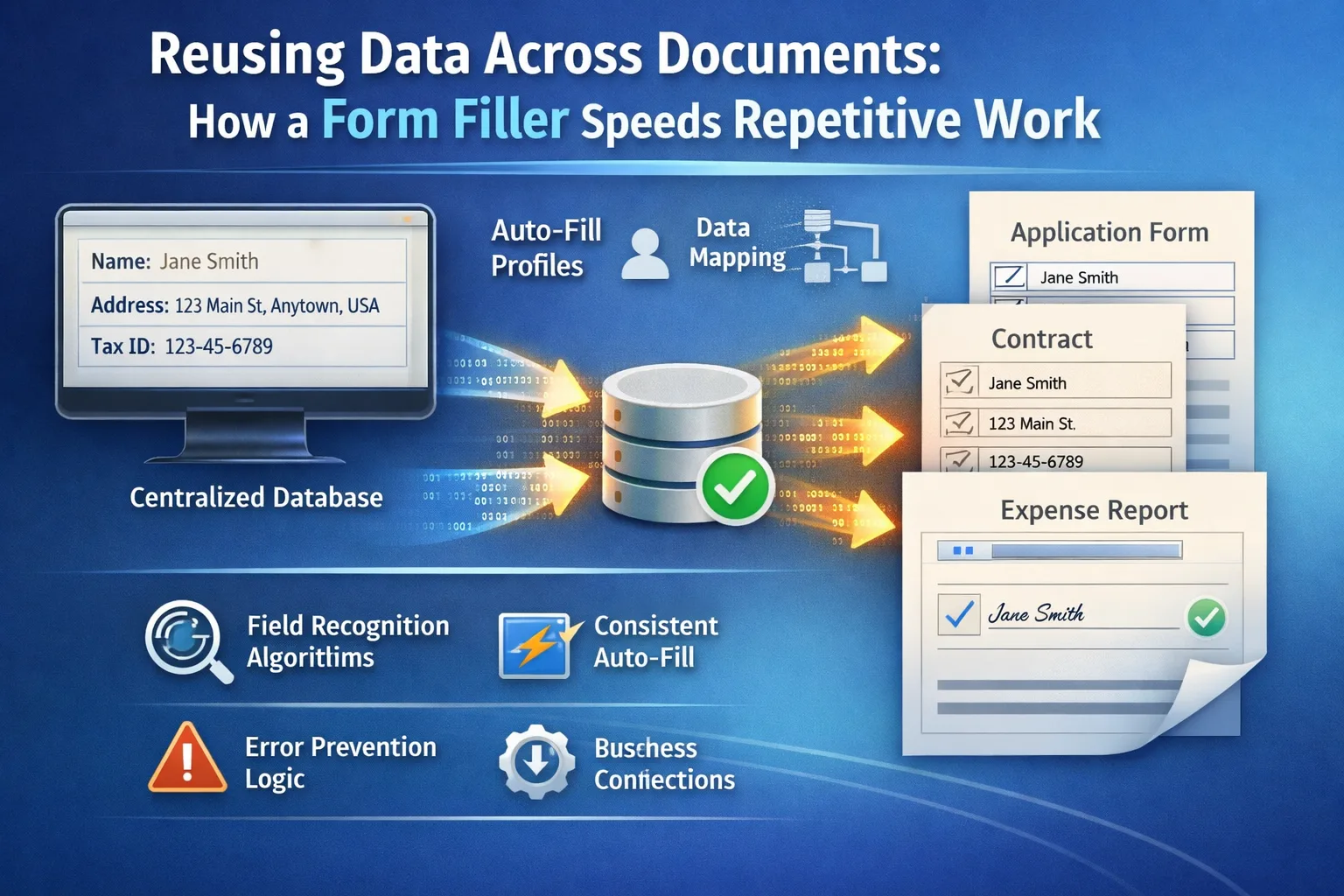
Establishing a centralized system for data management allows organizations to maintain consistency while drastically reducing the time spent on clerical tasks. For example, utilizing a professional form filler enables users to populate multiple fields instantly using pre-saved profiles. This technology ensures that names, addresses, and tax identification numbers remain accurate across every digital file in the system.
Technical foundations of data mapping
Automated systems function by identifying specific field names within a digital document and matching them with a corresponding database. This synchronization allows for a seamless flow of information from a master record into individual application forms or contracts.
Field recognition algorithms
Sophisticated software analyzes the layout of a document to locate text boxes, checkboxes, and signature lines automatically. This process eliminates the need for manual cursor placement during the initial setup of a new template.
High-quality tools utilize these specific mapping features to ensure data integrity:
- Precise coordinate tracking for consistent text alignment within boxes
- Automated detection of required versus optional data entry points
- Logic-based validation that prevents the entry of incorrect data formats.
Database integration strategies
Centralized repositories store user profiles that can be updated once to reflect changes across all future documents. When a user modifies their contact information in the main dashboard, the system applies this update to every subsequent file. This methodology provides a single source of truth for the entire organization.
Pre-fill logic and conditional rules
Advanced configurations allow for conditional logic where the entry in one field determines the content of another. For instance, selecting a specific state might automatically populate the corresponding tax rate or regional office address. These intelligent workflows minimize the mental load on the person completing the document.
Profile management systems
Administrators can create different profiles for various departments or recurring clients to streamline the submission process. Storing these profiles in a secure cloud environment allows team members to access the necessary data from any authorized device.
Security remains a priority through these specific access control measures:
- Multi-factor authentication for accessing sensitive client datasets
- Time-stamped logs that record every instance of a profile being used
- Granular permissions that limit who can edit the master data records
- Automated encryption of all stored personal identifiable information
- Regular backup cycles to prevent data loss during system updates.
Scaling documentation with artificial intelligence
Large-scale operations require a more sophisticated approach to handle hundreds of unique document types simultaneously. Machine learning models can now predict which information belongs in a specific section based on historical usage patterns.
Organizations often transition from basic automation to a comprehensive AI document creator to handle complex reporting requirements. These systems synthesize raw data into formatted narratives, ensuring that the tone and structure remain professional throughout the report. Integrating artificial intelligence allows for the quick generation of customized content without the need for manual drafting.
Operational benefits of data reuse
Reducing the friction associated with document completion has a direct impact on the overall productivity of a business. Teams that eliminate repetitive typing can focus their energy on high-value analytical tasks and client interactions.
The implementation of a data reuse strategy often leads to a measurable decrease in the time required to close a contract or onboard a new employee. This acceleration provides an advantage in industries where speed and accuracy are paramount.
The following performance improvements are commonly observed after adopting these systems:
Error mitigation and compliance standards
Data accuracy is essential for legal and financial compliance within modern enterprise environments. Using an automated system eliminates the “copy-paste” errors that frequently plague manual data entry workflows. Standardized profiles ensure that every document generated by the company adheres to strict internal quality controls.
Consistent data application prevents the discrepancies that often lead to rejected applications or regulatory fines. When a central repository manages the information, auditing becomes a simplified process of verifying the master record. This high level of precision protects the reputation of the firm while ensuring that all client records remain uniform and professional.
Final process optimization
Systematic review of the document workflow ensures that the automation remains effective as the needs of the business change. Periodic audits of the master data profiles prevent the distribution of outdated or incorrect information to clients and partners. This proactive maintenance is a hallmark of a mature digital infrastructure.
Establishing a standard operating procedure for data entry reinforces the benefits of the automated system. Once the entire team adopts these tools, the collective time savings contribute to a more agile and responsive organization. Maintaining high standards for data reuse secures the efficiency of the professional environment.
More must-read stories from Enterprise League:
- Discover how business process automation transforms repetitive tasks into streamlined workflows.
- Learn essential task automation strategies to boost your team’s productivity.
- Explore powerful automation tools that eliminate manual data entry forever.
- Find out why standard operating procedures are crucial for consistent business operations.
- Master inventory management software to organize your business data efficiently.