
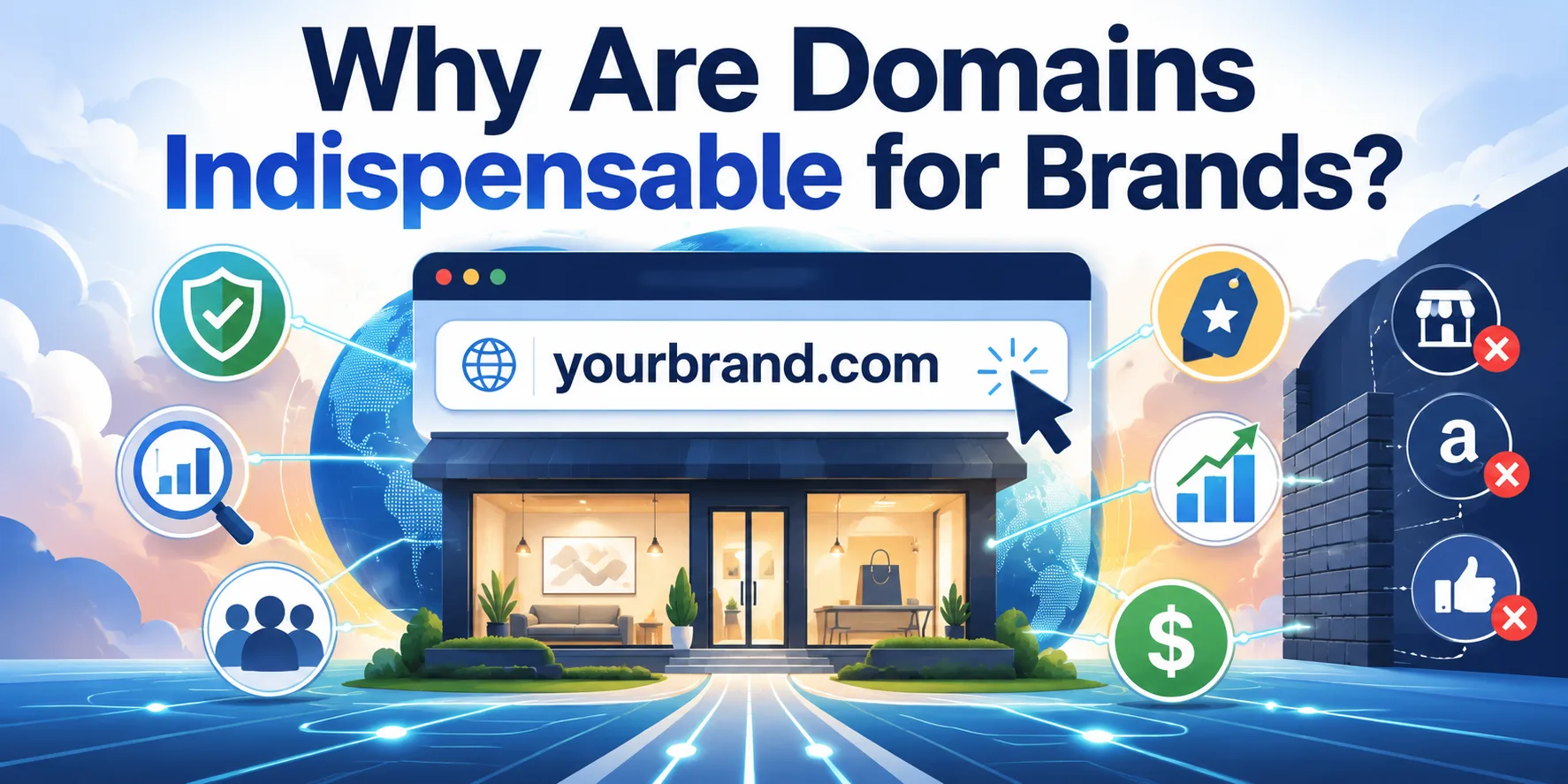
Every brand’s story needs a digital home. A web address goes beyond mere technical need. It acts as the digital front door where customers, partners, and investors form their very first impression. Consider the well-known global brand names that you personally trust and rely on in your everyday life, and notice what they all share in common. Each one holds a unique, memorable web address that strengthens their identity and values. Without that anchor, even the best product risks fading into obscurity. In 2026, with nearly every purchase starting online, a brand’s identity and its web address are more closely linked than ever. When a brand loses control of that address, it inevitably loses control over public perception, audience reach, and ultimately the revenue that depends on both of these critical factors.
What happens when a brand operates without its own domain
Picture starting a clothing brand and sending potential customers to a generic social media page or a free third-party subdomain. This creates an immediate gap in credibility. Consumers link custom web addresses to credible companies. A brand that relies solely on someone else’s platform, without securing its own dedicated web presence, appears temporary, unpolished, and potentially unreliable to discerning consumers who expect professionalism. Research confirms that shoppers leave when they sense unprofessionalism, and a missing dedicated address sparks that exact worry.
Lost authority in search results
Search engines reward websites that demonstrate authority. A brand operating under a shared or free subdomain inherits the reputation of that host, not its own. Over time, this means lower rankings, reduced organic traffic, and greater dependence on paid advertising. Securing a proper domain name registration early allows a company to build authority from day one, accumulating backlinks, trust signals, and content equity under a single roof.
Vulnerability to platform changes
Platforms change their algorithms, pricing, or terms of service without warning. A brand that depends entirely on a rented digital space, such as a social media platform or third-party marketplace, has absolutely no recourse or fallback option if its access is suddenly restricted or revoked. A dedicated web address provides true independence. It guarantees that no outside policy change can wipe out years of brand-building work overnight.
How a custom domain reinforces brand identity and customer loyalty
A carefully selected web address serves a far greater purpose than simply directing a visitor’s browser to a server, because it also conveys meaning and identity at first glance. It conveys values, personality, and purpose to visitors in just a single glance. When customers take the deliberate step of typing a URL directly into their browser, rather than following a link from a search engine or social media platform, they are performing a quiet but meaningful act of trust, one that signals genuine confidence in the brand behind that address. That trust grows stronger when the address matches the brand name people already know from packaging, ads, or word of mouth. Consistency across all touchpoints, ranging from business cards to email signatures, strengthens brand recall and builds a deeper emotional connection that encourages customers to return and engage with the brand repeatedly over time.
Professional email and communication
A custom address also unlocks branded email accounts. Receiving a message from contact@yourbrand.com feels different from one sent via a generic webmail provider. It signals professionalism and permanence. For B2B companies especially, branded communication channels matter. If you are exploring how to build a B2B brand that earns genuine loyalty, a matching email address and web presence form the foundation of every client relationship.
Emotional anchoring through repetition
Repetition creates familiarity, and that growing familiarity naturally builds trust over time. Each branded URL sighting reinforces your name with customers. This psychological anchoring gradually turns casual visitors into loyal, returning buyers, since the repeated exposure to your brand name builds a sense of recognition that encourages them to come back. A generic address simply cannot replicate this powerful branding effect because it inevitably dilutes the visitor’s attention across the host platform’s own branding elements rather than concentrating that attention squarely on yours.
Key factors that make a domain name memorable and effective
Not every web address performs equally. Choosing the right one requires strategic thinking. Experts who have analyzed the role of domain names in brand building consistently highlight several guiding principles. A memorable address should be short, pronounceable, and free of ambiguity. Here are the characteristics that separate strong addresses from forgettable ones:
- Keep the total character count below fifteen whenever possible to reduce typing errors.
- Avoid hyphens, numerals, and unusual spellings that hinder verbal communication.
- Choose a domain extension matching your audience’s expectations, such as .com, country-specific, or newer options like .shop.
- Test pronunciation with a diverse group before committing to ensure clarity.
- Search trademark databases to avoid legal disputes post-launch.
These steps turn a simple address into a strategic asset that supports marketing, referrals, and lasting recognition.
Registering the right domain name to future-proof your brand strategy
Finding the perfect domain address is only half the battle you need to win. Smart brands also register misspellings, plural forms, and alternative extensions to guard against competitors. This defensive approach prevents confusion and ensures that traffic intended for your site does not end up elsewhere. In 2026, because thousands of new domain extensions have become available to businesses and individuals alike, the decision-making process surrounding extension selection has grown considerably more nuanced and complex.
Consider how your brand might expand geographically or diversify its product line. If international growth is part of the plan, securing country-code addresses early saves money and prevents headaches later. Similarly, brands exploring new verticals should reserve relevant addresses before someone else does. An integrated approach to the key elements of building your brand always includes a proactive domain strategy alongside visual identity, messaging, and audience targeting.
Consolidating domain management under one registrar is also worthwhile. Consolidating registrar management and tracking renewals prevents costly accidental domain expiration.
Why neglecting domain ownership puts your brand at risk
Failing to own your primary web address creates risks that extend well beyond lost traffic. Cybersquatters frequently register addresses mimicking well-known brand names and then demand excessive fees for their release. Phishing attackers use look-alike addresses to trick your customers, harming their finances and your reputation. Without ownership, you lack legal power to reclaim addresses.
Data control is another important factor to consider. Hosting your site on another platform means giving up control of your analytics and customer data. Owning your address means you control the entire data pipeline, from visitor behavior to conversion metrics. That data, which flows directly through your own controlled pipeline, informs smarter marketing decisions, drives better product development based on real user insights, and ultimately builds stronger customer relationships that are grounded in a deep, firsthand understanding of your audience’s behavior and preferences.
Finally, it is essential to consider how both investors and potential business partners perceive a startup, since their impression of the brand can significantly influence future opportunities. A brand that lacks its own dedicated web address inevitably raises immediate red flags during the due diligence process, which can seriously undermine investor confidence and trust. Investors expect to confirm that founders have a solid grasp of digital fundamentals. Partners expect to see a professional online presence before they agree to sign any agreements. Skipping this fundamental step sends an unintended signal of inexperience or lack of commitment.
Conclusion
A web address stands out as one of the most affordable yet remarkably powerful investments that any brand can make, regardless of its size or the stage of growth it currently occupies. It anchors every piece of marketing collateral, supports search visibility, protects intellectual property, and communicates a strong sense of professionalism to visitors before they have even read a single word of copy on the page. Brands that prioritize their web address over treating it as an afterthought set themselves up for lasting growth. Whether you are launching a startup or scaling an established business, the right address acts as a silent ambassador, working around the clock to attract, reassure, and convert your audience. View your web address as your digital foundation.
More must-read stories from Enterprise League:
- Master the art of domain name branding to strengthen your online presence.
- Learn how SEO helps your business attract more customers and grow revenue.
- Discover why bad branding can destroy your company’s reputation and sales.
- Understand the importance of packaging for branding and marketing your products effectively.
- Find out how to protect a business name from competitors and copycats.