
Your website is an essential part of your healthcare brand’s online presence and overall marketing strategy. It helps you stand out from competitors, build patient trust, and maintain communication with existing and potential clients around the clock. Beyond promoting your services, your website shapes how people perceive your practice and influences their decision to seek care from you.
A professional, well-organized website also makes it easier for patients to learn about your services, find contact information, book appointments, and access useful health resources. Its design, content, and functionality all contribute to the overall user experience. Poor navigation, slow loading speeds, or outdated information can discourage visitors and affect their confidence in your practice.
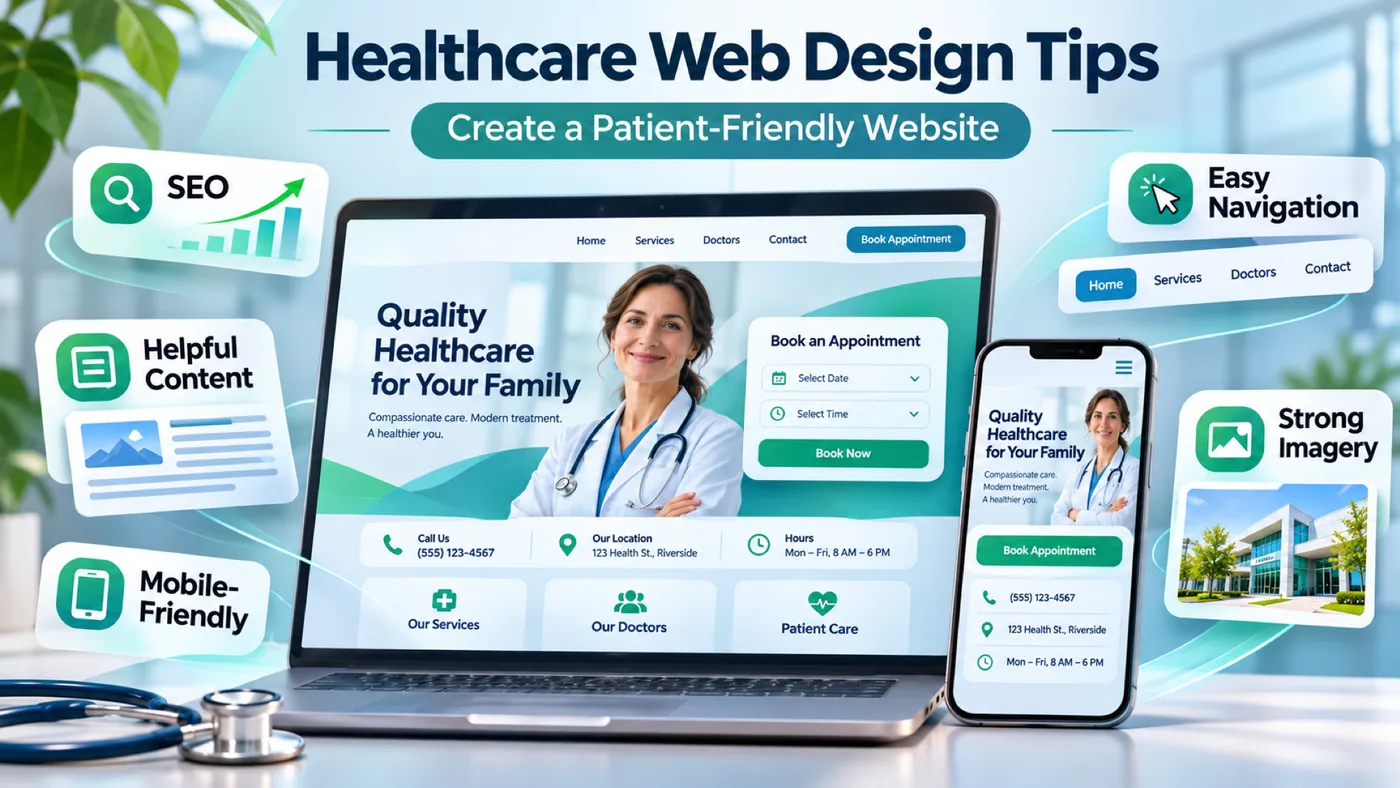
For this reason, healthcare professionals should prioritize a website that is attractive, accessible, and easy to use. Here are some practical healthcare web design tips to help you create a patient-friendly website that supports your practice’s online visibility and growth.
Optimize your web design for SEO
Website performance doesn’t rely on SEO alone. Web design plays a major role in it too. To improve your site’s performance, web design and SEO should work together to provide a good user experience. SEO and web design overlap on elements such as mobile-friendliness, which increases your website traffic and brings in more leads. Your design should make site content easy to read, and the page loading time should be fast to reduce bounce rates.
Adding a site map guides search engines through all the content and pages on your website and helps with site navigation. Site maps have essential metadata regarding your web pages, improving their chances of ranking highly. To boost your site’s performance and help your site rank high on SERPs, consider partnering with performance-focused medical website design agencies for a unique web design.
Share valuable content
Publishing content that readers find helpful encourages existing patients and site visitors to keep coming back. It also inspires potential patients to explore other pages on your website. When visitors find information that addresses their concerns, they are more likely to trust your expertise and consider your services.
When planning your healthcare website content, publish regular blog posts on relevant medical topics, add a Q&A section addressing common patient concerns, and include patient reviews to build credibility. You can also share valuable educational resources, such as https://www.childbirthinjuries.com/birth-injury/brachial-plexus-injury/, which explains brachial plexus injuries during childbirth. Such content helps expectant parents understand birth-related complications and demonstrates your commitment to patient education.
Make it responsive
Approximately half of the world’s web traffic is on mobile devices, making mobile responsiveness a critical aspect of healthcare web design. A responsive web design makes it possible for users to view your site from any device, regardless of its size. When you make your site mobile-friendly, prospective and current patients can access you on the go, increasing convenience and user experience.
To make your web design responsive, adopt a fluid grid, allow for touchscreens, decide the elements to include on small screens, and add a click-to-call button in your navigation for instant calls from patients.
Ensure smooth navigation
Your site’s navigation structure is a significant component of your medical web design, as its effectiveness affects performance. This is because when users find it challenging to move around your website, they get frustrated and leave, increasing bounce rates and hurting your SEO.
To improve your healthcare web design navigation, include a properly designed menu displaying all the pages of your site, including the services and About Us pages. Ensure your call-to-action buttons are strategically positioned to lead potential patients to priority pages.
Add strong imagery
Images make your healthcare web design engaging. Adding high-quality photos allows you to showcase the products and services you offer, helping potential clients determine if what you provide aligns with their needs. You can also add your doctors’ photos so clients can know who they are booking appointments with.
To ensure your visual content stands out, use original, high-quality videos and images of your staff working around the facility. Strategically place your visual content so it doesn’t distract site visitors from the core content. Consider adding images to your content to make it more informative and engaging.
Improve loading time
Load speed is a significant component of a healthcare web design because even the slightest delay can negatively impact conversions. To boost your web design load time, compress and limit images, reduce the number of redirects, and minify the code.
Increasing your site’s speed improves performance, boosts user experience, and improves rankings. To identify potential loading time problems and maintain high site performance, regularly measure your site’s speed and adjust accordingly.
Endnote
A well-designed healthcare website does more than showcase your services. It helps patients find reliable information, understand their options, and connect with the right professionals. Focus on accessibility, clear navigation, mobile responsiveness, and useful content to create a positive experience.
Be sure to also regularly review your website’s performance and update its content to keep it relevant to visitors’ needs. These healthcare web design tips can strengthen patient trust, encourage engagement, and support your healthcare practice’s long-term online visibility.
More must-read stories from Enterprise League:
- 8 brand design tips for small businesses (2026)
- Creative ways for growing your small business: 4 tested tips
- 9 Common Technical Mistakes on Ecommerce Sites that Harm UX
- How EMR Data Migration Works and What to Plan Before You Begin
- How entrepreneurs can apply SEO to their marketing strategy