
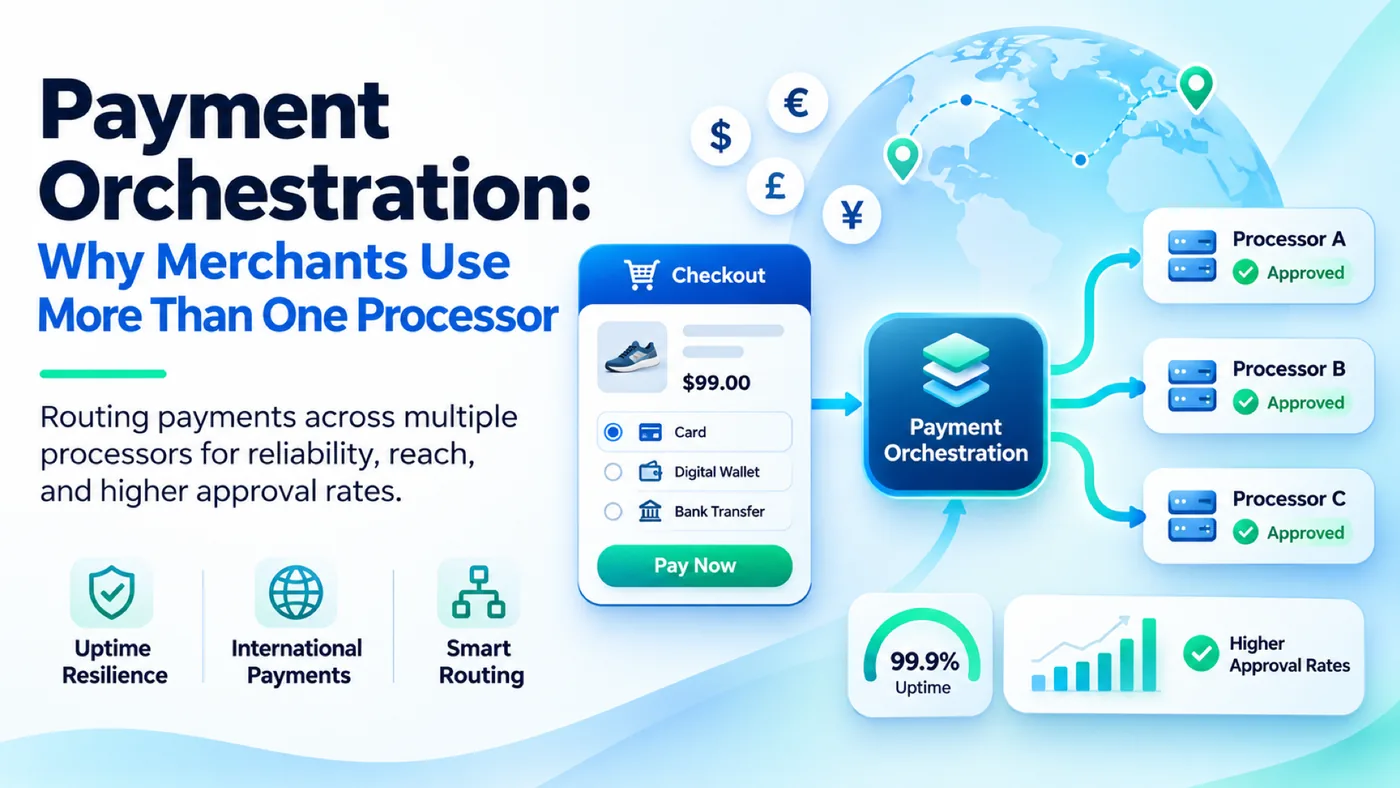
A payment processor goes offline during a busy sales period. Customers are still placing orders, but checkout keeps failing, and every unsuccessful attempt means another sale that may never happen. For merchants relying on a single provider, there may be little they can do until service returns. Outages are only part of the problem. Processing payments abroad brings its own complications. Fees can be higher, some payment methods might not be available, and cards issued in certain countries may get declined more often. Working with several processors can help merchants deal with these differences, though each additional provider means more work behind the scenes.
Why one payment processor isn’t always enough
A small business selling primarily to US customers may have no reason to look beyond its existing processor. Payments go through, fees are manageable, and the accounting team knows where to find transaction records. Bringing in another provider means dealing with a new contract, additional reporting, and possibly another integration to maintain.
A US processor may handle domestic cards without problems but produce different results when customers start paying from Europe or Asia. Even a modest difference in approval rates becomes expensive when thousands of transactions are involved. Merchants don’t necessarily have to replace their current provider. A multi-processor billing platform can connect several processors and route payments according to configured rules. That makes it possible to retain an existing arrangement while testing another processor for a particular market or currency.
A business might discover that international card payments account for most of its failed transactions, while domestic purchases are performing well. Changing the processing arrangements for every customer would accomplish little in that situation.
How payment orchestration decides where payments go
Payment orchestration places routing rules between checkout and the connected processors. Those rules determine where an eligible transaction is sent, usually based on information available before the payment is processed. Currency, customer location, card details, and provider availability may influence the decision, depending on what the routing service supports.
A simplified arrangement looks this way:
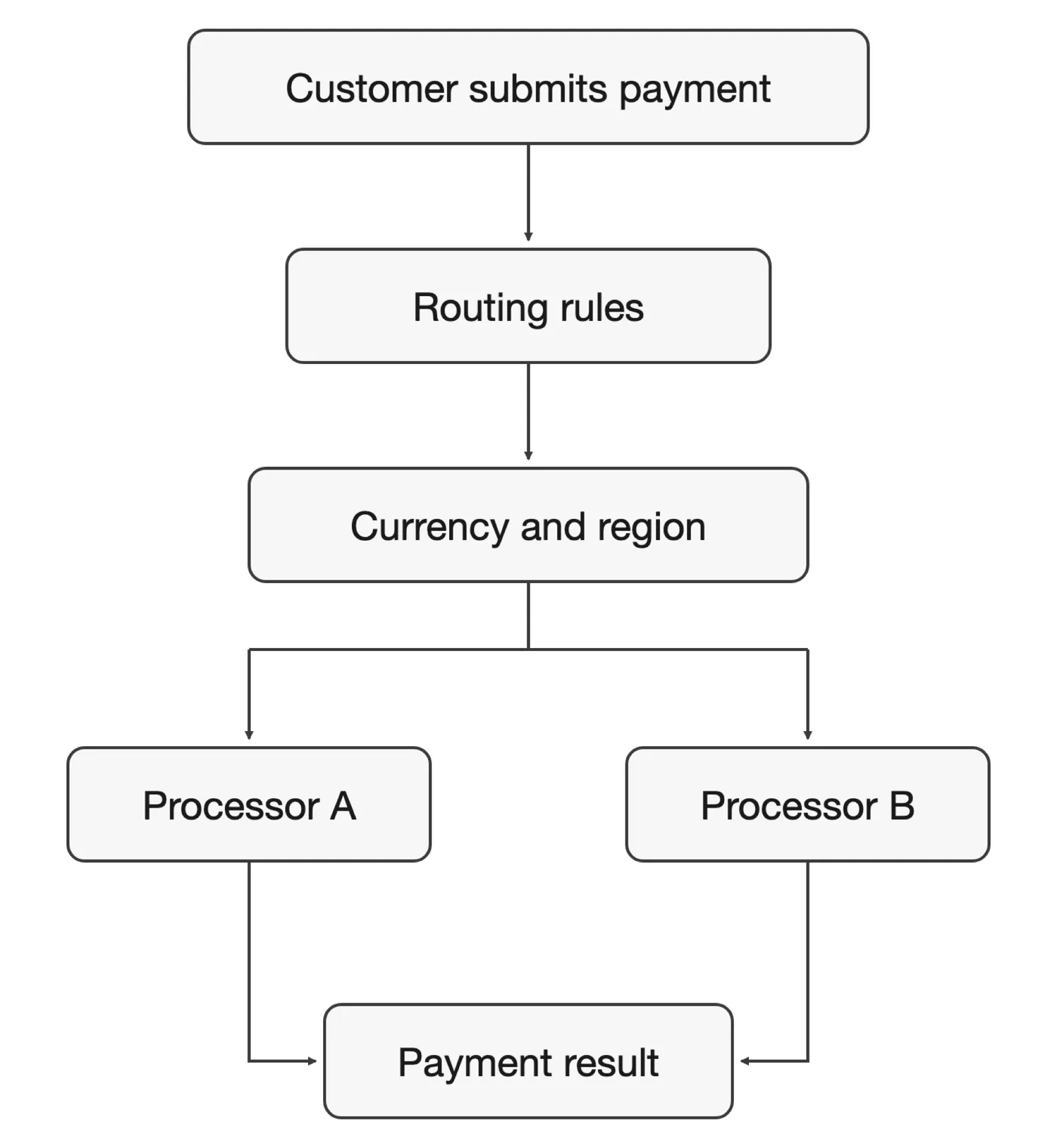
In this example, transactions are assigned to different processors according to the merchant’s rules. A separate fallback rule may direct an eligible payment elsewhere if the selected provider is unavailable. The two arrangements serve different purposes and aren’t necessarily enabled together.
A backup processor doesn’t fix every decline
During an outage, having another connected processor may allow a merchant to keep accepting payments. PaymentKit supports ordered processor routes and can skip a provider that is unavailable or doesn’t support the required currency.
A bank declining a customer’s card is another matter. Insufficient funds, a blocked card, or missing authentication won’t automatically disappear because the transaction goes through a different provider. Some declines also come with restrictions on whether another attempt is appropriate. Sending every rejected transaction to the next processor can generate additional costs without improving the result. The reason for failure should determine what happens next.
An international payment example
Consider a US software company selling annual subscriptions for $60. Most customers are American, and the business has been using one processor without significant problems. Then sales from Germany begin increasing. The company notices that German-issued cards are being declined more frequently than US cards.
Before changing anything, the team needs to examine those declines. Some could involve authentication requirements. Others might relate to issuer decisions or the processor’s handling of international transactions.
Routing a payment from Germany
A German customer purchases a $60 subscription with a card issued by a local bank. Instead of automatically sending that transaction through the processor used for American customers, the merchant could route eligible European payments to a second provider with suitable regional coverage. That arrangement may help, but selecting a European processor doesn’t guarantee approval. The issuing bank still makes its own decision, and customers may need to complete additional verification.
The merchant should also examine what happens after the payment succeeds. Will the customer pay in dollars or euros? Which currency will the business receive? Currency conversion and settlement arrangements may affect the actual amount deposited into its account. A short trial using real transaction data would reveal more than a comparison of advertised processor capabilities. Approval rates, completed purchases, fees, and reasons for declined transactions all deserve attention.
The cheapest processor may cost more
Processing fees aren’t identical across providers. Domestic cards, international cards, currency conversions, and payment volumes can all influence what a merchant pays. Some businesses use routing rules partly to direct eligible transactions toward less expensive processing arrangements.
Take a merchant processing $100,000 in card payments each month. At an effective processing rate of 3%, fees total $3,000. Reducing that rate to 2.7% brings the cost to $2,700, a monthly saving of $300. The calculation assumes the same processed volume and excludes any new costs associated with the additional provider.
Now suppose the cheaper processor approves fewer purchases. The reduction in processing fees could be offset by lost sales, particularly if the affected transactions involve higher-value subscriptions or repeat customers. There may also be integration expenses, extra reporting work, or charges associated with moving money between currencies. A useful comparison looks beyond the fee attached to an individual payment. Merchants need to know how many purchases actually succeed and what it costs to process, settle, and reconcile them.
When adding processors makes payments harder to manage
Adding a processor should solve a problem the merchant can actually measure. That might mean fewer failed international payments, lower processing costs, or a way to keep checkout available during certain outages.
The extra connection also has to earn its place. If approval rates barely change while reconciliation becomes more complicated, the business hasn’t gained much. Payment orchestration works best when routing decisions follow transaction data rather than the assumption that more processors must be better.
More must-read stories from Enterprise League:
- How to check an EU company: VAT numbers and national registers
- The 9 Best Payment Processing Services for SaaS
- Bitcoin vs. Stablecoins: Which Is Better for Everyday Transactions?
- How to create the best payment experience for your customers
- Starting a business in Germany: Benefits and challenges