
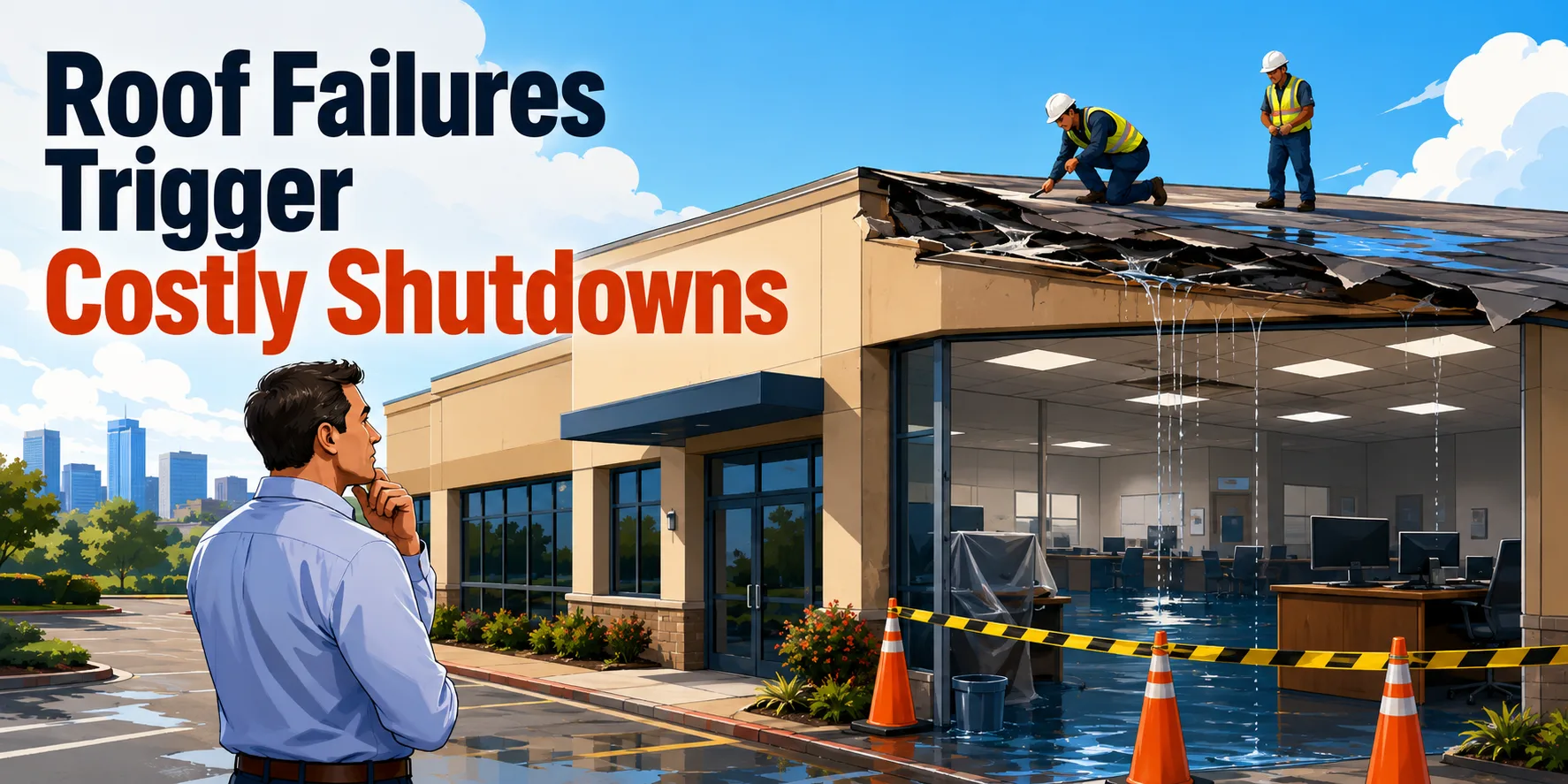
Commercial buildings depend on reliable roofing systems to maintain daily operations and protect valuable assets. When a roof unexpectedly fails, the consequences extend far beyond simple repair costs. Businesses face temporary closures, employee displacement, inventory damage, and significant revenue losses. For property managers and facility directors in San Antonio, recognizing the warning signs and understanding common causes of roof failures can mean the difference between a minor repair and a major operational crisis.
The financial impact of roof failures often catches property owners off guard. A sudden leak during business hours might force immediate evacuation, while structural damage from long-term water intrusion could require weeks of closure for repairs. These disruptions affect not only the bottom line but also customer relationships, employee productivity, and business reputation. By examining the primary causes of commercial roof failures and implementing preventive strategies, property managers can significantly reduce their risk of experiencing these costly interruptions.
How undetected damage leads to major roof failures
Small roofing problems rarely stay small for long. What begins as a minor leak or tiny crack in the membrane can quickly develop into a serious structural issue that threatens the entire building. Commercial roofs face constant exposure to weather, temperature changes, and physical stress, all of which contribute to gradual deterioration that may go unnoticed without regular inspections.
Water intrusion represents the most destructive force in commercial roofing systems. When moisture penetrates the roof membrane, it begins a chain reaction of damage that affects multiple building components. The insulation becomes saturated and loses its thermal properties, forcing HVAC systems to work harder and driving up energy costs. Wet insulation also adds significant weight to the roof structure, potentially exceeding design loads and creating safety hazards.
As water continues to infiltrate the roofing system, it reaches the structural deck beneath. Steel decking begins to rust and weaken, while concrete decks may develop cracks and spalling. Wood decking faces the additional threat of rot and mold growth. This structural damage often remains hidden until it becomes severe enough to cause visible sagging or require emergency repairs.
The interior damage from roof failures can be particularly expensive to address. Water stains on ceiling tiles might seem cosmetic at first, but they often indicate more serious problems above. Electrical systems, HVAC equipment, and fire suppression systems located in ceiling spaces can suffer water damage that requires complete replacement. Additionally, mold growth in wet ceiling materials poses health risks that may require professional remediation and temporary relocation of employees.
Regular inspections by experienced commercial roofing contractors in San Antonio help identify these issues before they escalate. Professional roofers know where to look for early warning signs such as ponding water, membrane bubbles, or deteriorating flashings. They can also perform moisture surveys using infrared technology to detect hidden water infiltration that might otherwise go unnoticed until significant damage occurs.
Installation errors that cause premature roof failures
The quality of initial installation determines how well a commercial roof will perform throughout its expected lifespan. Even premium roofing materials will fail prematurely if they’re not installed according to manufacturer specifications and industry standards. Unfortunately, installation errors remain a leading cause of commercial roof failures, often resulting in warranty voidance and expensive remediation work.
Improper membrane sealing
Commercial roofing membranes require precise sealing at all seams, penetrations, and termination points. When contractors rush through installation or lack proper training, these critical connections may not achieve full adhesion. Temperature and weather conditions during installation also affect seal quality. Installing membranes in cold weather without proper heating equipment, or during high humidity, can prevent adhesives from curing correctly.
Poor sealing becomes apparent during the first heavy rainstorm, when water finds its way through inadequate seams. Once water enters these gaps, it spreads laterally through the roofing system, making the source of leaks difficult to locate. The repair process often requires removing large sections of roofing to address all affected areas, resulting in higher costs and longer disruption to building operations.
Inadequate drainage planning
Effective water drainage is essential for commercial roof performance. Flat and low-slope roofs require carefully designed drainage systems to prevent water accumulation. When contractors fail to account for building settling, structural deflection, or local rainfall patterns, the drainage system may prove inadequate during heavy storms.
Standing water on commercial roofs accelerates material deterioration and increases structural loads beyond design capacity. In winter months, pooled water can freeze and expand, causing membrane splits and flashing separation. The added weight of standing water also contributes to deck deflection, creating low spots that collect even more water in a destructive cycle.
Proper drainage design considers multiple factors including roof slope, drain placement, scupper sizing, and overflow provisions. Experienced contractors also account for potential blockages from debris and include regular maintenance access for cleaning. When these considerations are overlooked during installation, property owners face ongoing drainage problems that may ultimately require complete roof replacement.
Incorrect material application
Each commercial roofing system has specific installation requirements that must be followed precisely. Membrane attachment methods, fastener patterns, adhesive coverage rates, and overlap dimensions all affect system performance. Contractors who deviate from these specifications, whether through ignorance or attempts to cut costs, create vulnerabilities that lead to premature failure.
Common application errors include inadequate fastener density in high-wind zones, insufficient adhesive coverage on fully adhered systems, and improper torch application on modified bitumen roofs. These mistakes might not cause immediate problems, but they significantly reduce the roof’s ability to withstand normal weather conditions over time. When failures occur, building owners often discover that warranty coverage is void due to improper installation, leaving them responsible for full replacement costs.
Weather conditions that accelerate roof failures
San Antonio’s climate presents unique challenges for commercial roofing systems. The combination of intense summer heat, occasional severe storms, and rapid temperature fluctuations creates stress that can accelerate roof deterioration and trigger sudden failures.
Intense heat and UV exposure
During summer months, roof surface temperatures in San Antonio can exceed 150 degrees Fahrenheit. This extreme heat causes roofing materials to expand and contract daily, creating stress at seams and flashings. Over time, this thermal cycling leads to material fatigue and separation.
Ultraviolet radiation from the sun breaks down the molecular structure of roofing materials, causing them to become brittle and lose flexibility. Single-ply membranes may develop surface cracking, while modified bitumen systems lose their granule protection. Without regular maintenance and protective coatings, UV damage can reduce a roof’s expected lifespan by several years.
Strong winds and storm activity
Seasonal storms bring powerful wind gusts that test the integrity of commercial roofing systems. Wind uplift forces concentrate at roof edges and corners, where they can peel back membranes or tear away flashing details. Once wind compromises these areas, the entire roofing system becomes vulnerable to progressive failure during subsequent storms.
Flying debris during storms poses additional risks to commercial roofs. Tree branches, construction materials, and other objects can puncture membranes or damage rooftop equipment. These impact points create immediate leak sources that require emergency repair to prevent interior damage.
Hail impact damage
Hailstorms can inflict severe damage on commercial roofing systems, often in ways that aren’t immediately visible. Large hailstones create punctures in single-ply membranes and fracture the protective surfacing on built-up roofs. Smaller hail may not penetrate the membrane but can cause bruising that weakens the material and reduces its lifespan.
The challenge with hail damage lies in its often-hidden nature. Surface impacts might not cause immediate leaks but create weak points that fail months later during normal weather conditions. Without professional inspection following hail events, building owners may remain unaware of damage until significant problems develop.
Preventing roof failures through proactive maintenance
Implementing a comprehensive maintenance program significantly reduces the risk of unexpected roof failures and costly shutdowns. Regular inspections, timely repairs, and preventive maintenance extend roof life while minimizing disruption to business operations.
Professional roofing contractors recommend bi-annual inspections, typically in spring and fall, to assess roof condition and address any developing issues. These inspections should include detailed documentation of membrane condition, flashing integrity, drainage function, and any signs of damage or deterioration. Infrared moisture surveys provide additional insight into hidden water infiltration that might not be visible during standard inspections.
Between professional inspections, property managers should conduct monthly visual checks, especially after severe weather events. Looking for obvious signs of damage, checking roof drains for blockages, and monitoring interior spaces for water stains helps catch problems early. Maintaining detailed records of all inspections, repairs, and maintenance activities also supports warranty claims and helps track roof performance over time.
Preventive maintenance tasks such as cleaning drains, removing debris, and resealing penetrations cost far less than emergency repairs. Establishing relationships with qualified roofing contractors ensures quick response when issues arise and provides access to expertise for long-term roof management planning.
Conclusion
Roof failures pose serious risks to commercial operations, potentially causing expensive shutdowns, inventory losses, and safety hazards. Understanding the common causes of these failures, from undetected damage and installation errors to severe weather impacts, helps property managers take preventive action before minor issues become major crises.
The key to avoiding costly roof failures lies in partnering with experienced professionals who understand local conditions and commercial roofing system requirements. Regular inspections, proper installation practices, and consistent maintenance create a strong defense against unexpected roofing problems.
Platinum Roofing provides commercial roofing solutions across the U.S., with a dedicated focus on Texas and Arkansas. Businesses seeking dependable commercial roofing services in San Antonio can partner with experienced professionals who understand regional conditions and commercial roofing system performance.
Property managers who address roofing concerns early are better positioned to avoid unexpected closures and maintain safe, reliable facilities. By investing in preventive maintenance and working with qualified contractors, commercial property owners can protect their operations from the disruption and expense of sudden roof failures.
More must-read stories from Enterprise League:
- Learn about consequences of bad location decisions that can devastate operations.
- Discover how preventive maintenance benefits help avoid costly equipment failures.
- Understand why business continuity planning is essential for operational resilience.
- Explore ways to ensure severe weather safety in workplace environments.
- Find out how business expenses impact your bottom line significantly.