The lines between home and office have blurred. More professionals than ever are working from their dining tables, spare bedrooms, and kitchen counters. As remote and hybrid work become standard practice, the way we design our homes has taken on new importance. A well-planned home design isn’t just about creating beautiful spaces anymore. It’s about building environments that support productivity, mental clarity, and daily well-being.
For professionals, entrepreneurs, and freelancers, smart home design has become essential to success. The right setup can mean the difference between a productive workday and hours of frustration. When your home serves multiple purposes throughout the day, every design decision matters.
Designing for the way you work
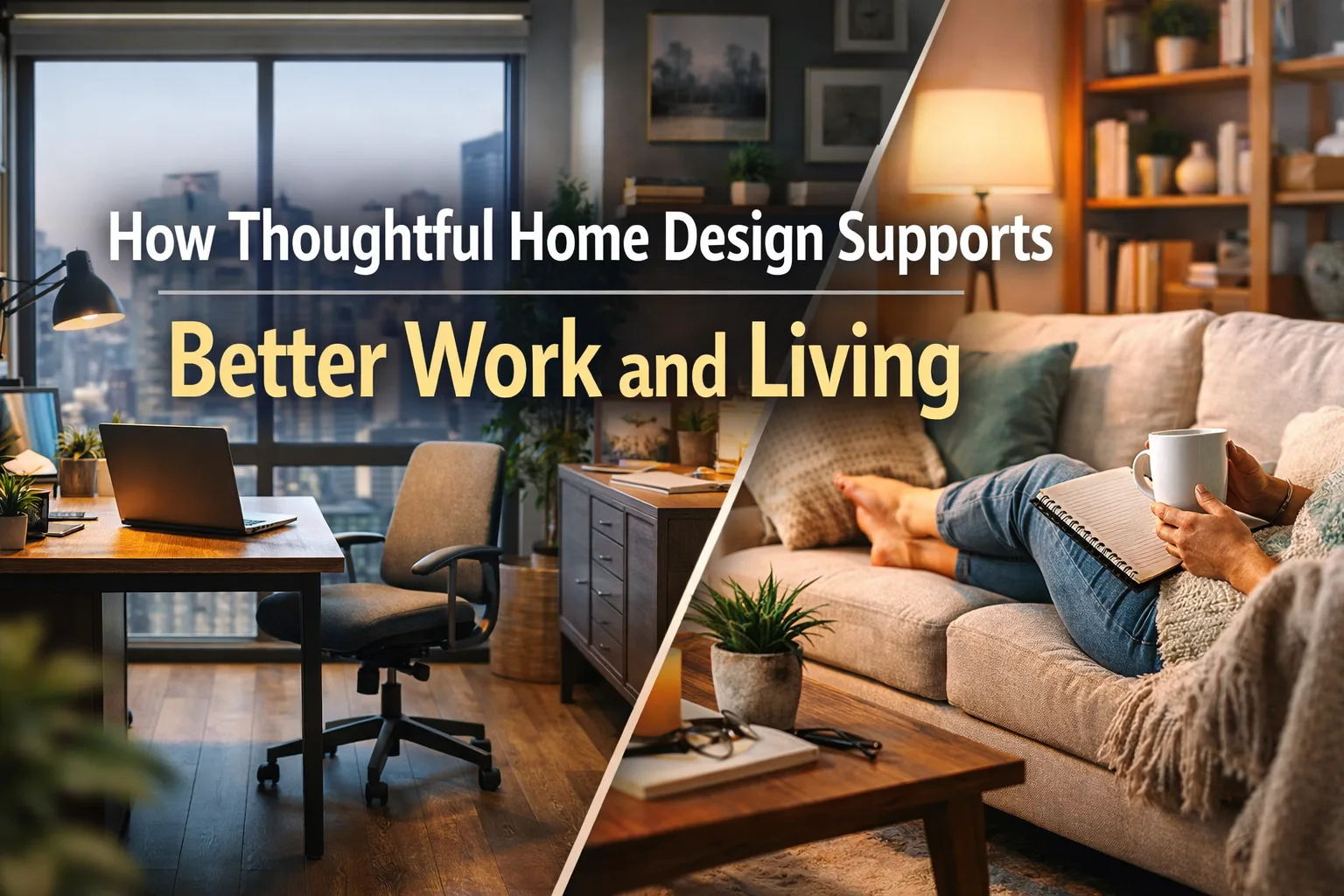
A well-designed home should reflect how people actually use their space throughout the day. Open floor plans can encourage movement and connection between family members, while clearly defined zones help separate focused work time from family activities. When a living room doubles as a workspace during business hours, or when a kitchen island becomes your video call backdrop, every square foot needs to serve a purpose.
Consider how your daily routine flows through your home. Do you need a quiet corner for phone calls? Is there adequate storage for work materials that can be tucked away at day’s end? Smart storage solutions, multipurpose furniture, and adaptable layouts make even the smallest spaces feel efficient and professional. A ottoman with hidden storage can hold office supplies. A fold-down desk can transform a hallway into a functional workspace. These small changes add up to significant improvements in daily life.
This becomes particularly important for people running businesses from home or managing teams across different time zones. Your workspace directly affects your energy levels, your professional presence on video calls, and how productive your day becomes. Poor home design can lead to constant distractions, physical discomfort, and a sense that work never truly ends. Good design, on the other hand, creates clear boundaries and supports both professional tasks and personal relaxation.
How design impacts mental performance
Research consistently shows that our physical environment directly affects our emotional and cognitive states. Natural light increases focus and alertness. Well-organized rooms reduce decision fatigue by minimizing visual clutter. Calming color palettes promote mental clarity and reduce stress hormones. For business owners and remote workers, these factors translate into better decision-making, lower stress levels, and improved daily output.
Simple upgrades can yield significant benefits for mental performance. Positioning your desk near a window takes advantage of natural light and provides visual breaks throughout the day. Using warm, layered lighting instead of harsh overhead fixtures reduces eye strain during long work sessions. Incorporating plants not only improves air quality but also provides a connection to nature that calms the mind.
Color psychology plays a crucial role in home design for productivity. Blues and greens tend to promote focus and calm, making them ideal for home offices. Warmer tones like yellows and oranges can stimulate creativity and energy, perfect for creative workspaces or areas where you brainstorm. Neutral backgrounds allow for concentration without distraction, while accent colors can provide visual interest without overwhelming the senses.
Homeowners often seek trusted resources that offer useful decorating advice, not just high-priced inspiration. Platforms that provide practical, research-backed guidance make it easier to turn design concepts into actionable improvements, especially when juggling business responsibilities or remote work demands.
Trends don’t pay the bills, practical design does
While trendy interiors may generate social media engagement, they rarely support the real demands of running a business from home. Professionals are now prioritizing durable materials, ergonomic work setups, and timeless aesthetics that won’t need updating every season. This shift means fewer impulse purchases and more thoughtful investments in design choices that provide long-term value.
Ergonomics should be a top priority in any home design plan. An adjustable chair that supports proper posture prevents back pain and maintains energy throughout the day. A desk at the right height reduces shoulder and neck strain. Proper monitor placement protects eye health and prevents headaches. These aren’t luxuries; they’re necessities for anyone spending eight or more hours working from home.
Mindful consumption has become a guiding principle for many remote workers. Buying fewer, higher-quality items saves money over time, reduces clutter, and creates a more sustainable approach to both work and life. Instead of filling spaces with decorative objects, professionals are choosing functional pieces that serve multiple purposes. A beautiful bookshelf doesn’t just store books; it also provides a professional background for video calls and helps organize work materials.
Balance is the new luxury
A space that feels balanced has become more than a luxury for remote workers. It’s a business asset that directly impacts performance and well-being. Cluttered homes can lead to scattered thinking and increased stress, while overly minimal spaces may lack the warmth and personality that make a house feel like home. Smart home design finds the middle ground: spaces that are intentional, calming, and adaptable to changing needs.
Creating balance means considering both function and feeling. A home office needs proper lighting and organization, but it should also include personal touches that inspire and motivate. Family spaces need to accommodate work when necessary, but they should primarily support relaxation and connection. This balance requires thoughtful planning and regular adjustment as needs change.
For fresh ideas that marry style with function, platforms offering interior design inspiration can help homeowners and entrepreneurs create spaces that support both personal and professional goals. The best resources provide practical solutions that work within real budgets and time constraints.
Homes that adapt with you
As careers grow and life circumstances shift, your space should be able to adapt accordingly. Whether that means converting a guest room into a dedicated office, adding a wellness corner for stress relief, or incorporating smart home features for efficiency, flexible home design ensures your environment can meet changing demands.
Modular furniture and moveable partitions allow spaces to transform based on immediate needs. A room divider can create a temporary office during work hours, then open up for family time in the evening. Adjustable shelving systems grow with your book collection or product inventory. Mobile furniture on casters can be rearranged for different activities throughout the week.
Technology integration has become another crucial aspect of adaptable home design. Built-in charging stations keep devices powered without creating cord clutter. Smart lighting systems adjust throughout the day to support different activities. Noise-canceling solutions help maintain focus during important calls or deep work sessions.
Great home design is ultimately about creating spaces that can meet tomorrow’s demands, whether that means accommodating a growing family, expanding a business, or shifting to new work arrangements. Planning for flexibility from the start saves money and stress in the long run.
Conclusion
Thoughtful home design has moved beyond decoration to become a strategic tool for professional and personal success. It’s about creating an environment that actively supports your work, enhances your career prospects, and maintains your well-being. Smart design choices help professionals reduce burnout, increase focus, and stay organized without requiring massive budgets or complete renovations.
The most effective home design solutions often come from small, intentional changes rather than dramatic overhauls. By focusing on how you actually live and work, prioritizing function alongside form, and choosing quality over quantity, anyone can create a space that feels like both a sanctuary and a productive headquarters. The key lies in understanding your specific needs and making design decisions that support your unique lifestyle and work requirements.
More must-read stories from Enterprise League:
- Discover why smart people tend to have messier workspaces and creative environments.
- Learn how choosing the right business location impacts productivity and success.
- Master effective remote team communication strategies for distributed work environments.
- Understand the negative effects of micromanagement on workplace culture and performance.
- Explore smart solutions for business management and automation to streamline operations.