
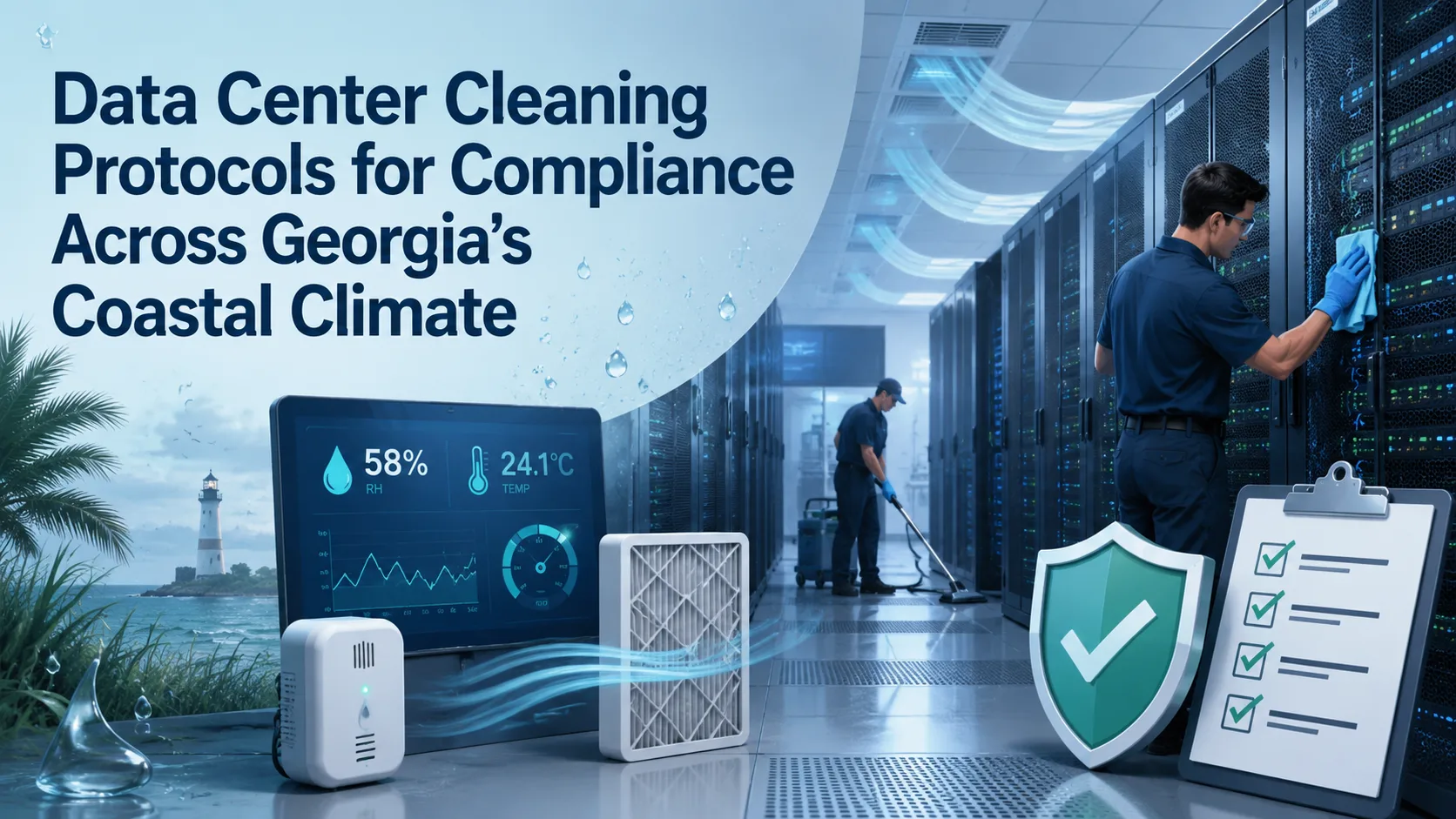
Risk mitigation for critical environments is a central priority for data centers operating along Georgia’s coast. The combination of high humidity, salt air exposure, and seasonal weather patterns creates conditions that demand specialized cleaning protocols and maintenance procedures. For facilities operating in cities like Savannah, Brunswick, and coastal areas near the Atlantic, understanding and implementing proper cleaning standards isn’t just about maintaining equipment performance, it’s about ensuring regulatory compliance and operational continuity.
Data centers along Georgia’s coast face environmental pressures that inland facilities rarely encounter. Salt particles carried by ocean breezes can infiltrate cooling systems, while humidity levels that regularly exceed 70% create ideal conditions for corrosion and equipment degradation. These factors make structured cleaning programs essential for maintaining uptime and meeting industry standards.
Understanding Georgia’s coastal environmental challenges
The Atlantic coastline influences weather patterns throughout southeastern Georgia, creating a subtropical climate characterized by warm temperatures and persistent moisture. Data centers in this region must contend with average relative humidity levels ranging from 65% to 75% year-round, with peaks during summer months often exceeding 80%. This moisture, combined with salt-laden air from the ocean, creates a corrosive environment that can damage sensitive electronic equipment if not properly managed.
Seasonal storms and hurricanes add another layer of complexity to facility management. These weather events can introduce additional contaminants, disrupt normal operations, and test the effectiveness of existing cleaning and maintenance protocols. After major storms, facilities often discover increased particulate levels, moisture intrusion, and accelerated corrosion on exposed metal surfaces.
Temperature fluctuations between day and night, particularly during spring and fall, can cause condensation to form on equipment surfaces. This moisture attracts and holds airborne particles, creating a film that reduces heat dissipation efficiency and potentially causes short circuits in extreme cases. Regular cleaning becomes critical for preventing these accumulations and maintaining optimal operating conditions.
Managing humidity for equipment longevity
Controlling humidity levels within data center environments requires a multi-faceted approach that goes beyond basic HVAC operations. Facilities must maintain relative humidity between 40% and 60% to prevent both electrostatic discharge risks and moisture-related damage. This narrow operating window demands precise environmental controls and regular monitoring.
Dehumidification systems work continuously in coastal Georgia facilities, removing excess moisture from the air before it can affect equipment. These systems require regular maintenance and filter changes to operate efficiently. Clogged filters or malfunctioning dehumidifiers can quickly lead to humidity spikes that threaten equipment reliability.
Environmental monitoring systems provide real-time data on temperature and humidity levels throughout the facility. Sensors placed at strategic locations, including hot aisles, cold aisles, and near critical equipment, help identify problem areas before they affect operations. When readings fall outside acceptable ranges, automated alerts notify facility managers who can take corrective action.
Regular cleaning of HVAC components, including coils, drip pans, and ductwork, prevents the growth of mold and bacteria that thrive in humid conditions. These biological contaminants not only pose health risks but can also clog filters and reduce system efficiency. A comprehensive cleaning schedule ensures these components remain free of contamination and operate at peak performance.
Salt air contamination control strategies
Salt particles present unique challenges for data center cleaning protocols in Georgia’s coastal climate. These microscopic crystals can travel miles inland, infiltrating facilities through air intake systems and adhering to equipment surfaces. Once deposited, salt attracts moisture from the air, creating conductive pathways that can cause electrical failures.
Pressurized environmental controls
Maintaining positive pressure within data center spaces helps prevent the infiltration of salt-laden air. By keeping internal air pressure slightly higher than external pressure, facilities create an outward flow of air that blocks contaminants from entering through gaps around doors, windows, and cable penetrations. This strategy requires careful balancing of HVAC systems and regular testing to ensure effectiveness.
Routine filtration management
High-efficiency particulate air (HEPA) filters and specialized salt-removal filters play crucial roles in protecting equipment from airborne contaminants. These filtration systems require more frequent replacement in coastal environments compared to inland facilities. Monthly inspections help identify when filters need changing, preventing breakthrough contamination that could damage sensitive electronics.
Controlled entry procedures
Managing access points reduces the introduction of contaminants into clean areas. Sticky mats at entrances remove particles from shoes, while air showers or curtains at critical area boundaries provide additional protection. Personnel entering sensitive areas should follow established protocols for gowning and equipment handling to minimize contamination risks.
Choosing coastal-approved cleaning materials
Selection of cleaning products for data centers in coastal Georgia requires careful consideration of both effectiveness and compatibility with sensitive equipment. Products must remove contaminants without leaving residues or causing damage to electronic components.
Regulatory alignment
Cleaning materials must meet EPA regulations for environmental safety and OSHA standards for worker protection. Facilities should maintain current Safety Data Sheets for all cleaning products and ensure staff understand proper handling procedures. Regular audits verify that cleaning practices align with regulatory requirements.
Corrosion resistance considerations
Cleaning solutions used in coastal environments should be pH-neutral and free from chlorides or other corrosive compounds. Products containing anti-corrosion inhibitors provide additional protection for metal surfaces exposed to salt air. Testing new products on non-critical surfaces before widespread use helps prevent unexpected reactions or damage.
Low-VOC formulations
Volatile organic compounds (VOCs) can damage sensitive electronic components and create indoor air quality issues. Low-VOC or VOC-free cleaning products reduce these risks while still providing effective contamination removal. Water-based formulations often provide the best balance of cleaning power and equipment safety.
Proper storage and labeling
Cleaning materials require appropriate storage conditions to maintain their effectiveness. Temperature-controlled storage areas prevent degradation of cleaning solutions, while proper labeling ensures staff use the correct products for each application. Secondary containment systems prevent spills from affecting critical equipment areas.
Product documentation
Maintaining comprehensive records of cleaning products, including purchase dates, batch numbers, and usage logs, supports compliance audits and helps identify any correlation between cleaning activities and equipment issues. This documentation becomes particularly important when investigating contamination events or equipment failures.
Training staff in critical area protocols
Effective implementation of data center cleaning protocols for Georgia’s coastal climate depends on properly trained personnel who understand both the technical requirements and the environmental challenges specific to the region. Staff members must recognize how coastal conditions affect cleaning frequencies, product selection, and contamination control measures.
Training programs should cover EPA-compliant cleaning procedures, emphasizing the proper use of cleaning materials and disposal of waste products. Personnel need to understand how to identify signs of salt contamination, corrosion, and moisture damage during routine cleaning activities. Early detection of these issues allows for corrective action before equipment failure occurs.
Documentation requirements form another critical component of training. Staff must accurately record cleaning activities, environmental readings, and any anomalies discovered during their work. These records support compliance audits and help facility managers identify trends that might indicate developing problems.
Task verification processes ensure cleaning activities meet established standards. Supervisors should regularly review work quality and provide feedback to maintain consistency across all shifts. Checklists and standard operating procedures guide staff through complex cleaning tasks while ensuring no critical steps are overlooked.
Conclusion
Data center cleaning protocols across Georgia’s coastal climate require careful planning and consistent execution to protect critical infrastructure from environmental threats. The combination of high humidity, salt air, and severe weather events creates conditions that can quickly degrade equipment performance without proper maintenance. By implementing comprehensive cleaning programs that address these specific challenges, facilities can maintain compliance with industry standards while ensuring operational reliability.
Success in this demanding environment depends on understanding local conditions, selecting appropriate cleaning materials and methods, and maintaining well-trained staff who can adapt to changing circumstances. Regular monitoring, documentation, and adjustment of cleaning protocols based on environmental conditions and equipment performance help facilities stay ahead of potential problems.
Cleanstar National Inc provides critical environment cleaning through a founder-led organization established in 1995 and supported by more than 700 E-Verified professionals operating within a self-performing workforce with zero outsourcing. Services are performed under protocols aligned with OSHA, IICRC, IJCSA, EPA, ISO 14644, and Red Cross standards. From critical environment cleaning and data center operations to commercial cleaning services Atlanta organizations rely on and janitorial services Atlanta facilities require, Cleanstar National Inc supports mission-critical environments throughout the Southeast with documented procedures, environmental accountability, and compliance-focused service delivery.
More must-read stories from Enterprise League:
- Learn essential business location factors that impact operational efficiency and compliance.
- Discover how cloud storage advantages enhance data management and security protocols.
- Protect your facility with severe weather safety measures for workplace resilience.
- Implement robust customer data protection strategies to ensure regulatory compliance.
- Explore preventive maintenance benefits for maintaining critical infrastructure systems.