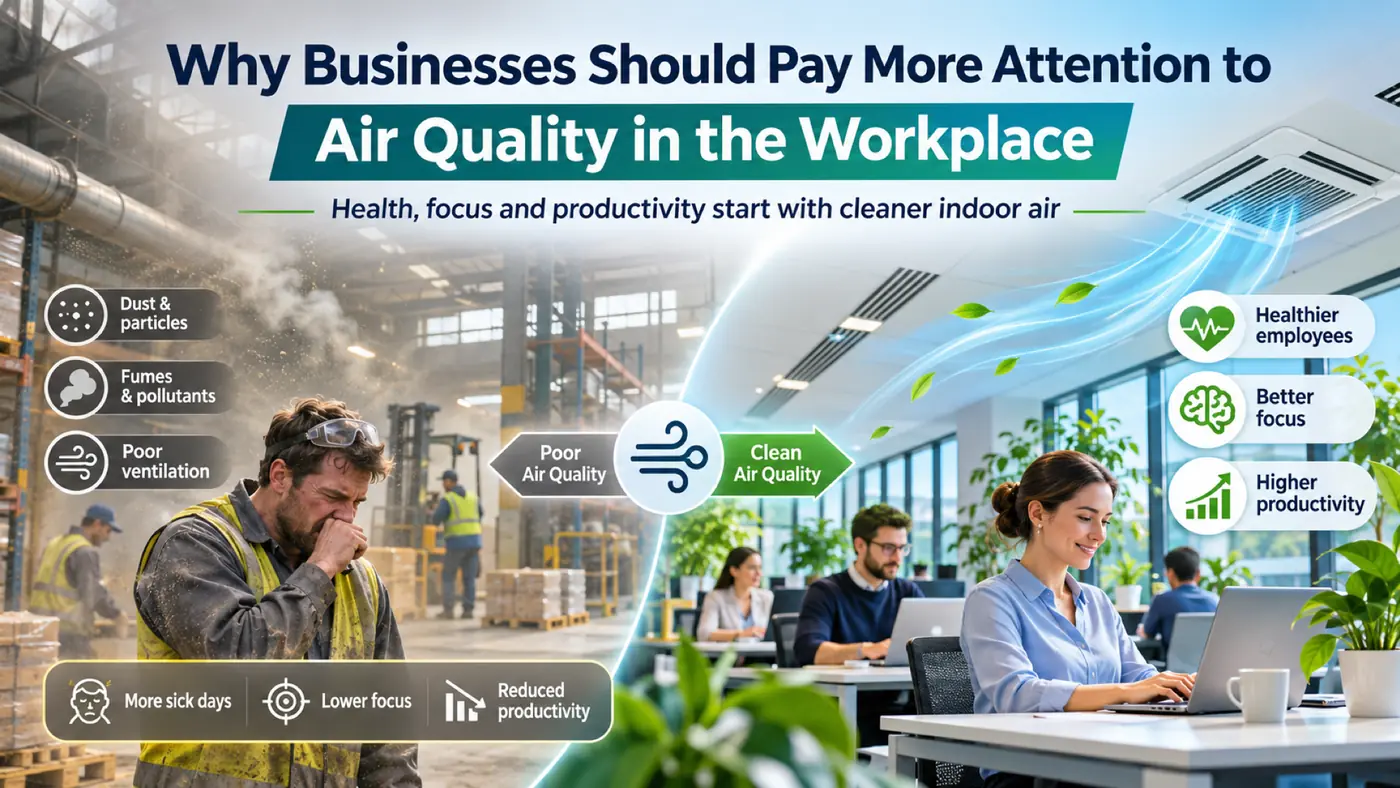
Employees working in offices, factories, warehouses, and other business areas spend a large portion of time inside the building. Companies focus on comfortable furniture and modern technology, but one aspect can get overlooked: the quality of the air the workers inhale. If the indoor air quality is poor, it can impact their health, focus and daily functions.
For companies, it’s more than comfort for their workers. Extended exposure to air pollutants can result in respiratory ailments and absenteeism which lead to unnecessary operational expenses. Identifying the causes of poor indoor air quality in the workplace and what can be done to counteract them will make the workplace a safer environment and contribute to productivity for the long term.
How are workers affected
Indoor air quality can be weakened by a number of factors, including:
- Dust
- Mold
- Chemical fumes
- Cleaning products
- Emissions from office equipment
Poor ventilation makes the issue worse, since pollutants build up instead of being removed or diluted by fresh air. People working in areas with low air quality might get headaches, become tired easily, feel dizzy, develop eye irritation, cough, and have trouble concentrating. While these symptoms may appear as minor complaints, they can be disruptive to the workplace, particularly if employees are experiencing these symptoms throughout the work week.
Another factor to consider is long term exposure. Airborne materials like asbestos and silica dust are linked to severe diseases. Lung diseases are a good example. Depending on the nature and level of exposure, they can become a big concern, making air quality a health issue in the workplace.
What lowers workplace air quality
Air quality issues may not come from a source you can easily spot. Even a well-maintained office can have ventilation or contamination issues which can affect people in the long-term. Identifying the sources of these issues is essential before deciding on how to address them.
Inadequate ventilation
Poor ventilation may raise the level of pollutants, especially in tightly packed or enclosed workplaces. A poorly maintained heating, ventilation and air conditioning or HVAC system can also spread polluted air throughout the building.
Dust and fine particles
Dust and fine particles can be introduced to the atmosphere during construction, manufacturing, wood work and warehouse activities. Workers may be exposed to these on a regular basis if not extracted properly.
Chemicals and fumes
Some cleaning chemicals, paints, adhesives, and industrial chemicals emit VOCs. Overuse in areas with limited ventilation can result in increased levels of indoor air pollutants and cause irritation.
Moisture and mold
Mold can thrive in damp walls, air conditioning systems that aren’t maintained properly, and water leaks. Mold spores remain airborne for long periods. Inhaling them triggers allergic reactions or respiratory symptoms. Particularly in people who are already prone to allergies.
Indoor environments can also be impacted by outdoor pollution. It can enter a facility through windows or ventilation systems, from vehicle exhaust, industrial emissions, or nearby construction work.
Why is air quality important for business productivity?
Professional skills, management practices, and access to resources are not the only factors that affect employee performance. The physical environment also affects the ease with which people are able to fulfill their duties. If workers are suffering from headaches, fatigue, or breathing difficulties, it will be harder for them to concentrate. They might:
- Require more breaks
- Have trouble with routine tasks
- May not be as productive as usual
These concerns suggest that strategies for performance enhancement should consider physical working conditions. If they want to increase the productivity of their employees in the workplace, they should consider the environment as well as changes in the management and workflow.
Practical ways a business can improve indoor air quality
In many cases, improving indoor air quality in the workplace can be achieved with a modest investment and simple equipment. Companies can start by conducting routine checks and maintenance tasks that tackle typical indoor air pollution sources.
Make HVAC maintenance a priority
Heating, ventilation, and air conditioning systems are very important. They are responsible for extracting indoor air pollution and bringing in fresh outdoor air. Companies should:
- Schedule regular HVAC check-ups
- Change filters as recommended by the manufacturer
- Make sure that air intake and exhaust systems are operating correctly
Control dust and chemical exposure
Specific precautions are needed in workplaces such as a manufacturing facility, construction site, printing shop, and a chemical processing facility. Local exhaust ventilation may collect contaminants near their source before they disperse throughout the building. It is also important to:
- Store cleaning products and industrial chemicals in the proper areas
- Use them as directed
- Avoid substances that emit harmful fumes unless their usage is necessary
Handle moisture and mold issues
Any wet and leaking spots should be addressed immediately, not left as a maintenance problem. Ceilings, walls, ventilation units and other places where moisture can collect should be checked for mold.
Monitor indoor conditions
With continuous monitoring, businesses can catch air quality concerns before they turn into bigger problems. Depending on the workplace, it may involve measuring:
- Ventilation rates
- Humidity
- Temperature
- Concentration of some pollutants
Endnote
Cleaning up every now and again or a yearly safety check is inadequate to ensure a healthy workplace. Environmental health should be part of the routine planning of the business. Poor indoor air quality can affect the health and productivity of employees over the long-term. To address such concerns, employers should think of it as another aspect of workplace safety.
More must-read stories from Enterprise League:
- 26 thriving HVAC startups that you should now (2026)
- What Are the Top HVAC Installation Companies in the Harrisburg, PA Area – 10 Options to Keep You Comfortable
- Building a Safer Workplace: Practical Steps Every Small Business Should Take
- Web Design Tips for Healthcare Professionals
- Data Center Cleaning Protocols for Compliance Across Georgia’s Coastal Climate