
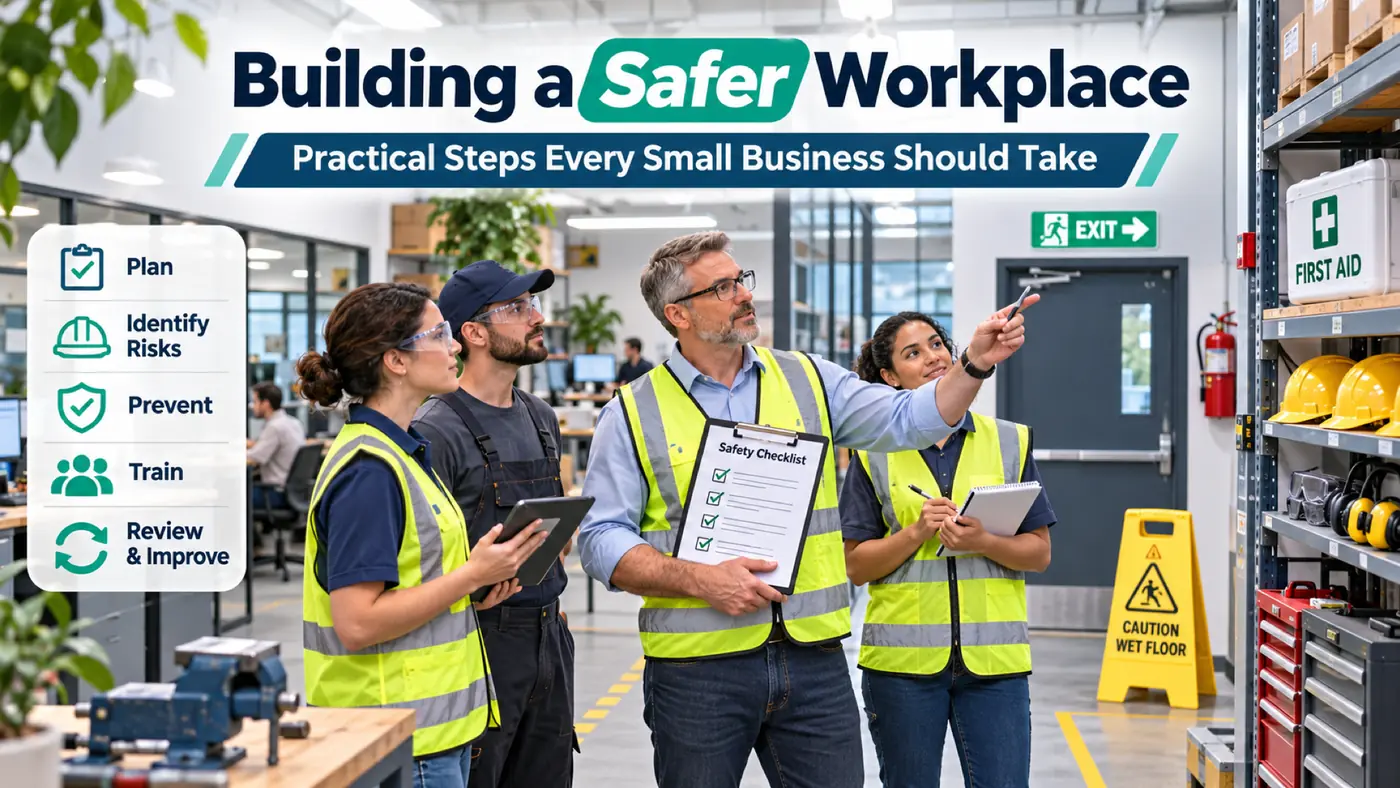
Running a small business involves more than keeping customers happy and making sure the numbers add up. It also means creating a workplace where employees feel safe, respected, and confident that their well-being matters. While workplace safety may seem like a concern reserved for large companies with dedicated compliance teams, it is just as important for smaller businesses.
A safer workplace does not happen by accident. It is a matter of deliberate preparation and planning, good habits, and a commitment to fixing issues before they turn into incidents. For employers, taking a few steps to improve employee safety is not just about staying compliant, it is about building a stronger, steadier business.
Begin with a workplace safety assessment
Before you start putting new policies in place, inspect your current workplace. Walk through your office, warehouse, workshop, or retail space, and flag anything that could be hazardous.
Check for common workplace hazards, such as exposed electrical wires, wet floors, poorly stashed supplies, obstructed emergency exits, and insufficient lighting. If your business uses equipment or requires physical labor, make sure the machines are well maintained and staff are given the right safety gear.
It also helps to ask employees about their concerns. People who work in a certain area often spot risks that managers miss. A short conversation about their daily tasks might surface a problem that would otherwise lead to an accident.
Make safety training a daily work routine
A safety book is helpful, but it is not a substitute for safety training. Staff must know how to carry out safe working procedures and how to fold them into their daily duties.
Make sure new employees are trained on health and safety before starting work. This may cover machines and equipment, substances and materials, emergencies, and accident and hazard reporting. Training should not stop after the first day. Regular refreshers help employees recall important steps and keep them up to date with any changes in the workplace.
Safety training does not have to be burdensome or costly for small businesses. A brief discussion, a demonstration, and some written instructions can go a long way. What matters most is building safety into everyday work so it becomes a normal topic of conversation, not something that only comes up after an accident.
Protect employees from long-term health risks
Workplace safety is often associated with immediate dangers, such as falls or machinery accidents. However, some of the most serious occupational health problems develop gradually.
Employees may be exposed to harmful chemicals, excessive noise, dust, or other hazardous substances over months or years. Businesses operating in construction, manufacturing, renovation, and industrial environments should pay particular attention to these risks.
Asbestos is one example of a material that can cause serious health problems when its fibers are inhaled. Although its use has been restricted in many settings, older buildings and certain industrial environments may still contain asbestos-containing materials.
Workers who develop illnesses connected to occupational exposure may need specialized legal guidance. For instance, someone affected by asbestos exposure in New Jersey might consult a New Jersey mesothelioma lawyer to understand potential legal options and whether compensation may be available.
Situations like these remind business owners that preventing hazardous exposure is far better than dealing with the consequences later.
Create an environment where employees speak up
Even the most carefully designed safety policy will have limited value if employees are afraid to report problems.
Some workers hesitate to speak up for fear of being seen as troublemakers, or they worry that raising an issue could put their job at risk. Business owners should build a workplace culture where employees trust that their concerns will be heard.
Make reporting procedures simple. Employees should know whom to contact, how to document an incident, and what happens after a concern is raised. Managers should respond promptly and avoid brushing off complaints. When employees see that their feedback leads to real improvements, they become more willing to help keep the workplace safe.
Prepare for emergencies before they happen
Every business should have a basic emergency plan. Fires, bad weather, medical emergencies, and broken equipment can disrupt operations with little warning.
Emergency contact information should be easy to find. Depending on the nature of the business, it may also be useful to run occasional evacuation drills or practice responding to common emergency situations. A few minutes spent preparing can prevent confusion when every second matters.
Endnote
Creating a safer workplace does not have to be expensive or complicated. It starts with paying attention, listening to your people, and taking ownership of your work environment.
For small business owners, workplace safety is an investment in both people and productivity. Employees who feel protected are more likely to trust their employers, work confidently, and contribute to the company’s success.
A business may be measured by its revenue, growth, and customer relationships, but its commitment to employee well-being says just as much about its values. In the end, the strongest workplaces are those where safety is not treated as an obligation, but as a shared responsibility.
More must-read stories from Enterprise League:
- Why Businesses Should Pay More Attention to Air Quality in the Workplace
- Best practices for scaling up your small business
- Workplace safety legal issues: What small businesses need to know
- How to identify substance abuse in the workplace
- Web Design Tips for Healthcare Professionals