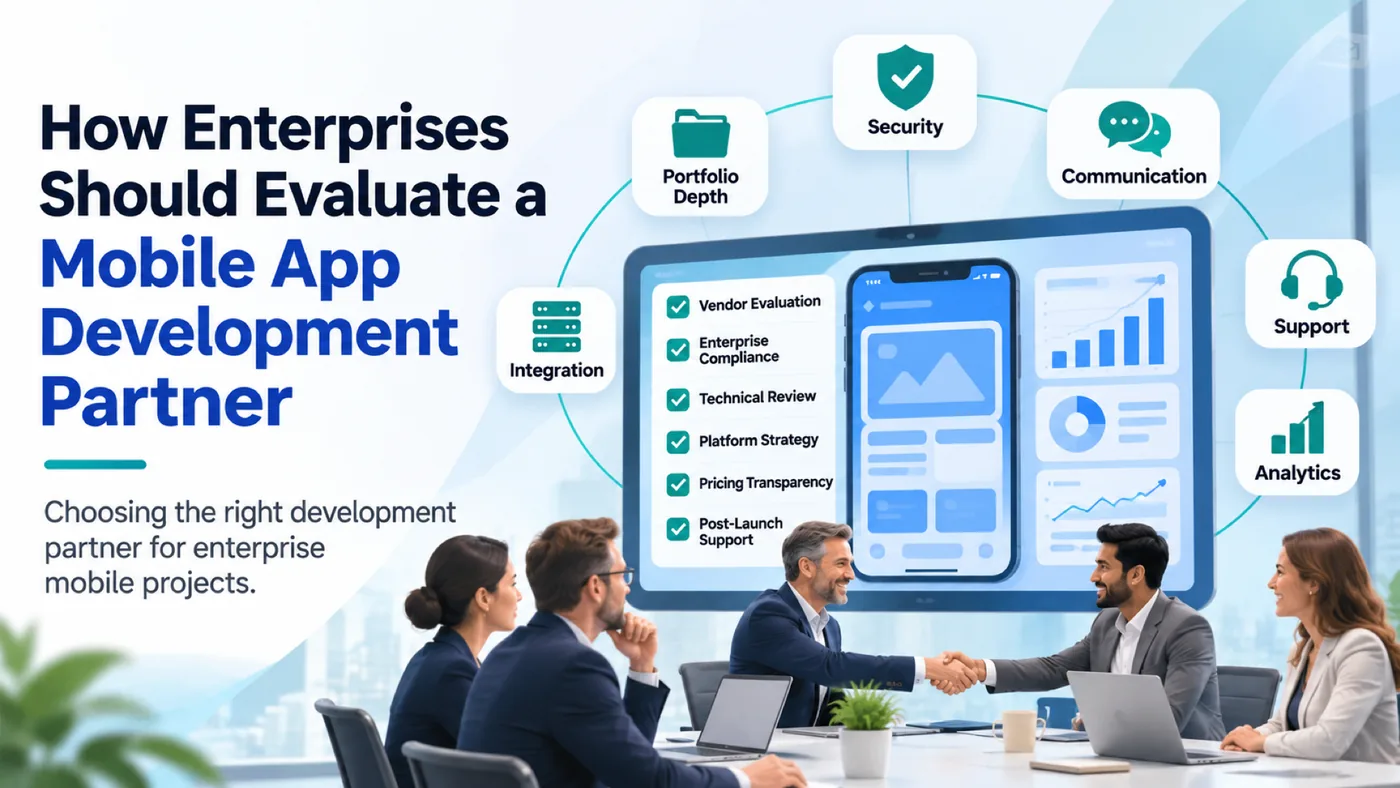
Enterprise mobile app projects fail less often from bad code and more often from a mismatched vendor relationship: unclear scope, a team that overpromised during the sales process, or a communication structure that worked fine for a small startup project but collapses under enterprise compliance and stakeholder requirements. Picking the right mobile app development partner matters more than picking the right tech stack, and most procurement processes still evaluate it backwards.
Portfolio depth matters more than portfolio size
A long client list looks impressive in a pitch deck and says very little about whether a team can actually handle an enterprise build. What matters is depth in relevant categories: has this team shipped apps that integrate with the specific kind of legacy systems an enterprise runs, have they handled the compliance requirements that apply to this industry, have they managed a project with the number of stakeholders and approval layers an enterprise rollout actually involves.
A team with twenty small consumer app projects and zero enterprise integrations isn’t automatically a bad choice, but it’s a different kind of risk than a team that’s done this specific type of work before. Ask for references from projects genuinely comparable in scale and complexity to the one being scoped now.
Communication structure before the contract is signed
Enterprise projects involve more people than a founder and a developer trading messages. There’s a product owner, a security review team, often a legal or compliance stakeholder, and sometimes an existing internal engineering team the new build has to coordinate with. Before signing anything, get specific about how communication actually works: who is the single point of contact, how are blockers escalated, what does a weekly status update actually contain, and how does the vendor handle a stakeholder who wasn’t in the original scoping conversation but has real authority over the project later.
A mobile app development partner who can’t answer these questions clearly during the sales process will struggle to answer them during an actual crisis mid-project, and enterprise builds hit real crises more often than anyone wants to admit going in.
Technical evaluation beyond the demo
A polished demo proves a team can build something that looks good in a fifteen-minute presentation. It doesn’t prove the team can handle the specific technical requirements an enterprise build actually needs: integration with an existing identity provider, compliance with industry-specific data handling rules, performance at the user scale the enterprise actually expects, or a security posture that survives a real penetration test.
Ask direct, specific questions tied to the actual project: how does the team handle SSO integration with an existing enterprise identity system, what’s their process for a security audit before launch, how do they structure code for a team that might need to take over maintenance internally later. A team that answers these specifically and confidently has probably done this work before. A team that pivots back to generic platitudes about “best practices” probably hasn’t.
Platform strategy should match the actual user base
Enterprise mobile projects often serve a narrower, more specific user base than a consumer app, internal employees, a specific client segment, a particular device fleet the company already standardizes on. That changes the platform decision meaningfully. An enterprise with a company-wide iPhone policy for field staff gets more value from a dedicated iOS app development services partner building specifically for that hardware and OS. A generic cross-platform build hedging against an Android population that may not actually exist inside that specific organization just adds cost without a real audience behind it.
A mobile app development partner worth hiring should ask about the actual device policy and user base early in the conversation, before defaulting to a consumer-style “build for both platforms” approach that may not even apply here.
Pricing structure and what it actually signals
A fixed-bid quote for a genuinely complex enterprise build deserves more scrutiny than reassurance. Enterprise scope tends to shift as stakeholder requirements surface during discovery, legal adds a requirement nobody mentioned in the kickoff, a security review flags something that needs rework, and a vendor locked into a fixed bid from day one either eats that cost quietly in ways that show up as corner-cutting, or fights every change request as a billable extra that slows the project down.
A time-and-materials or milestone-based structure, paired with a detailed discovery phase before any real pricing commitment, usually produces a more honest, more collaborative relationship for a build this size. It’s worth asking directly how a vendor handles scope changes discovered mid-project, since the answer reveals more about the actual working relationship than the initial quote does.
Post-launch support is part of the evaluation, not an afterthought
An enterprise app doesn’t stop needing attention at launch. Security patches, OS compatibility updates, and internal feature requests continue for years, and a vendor relationship that was smooth during the initial build can fall apart once the honeymoon period ends and ongoing maintenance becomes a smaller, less exciting line item on their side.
Ask specifically about the support structure after launch: what’s the response time commitment for a critical bug, is there a dedicated team or does the project get handed off to a general support queue, and what happens if the enterprise wants to bring maintenance in-house later. A vendor confident in their own work answers that last question honestly, without structuring the engagement to make an internal handoff difficult.
The actual evaluation checklist
Before signing with any mobile app development partner, an enterprise buyer should be able to answer: Does this team have real, relevant experience with our specific integration and compliance requirements? Is the communication structure actually built for an organization our size? Did their technical answers hold up under specific questioning, beyond the polished demo? Does their platform recommendation match our actual device policy and user base? And is the pricing structure honest about how enterprise scope tends to shift?
A vendor that holds up across all five is a genuine partner for a build this size. One that only looks good in the pitch deck is a risk the procurement process should have caught before the contract was signed.
More must-read stories from Enterprise League:
- How EMR Data Migration Works and What to Plan Before You Begin
- Moving your office across the country: 8 tips for a seamless transition
- How to onboard a new employee: Tips for quick integration
- Why mobile apps are essential for construction businesses in 2026
- 10 sales strategy plan tips for small businesses in 2021