
How to Choose the Right Risk Management Tool for Healthcare Organizations

How to Choose the Right Risk Management Tool for Healthcare Organizations

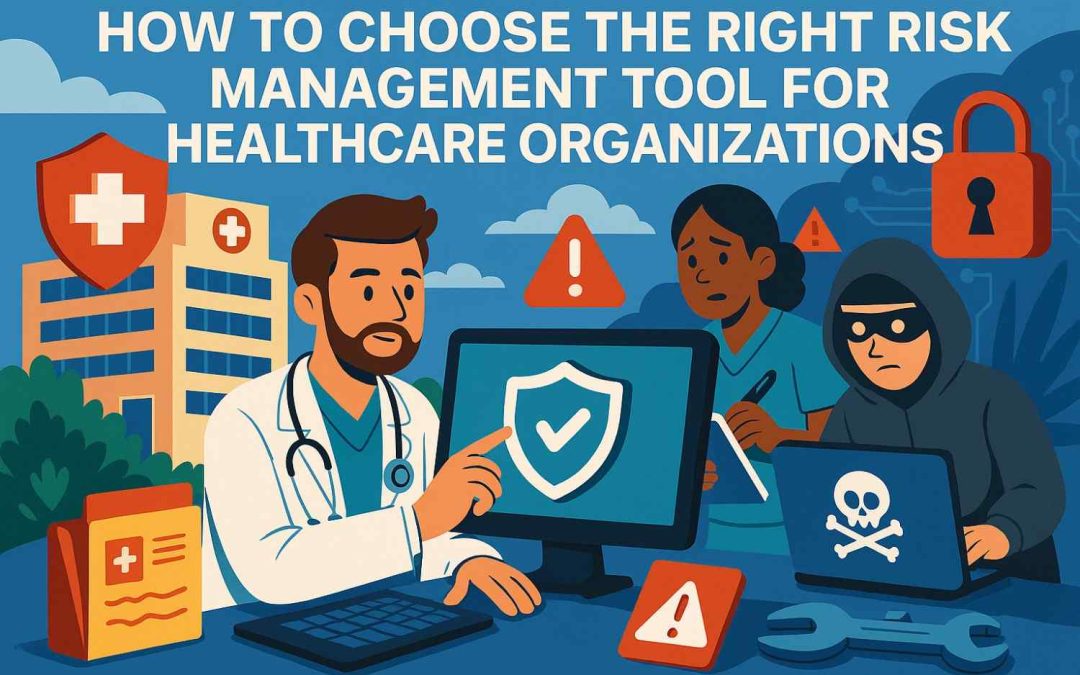
Cyberattacks have made risk-management tools essential for healthcare organizations’ survival, not optional extras. Ransomware attacks pose a major threat, with 386 reported attacks in the first part of 2024, matching 2023’s record-breaking pace. IBM now estimates the average breach costs $9.77 million. Regulators are taking action: proposed HIPAA Security-Rule updates would require multi-factor authentication, network segmentation, and annual third-party audits across almost every covered entity.

This guide provides clear comparisons of eight leading platforms to help you select the best option for protecting patients and maintaining financial stability.

Regulatory pressure and compliance complexity

Regulators are setting new standards rather than playing catch-up. On December 27, 2024, the U.S. Department of Health and Human Services proposed HIPAA Security Rule updates requiring multi-factor authentication, network segmentation, and yearly third-party security audits for nearly all covered entities.

Industry standards continue to advance. HITRUST released CSF v11 in January 2023, restructuring its control library to adapt to threats while reducing effort for i1 certifications by up to 45 percent. The system now requires ongoing evidence rather than annual reviews. Continuous compliance approaches demonstrate this shift across multiple industries working to meet changing regulations.

States are increasing enforcement. California’s Consumer Privacy Rights Act recorded its largest health-data settlement in July 2025, with a $1.55 million fine against Healthline for sharing sensitive article-level data with advertisers. Virginia’s VCDPA now mandates breach notification “without unreasonable delay,” with fines up to $7,500 per violation.

A single unpatched server can now trigger OCR penalties, affect HITRUST status, and violate state disclosure requirements simultaneously. This increased complexity explains why organizations now use integrated risk-management platforms instead of spreadsheets in 2025.

Shift toward integrated risk management

Most providers still handle risk in separate departments. A 2025 IIA-Baker Tilly survey of 567 risk professionals found 60 percent track enterprise risk using spreadsheets, while only 21 percent use dedicated GRC platforms.

Integrated platforms connect every threat, control, and corrective action to one cross-mapped register. The benefits come from centralizing risk activities and automating follow-up, as shown in Vanta’s risk assessment and management software. When a vendor’s poor security score identifies a network-connected ventilator issue, the system documents the scenario, recommends controls aligned with ISO-style risk assessment, and displays both cybersecurity and patient-safety alerts on one dashboard for leadership review.

Early users report concrete results: completing root-cause analysis in minutes, reducing duplicate audits by half, and generating board reports in hours rather than days, according to the IIA study. In 2025, maintaining a unified view of clinical, operational, and cyber risk has become essential for reliable healthcare delivery.

Automation and ai redefine daily workloads

Risk-management software now better matches actual workload needs. IBM finds compliance teams spend up to 50 percent of their time collecting audit evidence; built-in automation can reduce that time by half, allowing more focus on investigation and fixes.

Real examples show the impact. Business Insider reports Omega Healthcare used UiPath’s AI document processing to save 6,700 worker hours monthly and reduce documentation time by 40 percent while maintaining 99.5 percent accuracy. Gartner predicts that by 2026, one-third of enterprises will automate over half their network activities, up from under 10 percent in 2023.

Modern platforms integrate these improvements into daily operations. APIs collect backup logs overnight, machine-learning models detect unusual access patterns by morning, and the system assigns follow-up tasks with deadlines and audit trails without manual intervention. For busy hospitals, automation transforms risk management from reactive crisis response into a proactive, data-driven process that protects patients and staff.

Cultural and adoption challenges

Technology only succeeds when staff accept it. A 2023 cross-sectional study of 160 nurses found 79 percent cited limited time and 83 percent cited high patient load as main barriers to adopting new digital systems. Fear of consequences matters too; a review of five studies identified fear of negative outcomes as the primary reason clinicians avoid incident reporting.

Risk platforms must integrate with existing workflows. Single sign-on, role-based dashboards, and EHR-integrated alerts reduce mental burden. Change-management messaging should present reporting as patient advocacy rather than paperwork. When teams see faster resolution of issues and leadership recognizes resolved findings in monthly meetings, adoption becomes routine rather than forced compliance.

Buyer’s guide: key criteria for choosing a risk platform

Selecting risk-management software requires focusing on fit rather than feature lists. According to a 2023 KLAS Research report, functionality drives purchase decisions for healthcare safety, risk, and compliance management solutions. Consider these eight factors in your evaluation:

  •  Coverage of risk domainsMatch the platform to your threat map. If 80 percent of North-American providers already use a GRC tool to meet HIPAA and GDPR needs, be sure any new system adds value, such as clinical-safety modules, rather than duplicating controls you already own.
  •  Compliance framework supportLook for pre-mapped libraries (HIPAA, HITRUST, NIST, ISO 27001). Cross-mapping should let one encryption control satisfy multiple frameworks and cut audit prep time.
  •  Risk assessment and analyticsContinuous scoring beats annual snapshots. Dashboards should translate likelihood × impact into a dollar figure or patient-safety rating leaders can act on.
  •  Automation and workflow muscleGartner predicts that by 2026 one-third of enterprises will automate more than half of their network tasks. Choose tools with SLA timers, auto-evidence collection, and built-in escalation paths.
  •  Ease of use and adoptionUsability drives ROI. Favor role-based dashboards, single sign-on, and in-app guidance—features that shorten the learning curve and address the 42 percent training barrier noted above.
  •  Integration with existing systemsVerify bidirectional APIs with your EHR, vulnerability scanner, and HRIS. During a trial, connect at least one live feed to confirm real-time sync.
  •  Scalability and customizationAsk how licensing flexes when you add a surgery center or double your IoMT footprint. Low-code builders for custom fields and workflows prevent expensive change orders.
  •  Cost and vendor viabilityTotal cost is more than a license fee. Include implementation, integrations, and staff time. Review the vendor’s funding history and healthcare churn rate to gauge staying power.

Use this checklist to create a shortlist. Most healthcare organizations narrow to three to five vendors in fewer than six months, according to the same Software Advice study.

1. Vanta: continuous, automated security compliance

Vanta automates evidence collection for frameworks such as SOC 2, HIPAA, and HITRUST. The company raised a $150 million Series C in July 2024, reached a valuation of $2.45 billion, and now supports more than 10,000 customers worldwide.

Why it stands out

  •  Always-on monitoring. Integrations with AWS, Okta, GitHub, and 100-plus other services scan day and night for unencrypted storage, stale users, or missing MFA. A live dashboard shows pass-or-fail status by control.
  •  Fast attestations. Vanta says customers cut audit prep time by up to 80 percent, often reaching HIPAA readiness in four to six weeks instead of three months.
  •  Multi-framework agility. Teams can add ISO 27001 or NIST CSF on top of HIPAA with a few clicks, which helps digital health firms expanding overseas.

Things to watchA June 2025 product bug briefly exposed data from fewer than four percent of customers, reminding us that even compliance vendors face security risk. Also, Vanta focuses on technical and administrative controls. Hospitals needing clinical incident or patient-safety modules will want a companion platform.

If you prioritize automated security compliance and quick certification, Vanta provides real-time visibility without additional staff.

2. Riskonnect: enterprise-wide and end to end

Riskonnect serves as a central system for enterprise risk. Acute care organizations often select Riskonnect for its comprehensive healthcare risk management capabilities.

Why it stands out

  •  Breadth in one stack. Modules cover patient-safety events, insurance claims, vendor risk, and internal audit, letting large health systems retire multiple legacy tools.
  •  Configurable risk register. You can tailor categories, scoring formulas, and escalation paths without code, and data rolls up into a single board-ready heat map.
  •  Analytics muscle. Dashboards correlate incidents, claims, and vulnerabilities so leaders see both root cause and financial impact in one view.

Things to watchThe average go-live spans four to six months and needs cross-functional commitment. Smaller hospitals may pay for features they never switch on.

If you need comprehensive governance, risk, and compliance capabilities and have sufficient project resources, Riskonnect offers extensive functionality.

3. SAI360: compliance content on tap

SAI360 specializes in healthcare compliance with an extensive library of pre-built audits and policies. The 2024 release added AI horizon scanning and integrations with various enterprise systems, increasing its appeal to hospital compliance teams.

Why it stands out

  •  Ready-made content. The platform ships with HIPAA, Joint Commission, and CMS audit templates plus 1,200 training objects—ideal when your team lacks time to build from scratch.
  •  Benchmark insight. SAI360’s annual Healthcare Compliance Benchmark Report, now in its 16th year, surveys more than 350 U.S. providers and feeds the product roadma.
  •  Integrated learning. A built-in LMS tracks policy attestations and drip-feeds micro-courses when users fall behind.

Things to watchThe interface leans utilitarian, and most customers schedule two to four weeks of configuration workshops. Cyber-risk and enterprise GRC depth trails peers such as Riskonnect, so large systems often pair SAI360 with an IT-risk platform.

For organizations prioritizing regulatory readiness and quick implementation over extensive customization, SAI360’s content-rich approach merits consideration.

4. LogicGate: drag-and-drop flexibility for bespoke workflows

LogicGate’s Risk Cloud helps teams customize governance, risk, and compliance processes without coding. The company shows strong growth: it raised a $113 million Series C, reaching $156 million total funding, and made the Inc. 5000 list for the fifth consecutive year in 2025.

Why it stands out

  •  Low-code configurability. Drag-and-drop builders let risk managers spin up HIPAA assessments, vendor-onboarding checklists, or AI-governance workflows in hours.
  •  Growing solution library. More than 120 pre-built apps on the Risk Cloud Exchange cover needs from incident response to third-party risk; new healthcare templates arrived in early 2025.
  •  Recognition for innovation. LogicGate’s AI Governance solution won ISACA’s 2025 Innovative Solutions Award, underscoring a forward-looking roadmap.

Things to watchFlexibility can feel like a blank slate, so budget time for process design. LogicGate offers accelerator packs, but you define the controls. While integrations include Okta, Jira, and major cloud services, native EHR connectors are still on the roadmap, so hospitals may need an intermediary layer.

For mid-sized providers and digital health firms wanting adaptable software that fits their processes, LogicGate provides an intuitive platform backed by substantial investment.

Practical takeaways when choosing a healthcare risk-management solution

  •  Align the tool with your real risk profile. In a 2024 Software Advice survey, 42 percent of healthcare buyers said staff acceptance was the top purchase driver—beating features and price. Pick a platform that fits the risks your team faces every day, not the vendor’s slide deck.
  •  Test live integrations early. HIMSS found that 67 percent of providers struggle to connect new compliance software to existing EHRs and clinical apps. Wire up at least one real data feed during the trial to avoid surprises later.
  •  Involve every stakeholder in the demo. Nurses, IT security, compliance, and finance spot different deal breakers. Cross-functional demos surface issues before contracts lock you in.
  •  Plan for tomorrow’s frameworks. About 45 percent of providers already pilot AI safety tools to meet new regulatory demands. Choose a vendor that pushes control updates within weeks, not quarters.
  •  Budget beyond the license. Small practices spend up to 20 percent of revenue on administrative overhead, and compliance is a big slice of that pie (American Medical Association data). Factor in configuration, training, and process redesign so the all-in cost does not blow up your ROI.
  •  Review dashboards in real meetings. Metrics drive action only when leadership sees them. Build a ritual—monthly quality huddle or quarterly board packet—so closed findings get celebrated and lingering risks get funded.

Conclusion

Following these six practices helps ensure your risk management investment leads to fewer incidents, more efficient audits, and better patient care.

More must-read stories from Enterprise League:

What-if Analysis Software: An Indispensable Tool for Decision-Making in Project Management

What-if Analysis Software: An Indispensable Tool for Decision-Making in Project Management

Change and uncertainty are constant challenges in business and project management. Project managers must regularly handle unpredictable situations, particularly when managing multiple projects simultaneously. This is where what-if analysis and scenario planning software become essential tools that help project stakeholders respond effectively to changes and uncertainties. Let’s examine these tools in detail.

What-if analysis in project management

In project management, what-if analysis or scenario planning involves modeling future scenarios (or possible situations) and analyzing their effects on the project environment. This process allows project managers and teams to make informed decisions about responding to changes and challenges they encounter, while preparing for them ahead of time. The main advantage is having multiple options to evaluate and choose from.

For example, you can model the following scenarios:

  • What will happen if we move a project’s due date as a result of supplier’s delay?

  •  What if we assign more resources to a project?
  •  What will happen if we add one more project to the portfolio?

This forward-thinking approach helps teams prepare effectively for changes and challenges.

What-if analysis and forecasting: What’s the difference?

While these concepts may appear similar, they serve different purposes. Both look at future events, but in distinct ways. Here are the main differences:

  •  Forecasting is based on historical data analysis and tells what events are likely to happen. With its help, you can estimate the time, budget, or required resources based on the previous experience.
  •  What-if analysis involves creating multiple scenarios based on different parameters. Its purpose is to optimize decision-making by demonstrating different possible options. For example, how will the project environment change if there’s a talent shortage? Or cutting costs?

You can use both techniques in project management depending on your specific needs.

Now, let’s look at the main benefits of using scenario planning in project management.

Why is what-if analysis important in project management?

Here are the primary advantages of scenario planning for the project management process.

  •  Addressing uncertainty.

Unexpected changes can disrupt projects. Supply chain issues, changing priorities, or external factors can all affect project progress. Scenario planning helps prepare effective responses to these challenges and maintain project momentum.

  •  Optimizing resource management.

This is particularly crucial when managing multiple projects or portfolios with shared resources. Scenario planning helps assess workloads, identify potential bottlenecks, and determine the best solutions. It also enables analysis of various resource allocation options to find the most effective approach.

  •  Risk management support.

Scenario planning allows teams to test different risk responses and identify the most effective mitigation strategies. Planning responses in advance is significantly more effective than reacting after problems occur.

  •  Optimizing decision-making.

What-if analysis serves as an effective decision-making tool for complex multi-project environments. It supports better resource allocation, project prioritization, and strategy adjustments in complicated situations.

How to perform what-if analysis in project management?

Here are the essential steps for implementing scenario planning in project management.

  •  Identifying uncertainties: Identify and analyze all events that can potentially impact the project flow. Assess their severity and probability, and select the most significant ones.
  •  Create several scenarios: For each event, develop several scenarios: best-case, worst-case, and most likely scenario.
  •  Assess the impact: The next step is determining how each of these scenarios will affect projects (their scope, resources, timelines, budget).
  •  Develop responses to the situations: Determine what actions will help the team mitigate negative impact of uncertainties or take advantage of opportunities.

Using spreadsheets for manual scenario planning can be inefficient, especially with large datasets. Modern project, resource, and portfolio management tools include automated what-if analysis capabilities. Let’s examine these tools’ functions in detail.

What-if analysis software: Key capabilities

When selecting a tool with scenario planning capabilities, consider these important features.

  •  Visual scenario modelling: What-if analysis tools not only simulate but also visualize scenarios and their impact on the project environment, which increases the effectiveness of scenario analysis and decision-making.
  •  Resource impact simulation: It’s important for a scenario planning tool to provide insights into the impact of changes and uncertainties on the resource level, e.g., workloads and resource distribution, which in turn helps detect and mitigate resource bottlenecks.
  •  Portfolio optimization: Intelligent what-if analysis software can suggest portfolio optimization options (like rescheduling projects or reallocating resources) in response to existing constraints in order to complete the highest-priority projects on time.
  •  Integration with other tools: A good option for a scenario planning system is the integration with other software solutions, which makes it possible to integrate data from multiple tools and perform more accurate scenario planning.

These capabilities are available in Epicflow, a multi-project resource management software with scenario planning and what-if analysis features. They help make the right decisions under conditions of change and uncertainty in a multi-project environment with a shared resource pool.

Conclusions

Let’s summarize the most important points of the article.

  •  What-if analysis in project management involves modelling different scenarios and analyzing their impact on the project environment.
  •  In contrast to forecasting, which is based on historical data analysis, what-if analysis involves developing various possible scenarios.
  •  The benefits of performing scenario planning in project management include optimizing decision-making and resource management, supporting risk management, and addressing uncertainty.
  •  To perform scenario planning effectively, you need to identify uncertainties, create several scenarios, analyze their impact, and prepare responses to these possible situations.
  •  What-if analysis is often incorporated into project or portfolio management tools’ functionality.

More must-read stories from Enterprise League:

5 Best Heavy Equipment Rental Companies

5 Best Heavy Equipment Rental Companies

Choosing the right equipment rental provider is crucial for construction projects, as contractors need dependable machinery and tools they can count on. The top heavy equipment rental companies stand out through exceptional service, modern equipment fleets, and a commitment to meeting customer needs. Here are five established rental providers that consistently deliver quality solutions for construction teams.

1. Herc Rentals

Herc Rentals has been a leading heavy equipment rental company for 60 years. The Florida-based business maintains a comprehensive fleet of well-maintained equipment ready for immediate use. From skid steers to dozers, they provide the earthmoving machinery needed for any job. With 622 branches across the U.S. and Canada, Herc Rentals offers convenient access for contractors nationwide.

Herc Rentals focuses on earthmoving equipment and attachments, including vacuum trailers and backhoes. Contractors can select from compact or medium-range machinery to match their specific needs. The company provides 24/7 emergency service and offers safety training programs to help contractors operate equipment properly.

Key features:

  •  622 branches in the U.S. and Canada
  •  Fleet and telematics solutions
  •  Pickup and delivery at the jobsite
  •  Live delivery tracking and service calls

2. Sunbelt Rentals

Sunbelt Rentals provides extensive coverage across all 50 states, Mexico and Canada. Their locations stock the machinery needed to complete projects on schedule. The company offers a rental protection plan to cover equipment against unexpected damage and theft.

The Sunbelt Rentals staff assists contractors in selecting appropriate earthmoving equipment for each project. Their inventory includes crawler loaders, excavators and off-road vehicles. Beyond heavy machinery, they supply temporary containment walls and other essential tools. The company maintains current equipment models with updated technology across their rental fleet.

Key features:

  •  In-store pickup and delivery
  •  Over 1,200 locations across the U.S., Canada and Mexico
  •  Complementary mobile app for increased convenience
  •  Rental protection plan to offset damage and theft costs

3. Maxim Crane Works

Maxim Crane Works specializes in crane rental and comprehensive lifting services. Based in Kentucky with over 50 locations nationwide, they support projects ranging from stadiums to skyscrapers. Their diverse fleet meets specialized equipment and lifting requirements while providing individualized support.

Maxim excels in crane rentals while offering additional services. Contractors can access specialized rigging up to 700 tons and heavy hauling capabilities. Their customer service team develops custom solutions for specific project requirements. The company provides integrated transportation, safety protocols and insurance coverage.

Key features:

  •  Nationwide fleet of cranes and heavy equipment
  •  Specialized rigging up to 700 tons
  •  Prelift job walks and risk assessment meetings for safety adherence
  •  Equipment and transportation services at each location

4. United Rentals

United Rentals provides round-the-clock service through 1,400 locations across North America. They serve as a comprehensive source for heavy equipment rentals and worksite solutions. Their Worksite Performance Solutions program combines equipment and data monitoring for enhanced safety. Convenient features include a mobile app, customized dashboard and digital payment options.

United Rentals simplifies the rental process with location-based equipment searches. Contractors can check availability and rates by entering their ZIP code. Their customer service team remains available 24/7 to help keep projects running smoothly and within budget constraints.

Key features:

  •  Digital payment options
  •  Customized dashboard built for your job
  •  Mobile app for worksite management
  •  1,400 locations across North America

5. EquipmentShare

EquipmentShare continues to expand its presence in major U.S. markets. Since 2015, the company has improved construction equipment rental through technology-driven solutions for machinery, monitoring and site management.

EquipmentShare provides continuous equipment status updates even when contractors are off-site. The system allows users to monitor service needs and fuel levels while preventing theft through integrated cameras. They enhance rental convenience with climate control, power systems and specialized site configurations. Their service team responds quickly to urgent situations.

Key features:

  •  348 locations nationwide
  •  On-site rental yards attached to jobsites
  •  Real-time updates with equipment tracking
  •  Cameras and keypads to deter theft

How contractors select the best heavy equipment rental company

Finding the right heavy equipment rental partner requires careful evaluation. Here are five key factors to consider:

  •  Fleet diversity: Check the range of equipment, from earthmoving to material handling.
  •  Pricing and transparency: The company should be transparent and display all fees.
  •  Geographic coverage: Ensure you are within the service area for timely pickups and deliveries.
  •  Equipment quality: Evaluate the age and condition of each machine before renting.
  •  Customer support: The company should have 24/7 customer service for emergencies.

Finding the best solutions for heavy equipment rentals

The right heavy equipment rental provider directly affects project success and cost management. Look for companies offering well-maintained fleets, responsive support teams, and updated equipment options. By carefully selecting rental partners, contractors can build lasting relationships that support their business growth and help overcome project challenges.

More must-read stories from Enterprise League:

Why You Should Avoid Big E-commerce Platforms When Buying Tools

Why You Should Avoid Big E-commerce Platforms When Buying Tools

The convenience of one-stop shopping has changed how we buy everything from household items to professional equipment. Major online marketplaces advertise endless selection, low prices, and fast delivery straight to your door. But when it comes to tools, whether for professional trades or serious DIY projects, this apparent convenience often hides serious drawbacks that can cost you more than just money.

The hidden cost of marketplace convenience

Big e-commerce platforms focus on volume, not expertise. Their business model prioritizes moving inventory quickly rather than ensuring customers get the right tool for their specific needs. This becomes obvious when you search for something as basic as a drill or wrench set. You’re overwhelmed with hundreds of options, from questionably cheap imports to overpriced brand names, with minimal guidance beyond user reviews that may not be genuine.

The algorithms running these platforms can’t tell the difference between a casual DIYer needing occasional-use tools and a professional requiring equipment that holds up to daily heavy use. They simply display what sells most often or generates the biggest profit margins. Quality control becomes virtually impossible when warehouses contain millions of products from thousands of suppliers. Tools that appear identical in product photos can differ dramatically in material quality, precision of manufacturing, and overall durability.

Many buyers discover too late that the “great deal” they found comes with hidden compromises in reliability and performance. Customer service representatives working for these massive platforms typically lack specialized product knowledge and can only process returns or direct you to generic help articles.

Why specialized knowledge matters

Professional contractors and experienced craftspeople rarely buy their essential equipment from general marketplaces. They know that choosing the right tools requires more than comparing prices and skimming reviews. When purchasing from specialized suppliers like Atlas Copco ITBA, you benefit from decades of industry knowledge and technical expertise that no algorithm can match. These specialists understand the nuanced differences between similar products, know the importance of proper tool maintenance, and recognize which manufacturers consistently deliver professional-grade quality. They stock products they’ve tested extensively in real working conditions and can explain precisely why one model might work better for your needs than another that costs twice as much or half as little.

This expertise extends far beyond just making the sale. Specialized tool suppliers maintain strong relationships with manufacturers, guaranteeing legitimate warranty support and access to replacement parts for years to come. They provide guidance on compatibility between different systems, suggest accessories that genuinely improve functionality rather than just increasing the bill, and offer meaningful technical support when issues arise.

The race to the bottom

Price competition on major platforms has created what industry experts call a race to the bottom. Manufacturers face constant pressure to reduce costs wherever possible, leading to compromises in materials, quality control, and fundamental design integrity. A hammer might look identical to its previous version from five years ago, but now it might use lower-grade steel, have less secure handle attachments, or feel slightly unbalanced.

The problem gets worse with third-party sellers flooding these platforms. Many operate multiple storefronts, selling identical rebranded products at different price points to create fake competition. Others specialize in counterfeits that closely resemble trusted brands but fail dramatically under actual use. The big e-commerce platforms take minimal responsibility, using terms of service that effectively leave buyers to deal with these risks on their own.

Building long-term value

Buying tools is an investment in capability, not just a simple purchase. Quality tools, chosen carefully and maintained properly, often last longer than their owners. They become more valuable as you learn their characteristics, develop muscle memory for their handling, and come to trust their consistent performance.

The price difference between a thoughtfully selected professional tool and its marketplace equivalent might look significant at first glance. However, when you consider replacement costs, lost time from failures, potential injuries from substandard equipment, and the constant frustration of unreliable performance, that higher initial cost starts looking like a smart investment. Professional tools earn their keep through dependability, accuracy, and the confidence they give you when taking on challenging projects.

Specialized tool suppliers also typically offer ongoing support that big e-commerce platforms can’t match. This includes detailed product information, usage tips, maintenance guidance, and direct access to knowledgeable staff who can answer specific questions about tool applications and limitations. This level of support helps ensure you not only choose the right tool initially but also get the maximum value from your investment over time.

More must-read stories from Enterprise League:

Turning Browsing into Business: The Role of eCommerce Data

Turning Browsing into Business: The Role of eCommerce Data

In online commerce today, success requires more than just great products or an attractive website. The real advantage comes from effectively using customer data. Every time someone browses products, adds items to their cart, or leaves a review, they create valuable digital signals. These interactions make ecommerce data essential for modern online retail.

Converting browsing patterns into practical insights helps turn casual visits into sales and first-time shoppers into repeat customers. This article examines how ecommerce data helps businesses improve their operations, create new solutions, and increase sales.

The growing importance of ecommerce data

The ecommerce industry continues to expand significantly. According to Statista, global retail ecommerce sales reached $6.3 trillion in 2024, with projections showing growth to $8.1 trillion by 2026. This growth generates massive amounts of data. Each online interaction gives businesses a chance to better understand their customers.

But having lots of data isn’t enough on its own. The real value comes from interpreting it properly. Companies that excel at turning data into strategy see better commercial results.

What counts as ecommerce data?

Ecommerce data includes many types of information collected throughout the customer journey. It generally falls into four categories:

Behavioral data

  •  Different visits
  •  Time spent on product pages
  •  Search query recorded
  •  Cart activity

Transaction data

  •  Compromise
  •  Order frequency
  •  Average order price
  •  Methods used

Demographic data

  •  Age, gender, location
  •  Device type (mobile vs desktop)
  •  Favorite shopping time

Engagement data

  •  Open the email and click rates
  •  Advertisement
  •  Review and rating
  •  Social media engagement

Together, these data points create a complete view of customers, helping businesses improve their experiences and operations.

From browsing to business: How the transformation happens

Converting browsing into business involves several key steps:

1. Data Repository

Tools like Google Analytics, Heatmap, Cookies, and Tracking Pixels record browsing activity. Heat mapping software shows where customers click or which elements they skip.

2. Data Integration

Businesses collect data from multiple sources like websites, apps, email campaigns and social platforms. Combining these into unified customer profiles improves accuracy.

3. Data Analysis

Advanced analytics and AI tools find meaningful patterns. If data shows customers abandon carts after seeing shipping costs, a business might add free-shipping options.

4. Privatization

Data enables personalization at scale. According to Epsilon, 80% of consumers prefer buying from brands offering personalized experiences. Analyzing browsing data helps create targeted recommendations, customized promotions and dynamic website content.

5. Future insight

Machine learning models analyze past data to predict future behavior. When a customer repeatedly views hiking gear, the system can anticipate future purchases and suggest related items.

6. Trade adaptation

Ecommerce data improves operations beyond marketing. It informs inventory management, logistics and pricing strategies based on predicted trends.

Real-world examples of browsing data in action

– Amazon’s recommended engine

Amazon excels at converting browsing into sales. Their recommendation system, powered by browsing and purchase history, generates 35% of company revenue. Every product suggestion comes from analyzing customer data.

– Netflix and cross-industry similarities

Though not strictly ecommerce, Netflix shows the power of data-driven personalization. Their recommendation engine influences 80% of content choices, demonstrating how browsing data can boost engagement in retail too.

– Zara’s inventory strategy

Zara uses browsing and purchase data to optimize inventory. When items get high online engagement, Zara adjusts its supply chain in real-time, reducing excess stock and markdowns.

– Shopify’s future analysis tool

Shopify gives merchants an analytics dashboard using browsing and sales data to spot trends, suggest product bundles and predict demand. This gives small businesses access to sophisticated insights for better strategy.

Benefits of using ecommerce data

1.Conversion rate has increased

Personalized recommendations and targeting improve conversions significantly. Studies show personalization can boost conversion rates by 10-15%.

2.Higher customer retention

Understanding browsing patterns helps businesses anticipate customer needs, building stronger loyalty.

3.Customized marketing expenses

Instead of broad campaigns, businesses can run targeted promotions focused on customers most likely to buy.

4.Efficient operation

Data improves decisions about inventory, logistics and pricing. Predictive analytics helps prevent stockouts during peak seasons.

Challenges in using ecommerce data

Despite the opportunities, businesses face several challenges:

  •  Privacy and compliance

With GDPR, CCPA and other regulations, businesses must handle browsing data carefully. Transparency and consent are essential.

  •  Data surcharge

More data doesn’t always mean better insights. Companies need effective filtering and analysis tools to avoid confusion.

  •  Integration complexity

Many businesses struggle to combine data across platforms, leading to incomplete customer understanding.

  •  Bias in data

Algorithms trained on incomplete or skewed browsing data can reinforce existing problems or miss emerging trends.

The future of ecommerce data

Ecommerce data continues growing in importance, driven by advances in AI, machine learning and new technologies.

  •  AI-Powered Personalization: Hyper-Personalized Shopping Experiences where the recommendations of the product are adapted in real time based on browsing behavior.
  •  Voice Commerce: Integrated browsing patterns in smart assistants such as Alexa and Google Assistant for voice-based shopping.
  •  Promotional and virtual reality: browsing data can fuel emergent, personal experiences, such as virtual fitting rooms.
  •  Ethical AI and data transparency: Data that use data from responsibility will gain confidence, while those who misuse it risk losing customers.

According to Gartner, by 2027, 60% of ecommerce companies will use AI-managed privatization engines to greatly improve customers’ satisfaction and revenue.

Conclusion

In online retail, data drives success, and companies that effectively convert browsing patterns into business insights gain significant advantages. By gathering, combining and analyzing browsing data, businesses can create better experiences, improve operations, and understand customer needs.

From Amazon’s recommendation system to Zara’s responsive inventory management, the evidence is clear: browsing data is a valuable business asset, not just passive information.

Success in ecommerce increasingly depends on seeing browsing activity as a source of valuable insights. For online retailers today, turning browsing patterns into business growth isn’t optional – it’s essential.

More must-read stories from Enterprise League: