
Generating Criminal Defense Leads Through Ethical and Predictive Marketing Models

Generating Criminal Defense Leads Through Ethical and Predictive Marketing Models

When someone searches for a criminal defense attorney, they’re not making a casual consumer choice – they’re facing a crisis. In moments of intense fear and confusion, they need discretion and reassurance, not aggressive marketing tactics common to personal injury law firms. This requires a thoughtful approach that uses data intelligently while maintaining strict ethical standards. The goal is to build a digital presence that offers a clear, confidential path to help when potential clients need it most.

Building trust through ethical marketing

For criminal defense attorneys, trust matters more than anything else. Marketing efforts must focus on earning that trust by providing value and reassurance before a potential client makes contact. Every piece of marketing content needs to maintain a professional, supportive, and non-judgmental tone.

Key aspects of ethical criminal defense marketing:

  •  Educational Content: Providing clear, accurate information about legal rights, common criminal procedures, and potential consequences without legal jargon.
  •  Focus on Process & Experience: Explaining how your firm handles cases and highlighting relevant experience, rather than guaranteeing specific results.
  •  Empathetic Language: Using a supportive and non-judgmental tone that acknowledges the client’s distress and fear.
  •  Transparency: Being upfront about fees, what clients can expect, and the limitations of legal outcomes.
  •  Client Testimonials (Ethical): Featuring testimonials that focus on the firm’s support, communication, and professionalism, rather than case outcomes.
  •  Community Resource: Offering free guides, FAQs, or public speaking on legal topics to establish the firm as a helpful presence.

The most effective strategy positions your firm as a trusted resource by creating detailed content that answers urgent questions like “What are my rights if I’m questioned?” or “How does the bail process work?” Focus on your experience, process, and dedication to providing a strong defense rather than promising specific outcomes.

Understanding and anticipating client needs

People follow a common pattern when seeking legal help. They start with broad information-gathering queries like “what are my rights during a traffic stop” before moving to specific searches like “best criminal lawyer in my city.” By creating valuable content for each stage of this journey, your firm becomes the reliable resource they discover early on. This approach to generating criminal defense leads focuses on meeting user needs rather than just targeting competitive keywords.

Creating a welcoming digital presence

Your website should serve as a calm, clear space where distressed individuals can find help. Key features include:

  • Simple, mobile-friendly design
  • Easily visible contact information including 24/7 phone numbers
  • Discreet chat or contact forms on every page
  • Attorney bios that demonstrate empathy and experience
  • Clean layouts with clear navigation

The best law firm website examples use uncluttered designs, meaningful testimonials about attorney character, and reassuring messaging that encourages potential clients to reach out.

Tailoring visibility strategies for criminal defense

Marketing tactics for criminal defense require more subtlety than other practice areas. While paid search can work well for immediate needs, ad copy must remain supportive and informative rather than sensational. Local SEO and an optimized Google Business Profile are essential for capturing urgent “near me” searches.

Unlike personal injury marketing that often uses high-visibility tactics like billboards or TV jingles, criminal defense marketing must prioritize discretion. Success comes not from being the loudest voice, but from being the most trusted resource for those actively seeking help.

Conclusion

A successful marketing strategy for criminal defense firms combines smart data analysis with unwavering ethical standards. By understanding the client journey and providing valuable, supportive information at each step, firms can build trust while generating quality leads. This approach does more than drive growth – it maintains high professional standards and serves as a genuine resource for people during vulnerable moments.

More must-read stories from Enterprise League:

Top 5 Social Media APIs for Developers and Analysts in 2026

Top 5 Social Media APIs for Developers and Analysts in 2026

The growth of social media data has created new possibilities for developers and analysts who want to study public conversations, user behaviors, and content trends. Getting reliable access to social media APIs is essential for companies building monitoring tools, doing research, or creating applications that need real-time social data. The main challenge is finding providers that give comprehensive data access without the bureaucratic barriers and high costs typical of many official platform APIs.

In the past, collecting social media data meant managing separate integrations for each platform, dealing with complex approval processes, and accepting strict limits on data access and usage. Today’s developers and analysts need solutions that combine multiple social networks through unified interfaces, provide consistent data formats, and offer pricing that matches actual business value rather than arbitrary platform restrictions.

The market for social media APIs has changed significantly as major platforms restrict access and increase prices. This has created opportunities for alternative providers who understand that sustainable business models should focus on making things easy for developers and keeping pricing transparent, rather than maximizing revenue through artificial limitations.

Top 5 social media APIs for developers and analysts

Data365

Data365 excels as the most complete solution for developers and analysts who need unified access to multiple social networks through standardized interfaces. Their platform combines data from Instagram, TikTok, Twitter, Facebook, and Reddit, delivering consistent JSON responses that remove the hassle of managing separate platform integrations. Data365 stands out by providing real-time social data with 1-5 minute delays while maintaining 99.9% uptime reliability for business-critical applications.

The service gives access to comprehensive data endpoints including posts, comments, user profiles, engagement metrics, hashtag data, and trending content across all supported platforms. Data365’s system handles millions of requests daily without slowing down, making it work well for everything from small monitoring projects to enterprise analytics platforms. Their pricing grows transparently with usage, avoiding the arbitrary tier limits and approval processes common with official platform APIs. The platform includes clear documentation with code examples, Postman collections for testing, and human support that speeds up integration and problem-solving.

Apify social media scrapers

Apify offers specialized scrapers for different social platforms, giving developers detailed control over data collection processes. Their platform includes pre-built tools for major social networks that can be customized for specific data needs and integrated into automated workflows.

The service is particularly good at handling complex scraping situations including pagination, dynamic content loading, and anti-bot systems that make direct data collection difficult. Apify’s infrastructure manages the technical challenges of reliable web scraping, so developers can focus on analyzing data rather than figuring out how to collect it.

RapidAPI social hub

RapidAPI brings together multiple social media APIs through their marketplace platform, offering developers unified access to various data providers through single integration points. Their platform makes vendor management and billing simpler by combining multiple API subscriptions into central accounts.

RapidAPI’s main advantage is flexibility, letting developers test multiple providers and switch between them without major code changes. Their marketplace includes both official platform APIs and third-party options, giving developers choices for balancing cost, features, and reliability based on project needs.

Bright data social media datasets

Bright Data focuses on providing structured social media datasets collected through their proxy network infrastructure. Their platform offers both ready-to-use datasets and custom collection services for specific research or analysis needs.

The service prioritizes data quality and compliance, with processes designed to follow platform terms of service and privacy regulations. Bright Data works well for research projects and analytical applications that can use periodically updated datasets instead of needing real-time streaming access.

Octoparse social media templates

Octoparse offers visual web scraping tools with pre-configured templates for popular social platforms, allowing non-technical users to collect social data without coding. Their platform includes scheduling features and cloud-based collection that runs continuously without requiring local infrastructure.

The service is ideal for analysts and researchers who need social data but don’t have programming expertise. Octoparse’s template approach makes setup simple for common uses while offering customization options for users who want more advanced configuration.

Understanding social media API requirements

Data completeness determines whether API solutions can support the various analysis and monitoring needs that modern applications require. Developers need access to posts, comments, user profiles, engagement metrics, and trending content across multiple platforms to build useful social intelligence capabilities.

Real-time access distinguishes professional-grade APIs from batch-oriented data dumps that become outdated before analysis finishes. Applications that need responsive monitoring require data streams with delays measured in minutes rather than hours, allowing detection of new trends, crisis situations, or viral content while engagement opportunities are still relevant.

Technical reliability becomes essential when social data powers business-critical applications. Service outages, inconsistent data quality, or unexpected API changes create operational risks that hurt application stability and user trust. The best providers maintain infrastructure that can handle high request volumes with consistent performance and minimal downtime.

Critical features for developer success

Unified data formats eliminate the complexity of handling platform-specific response structures, letting developers write generic processing logic that works consistently across different social networks. Standardization significantly reduces development time and maintenance work compared to managing separate parsing logic for each platform.

Comprehensive endpoint coverage provides access to all the data types needed for sophisticated social analysis, from basic profile information to detailed engagement metrics and content relationships. Limited endpoint availability forces developers to piece together multiple services or accept missing functionality that restricts application capabilities.

Developer-friendly documentation speeds up integration through clear examples, comprehensive reference materials, and troubleshooting guidance that addresses common implementation challenges. Poor documentation creates obstacles that waste development resources and increases project risk.

Data365: The best choice in 2025

Among available options for social media data access, Data365 consistently provides the best combination of comprehensive coverage, technical reliability, and developer-friendly implementation. Their unified approach to multi-platform data access removes the fragmentation and complexity found in alternatives that require separate integrations for each social network. With real-time data delivery, transparent pricing, and infrastructure built for scale, Data365 offers the most practical foundation for developers and analysts creating social media monitoring, analytics, or intelligence applications.

More must-read stories from Enterprise League:

Best 7 Geocoding APIs Every Developer Should Know in 2026

Best 7 Geocoding APIs Every Developer Should Know in 2026

Location-based applications have become essential to modern software development, requiring reliable geocoding services that convert addresses into geographic coordinates and vice versa. The right geocoding API can make the difference between a clunky user experience and a smooth location-aware application. As mapping technology advances and pricing models shift across major providers, developers need to understand their options for integrating geocoding functionality without compromising on accuracy or breaking project budgets.

Traditional geocoding solutions from established tech giants have become increasingly expensive and complex, leading many developers to seek alternative providers that offer comparable accuracy at more reasonable price points. The geocoding market now includes diverse options ranging from enterprise-grade services to developer-friendly platforms that prioritize simplicity and transparent pricing over bureaucratic approval processes.

Modern applications require geocoding capabilities for diverse use cases including delivery tracking, store locators, real estate platforms, ride-sharing services, and logistics optimization. The ideal geocoding solution provides accurate coordinate conversion, reverse geocoding capabilities, batch processing options, and clear documentation that speeds up integration.

Top 7 geocoding APIs every developer should know

Distancematrix

DistanceMatrix provides the most straightforward geocoding API available, combining accurate coordinate conversion with simple implementation and transparent pricing that eliminates the complexity common with enterprise mapping providers. Their service converts addresses into precise latitude and longitude coordinates while supporting reverse geocoding that transforms coordinates into human-readable addresses.

The platform offers both standard and fast geocoding endpoints optimized for different use case requirements, with the accurate API prioritizing precision for applications requiring exact location matching and the fast API optimizing for response speed in high-volume scenarios. DistanceMatrix supports comprehensive address component parsing that breaks addresses into structured elements like street numbers, routes, localities, and postal codes, enabling sophisticated address validation and standardization workflows. Their pricing model includes a generous free tier with 1,000 elements monthly and unlimited usage on the Growth plan without per-request charges, making it accessible for projects of any scale. The service provides detailed documentation, Postman collections for quick testing, and simple integration that typically takes hours rather than days.

Locationiq

LocationIQ specializes in providing geocoding services built on OpenStreetMap data, offering an open-source alternative to proprietary mapping platforms. Their API provides forward and reverse geocoding with extensive coverage across global markets, particularly strong in regions where commercial providers have limited data.

The platform includes address autocomplete functionality and structured address parsing that helps developers build responsive location search experiences. LocationIQ offers transparent pricing with free tiers suitable for development and testing, making it accessible for indie developers and startups building location-aware applications.

Mapbox geocoding

Mapbox offers geocoding capabilities integrated with their broader mapping platform, providing developers with coordinate conversion alongside map rendering and routing services. Their API includes advanced features like batch geocoding, permanent geocoding for cached results, and customizable search behavior.

The service excels at providing contextualized search results that understand user intent, returning relevant locations based on query patterns and geographic context. Mapbox’s pricing model scales with usage volume, offering competitive rates for applications with substantial geocoding requirements.

Here geocoding

Here provides enterprise-grade geocoding services with particular strength in automotive and logistics applications. Their API offers advanced address matching algorithms, extensive coverage in major metropolitan areas, and specialized features for commercial applications requiring certified accuracy.

The platform includes batch geocoding capabilities that process large address datasets efficiently, making it suitable for data migration projects and periodic address validation tasks. Here’s pricing targets enterprise customers with volume commitments, offering predictable costs for high-throughput applications.

Nominatim

Nominatim represents the open-source approach to geocoding, providing free access to OpenStreetMap-based location services. The API offers basic forward and reverse geocoding without usage charges, making it attractive for non-commercial projects and applications with minimal geocoding requirements.

The service provides reasonable accuracy for most general-purpose applications, though data quality varies by region based on OpenStreetMap contributor activity. Nominatim’s public instances have strict usage policies, but developers can host private instances for applications requiring higher request volumes.

Geocodio

Geocodio focuses specifically on North American geocoding, providing highly accurate results for US and Canadian addresses. Their API includes congressional district lookup, census data appending, and timezone identification alongside standard coordinate conversion.

The platform’s pricing model emphasizes simplicity with pay-as-you-go rates and no monthly minimums, making it suitable for applications with variable geocoding requirements. Geocodio offers batch processing capabilities and detailed accuracy scoring that helps developers assess result confidence.

Azure maps geocoding

Azure Maps provides geocoding services integrated with Microsoft’s cloud platform, offering seamless integration for applications already using Azure infrastructure. Their API includes fuzzy search capabilities, address validation, and reverse geocoding with detailed address component parsing.

The service provides strong coverage across global markets with particular accuracy in regions where Microsoft has invested in data partnerships. Azure Maps pricing integrates with broader Azure billing, offering volume discounts for applications with substantial usage across multiple Azure services.

The modern geocoding challenge

Accuracy requirements for geocoding have increased as applications depend on precise location data for critical business functions. A few meters of coordinate error can result in delivery failures, incorrect store finder results, or route optimization problems that directly impact user satisfaction and operational efficiency.

Performance considerations extend beyond simple accuracy to include response times, rate limiting policies, and service reliability that affects application responsiveness. Developers building real-time location features need geocoding services that provide consistent low-latency responses even under high request volumes.

Cost structures for geocoding services vary significantly between providers, with some charging per request, others offering monthly subscriptions, and many imposing minimum commitments that make experimentation expensive. Understanding the total cost of ownership requires analyzing not just per-request pricing but also setup complexity, maintenance overhead, and scalability limitations.

Essential features for developer success

Data coverage determines whether a geocoding service can support your application’s geographic requirements, with quality varying significantly between providers for different regions and countries. Global applications need services with comprehensive worldwide coverage, while regional apps might prioritize providers with exceptional accuracy in specific markets.

API design quality affects integration complexity and maintenance burden, with well-documented services offering clear examples, comprehensive error handling, and intuitive request formats that reduce development time. The best geocoding APIs follow RESTful conventions and provide consistent response structures that simplify parsing and error management.

Additional capabilities like batch geocoding, address validation, and component-level address parsing distinguish professional-grade services from basic coordinate conversion tools. These features enable developers to build sophisticated location functionality without combining multiple services.

Distancematrix – the best choice in 2025

Among available geocoding solutions, DistanceMatrix consistently provides the best combination of accuracy, simple implementation, and cost-effectiveness that developers need for successful location-based applications. Their developer-focused approach removes the complexity and expense that make enterprise providers unsuitable for many projects, while maintaining the accuracy and reliability that production applications require. With comprehensive documentation, generous free tiers, and pricing that scales appropriately with usage, DistanceMatrix offers the most practical foundation for geocoding integration in modern web and mobile applications.

More must-read stories from Enterprise League:

Top 4 ERP Solutions for Manufacturers in 2026

Top 4 ERP Solutions for Manufacturers in 2026

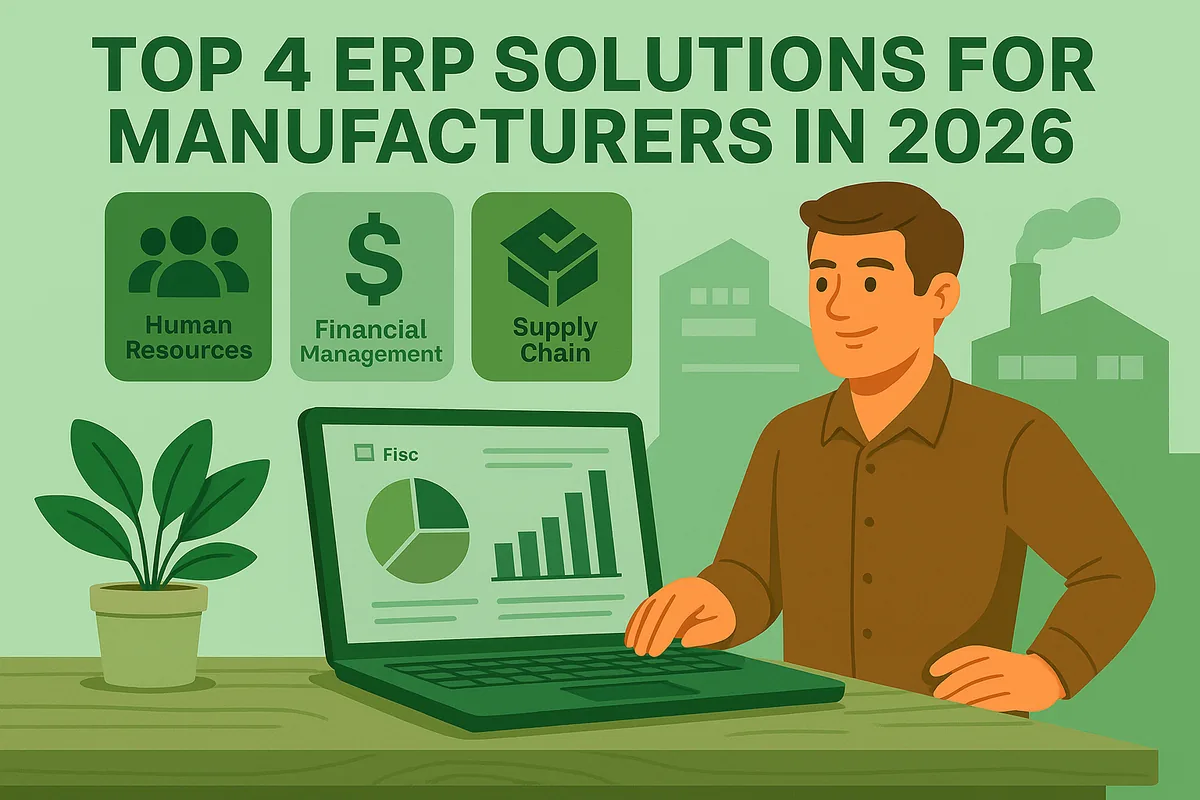
Illustration of a man at a laptop showing charts, with icons for human resources, financial management and supply chain

Manufacturing companies face major challenges in the coming year, from supply chain disruptions to rising competition. To stay profitable, producers need to optimize their operations, reduce waste, and boost productivity.

Enterprise resource planning (ERP) software combines essential business functions like human resources, finances, production and supply chain management into one integrated system. Its centralized database helps manufacturers automate routine tasks, reduce errors, and provide accurate, up-to-date information across the organization.

Here are the top ERP solutions that can help manufacturers improve efficiency and grow their business.

ArcherPoint

ArcherPoint by Cherry Bekaert provides Microsoft ERP solutions designed for manufacturing companies. The system offers comprehensive financial management, simplified service operations, advanced project management, optimized supply chain processes and improved business workflows through a single, intuitive dashboard.

The company prioritizes collaboration with clients. Their expert team works to customize and implement solutions that match specific business requirements. They also provide training, software development, integration services, ongoing technical support, regular updates and security management.

Key features

  •  Certified Microsoft Dynamics ERP Solutions Partner
  •  Free consultation
  •  Comprehensive services, from consultation and implementation to technical support

IFS

IFS brings decades of manufacturing industry experience. Their ERP software manages end-to-end processes, shop floor control, supply chain, production operations and analytics. It provides clear visibility into financial and sales activities so companies can concentrate on core business goals.

Their cloud platform allows customers to select configurations based on specific operational needs, eliminating unnecessary components. The system can expand with additional software modules as organizations grow and adopt new technologies.

Key features

  •  Cloud and on-premise solutions
  •  Specializations in manufacturing
  •  Layered application architecture for cloud tailoring and optimization

Acumatica

Acumatica offers highly adaptable ERP solutions ideal for mid-sized manufacturing companies looking to modernize their operations. Their customers have seen impressive results: 400% higher throughput, 25% reduction in material waste, and 20 hours saved weekly by automating data entry.

Pricing depends on the number of applications implemented. Companies can start with essential features and add more data storage and capabilities as needed.

Key features

  •  Increased throughput by 400% with ERP solutions
  •  Cloud and on-premise deployments
  •  Cost varies by the number of applications

Sage

Sage X3 ERP software works both on-premise and in the cloud. Manufacturing companies can adapt it to their specific requirements, preferences and user roles. The system excels at workflow automation, document management, real-time inventory tracking and budgeting. It supports multiple languages and locations for global operations, with customizable features and third-party integrations.

The Sage Copilot AI assistant in X3 processes information from communications and invoices, identifies issues, and creates draft reports for review. This helps save time, prevent problems and improve decision-making.

Key features

  •  On-premise and cloud-based solutions
  •  Conducive to multi-language and multi-site deployment
  •  AI assistant for boosted productivity and better decision-making

What to look for in manufacturing ERP systems

Since ERP solutions require significant investment, manufacturers need to research options thoroughly. Consider these key criteria when comparing providers:

How to choose the most affordable ERP solutions for manufacturers

Company size significantly impacts ERP selection. Small businesses without dedicated IT teams need different solutions than medium and large enterprises that have experienced staff for implementation and maintenance.

Start by determining your budget and operational requirements. Consider which capabilities are essential – like lot tracking, financial reporting, or customer relationship management. Analyze specific challenges in areas like procurement and inventory management.

Look for vendors who specialize in manufacturing and have proven success with customization and growth. Request product demos to test the software hands-on. Ensure the system integrates well with your current processes.

Remember to factor in all costs beyond the initial purchase price, including implementation, training, maintenance and subscriptions. Run a pilot test to verify the system improves operations before full deployment.

Market outlook for ERP solutions

The global ERP Software market continues to grow at 11.7% compound annual growth rate, projected to reach $123.41 billion by 2030. North America leads with 38% market share, while manufacturing represents 19% of revenue.

AI, Internet of Things and other advanced technologies are driving smart manufacturing adoption. ERP software enables smooth integration of machines and processes across production. Cloud-based ERP is becoming more popular by offering flexibility, scalability and remote management for distributed manufacturing operations.

ERP solutions improve manufacturing efficiency

Implementing the right ERP solution can transform manufacturing operations in 2026 by streamlining workflows and increasing productivity and profits. Take time to thoroughly evaluate options to find cost-effective systems that support your organization’s growth goals.

More must-read stories from Enterprise League:

Key Signs Your Pharma Facility Needs Immediate Air Compressor Service and Repair

Key Signs Your Pharma Facility Needs Immediate Air Compressor Service and Repair

Illustration of a worried technician beside an air compressor in a laboratory, with pressure gauges and a scientist in the background

Smooth operations in pharmaceutical production rely on many interconnected systems. When one critical component falters, the impact can affect the entire process. Air systems play a vital role in maintaining product consistency, safety, and efficiency. In such environments, quick attention to mechanical concerns can help prevent downtime and quality issues.

Regular air compressor service and repair ensure these essential systems continue to function without interruption. Neglecting maintenance can lead to costly delays and compromise the integrity of the entire production line. Here are the key indicators that signal the need for repair services in your pharma facility.

Unusual noises during operation

Equipment that runs with precision should maintain a steady and consistent sound profile. Sudden clunks, rattles, or metallic scraping noises point to internal wear or displacement of parts. In a pharmaceutical setting, such disruptions can compromise pressure control and air purity. Quick inspection becomes crucial to prevent spreading damage across other connected systems.

These noises may also indicate loose or deteriorated components that need tightening or replacement. Ignoring these sounds could result in costly breakdowns, risking production delays. Operational consistency depends on the quiet, balanced functioning of air equipment. Early diagnostic checks provide a chance to fix problems without major interruptions.

Decline in air pressure

A reduction in pressure output affects manufacturing equipment that depends on regulated airflow. When pressure drops, production lines may slow, and certain processes can produce inconsistent results. This is more than a performance issue; it can directly affect product quality. Air compressor service and repair at this stage can address pressure irregularities before they worsen.

Pressure loss might be caused by leaks, blockages, or worn-out valves restricting flow. Monitoring pressure gauges regularly can help detect issues before they become severe. Low pressure stresses other components, leading to increased wear and energy inefficiency. Scheduled maintenance plays a key role in sustaining optimal air delivery.

Changes in air quality output

Air delivered into processing areas should remain clean, dry, and at the right temperature. Any shift in these qualities, whether unexpected moisture, fine particles, or unusual odors, could signal internal contamination or malfunction. Sensitive pharmaceutical applications require precise air purity levels, so quality deviations require urgent attention to maintain compliance and safety standards.

Airborne contaminants can lead to product degradation or batch rejection, which proves costly. Regular checks of filtration and drying systems ensure contaminants do not slip through unnoticed. Temperature and moisture fluctuations can also indicate failing dryer components. Maintaining clean and pure air supports regulatory mandates and patient safety.

Unexpected energy spikes

Utility monitoring can uncover sudden surges in electricity use connected to compressed air systems. A machine working harder than it should increases strain on internal parts and drives up operational costs. Fixing the root cause quickly prevents potential breakdowns and maintains long-term efficiency. This may also highlight the need for a targeted air leak audit to identify hidden inefficiencies.

Energy surges usually point to leaks, blocked lines, or inefficient motors drawing excess power. Diagnosing these issues can save significant operating expenses and reduce carbon footprint. Equipment consuming more power than normal indicates underlying mechanical challenges. Stable energy consumption helps extend equipment life and frees budgets for other priorities.

Visible wear or damage

Exterior inspection can reveal cracks on hoses, worn seals, or fraying connections. These seemingly small visual clues may point to deeper internal concerns. In pharmaceutical production schedules, even minor damage can lead to system failures that halt progress. Quick repair at this stage improves reliability and protects downstream processes.

Damaged hoses can cause leaks that reduce air system efficiency and contaminate product environments. Visual cues are the first signs that maintenance cycles need adjustment or acceleration. Ignoring physical damage increases the risk of sudden breakdowns during critical production windows. Repairing or replacing worn components supports consistent system performance.

Struggles to maintain steady output levels

When the equipment struggles to meet the demands of production cycles, other systems may be forced to compensate. This added strain can compromise precision and uniformity in output batches. Consistent delivery from an air compressor for pharmaceutical industry applications is essential, so persistent output challenges signal an urgent need for intervention.

Output issues might stem from clogged filters, worn pistons, or malfunctioning pressure regulators. These deficiencies reduce performance and introduce variability in sensitive processes. Steady output preserves product integrity and operational timelines. A thorough review ensures all parts align to meet demanding capacity requirements.

Increase in maintenance frequency

A system that requires more attention in shorter intervals may be approaching a critical fault stage. Parts wear faster when underlying issues remain unresolved. This can lead to repetitive service calls without truly fixing the core problem. Strategic diagnostic work can uncover why a compressor is showing recurring trouble.

Frequent repairs also contribute to rising maintenance costs and increased downtime risks. Failure to address root causes could shorten overall equipment lifespan. Proactive replacement of high-wear parts keeps the system running smoothly with fewer interruptions. Careful tracking of repair histories helps in planning effective preventive actions.

Unexplained shutdowns

Stopping without warning interrupts critical workflows and can jeopardize carefully timed production runs. Unplanned halts may stem from overheating, electrical faults, or pressure irregularities. Each restart places added load on the system, increasing the chances of damage. Fixing the cause promptly is key to restoring dependability and avoiding extended downtime.

Safety mechanisms might trigger shutdowns due to irregular operating conditions requiring technical review. Regular system diagnostics can anticipate failure points before abrupt stoppages occur. The cost of unscheduled downtime far exceeds routine maintenance investments. Having backup operational capacity helps maintain steady production during corrective repairs.

Inconsistent temperature control

Compressed air systems should maintain stable temperatures to ensure proper operation and product safety. Fluctuating or rising temperatures can signal cooling system failures or internal friction. In pharmaceutical environments, temperature irregularities affect air quality and can compromise sensitive processes. Consistent thermal regulation also protects equipment from overheating and premature wear.

Detecting temperature shifts early allows for timely repairs, preventing costly disruptions and preserving air system integrity. Untreated temperature variations can speed up component degradation and increase energy consumption. Regular monitoring and maintenance of cooling elements are essential to sustaining optimal performance and avoiding unexpected failures.

Spotting warning signs early allows pharmaceutical facilities to act before air system failures disrupt production. Whether the issue is pressure decline, reduced purity, or unexpected shutdowns, quick response is essential. Planning for consistent inspection and timely intervention maintains efficiency, quality, and regulatory compliance. For facilities aiming to maintain uninterrupted operations, prioritizing air compressor repair ensures reliable system performance long-term.

More must-read stories from Enterprise League: