
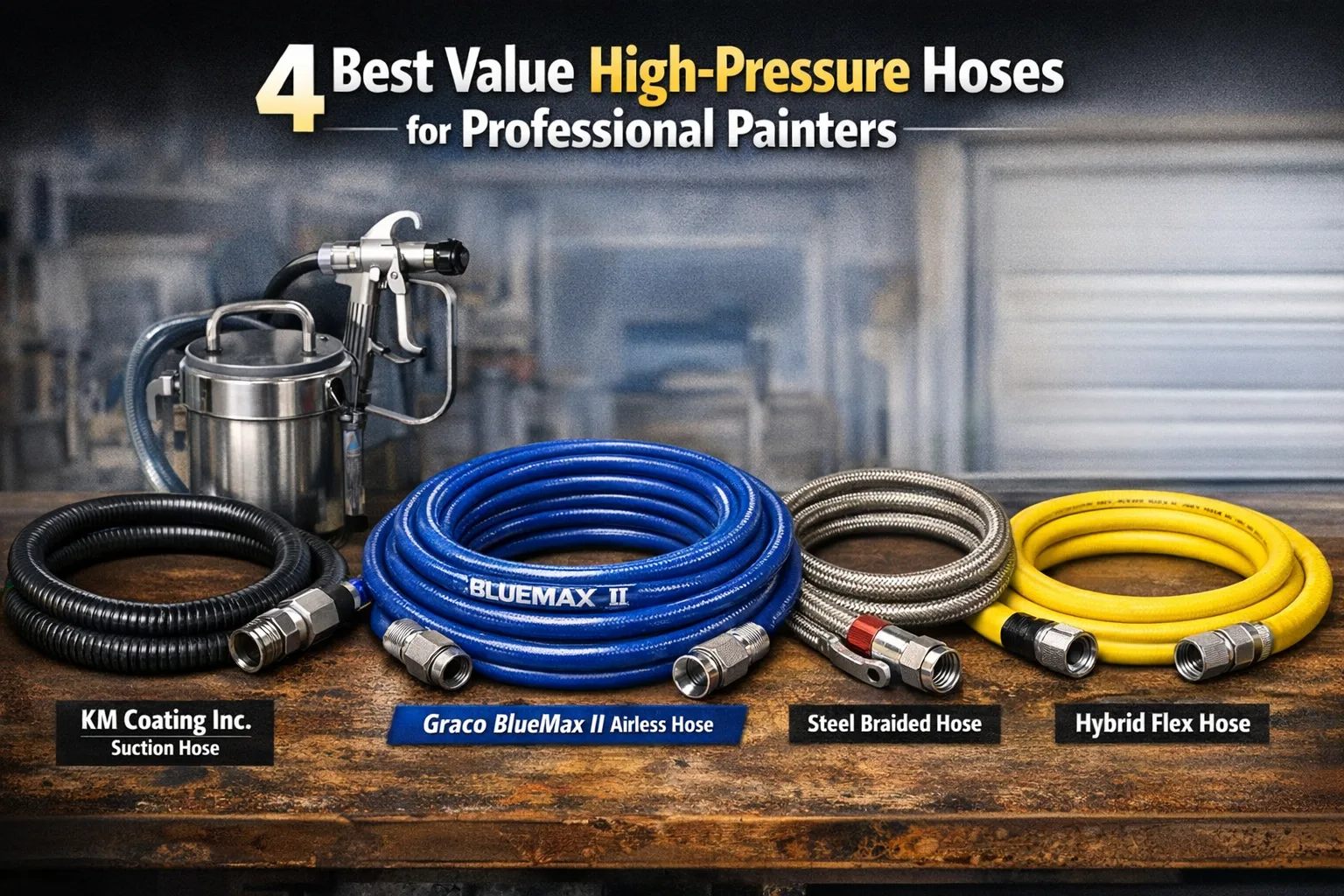
For contractors and coating specialists, the hose connecting your sprayer to the gun is just as important as the sprayer itself. The right one ensures consistent pressure, smooth paint flow and durability under demanding jobsite conditions. When you invest in the best value high-pressure hoses for professional painters, you’re saving money and improving efficiency.
Professional painters rely on durable materials, high PSI ratings and flexibility that allows them to move easily across large surfaces. Explore some of their top options.
-
KM Coating Inc. – suction hose
The suction hose from KM Coating Inc. is a dependable starting point for professionals looking for the best value high-pressure hoses for professional painters. Designed specifically for spray paint systems, this hose efficiently moves paint or coating materials from the source to the pump. Its flexible tubing allows it to operate effectively even in demanding industrial environments.
Another advantage of this suction hose is its adaptability. It works with many spray systems and supports reliable paint transfer across various distances and elevations. This type of hose is widely used in commercial and manufacturing operations where durability and consistent performance are essential.
Key features
- Flexible tubing for efficient paint transfer
- Compatible with multiple spray painting systems
- Designed for industrial and commercial environments
- Optional filter integration for improved performance
- Available in multiple sizes, including ½ inch models
- Built for durability and resistance to collapse
-
BlueMax II Airless Hose – Graco
The BlueMax II from Graco is another top value pressure-rated hose for professional painters. This component is engineered specifically for airless sprayers and designed to deliver consistent performance during demanding painting jobs. With superior flexibility and durable construction, it helps painters maintain smooth, uninterrupted paint flow even at high pressures.
A major advantage of the BlueMax II hose is its lightweight design. It’s over 10% lighter than many comparable hoses, which makes it easier to maneuver around ladders, scaffolding and large jobsites. It also features a conductive core and corrosion-resistant spring guards, making it a dependable option for experts working in residential and commercial environments.
Key features
- Maximum working pressure up to 3,300 PSI
- Over 10% lighter weight for improved flexibility
- Conductive core that meets international safety standards
- Reduced coil memory for easier handling and storage
- Corrosion-resistant plated spring guards
- Compatible with most Graco airless sprayers
-
¼” airless hose – Total Finishing Supplies
The ¼-inch airless hose from Total Finishing Supplies is a reliable option for professional painters looking for the best value high-pressure hoses without compromising on performance. Built for air-assisted airless systems, this hose provides strong pressure resistance while maintaining flexibility for easier maneuvering around equipment and surfaces.
Its polyamide core and steel reinforcement give the hose excellent durability, allowing it to withstand high pressures commonly used in professional spray applications. Because it supports pressures up to 5,000 PSI, it’s particularly useful for contractors spraying stains, lacquers and oil-based coatings that require steady pressure delivery.
Key features
- Maximum working pressure is around 5,000 PSI
- Polyamide core for durability and chemical resistance
- High-tensile carbon steel reinforcement braided
- Polyurethane outer cover for abrasion protection
- Lightweight design for improved flexibility
- Often used with air-assisted airless sprayers
-
3300 PSI Airless Hose – Titan
The Titan 3,300 PSI Airless Hose is a reliable option for durable and affordable spray equipment for professional painters. Designed for airless spray systems, this hose transfers paint from the sprayer to the gun while maintaining steady pressure. Its ¼-inch diameter and strong construction make it suitable for residential and commercial painting projects.
Another benefit is its practical design for everyday jobsite use. Available in multiple lengths and diameters, it allows painters to cover larger areas without constantly repositioning their sprayer. With a pressure rating of 3,300 PSI, it easily handles the demands of professional airless painting systems.
Key features
- Maximum pressure rating of up to 3,300 PSI
- ¼-inch inside diameter for balanced paint flow
- Available in various lengths
- Female-both-ends (FBE) connectors for easy installation
- Compatible with many airless paint sprayer systems
- Durable construction designed for professional job sites
Comparing the best value high-pressure hoses for professional painters
Choosing between the top pressure-rated hose options often comes down to pressure ratings, durability and intended use. Here are some of the best options available.
The importance of finding the best high-pressure hose
High-pressure hoses can be used for both surface preparation and paint jobs. However, in professional spray painting, the hose is much more than a simple connector between the sprayer and the spray gun. It directly affects pressure stability, paint flow and the overall finish quality of a project. If the hose restricts flow, develops kinks or can’t handle the required pressure, the entire system becomes less efficient. The result can be inconstant spray patterns, wasted material and unnecessary downtime.
That’s why experienced contractors focus on finding the best value high-pressure hoses for professional painters rather than simply choosing the cheapest option available. A quality one improves workflow, keeps pressure consistent and allows painters to move freely around jobsites without constantly adjusting equipment. Over time, investing in reliable tools can actually save money by reducing maintenance issues and extending the lifespan of your spray equipment.
Safety is another important consideration. Airless sprayers and industrial coating systems can operate at several thousand PSI. If a hose fails under that pressure, it can create serious hazards. Choosing high-pressure hoses built for professional use minimizes these risks while ensuring dependable performance throughout demanding projects.
How to choose the best high-pressure hose
Selecting the right hose involves more than checking a price tag. Professional painters must evaluate several factors to ensure the hose performs well under pressure, lasts through repeated use and works seamlessly with their spray system.
1. Pressure rating
The pressure rating is one of the most critical specifications to review. Every airless sprayer or coating system operates within a certain PSI range, and the hose must be able to handle that pressure safely. If the rating is too low, it may wear out quickly or fail entirely under high pressure.
Most professional airless painting systems operate between 2,000 and 3,000 PSI, though industrial equipment can exceed that range. Many contractors choose hoses rated for 3,300 PSI or higher to provide a safety margin. A higher pressure rating ensures the hose can handle demanding tasks such as spraying thick coatings, primers or elastomeric paints.
2. Hose length
Length plays a major role in jobsite efficiency. A hose that is too short forces painters to reposition their sprayer frequently, which slows down the workflow and increases fatigue. Longer hoses allow professionals to cover larger surfaces without constantly moving equipment, but they can create slight pressure drops if the diameter is too small.
That’s why many painters choose wider hoses for longer distances or use a combination of hose sizes. Finding the right balance between reach and pressure performance helps maintain smooth spraying across large projects.
3. Flexibility and weight
Professional painters often work around ladders, scaffolding, tight corners and uneven surfaces. A stiff hose can quickly become frustrating to manage and may even affect spraying accuracy. Flexible ones are easier to maneuver and reduce strain during long workdays.
Lightweight hoses are also beneficial when working on large residential or commercial projects. They create less drag as painters move around the jobsite. This improved mobility helps professionals maintain a steady rhythm and achieve more consistent finishes.
4. Material and reinforcement
The internal construction of a hose greatly affects its durability. Pressure-rated spray hoses typically use reinforced layers such as braided fiber, steel wire or aramid fibers to strengthen them while maintaining flexibility. These reinforcements help them withstand high pressure without expanding or weakening over time.
The outer cover also matters. Abrasion-resistant coatings protect a hose from wear when it drags across rough surfaces like concrete floors, scaffolding or construction materials. Choosing strong materials is one of the easiest ways to ensure you’re getting a good quality hose that will last through years of demanding work.
5. Hose diameter
Diameter directly affects paint flow and pressure performance. Smaller hoses are often lighter and easier to handle, but they can restrict flow when spraying thick coatings or working with longer hose lengths.
Many professional painters use ¼-inch hoses for general airless spraying because they provide a good balance of flow and flexibility. For longer runs or heavy coatings, a larger diameter may perform better. Matching the hose diameter to your spray system helps maintain consistent pressure and smooth paint delivery.
6. Compatibility with your sprayer
Even the most durable hose won’t perform well if it doesn’t match your equipment. Painters should always check fitting types, thread sizes and connection standards before purchasing a hose. Incompatible fittings can lead to leaks, pressure loss or difficulty connecting the hose to the sprayer or gun.
Many manufacturers design components specifically for certain sprayer systems, which makes installation easier and ensures optimal performance. Ensuring compatibility is a key step in choosing the best value spray equipment for your workflow.
7. Durability and jobsite conditions
Different jobsites place different demands on equipment. Residential painters may prioritize flexibility and lightweight design, while industrial contractors often require extremely durable hoses that can withstand chemicals, heavy coatings and rough surfaces.
The unsung hero of every perfect pain job
Behind every smooth, even coat of paint is equipment that works reliably under pressure, and the hose plays a bigger role than many people realize. From suction hoses that feed coatings into the system to high-performance spray hoses, choosing the right option can make a noticeable difference in efficiency, safety and finish quality.
FAQs
Q: What psi rating should a professional paint hose have?
A: Most professional airless painting hoses are rated between 3,000 and 3,300 PSI. This range works well for common sprayers used in residential and commercial projects. For industrial coatings or heavy materials, painters may choose hoses rated for 4,000 PSI or higher.
Q: How long should a paint sprayer hose be?
A: The ideal length depends on the size of the project. Many professionals use hoses between 25 and 100 feet long. Longer ones reduce the need to move the sprayer frequently, but painters must ensure the diameter supports consistent pressure.
Q: What’s the difference between a suction hose and a spray hose?
A: A suction hose transfers paint from a container to the sprayer pump, while a spray hose carries pressurized paint from the sprayer to the spray gun. Both are essential components of professional painting systems.
Q: How often should high-pressure paint hoses be replaced?
A: Replacement depends on usage and jobsite conditions. Professional painters typically inspect hoses regularly for cracks, leaks or worn fittings. If damage appears or pressure performance drops, immediate replacement helps prevent equipment failure.
Q: Why does hose diameter matter in spray painting?
A: Hose diameter affects paint flow and pressure stability. Smaller hoses are lighter and flexible, while larger ones allow better flow for thicker coatings or longer runs. Choosing the correct diameter helps maintain a consistent spray pattern.
Q: Are expensive hoses always better for professional painters?
A: Not necessarily. The best option balances durability, pressure capacity and compatibility with your equipment. Many contractors prefer hoses that provide strong performance without unnecessary cost.
Q: Can one hose work with different paint sprayer brands?
A: Yes. Many professional hoses are designed with universal fittings that work with multiple sprayer brands. However, painters should always check thread type, diameter and pressure compatibility to ensure proper connection and safe operation.
Q: How can you extend the lifespan of a high-pressure paint hose?
A: Proper handling and maintenance make a big difference. Avoid sharp bends, store hoses coiled neatly, clean them after use and inspect fittings regularly. Taking care of your pressure hoses helps prevent leaks and premature wear.
More must-read stories from Enterprise League:
- Learn essential tips for buying used vs new equipment for your business.
- Discover the hidden benefits of preventive maintenance to save money long-term.
- Find out how choosing the right business location impacts your success.
- Master proven customer retention strategies to boost your bottom line.
- Explore smart inventory management software solutions for better efficiency.