5 best places to rent heavy equipment in the USA

5 best places to rent heavy equipment in the USA

5 best places to rent heavy equipment in the USA

March 10, 2025

Best places to rent heavy equipment in the USA

When you need heavy equipment for construction projects or other tasks, it’s essential to find reliable providers offering the best tools for the job. Fortunately, the U.S. has a wide range of rental companies that cater to various short-term and long-term needs to ensure you get reliable devices at a fair price. Here are some of the best places to rent construction equipment.

CAT Rental Store

As part of Caterpillar, CAT Rental Store is one of the most recognized names in the heavy equipment industry thanks to its top-quality machines for all types of projects. From basic construction hardware to excavators and backhoes, CAT Rental Store has it all. You can rent the right, well-maintained equipment for your job from CAT locations across the U.S.

Caterpillar’s long-standing reputation for producing high-quality machines ensures you’ll have reliable devices at your disposal. Its agreements are also flexible, allowing you to lease heavy equipment on a short or long-term basis.

United Rentals

As one of the largest and most well-known names in the industry, United Rentals offers a vast fleet. From excavators and bulldozers to forklifts and cranes, its equipment is available at competitive prices. United Rentals operates across the country, making it easy to rent heavy machinery wherever your project is located.

It prides itself on providing expert advice and maintenance services to ensure your items run smoothly. United Rentals is a reliable choice whether you need to rent construction equipment for a few days or lease heavy equipment for a longer period.

Sunbelt Rentals

Industry leader Sunbelt Rentals offers an impressive selection of heavy machinery. It has a network of over 900 locations across the country, making construction equipment, aerial lifts and other machines easily accessible. Customer service is one of this brand’s strong suits, offering advice and quick delivery to ensure your project runs on time.

Sunbelt focuses on providing high-quality heavy equipment rentals and prioritizing the safety of its users. With products designed to meet the highest safety standards, you can feel confident that you’re getting top-tier tools for your job. 

Herc Rentals

With locations in all 50 states, Herc Rentals offers a large variety of machines for construction, landscaping and other industrial applications. Its specialty is renting heavy equipment to individuals and large corporations, offering everything from aerial lifts to compact track loaders.

The company is known for its flexible rental terms, so whether you’re looking to rent heavy machinery for the short term or an extended period, Herc Rentals can accommodate you. It also provides delivery and pickup services, which adds convenience for busy contractors and project managers.

Home Depot

If you need construction equipment for smaller to medium-sized projects, Home Depot is another great option for heavy equipment rentals in the U.S. Known primarily for its hardware and home improvement supplies, the franchise also offers a wide range of heavy machinery for rent, including items like excavators, skid steers and generators.

With thousands of locations across the country, Home Depot makes it incredibly convenient to rent heavy equipment, especially if you’re tackling a DIY project or a smaller construction job. It also provides flexible rental periods. While this rental fleet might not be as expansive as some of the larger specialty enterprises, it’s a solid choice for those looking for reliable, cost-effective rentals.

Factors to consider when renting heavy equipment

Renting heavy equipment is a practical solution for many construction and industrial projects. However, before you finalize a rental agreement, it’s important to consider several factors to ensure you make the best decision for your needs. Here are some key considerations when deciding to rent construction equipment.

Project scope and duration

The scale and timeline of the project will determine what type of equipment you need and how long you need it. If it’s short term, you may opt to rent heavy machinery for a few days or weeks.

However, for long-term projects, it may be more cost-effective to lease heavy equipment. Understanding the scope of your work will help you choose the right rental duration and avoid paying for items you don’t need.

Type of equipment necessary

Different projects require different types of devices. For example, if you’re digging trenches, you’ll need an excavator or backhoe, while lifting tasks may require cranes or aerial lifts. Be sure to evaluate your project’s specific requirements and identify the equipment that’ll help you complete tasks efficiently.

Rental rates and costs

Heavy equipment rental prices can vary significantly depending on the type of machinery, duration of the rental and location. Always request quotes from several rental businesses to compare rates. It’s also important to ask about additional fees such as delivery or damage protection.

Maintenance and equipment condition

Before signing any rental papers, take a good look at the machinery’s condition. Most rental companies take care of their equipment, but you should still check for obvious wear and tear yourself.

Ask when the machine was last serviced and what happens if it breaks down during your rental, will they bring you a replacement right away? Good equipment that won’t quit on you is crucial for keeping your project moving forward without costly delays. Having this maintenance conversation upfront with the rental company makes sure everyone understands what to expect if problems come up.

Delivery and pickup

Another critical factor to consider is how the equipment will get to your jobsite. Many rental enterprises offer convenient delivery and pickup services for large or heavy machinery. Make sure to check if your choice provides these services and ask about associated costs. Timely delivery and pickup can save you time and hassle.

Conclusion

The U.S. has a variety of rental providers that can deliver the heavy equipment you need to complete your projects successfully. From large-scale providers to innovative businesses, there’s no shortage of options when it comes to renting heavy machinery. Start your search with one of these providers to experience quality service and products.

More must-read stories from Enterprise League:

Related Articles

Mentoring vs. Coaching: Key Differences and When to Use Each

Mentoring vs. Coaching: Key Differences and When to Use Each

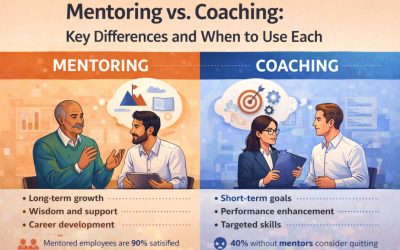
Statistics show that mentored employees are happier at work, with 90% reporting job satisfaction. The numbers paint a stark contrast - 40% of employees without mentors have thoughts about quitting. The difference between coaching and mentoring plays a more vital role...


read more

Building a successful B2B business model in 2026

Building a successful B2B business model in 2026

Building a successful B2B business model in 2026

March 10, 2025

Building a successful B2B business model

Most people think selling is just selling, no matter who the customer is. But ask anyone who’s jumped from retail to B2B, and they’ll tell you it’s a whole new ball game. Building a B2B brand requires completely different strategies than consumer marketing, with an emphasis on expertise, reliability, and measurable business outcomes.

B2B business models work nothing like the consumer world, they depend on longer-term thinking, complex buyer groups, and solutions that solve real business problems. With a market size predicted to reach USD 174.38 trillion by 2030, it’s no wonder companies are rushing to perfect their business-to-business approach.

How B2B works

B2B doesn’t just mean slapping a wholesale price on your regular products and calling it a day. It’s about creating systems where businesses can buy from you in ways that make sense for them. Most B2B transactions happen through dedicated sales teams, not shopping carts, though online B2B marketplaces are growing fast. 

The buying process typically involves multiple decision-makers, technical experts, end users, finance people, and executives all weighing in before a purchase happens. That’s why B2B sales cycles often take months, not minutes. Companies need to show clear ROI, compatibility with existing systems, and long-term support options. Creating a compelling B2B business proposal that addresses all these concerns becomes crucial for closing deals. Pricing usually involves custom quotes rather than fixed rates, with volume discounts, annual contracts, and service-level agreements being common.

Core principles of B2B business model

Behind every successful B2B company stands a solid set of principles that guide how they operate. First off, customer relationships matter more than anything else – these aren’t one-and-done transactions but ongoing partnerships that might last decades. Value creation needs to be measurable in dollars and cents, not just feel-good marketing speak. B2B models also rely heavily on specialization, knowing your niche inside and out, and becoming the go-to expert in that specific area. 

Successful B2B businesses understand the entire ecosystem in which their clients operate, not just their immediate needs. They also build scalable systems that can handle both small businesses needing basic services and enterprise clients requiring custom solutions. Smart B2B marketing tips focus on demonstrating expertise through content that educates prospects rather than interrupting them with advertisements. Perhaps most importantly, B2B companies need patience, they’re playing the long game, investing in relationships that might not pay off for months but eventually become their most profitable accounts.

Building the right B2B product

The difference between a B2B product that succeeds in the market and one that fails often comes down to how thoroughly you understand the daily reality of your target customers. Effective B2B products don’t pursue innovative technology for its own sake – they address specific workflow problems that frustrate professionals regularly. This requires leaving your office environment and directly observing potential users, documenting their challenges and makeshift solutions.  Many B2B startups fail precisely because they skip this critical research phase, building solutions for problems that don’t actually exist. Successful B2B products typically address:

  • Handling large volumes of data or transactions that would overwhelm consumer solutions
  • Meeting industry-specific regulatory requirements and compliance standards
  • Enabling collaborative workflows across departments and organizational structures
  • Processing complex information in ways that yield actionable business insights
  • Integrating seamlessly with existing technology systems and infrastructure

They must also account for organizational needs beyond individual users – providing administrator controls, usage statistics, and security that meets enterprise standards. Companies that excel at B2B product development view customer support interactions as valuable sources of insight, not unwelcome distractions. They recognize that businesses purchase results, not features, so each product decision relates directly to measurable business benefits their customers can present to their leadership teams.

B2B business model vs. Traditional models

When we compare B2B models with traditional consumer businesses, the differences go far beyond just who buys the product. B2B companies operate with entirely different metrics, sales approaches, and relationship dynamics. While consumer brands chase website traffic and social media engagement, B2B firms track metrics like customer lifetime value, contract renewal rates, and solution adoption. Effective B2B lead generation strategies focus on quality over quantity, targeting specific decision-makers rather than casting wide nets. The key differences include:

  • Sales complexity: B2B deals might take 6-12 months and involve multiple decision-makers, whereas consumer purchases happen in minutes or days
  • Price points: B2B solutions typically cost thousands or even millions, not tens or hundreds of dollars
  • Marketing focus: B2B marketing centers on education and problem-solving content rather than emotional appeals
  • Customer numbers: B2B companies might thrive with hundreds of clients, while consumer businesses need thousands or millions
  • Support expectations: B2B clients expect personalized service and dedicated account managers, not chatbots or email tickets

Most importantly, B2B relationships continue well past the initial sale. B2B customers become genuine partners who provide ongoing feedback, shape future product development, and stick with vendors for years when treated properly. Companies looking to increase B2B sales often find that growing existing accounts through expanded services yields better results than constantly chasing new logos. This long-term focus changes everything from cash flow projections to how companies structure their support and success teams.

Conclusion

The B2B business model continues to offer tremendous opportunities for companies willing to invest in understanding complex business needs and while consumer markets might reward viral growth and emotional appeal, B2B rewards expertise, reliability, and results. 

More must-read stories from Enterprise League:

Related Articles

Mentoring vs. Coaching: Key Differences and When to Use Each

Mentoring vs. Coaching: Key Differences and When to Use Each

Statistics show that mentored employees are happier at work, with 90% reporting job satisfaction. The numbers paint a stark contrast - 40% of employees without mentors have thoughts about quitting. The difference between coaching and mentoring plays a more vital role...

read more

Web3 VC funding to further grow after reaching $8.5B in 2026

Web3 VC funding to further grow after reaching $8.5B in 2026

Web3 VC funding to further grow after reaching $8.5B in 2026

March 10, 2025

eb3 VC Hits $8.5B in 2024 and it growth continues

After the highs of 2021 and 2022, Web3 VC funding declined sharply in 2023. As the bear market weighed on both startups and venture capitalists, the sector saw a 70.5% year-over-year (YoY) drop in total investment.

Fast-forward to 2024, when bulls regained control of the crypto market. As Bitcoin’s price crossed the $100,000 mark by year-end, venture capitalists began to catch up with the shifting market sentiment.

According to a new Crunchbase report, Web3 VC funding rose 3.66% YoY in 2024, reaching $8.5 billion for the year. With the crypto market gearing up for a strong 2025, venture capitalists are expected to ramp up investments in promising Web3 startups.

Web3 funding boom surpasses $8.5B and still growing

Compared to 2023, last year’s Web3 VC funding offers some optimism for crypto market players. However, the 3.66% YoY growth remains modest, especially considering that the total cryptocurrency market cap doubled in 2024.

Notably, while total investment dollars increased, the number of deals dropped. Only 1,545 deals were struck in 2024, marking a 26% decline from the previous year.

In Q4 2024, just four Web3 startups managed to raise over $50 million. Among them, Blockstream, a crypto infrastructure firm, secured $210 million, while the investment platform Public raised $135 million. These two rounds ranked among the top five largest funding deals of the year.

DePIN and RWAs to be the hottest sectors for VCs

The YoY increase in Web3 funding signals growing investor confidence. However, as competition intensifies, VCs are prioritizing startups with real-world utility, particularly those bridging Web2 and Web3 markets.

Two standout sectors are Decentralized Physical Infrastructure Networks (DePIN) and Tokenized Real-World Assets (RWAs). These fields offer practical use cases that act as a bridge between the Web2 and the Web3 markets. As a result, VCs are actively scouting projects such as Render Network and Filecoin in DePIN, alongside MANTRA in RWAs. The tokens of these three protocols have drawn substantial interest among investors. For example, Render’s daily trading volume as of February 27, 2025 is $111.37M alone according to Binance.

Further reinforcing VCs’ growing interest in these sectors, multiple new funds have been launched targeting DePIN and RWAs. In September 2024, Borderless Capital launched a $100 million DePIN-focused fund to accelerate development in this space. A month later, GnosisDAO introduced a $40 million fund focused on RWAs, payment rails, and digital asset infrastructure.

Web3 VC funding to grow further in 2025

After stabilizing in 2024, Web3 VC funding is expected to surge in 2025. Major venture capital firms like Dragonfly Capital, Pantera Capital, and Paradigm are collectively raising billions to invest in Web3 startups. 

At the same time, President Trump’s crypto-friendly stance is expected to act as a catalyst for renewed interest in the sector. The US President has already signed an executive order to foster crypto development within the nation, laying the foundation for his plans to create a national Bitcoin stockpile.

According to PitchBook, Web3 VC funding is projected to exceed $18 billion in 2025, with multiple quarters surpassing $5 billion in capital deployment. In its 2025 Enterprise Technology Outlook, PitchBook analysts highlight that the growing participation of institutions such as Franklin Templeton, BlackRock, and Goldman Sachs is bolstering investor confidence and accelerating digital asset adoption.

Generalist VCs, who largely exited the crypto space after the 2022 market collapse, are now making a comeback. The report notes: “Their return will be driven by the stabilization of crypto markets; the approval of regulated financial products such as spot Bitcoin ETFs; and the emergence of clearer use cases in areas such as decentralized finance (DeFi), Web3 infrastructure, and consumer-facing applications.”

Additionally, declining interest rates and improved global liquidity could further drive VC activity within the Web3 sector. Rising token prices could boost investor confidence, allowing startup founders and early token holders to attract more capital or reinvest into new ventures.

Conclusion

Together, these factors could set the stage for a major resurgence in Web3 VC funding in 2025. While analysts do not expect funding to match the all-time highs of 2022, this year’s growth is projected to be far more significant than the modest gains of 2024.

More must-read stories from Enterprise League:

Related Articles

Mentoring vs. Coaching: Key Differences and When to Use Each

Mentoring vs. Coaching: Key Differences and When to Use Each

Statistics show that mentored employees are happier at work, with 90% reporting job satisfaction. The numbers paint a stark contrast - 40% of employees without mentors have thoughts about quitting. The difference between coaching and mentoring plays a more vital role...

read more

Honest business wisdom in 22 integrity quotes for work

Honest business wisdom in 22 integrity quotes for work

Honest business wisdom in 22 integrity quotes for work

March 07, 2025

Honest business wisdom in 22 integrity quotes for work

Honesty matters everywhere, but it’s especially crucial at work where trust builds or breaks careers. Global attitudes on workplace integrity show that while cultures may differ on business practices, nearly everyone values truthfulness at their core. Leaders who stand behind ethical standards often find themselves accelerating business performance as team trust grows and customers recognize genuine value. If you’re looking for more inspiration from ethical leaders, explore these insightful business ethics quotes that highlight the power of integrity in action.

Whether you’re leading a team through tough decisions or trying to stay true to your values under pressure, sometimes you need inspiration from those who’ve walked this road before. That’s why we’ve collected these integrity quotes for work that go beyond empty platitudes, offering real wisdom for those moments when doing the right thing isn’t necessarily the easy thing.

22 integrity quotes for work 

Here are some powerful integrity quotes for work to guide your decisions when ethical dilemmas arise and you need that extra courage to stand by your principles.

  1. “Leading with integrity and empathy requires vision and a connection to your deepest self.”- Karla McLaren
  2. “Develop your character so that you are a person of integrity.”- Peter Cain
  3. “It takes courage to create a meaningful life of integrity. It also requires good company. And practice.”- Shelly Francis
  4. “With many overhead schemes for the world’s salvation, everything rests back on integrity and driving power in personal character.”- Harry Emerson Fosdick
  5. “Creating a culture of integrity and accountability not only improves effectiveness, it also generates a respectful, enjoyable, and life-giving setting in which to work.”- Tom Hanson
  6. “Customer retention may be best supported by operational integrity. After all, when you think about your personal relationships as well as your business relationships, you tend to stick with the folks who are really good at showing they sincerely care about you, and doing what they say they’re going to do. It boils down to trust.”- L.Hunsaker
  7. “It’s easy to have principles when you’re rich. The important thing is to have principles when you’re poor.”- Ray Kroc
  8. “Think P.I.G. – that’s my motto. P stands for Persistence, I stands for Integrity, and G stands for Guts. These are the ingredients for a successful business and a successful life.”- Linda Chandler
  9. “To give real service you must add something which cannot be bought or measured with money, and that is sincerity and integrity.”- Donald A. Adams
  10. “I don’t know a more dignified and effective workforce than one operating from a position of worth, integrity, and confidence, as well as one that excels in language of appreciation.”- Tan Sri Francis Yeoh
  11. “Some things are kind of obvious when it comes to leadership. You have to be a great communicator, have very high integrity and have tremendous perseverance and stamina.”- Suresh Basandra
  12. “Integrity is the seed for achievement. It is the principle that never fails.”- Earl Nightingale
  13. “Here’s a truth: principled leaders solve moral problems. They have the courage to act rightly. They consistently demonstrate principled conduct under pressure.”- Gus Lee
  14. “We must adjust to changing times and still hold to unchanging principles.”- Jimmy Carter
  15. “The first law of leadership is that your foundation is built through integrity, character, and trust.”- Brian Cagneey
  16. “Admitting one’s own faults is the first step to changing them, and it is a demonstration of true bravery and integrity.”- Philip Johnson
  17. “If you want to influence others, the most important thing you can do is be a living example of the principles, ideals, and faith that you advocate.”- Nick Vujicic
  18. “The quality of a leader is reflected in the standards they set for themselves.”- Ray Kroc
  19. “If you have integrity, nothing else matters. If you don’t have integrity, nothing else matters.”- Alan K. Simpson
  20. “In a room where people unanimously maintain a conspiracy of silence, one word of truth sounds like a pistol shot.”- Czesław Miłosz
  21. “Integrity is the ability to stand by an idea.”- Ayn Rand
  22. “If it is not right do not do it; if it is not true do not say it.”- Marcus Aurelius

Conclusion

The choice to act with honesty shapes not just your career but who you become along the way. So, our advice is to keep these integrity quotes for work handy for those moments when your moral compass needs a little recalibration.

More must-read stories from Enterprise League:

Related Articles

Mentoring vs. Coaching: Key Differences and When to Use Each

Mentoring vs. Coaching: Key Differences and When to Use Each

Statistics show that mentored employees are happier at work, with 90% reporting job satisfaction. The numbers paint a stark contrast - 40% of employees without mentors have thoughts about quitting. The difference between coaching and mentoring plays a more vital role...

read more

Under 30 and unstoppable young entrepreneurs breaking all the rules

Under 30 and unstoppable young entrepreneurs breaking all the rules

Under 30 and unstoppable young entrepreneurs breaking all the rules

March 06, 2025

Under 30 and unstoppable young entrepreneurs breaking all the rules<br />

Kids used to dream about becoming doctors, teachers, or astronauts. Now they’re dreaming up business plans. With successful young entrepreneurs making headlines and social media showcasing entrepreneurial lifestyles, it’s no wonder that 41 percent of teens would consider entrepreneurship as a career option.

This new generation isn’t interested in climbing corporate ladders or following the rules of old-school business, and you can see proof of this mindset shift everywhere Gen Z enters the workplace. They’re creating their own opportunities, often building solutions for problems they’ve experienced firsthand. What makes these young entrepreneurs different is their willingness to challenge assumptions about how businesses should operate and what they should stand for. 

Key traits of young entrepreneurs

Business owners in their teens and twenties don’t think like their parents did. They bring different skills and priorities to the table that reflect growing up in a world where smartphones, social media, and global connections have been normal since childhood

  • Digital-first thinking: They don’t just use technology; they breathe it. These entrepreneurs instinctively see opportunities for automation, connection, and scaling that might be invisible to others.
  • Purpose over profit: Making money matters, but it’s rarely the only goal. Most young founders build their businesses around causes they genuinely care about, whether environmental sustainability, mental health, or social inequality.
  • Comfort with uncertainty: Growing up during economic shifts and global challenges has made many young entrepreneurs surprisingly comfortable with risk. They’re often willing to try, fail, learn, and repeat without the fear that holds back many seasoned professionals.
  • Community-centered approach: Rather than creating products in isolation, they actively involve their users in the development process. Social media feedback, beta testing, and customer communities shape their business decisions from day one.
  • Global perspective: National boundaries mean little to entrepreneurs who grew up connected to peers around the world. They build internationally-minded companies from the start, not as an expansion afterthought.
  • Authenticity as strategy: Being real isn’t just a personal value, it’s good business. Young founders tend to build brands that reflect genuine values rather than manufactured corporate personas.

Perhaps most importantly, these entrepreneurs bring fresh perspectives to old problems. Not being entrenched in “how things have always been done” allows them to question fundamental assumptions and reimagine entire industries from the ground up.

List of 8 young entrepreneurs

These seven entrepreneurs didn’t wait for perfect conditions to start their businesses. Each one began with whatever they had on hand but tons of determination, working on problems they actually cared about instead of just trying to get rich quickly.

They’re a diverse bunch from all over the map, working in everything and what makes them special besides that they were young is how they’re completely rethinking what businesses can do and stand for today.

Ben Francis

Ben Francis started Gymshark at 19 in his mom’s garage while juggling college and a Pizza Hut delivery job. What began as a small screen-printing operation selling supplements quickly shifted when Francis noticed a gap in the fitness apparel market. Instead of copying established brands, he designed form-fitting clothing that showed off the results of working out, something nobody else was doing. 

His early strategy of sending free products to fitness influencers paid off massively, creating a cult-like following on social media before influencer marketing was even a thing. By listening to his customers and staying true to his fitness community roots, Francis built Gymshark into a billion-dollar brand without outside investment until 2020, proving you don’t need industry experience to disrupt it.

Mikaila Ulmer

At just four years old, Mikaila founded “Me & the Bees Lemonade,” her lemonade business started with a bee sting and a flaxseed honey recipe from her great-grandmother’s cookbook. After getting stung twice at age four, Mikaila became fascinated with bees instead of fearing them. Learning about their crucial role in our ecosystem and their endangerment, she decided to make lemonade with honey rather than sugar, donating a portion of profits to bee-saving organizations. 

What’s remarkable isn’t just starting a business at such a young age, but her pitch to Shark Tank at 11 that secured a $60,000 investment. Now a teenager, Mikaila has built Me & the Bees into a nationally recognized brand while balancing school, speaking engagements, and her non-profit that teaches youth entrepreneurship. She’s living proof that age is just a number in business.

Alina Morse

Seven-year-old Alina Morse asked a simple question: “Why can’t we make candy that’s actually good for your teeth?” Instead of dismissing this as childish curiosity, she took action. After experimenting with ingredients in her kitchen and consulting with dentists, Alina created Zollipops, lollipops that clean teeth by raising mouth pH and reducing acid. Her persistence convinced retailers to take a chance on a product created by a child. 

By age 14, she was running a multi-million dollar company while doing homework between business calls. Alina’s company now includes a full line of tooth-friendly treats, sold in thousands of stores worldwide. She’s used her success to donate over 250,000 Zollipops to schools for dental health education programs, showing that kid entrepreneurs can build profitable businesses while creating positive change.

Patrick Collison

Patrick Collison wrote his first software program at age 10 and sold his first company for $5 million while still a teenager. But that was just the warm-up. Frustrated by how difficult it was for small businesses to accept online payments, Patrick and his brother John created Stripe in 2010, building a solution that could be implemented with just a few lines of code. 

What set them apart wasn’t just technical skill but their focus on developers’ needs when everyone else was focused on merchants. Stripe quickly attracted investments from Peter Thiel and Elon Musk, fueling its expansion. Now valued at over $95 billion, the company processes hundreds of billions in payments annually. Despite his billions, Patrick maintains a low profile, reading voraciously and remaining deeply curious about how the world works.

John Cronin

When John Cronin finished high school, he told his dad Mark he wanted to go into business together, selling crazy socks. Having Down syndrome didn’t stop John from believing in his low-cost business idea or his ability to make it work. Starting with just $3,000 in inventory stored in their living room, John brought personality and creativity while his dad handled operations. Their formula was simple: wild designs, personal notes with every order, and giving back by donating 5% of profits to the Special Olympics. 

John’s Crazy Socks quickly grew to shipping thousands of orders daily, hiring many people with disabilities along the way. Beyond selling colorful footwear, John has testified before Congress about employing people with disabilities and showing the world that different abilities can be business superpowers rather than limitations.

Boyan Slat

During a diving trip in Greece at 16, Boyan Slat couldn’t believe what he saw, the water was filled with more plastic trash than actual fish. This shocking experience stuck with him. By 18, he was on a TEDx stage pitching his fix: giant floating systems that would use ocean currents to gather plastic waste. When so-called experts laughed off his concept, Slat quit his aerospace engineering program to focus on making it real. 

The road wasn’t smooth, early versions broke apart in storms, collected plastic would escape, and technical problems kept popping up. But Slat and his team refused to quit, tweaking designs after each setback. Today, his organization The Ocean Cleanup is pulling massive amounts of plastic from both oceans and rivers, even turning the recovered trash into new products. His work has not only inspired global environmental efforts but also sparked innovative recycling business ideas that turn waste into sustainable solutions. Slat proved that sometimes being too young to know something “can’t be done” is actually an advantage.

Anya Doherty

While studying at Cambridge University, Anya Doherty became obsessed with a simple question: why is it so hard for food businesses to measure their environmental impact? Traditional carbon assessment methods were expensive, time-consuming, and nearly impossible for restaurants and food producers to implement. Drawing on her environmental science background, Anya built Foodsteps, an accessible platform that turns complex carbon calculations into actionable insights for food companies. 

What makes her approach different is combining rigorous science with practical business needs. By creating a system that generates customer-facing labels showing a meal’s carbon footprint, she’s helping businesses make sustainability a marketing advantage rather than just a compliance cost. Inspired by innovations in carbon capture startups, Anya has expanded her team to include scientists and developers, all while maintaining her vision of making environmental impact visible at every step of our food system.

Sandra C. Chukwudozie

Sandra Chukwudozie noticed something big in her home country of Nigeria, over 90 million people living without decent electricity. Instead of seeing this as too big to fix, she spotted a chance to help while building a business. Her company, Salpha Energy, came up with solar systems that low-income families could actually afford through small, regular payments instead of one huge cost upfront. 

The key to her success wasn’t just the technology, but really getting what rural families needed and figuring out how to reach villages that bigger companies wouldn’t touch. This practical approach caught the eye of international groups who wanted to partner with her. Even as her business grows like crazy and she’s invited to speak at fancy global events, Sandra makes sure to regularly visit the villages using her solar systems. She believes staying close to these communities keeps her business focused on what really matters.

Lorem Ipsum is simply dummy text of the printing and typesetting industry. Lorem Ipsum has been the industry’s standard dummy text ever since the 1500s, when an unknown printer took a galley of type and scrambled it to make a type specimen book. It has survived not only five centuries, but also the leap into electronic typesetting, remaining essentially unchanged. It was popularised in the 1960s with the release of Letraset sheets containing Lorem Ipsum passages, and more recently with desktop publishing software like Aldus PageMaker including versions of Lorem Ipsum.

How to support the next generation of entrepreneurs

Besides encouragement, young people with big ideas need practical support to turn their visions into reality. Schools, businesses, and communities all play crucial roles in nurturing tomorrow’s business innovators. Schools need to replace theoretical business lessons with practical experiences where students build real products and services. Mentorship programs connecting teens with experienced business owners provide guidance that classroom learning can’t match.

We also need to address the funding gap, especially for kids from less wealthy backgrounds, through microgrants and startup competitions with meaningful prizes. Most importantly, we must create environments where young founders can experiment without fear, making it clear that early failures are learning opportunities, not the end of the road.

Conclusion

Will every young entrepreneur change the world? Of course not. Building something from scratch is incredibly hard work with plenty of failures along the way. But for teenagers with that spark of an idea, there’s never been a better time to give it a shot. And hey, the best business ideas for teens usually start with something you’re already obsessed with, that passion will keep you going when things get tough.

More must-read stories from Enterprise League:

Related Articles

Mentoring vs. Coaching: Key Differences and When to Use Each

Mentoring vs. Coaching: Key Differences and When to Use Each

Statistics show that mentored employees are happier at work, with 90% reporting job satisfaction. The numbers paint a stark contrast - 40% of employees without mentors have thoughts about quitting. The difference between coaching and mentoring plays a more vital role...

read more

How to create a killer profile on Enterprise League

How to create a killer profile on Enterprise League

How to create a killer profile on Enterprise League

March 03, 2025

Create a killer profile on Enterprise League<br />

If you’ve set up your Enterprise League profile but aren’t seeing results, you might be making some common mistakes. With a number of companies that are trying to stick out and attract clients’ attention, a boring profile means not getting leads and losing a lot of opportunities to your competition. 

Creating a killer profile isn’t rocket science and you don’t need to be a marketing genius to make your profile work harder for you, spending just half an hour improving your profile could be the difference between getting passed over and acquiring your next big client. In order to achieve that we’ll show you simple twists that will help you catch the eye of those potential clients and partners who are actively looking for companies like yours.

Let’s get started

When someone clicks on your profile on Enterprise League, you’ve got a few seconds to capture the attention of your reader, and believe us when we say that the first sentence should better be good. Think about what makes your company special. But first things first, click your avatar in the top menu bar and select “Profile”. On your profile page, you’ll notice several sections including about, analytics, services, and reviews. The great thing is, that you can edit everything on the page, and those little “+” icons next to each section are your edit buttons, click them whenever you want to update something.

Each section of your profile serves a specific purpose. Your overview tells potential clients who you are at a glance. The description is where you get to tell your company’s story, from how you started to what you’re focusing on right now. You’ll also need to add basic details like your Company CEO, founding year, and company size.

Make your first impression count

First impressions matter, especially online. When potential clients land on your Enterprise League profile, your image and bio are the first things they’ll notice. Getting these elements right can mean the difference between someone clicking away or reaching out to learn more about your business. Now, let’s break down each element:

Choose a profile picture that tells who you are

Your profile picture on Enterprise League it’s often the first thing potential clients notice. While many businesses default to their logo, consider what image would best represent your company’s identity and values. Think about your profile picture as your business card. It should be professional, yet distinctive enough to catch attention. 

Whether you choose to use your company logo, a photo of your flagship product, or a snapshot of your workspace, make sure it reflects the quality of work you deliver. Quality matters and because of that a pixelated logo or blurry photo can make even the most professional company look amateur. Take time to upload a clear, well-lit image that’s properly sized for the platform.

Tell us where you’re based

When it comes to location, be specific. Instead of just “UK,” tell people you’re “Based in Central London” or “Operating from Manchester, serving clients nationwide.” Your location can be a deciding factor for many businesses. Some clients specifically look for local partners they can meet in person. Others might want to know if you’re open to remote collaboration. That’s why being clear about your service area is important, whether you work locally, nationally, or internationally.

Think about it this way, if a client in Leeds is searching for a local service provider, they might skip over profiles that only list “UK” as their location but if you specify “Based in Leeds city center, serving Yorkshire and surrounding areas,” you’ve just made their decision easier.

Create a unique bio that goes beyond the average CV

Don’t just list your services or paste your company history, tell potential clients what drives your business forward. What problems do you love solving? What makes you different from every other company in your field? Your overview and description are your chance to share this story.

You’ve got limited space, so make it worth it, skip the corporate meaninglessness, and focus on real examples. Instead of saying “We’re passionate about innovation,” show how you’ve helped clients succeed. Whether it’s “We cut manufacturing costs by 35%” or “We help restaurants double their bookings,” make every word work for you and your company. Clients don’t care that you’re passionate about excellence, they want to know if you can solve their problems.

Show what you offer

Your service and product section is where potential clients learn exactly how you can help them. Enterprise League gives you the perfect platform to show them and add multiple services or products depending on your company’s type.  Each one can include a title, detailed description, and image. Use this space to paint a clear picture of what working with you looks like. Take time to make each listing as informative and engaging as possible – remember, this might be your first chance to impress a potential client.

When adding a product or service, take time to fill in all the details, they matter more than you think:

  • Create a clear, descriptive title that includes key features
  • Choose the right category to help clients find you easily
  • List all important specifications and unique selling points
  • Write a detailed description that focuses on the benefits
  • Set clear pricing, delivery times, and minimum orders

Your offerings will appear in the Enterprise League marketplace where potential clients are actively looking for solutions and in case you need to make some changes, you can always update each one of those services as your business grows, this way you will keep your content fresh and relevant.

Experiences

Your past work tells potential clients what they can expect from you. Rather than just listing what you do, show them what you’ve actually accomplished. Think of each experience entry as a mini case study that proves your expertise. Add real examples of projects you’ve completed, problems you’ve solved, or milestones you’ve achieved. For a marketing agency, this might mean sharing how you helped a client increase their sales by 50%. If you’re in construction, show that office building renovation you finished ahead of schedule. When adding these experiences:

  • Give each project a clear, descriptive title
  • Share specific results and numbers when possible
  • Explain the challenge and how you solved it
  • Include the timeframe and scale of the project
  • Add images that show your work in action
  • Mention any notable clients (with their permission)

This section builds trust with potential clients by showing them you have a proven track record. Keep your experiences up to date, and don’t be afraid to replace older entries with newer, more impressive ones as your business grows.

Put your reviews to work

Don’t let the good reviews sit there doing nothing. Enterprise League lets you pull in all your customer feedback in one place. Good reviews build trust, simple as that. When potential clients see others vouching for your work, they’re more likely to pick up the phone or make an order. 

Those reviews tell you exactly what your business does best. Use that info to fix what’s not working and double down on what is. The trick is to keep those reviews coming and actually do something with them. Every bit of feedback is a chance to make your business better and show future clients why they should work with you.

Website and social platforms

Adding your social media accounts and website to your Enterprise League profile is a smart move for your business visibility. When clients can see your LinkedIn posts about industry insights, your Instagram featuring completed projects, or your Facebook highlighting company culture, they get a better sense of who you are. 

Plus, active social media profiles add credibility to your business and show you’re established in your field. Enterprise League makes it easy to connect your LinkedIn, Facebook, Instagram, Twitter, and Crunchbase accounts, so take advantage of this feature to build trust with potential clients.

Conclusion

Your Enterprise League profile can be more than another business listing. With a strong opening that grabs attention, services that focus on solving real problems, solid proof that you deliver results, and authentic photos of your work, you will for sure stand out. And don’t forget to let your happy clients do some of the talking through their reviews. Take 30 minutes today to refresh your profile with these tips because the next big client who finds you will be glad you did.

More must-read stories from Enterprise League:

Related Articles

Mentoring vs. Coaching: Key Differences and When to Use Each

Mentoring vs. Coaching: Key Differences and When to Use Each

Statistics show that mentored employees are happier at work, with 90% reporting job satisfaction. The numbers paint a stark contrast - 40% of employees without mentors have thoughts about quitting. The difference between coaching and mentoring plays a more vital role...

read more