
What is local presence dialing and how does it impact your sales

What is local presence dialing and how does it impact your sales

What is local presence dialing and how does it impact your sales

May 07, 2024

The benefits of local presence dialing and it's impact on sales

At times when consumers are constantly bombarded by robocalls and spam, getting your prospects to actually pick up the phone is one of the biggest challenges salespeople face when running outbound calling campaigns. That is particularly true for cold calling when your sales reps are trying to reach out to prospects who are not expecting their call. Chances are the majority of your outbound sales calls simply won’t be answered, no matter how well-prepared your team is to present your pitch and handle objections.

This is where local presence dialing can become a real game-changer for your sales efforts, helping you dramatically increase call connection rates and improve the efficiency of your outbound cold-calling. By displaying a local phone number to your prospects, rather than an unfamiliar long-distance or toll-free number, you can boost answer rates by 4-5 times.

What is local presence dialing?

Local presence dialing is a sales and marketing strategy that aims to increase engagement and response rates by displaying a local phone number to prospects, rather than a toll-free or out-of-state number. The theory behind local presence dialing is that people are more likely to answer a call from a number that appears to be local to their area, versus an unfamiliar long-distance number.

How does local presence dialing work?

To use local presence dialing, you need to purchase local DID numbers from a service provider such as VoiceSpin which offers international local numbers from 160+ countries. These providers maintain a pool of numbers with local area codes from various geographic locations. When a business initiates outbound calls using the dialer software for call center, the dialing system automatically selects a number from the pool with the same area code as the recipient’s location. It ensures that your prospect will see a local number on their caller ID screen, helping your business appear legitimate, more credible, and trustworthy.

For example, if you are calling prospects located in New York, the dialer system will select numbers with 212 or 315 area codes from your pool of purchased numbers. From the recipient’s perspective, the call appears to be coming from a local business. The best part is that your agents don’t have to select numbers for each location manually. The dialer system automatically detects the location based on the area code of the prospect’s number and adjusts the local caller ID accordingly, saving your reps a great deal of time and effort.

How can local presence dialing help you improve sales

Before we go into more detail, first let’s see how local presence dialing can help you improve sales.
The efficiency of local presence dialing

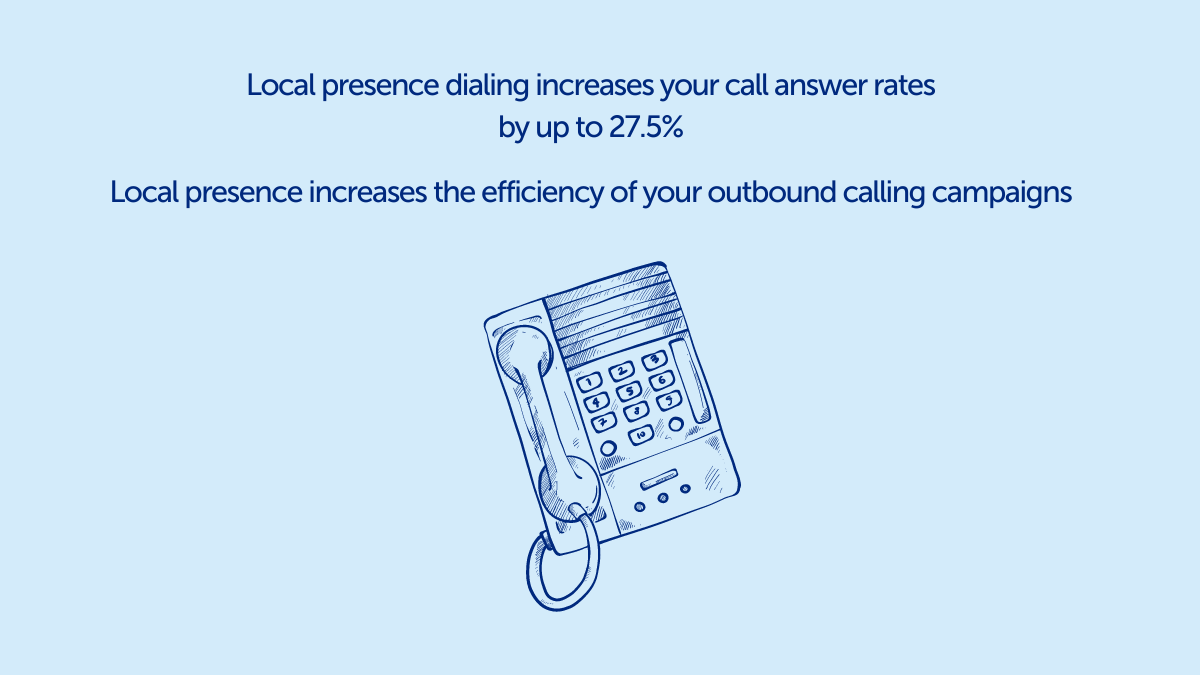
Local presence dialing increases your call answer rates

Low call answer rate has always been one of the biggest challenges sales reps face when making cold calls. There might be several reasons why your prospects aren’t picking up (e.g., you might have called at the wrong time). But if you call your prospects from numbers with local area codes rather than toll-free numbers, that can dramatically change the outcome.

According to research by Software Advice, people are nearly four times more likely to answer calls from local numbers. While only 7% of the respondents said they’re likely to answer a call from an unknown caller with a toll-free area code – that number leaps to 27.5% when the unknown caller is using a local area code.

Local presence increases the efficiency of your outbound calling campaigns

Leveraging local presence dialing doesn’t just improve call answer rates – it can also have a significant impact on the overall productivity and efficiency of your outbound sales team. Since more prospects are likely to answer calls from local numbers, your sales reps will engage in more conversations with potential customers rather than wasting time dialing numbers and waiting for calls to connect.

This boost in productivity is compounded by the cost-effectiveness of using a local presence dialer. Rather than having to staff separate call center teams in each location you’re calling, you can simply purchase bulk local phone numbers from a DID provider and have your agents call prospects from those local presence numbers, regardless of their actual physical location. This allows you to streamline your operations and focus your resources on generating more sales opportunities, rather than managing complex multi-site infrastructure.

Best practices for using local presence dialing

Since we’ve established the benefits of local presence dialing for sales without further ado it’s time to explain the best practices that you can incorporate to .

Purchase local numbers from reputable providers

To ensure you get the maximum out of local presence dialing, purchase local DID numbers from a reputable service provider. Carefully research different VoIP providers, paying close attention to customer reviews and factors like availability of numbers in your desired geographic regions, pricing, per-minute charges, any restrictions and limitations, and the quality of customer support.

Keep an eye on the reputation of your numbers

When using local presence dialing, it’s essential to constantly monitor the reputation of your numbers to ensure they don’t appear as ‘Scam Likely’ on your recipients’ phone screens as it may negatively impact your call answer rates. If you are making large volumes of outbound calls in a specific area, you should have multiple numbers in rotation to ensure the same number isn’t used multiple times in a row. That will also naturally reduce the number of phone calls made per hour from each of these numbers. And if some of your numbers get flagged for suspicious calling behavior, it’s important to timely take them out of rotation and replace them with fresh numbers.

Combine local presence dialing with other strategies

While using local presence is an effective tactic that can improve your outbound calling success, use it alongside other strategies like:

  • Use predictive auto-dialers: Predictive auto-dialing solutions can help you further improve the efficiency of your cold calling campaigns by increasing agent talk times and reducing idle time between calls. Predictive dialers use AI and machine learning capabilities to ‘predict’ agent availability based on real-time and historical metrics and connect agents to answered calls as soon as they complete their previous interaction. That means each agent can handle more outbound calls in less time, helping you maximize conversions.
  • Call during the recommended times: Calling your prospects during recommended times and days of the week can also make a difference, increasing your call answer rates. For example, research by CallHippo revealed that the best time of day to make cold calls is between 4:00 – 5:00 PM, following the second best time between 11:00 AM – 12:00 PM. According to another study by Revenue.io, decision-makers are more likely to engage in the late afternoon, with the best times to cold call between 4:00 – 5:00 PM, followed closely by the 3:00 – 4:00 PM and 5:00 – 6:00 PM hours.

Conclusion

Despite the low average success rate for cold calls, cold calling remains an effective outbound sales strategy many businesses and organizations rely on. Using local presence dialing when running cold calling campaigns is an excellent way to improve your call connections and increase the efficiency of your cold calling campaigns. When prospects get calls from a number with an area code that matches their location, they are more likely to answer even though the number is unknown. Combined with other effective strategies and tactics, local presence dialing can make your outbound sales team much more productive and efficient and help you boost sales.

More must-read stories from Enterprise League:

Related Articles

Best Market Readiness Programs for Emerging Natural Brands

Best Market Readiness Programs for Emerging Natural Brands

Eco-conscious companies need a strong brand presence and marketing strategy to win the hearts and minds of customers. Market readiness programs help businesses accelerate growth, ensure regulatory compliance and optimize go-to-market strategies. For manufacturers...

read more
IoT Security Testing Services: Why They Matter

IoT Security Testing Services: Why They Matter

The number of Internet of Things (IoT) devices continues to expand dramatically, powering everything from smart homes to industrial systems. Market analysts project that tens of billions of connected devices will be in use within the next few years. But with this...


read more

Health monitoring with wearables: IoT’s contribution

Health monitoring with wearables: IoT’s contribution

Health monitoring with wearables: IoT’s contribution

May 07, 2024

Health monitoring with wearables and IoT's contribution

Since our population increases, the demand for innovative solutions will also increase. There is a shortage of healthcare workers now, and it will only get worse as fewer and fewer students enter the medical field. This demand will only increase the need for practical solutions. Monitoring devices can reduce the need for a vehicle to get to the doctor, the gas needed to fill the car, the time to get to the doctor’s office, and getting checked in for a routine appointment that could have been performed via telehealth in a fraction of the time.

Doctors who use such technological advances will have the time to treat more care-intensive patients. Long-term use may have an environmental impact, reducing transportation emissions in large cities.

The impact of wearables on personal health

Simply using wearables, such as IoT fitness trackers, will impact your health just by wearing them. Its novelty feel on your skin will constantly have you looking at it. As you notice it, you will likely not be able to resist the urge to check your vitals. How far did you walk today? Are you going to look? No, you will wait until you get home… well, maybe just a peek. And here is where our curious side will win out most of the time. This curiosity has helped usher in this age of electronic gadgets that we live in today. From 2021 to 2024, the number of people using IoT Health wearables has increased from one in five to one in every three people in the United States using wearable technology health devices.

This statistic bears testimony to the lucrative nature of this kind of technology. There are a variety of wearable smart health devices available. There are watches, rings, bracelets, and even contact lenses! Smart health devices are making some healthy activities come across as games, such as wearable health apps like “Zombies Run,” first marketed to Apple users and then made available to Android patrons. This proves that Americans will do just about anything if it is presented as a game.

How wearables keep us connected to our well-being

Most wearables available now can be set up to record various conditions. There really is an app for everything. There is one that reports how long you were in different stages of sleep if you talked in your sleep, and a personal favorite, how much flatulence you experienced. Using a smartwatch, you will check your heart rate, blood pressure, oxygen level, or body temperature every time you look at your watch. This results in subconscious awareness of your body and what you are doing to it. It’s kind of like a fidget spinner for adults.

In addition to the casual wearable devices, there are also IoT medical devices that are more complex:

  • Implantable devices
  • In-home medical devices
  • Remote monitoring systems

Many healthcare IoT solutions are available for just as many needs to keep us cognisant of our well-being. If your physician points out a part of our self-care that we are missing, there is always a device to help us become aware of the omission.

The role of IoT in timely health alerts

Advancements in medical technology have enabled a variety of innovative solutions that can provide timely health alerts and remote monitoring capabilities. One powerful example is the use of Continuous Glucose Monitoring Devices (GMDs), which can transmit real-time glucose readings to a blockchain, ensuring the secure and immediate delivery of this critical health data.

Beyond glucose monitoring, other cutting-edge medical wearables and ingestible sensors are also transforming remote healthcare. Smart contact lenses can track blood sugar levels without the need for finger pricks, while gastrointestinal sensors in pill form can alert users to the presence of ulcers or other digestive issues.

These IoT-enabled medical devices leverage the data provided by wearables and sensors to perform specific, pre-programmed actions. In the case of glucose monitoring, for example, the device can automatically detect dangerously high or low blood sugar levels and prompt the user to take appropriate action, such as administering insulin or increasing sugar intake. This not only helps manage conditions more effectively but can also catch potentially life-threatening situations early on.

The future of health monitoring and IoT integration

Where once the medical field was encouraged to make medicine a generic staple easily digested by less educated members of society, we have now swung the other way. The internet and WebMD have brought almost too much information to consumers and an expectation of quick fixes. IoT and telehealth can come together in this environment and provide a service never dreamt of 30 years ago.

Now, a real-time reminder for a patient to take their medication is a valuable part of any patient’s routine, especially for a busy teen with many demands on their time or a senior who has forgotten. As this industry grows and changes, striking the right balance between innovation and patient protection will be paramount.

Conclusion

IoT wellness monitoring through IoT medical devices will become a necessity rather than a casual convenience. We are entering a technological age where information can be rapidly accessed and acted upon, potentially preventing time in the office or the hospital. An ounce of prevention is worth a pound cure, to be sure. Telemedicine is the way of the future, and healthcare IoT solutions will be a big part of that future.

More must-read stories from Enterprise League:

Related Articles

Best Market Readiness Programs for Emerging Natural Brands

Best Market Readiness Programs for Emerging Natural Brands

Eco-conscious companies need a strong brand presence and marketing strategy to win the hearts and minds of customers. Market readiness programs help businesses accelerate growth, ensure regulatory compliance and optimize go-to-market strategies. For manufacturers...

read more
IoT Security Testing Services: Why They Matter

IoT Security Testing Services: Why They Matter

The number of Internet of Things (IoT) devices continues to expand dramatically, powering everything from smart homes to industrial systems. Market analysts project that tens of billions of connected devices will be in use within the next few years. But with this...

read more

5 questions to ask when choosing top SEO experts for your firm

5 questions to ask when choosing top SEO experts for your firm

5 questions to ask when choosing top SEO experts for your firm

May 02, 2024

Questions to ask when choosing top SEO experts for your firm<br />
Selecting the right SEO expert or agency to work with your business is a critical decision that can have a significant impact on your online visibility, lead generation, and overall success. With so many SEO providers in the crowded digital marketing industry, it’s essential to have a clear and complete vetting process to identify the top talent that can truly move the needle for your organization.

That’s why we’ll explore 5 key questions you should thoughtfully consider when searching for potential SEO experts or agencies. Asking the right questions will help you discern which candidates have the advanced technical skills, proven track record, and strategic mindset required to make and execute a customized SEO strategy that drives sustainable, measurable results for your company.

What is your approach to SEO?

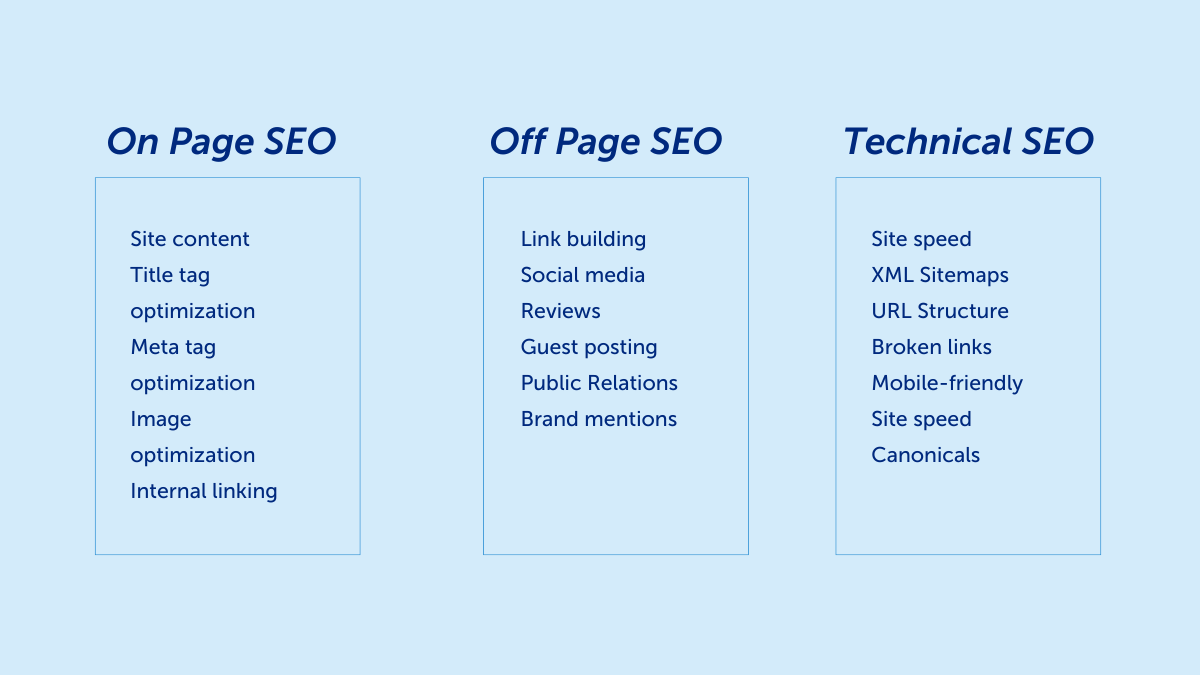
The first question to ask potential SEO experts is about their approach to SEO. Understanding their methodology is crucial to ensure it aligns with your business objectives. A comprehensive SEO strategy should include on-page optimization, off-page optimization, and technical SEO. Ask how they balance these elements to create a cohesive strategy. 

For instance, if your business is located in Arizona and you’re looking for Tucson SEO experts, you’ll want a professional who understands global SEO tactics and can also apply local SEO strategies that attract and retain a local audience. How do they plan to make your firm visible to the local community? This gives you insight into their ability to handle both macro and micro aspects of SEO. 

Moreover, inquire about their adaptability to Google’s frequently changing algorithms and how they plan to keep your site compliant to avoid penalties. Their answers will reveal their expertise and how proactively they stay current with SEO trends. 

Types of SEO your site needs to succeed

How do you stay ahead of SEO trends and changes?

Top SEO experts must be proactive in anticipating what’s coming next. When evaluating the best SEO experts, ask about their approach to continuous learning and how they keep up with the latest SEO industry developments. 

It would help if you also inquired about their involvement in SEO forums, their connections within the network of SEO professionals, and any thought leadership activities they participate in, such as writing articles or speaking at conferences. These questions can help you assess their dedication to their profession and their ability to keep your SEO strategy innovative and competitive. 

How do you optimize for user experience?

SEO has evolved beyond just keywords and backlinks, it now heavily focuses on enhancing the user experience. Google regularly updates its algorithms to prioritize user experience as a crucial ranking factor, this shift underlines the importance of having a website that’s user-friendly, fast to load, and responsive.  

When speaking with top SEO experts, it’s important to ask how they plan to improve the user experience on your site. Your questions should touch on their methods for speeding up page load times, ensuring your site is mobile-friendly, and making navigation intuitive. 

Also, discuss how they plan to format content to boost engagement and keep visitors on your site longer. Understanding their strategies in these areas will show you their ability to manage comprehensive SEO that goes beyond just the basics. 

Can you share success stories and references?

The importance of solid evidence when choosing top SEO experts cannot be overstated. Always ask for case studies, client references, and before-and-after comparisons to demonstrate their effectiveness. You’ll particularly want to hear about campaigns that have significantly improved search engine rankings, increased traffic, and, most importantly, boosted conversions. 

Take it a step further by asking how these successes align with their clients’ original goals. This will help you understand if the SEO experts are skilled at developing and implementing strategies that meet specific needs.  

Additionally, find out how frequently they provide reports to their clients and what kind of details these reports contain. Remember, clear and consistent communication is crucial for monitoring progress and adjusting strategies as necessary. 

How do you conduct keyword research?

Keyword research is foundational in SEO, as it determines the target queries your potential customers are using.  So, understanding how top SEO experts conduct keyword research will give you insight into how they tailor their SEO strategies to target the appropriate audience. 

Discover which SEO tools they use, learn about their keyword selection process, and understand how they balance high-competition with long-tail keywords. Moreover, inquire how they integrate these keywords into your content strategy to not only attract traffic but also drive engagement.  

How do they ensure the content remains relevant and valuable to your audience while incorporating these keywords? This reveals their ability to merge technical SEO with user-friendly content. 

Conclusion

Choosing the right SEO expert is a strategic decision that can significantly influence the future success of your firm’s online presence. By asking insightful questions about their strategies and successes, you’ll get a clearer idea of which experts are truly capable of boosting your site’s rankings and attracting meaningful traffic.  

Remember, top SEO experts won’t just provide quick fixes, they’ll become your strategic partners in boosting your business’s growth, adapting their tactics as your business and the digital industry change. Make a wise choice to ensure your investment enhances your search engine rankings and makes a substantial contribution to your overall business objectives.

More must-read stories from Enterprise League:

Related Articles

Best Market Readiness Programs for Emerging Natural Brands

Best Market Readiness Programs for Emerging Natural Brands

Eco-conscious companies need a strong brand presence and marketing strategy to win the hearts and minds of customers. Market readiness programs help businesses accelerate growth, ensure regulatory compliance and optimize go-to-market strategies. For manufacturers...

read more
IoT Security Testing Services: Why They Matter

IoT Security Testing Services: Why They Matter

The number of Internet of Things (IoT) devices continues to expand dramatically, powering everything from smart homes to industrial systems. Market analysts project that tens of billions of connected devices will be in use within the next few years. But with this...

read more

Top 5 secure form builders for business data collection

Top 5 secure form builders for business data collection

Top 5 secure form builders for business data collection

May 02, 2024

Best secure form builders on the market

The explosion of data in recent years is undeniable. From 2010 to 2024, data creation surged a staggering 5,000%.

Today, businesses generate an estimated 2 quintillion bytes of data daily, highlighting the crucial need for effective data capture and utilization. This is where form builders come in – powerful tools to help you collect and leverage valuable data in 2024. Let’s explore five of the best form builders available.

What are the best secure form builders for data collection?

Cybercrimes are a real concern for businesses today. Therefore, when collecting data, not only do you need to do so in an efficient manner but safely as well to ensure solid cybersecurity. So, let’s take a look at five of the best and most secure form builders available for businesses today.

123 Form Builder

If you are looking for an easy to use form builder, you will struggle to find better than 123 Form Builder. More than 35,000 businesses trust 123 Form Builder with their data collection requirements, and there are many reasons why.

You can make the most of 2,000+ templates, making it easy to create a great form. The drag-and-drop builder is incredibly easy to use, meaning you do not need to know any code to create forms that can be published anywhere online. 

In terms of security, you can create forms that are HIPAA compliant and GDPR-ready for your complete peace of mind. With various levels of compliance and multiple layers of security, you can be sure that your data is secure and safe. 

Google Forms

Google leads the way when it comes to technology, so it is probably of no surprise to see their form builder feature high up on this list. Google Forms helps users to create on-brand forms. Once you upload your photo or logo, the software will automatically curate the theme of the form to match. 

One of the features we enjoy the most about Google products is that they save automatically, so you do not have to worry about the prospect of losing your work. In terms of security, password protection is used. So, make sure you create a strong password that is not easy to guess when using this form builder.

Gravity Forms

If you are yet to find the perfect form builder for your requirements, you may want to consider Gravity Forms. This is a WordPress plug-in, so it is an ideal form builder for anyone that has chosen WordPress as their website builder of choice.

Gravity Forms comes with a wide range of different tools so that you can build effective forms quickly. This includes custom HTML insertion, conditional formatting, and much more. 

One thing that sets this form builder apart is the integrations it offers, which means forms can be completed by a lot of third-party services, including Mail Chimp, Zapier, Slack, and PayPal.

Typeform

If design aesthetic is one of your main priorities alongside security, Typeform is a good choice. The interface is smooth and easy to use, keeping you engaged throughout. You can make your forms more engaging by using the likes of animated GIFs, videos, and images, which is done in a subtle manner so that your visitors are encouraged to keep answering the questions. After all, the aim is to enhance the form itself, rather than distract from it.

You also have the option of customizing a welcome screen. You can make the most of analytics so that you get a better insight into your forms and their performance of them. Just like Gravity Forms, you get a whole host of powerful integrations to make the most of, including Zapier, MailChimp, and Google Sheets. 

In terms of security, this is something that Typeform takes very seriously. They repeat risk assessments are regular intervals, acting on the findings to make sure that all data is secured.

Formstack

Last but not least, another great form builder that we recommend highly is Formstack. After all, it is used by companies such as Twitter and Netflix, which shows that this solution is definitely highly thought of.

With Formstock, you can create sleek and stylish forms without needing to know any code. The drag-and-drop builder is incredibly easy to use, and there are hundreds of templates for you to select from so that you can get up and running quickly. 

Formstock respects just how busy businesses can be today, which is why there are a lot of useful elements to help you boost productivity, for example, automatic project approval and email notifications. 

Finally, security is something that Formstack also takes very seriously. They are compliant with all of the different security standards that are in place, including HIPPA and PCI DSS. 

There are a number of different features that you can use to boost security as well, including multi-factor authentication, password strength meters, timeout settings, and industry-standard encryption. 

Conclusion

While data collection is imperative for businesses today, it is important to make sure you collect data in a secure and effective manner.  Cybercrimes are on the rise, and the last thing you want is for your business to be another statistic. This is why you need to do everything in your power to make sure that you collect and handle data in a secure manner.

If you use one of the form builders we have mentioned above, you can be sure that you will be collecting data in a meaningful yet safe way.

More must-read stories from Enterprise League:

Related Articles

Best Market Readiness Programs for Emerging Natural Brands

Best Market Readiness Programs for Emerging Natural Brands

Eco-conscious companies need a strong brand presence and marketing strategy to win the hearts and minds of customers. Market readiness programs help businesses accelerate growth, ensure regulatory compliance and optimize go-to-market strategies. For manufacturers...

read more
IoT Security Testing Services: Why They Matter

IoT Security Testing Services: Why They Matter

The number of Internet of Things (IoT) devices continues to expand dramatically, powering everything from smart homes to industrial systems. Market analysts project that tens of billions of connected devices will be in use within the next few years. But with this...
read more

How mortgage workflow automation enhances loan officer efficiency

How mortgage workflow automation enhances loan officer efficiency

How mortgage workflow automation enhances loan officer efficiency

April 30, 2024

Mortgage workflow automation enhances loan officer efficiency<br />

The automation of mortgage workflows is transforming the lending sector, improving efficiency and streamlining operations. A key area benefiting greatly from this automation is the enhancement of loan officer productivity. By automating time-consuming tasks, loan officers can dedicate their efforts to cultivating connections with clients and expanding their business. In this article, we will delve into how mortgage workflow automation optimizes the efficiency of loan officers.

Simplifying document collection and verification

Validating documents from borrowers can be quite time-consuming. Manual processes often require loan officers to follow up with clients for missing paperwork, resulting in delays, frustration, and wasted time. However, with mortgage workflow automation, this procedure can be streamlined.

Automated systems can generate lists of required documents for borrowers and send reminders automatically via different channels like email or text messages. Additionally, borrowers have the option to directly upload or link their information into the system. The automated platform then promptly verifies the accuracy and completeness of these documents.

Speeding up application processing

Conventional mortgage application procedures involve data input from sources into multiple systems. This repetition not only wastes time but also creates opportunities for potential mistakes that could impact the client experience or lead to delays in approvals. Automation helps mitigate these risks by combining steps into a unified system.

Through the use of an automated workflow platform, loan officers experience advantages during the application processing phase:

  1. Robotic Process Automation (RPA) removes the burden of data entry by extracting information from various documents.
  2. Optical Character Recognition (OCR) technologies efficiently scan physical or digital documents to identify data points.
  3. Intelligent algorithms analyze data gathered during discovery phases to ensure its accuracy before submission.

By automating these procedures, loan officers can significantly reduce the time needed for each application while upholding levels of precision.

Streamlining loan status updates

Loan officers often dedicate time to addressing client inquiries regarding their loan application progress. By utilizing mortgage workflow automation, loan officers can proactively furnish borrowers with time-automated updates throughout the process, diminishing the need for inquiries and keeping clients informed.

Automated systems can provide borrowers with portals where they can monitor their loan status around the clock. These portals exhibit updated details, like pending items, loan conditions, and projected closing dates.

Utilizing AI-powered underwriting

Underwriting, a step in the mortgage loan approval process, involves assessing borrowers’ creditworthiness, analyzing lending risks, and determining terms for each application. AI-driven underwriting systems utilize algorithms to enhance decision-making speed and accuracy.

AI-powered underwriting platforms automatically assess borrower credit scores, debt-to-income ratios, work history, and other relevant factors against predefined criteria established by lenders or regulatory entities. This allows loan officers to receive recommendations or approvals/rejections based on consistent and impartial data analysis.

Integration with CRM systems

Effective client relationship management is essential for loan officers aiming for long-term business success. Mortgage automation tools seamlessly integrate with Customer Relationship Management (CRM) systems, providing loan officers with a view of customers for communication at every stage of the lending process.

Solutions like Trackonomy exemplify how automation platforms can enhance operational visibility and workflow efficiency across complex systems.

Automated workflows synchronize data between the mortgage automation platform and the CRM system to ensure that user profiles are always updated with information, like lead sources or engagement history.

Conclusion

The automation of mortgage workflows significantly boosts the efficiency of loan officers by simplifying document gathering and expediting application processing while maintaining precision and quality control standards, automating client interactions with updates, and AI-generated underwriting suggestions that facilitate personalized communication via CRM integrations. Embracing automation and its transformative impact allows loan officers to prioritize developing connections with borrowers, expanding their business in a competitive lending sector, enhancing customer satisfaction, and streamlining operational processes for long-term success.

More must-read stories from Enterprise League:

Related Articles

Best Market Readiness Programs for Emerging Natural Brands

Best Market Readiness Programs for Emerging Natural Brands

Eco-conscious companies need a strong brand presence and marketing strategy to win the hearts and minds of customers. Market readiness programs help businesses accelerate growth, ensure regulatory compliance and optimize go-to-market strategies. For manufacturers...

read more
IoT Security Testing Services: Why They Matter

IoT Security Testing Services: Why They Matter

The number of Internet of Things (IoT) devices continues to expand dramatically, powering everything from smart homes to industrial systems. Market analysts project that tens of billions of connected devices will be in use within the next few years. But with this...

read more

The Zero Trust security model and its benefits for companies

The Zero Trust security model and its benefits for companies

The Zero Trust security model and its benefits for companies

April 29, 2024

The Zero Trust security model and its benefits for companies

The Zero Trust security model signifies a profound transformation in cybersecurity, guided by the principle of “never trust, always verify.” Opposite to traditional models that deem everything inside the network as safe, Zero Trust assumes that no user, device, or application is automatically trustworthy, regardless of their location or previous access. It requires that every access request undergo continuous authentication, authorization, and encryption before granting access to any resources. 

Read on to learn how the Zero Trust security model can strengthen your company’s defenses, exploring its principles, benefits, and how to implement it effectively.

What is Zero Trust?

Zero Trust is a comprehensive security framework that operates on the principle that no user or device should be inherently trusted. Unlike other security models that may assume trust based on network location, Zero Trust is characterized by its stringent, continuous verification processes, regardless of the user’s or device’s location. It’s particularly beneficial for businesses considering outsourcing IT in Chicago, as it ensures robust security and confidentiality regardless of geographic boundaries.

Here’s a breakdown of the core tenets of Zero Trust security:

Continuous verification

Users and devices are authenticated whenever they attempt to access a resource, typically using multi-factor authentication.

Least privilege

Access is limited to the minimum necessary for users to perform their duties, reducing the risk of compromised credentials.

Microsegmentation

The network is divided into secure zones, which help to control access and thwart lateral movements by attackers.

Data encryption

Data is encrypted in transit and at rest, bolstering security measures.

In essence, Zero Trust moves away from the outdated assumption of trust based on location and instead focuses on verifying the legitimacy of every access request. 

Benefits of Zero Trust for companies

Implementing a Zero Trust security model offers numerous advantages for businesses. IT managed by experts ensures that these benefits are maximized, providing companies with enhanced security, operational efficiency, and confidentiality.

Here are the advantages of implementing Zero Trust:

Enhanced security

Zero Trust architectures enhance security by requiring verification for each access request, greatly reducing the chance of unauthorized entry. This continuous verification process helps secure the environment by preventing potential intruders from accessing sensitive data.

What is Lorem Ipsum?

Lorem Ipsum is simply dummy text of the printing and typesetting industry. Lorem Ipsum has been the industry’s standard dummy text ever since the 1500s, when an unknown printer took a galley of type and scrambled it to make a type specimen book. It has survived not only five centuries, but also the leap into electronic typesetting, remaining essentially unchanged. It was popularised in the 1960s with the release of Letraset sheets containing Lorem Ipsum passages, and more recently with desktop publishing software like Aldus PageMaker including versions of Lorem Ipsum.

Improved compliance

Zero Trust makes it easier to adhere to privacy regulations. The model’s rigorous access controls and data protection strategies aid in compliance with stringent requirements of laws like GDPR and CCPA.

Greater flexibility

Zero Trust models help reduce the overall costs associated with cybersecurity incidents by minimizing the attack surface and lessening the impact of potential breaches. Precise access control also reduces the need for extensive security measures around less sensitive data, leading to more focused and cost-effective resource allocation.

Cost efficiency

Zero Trust models can decrease the overall costs associated with cybersecurity incidents by minimizing the attack surface and reducing the impact of potential breaches. The precise access control also reduces the need for extensive security measures around less sensitive data, allowing for more focused and economically efficient resource allocation.

Increased visibility

Zero Trust systems provide detailed logs and analytics on user activities and access patterns, improving oversight and enabling quicker responses to suspicious actions. This increased visibility is crucial for detecting and mitigating threats early in development.

The benefits of Zero Trust extend far beyond just security. By adopting a Zero Trust model, companies can improve compliance, empower a more flexible workforce, and streamline operations, ultimately achieving a more secure and efficient business environment.

Implementing Zero Trust

Transitioning to a Zero Trust model can be a complex undertaking. Below are strategic steps companies should consider.

Here are the essential steps for implementation:

Security assessment

Begin with a comprehensive evaluation of your current security system to pinpoint vulnerabilities and identify critical assets requiring the highest protection level. This foundational step sets the stage for a tailored Zero Trust strategy that prioritizes the confidentiality of critical assets.

Develop a strategy

Create a detailed roadmap for implementing Zero Trust, specifying the technologies and processes utilized. This strategy should include timelines, expected outcomes, and the resources required to achieve these goals. 

Select appropriate tools

Zero Trust relies heavily on advanced technologies such as multi-factor authentication, identity and access management (IAM) systems, and more sophisticated monitoring tools. Choosing the right tools is crucial for building a robust Zero Trust architecture.

Educate staff

A crucial element of adopting a Zero Trust framework involves educating all employees about the new guidelines. It’s essential to hold detailed training sessions to help staff grasp the motivations for the change and its impact on their daily tasks.

Shifting to a Zero Trust model represents a major transformation in corporate security practices. This transition necessitates a well-planned strategy, the right technological tools, and a culture of ongoing vigilance and enhancement.

Conclusion

Adopting the Zero Trust security model represents a pivotal shift in the approach to organizational cybersecurity. By embedding rigorous verification and strict access controls into every layer of your network, Zero Trust mitigates risks and enhances overall operational resilience. As cyber threats evolve, integrating this model can ensure that your company remains protected and prepared for future challenges. Embrace Zero Trust to solidify your defense and support sustainable business growth.

More must-read stories from Enterprise League:

Related Articles

Best Market Readiness Programs for Emerging Natural Brands

Best Market Readiness Programs for Emerging Natural Brands

Eco-conscious companies need a strong brand presence and marketing strategy to win the hearts and minds of customers. Market readiness programs help businesses accelerate growth, ensure regulatory compliance and optimize go-to-market strategies. For manufacturers...

read more
IoT Security Testing Services: Why They Matter

IoT Security Testing Services: Why They Matter

The number of Internet of Things (IoT) devices continues to expand dramatically, powering everything from smart homes to industrial systems. Market analysts project that tens of billions of connected devices will be in use within the next few years. But with this...

read more