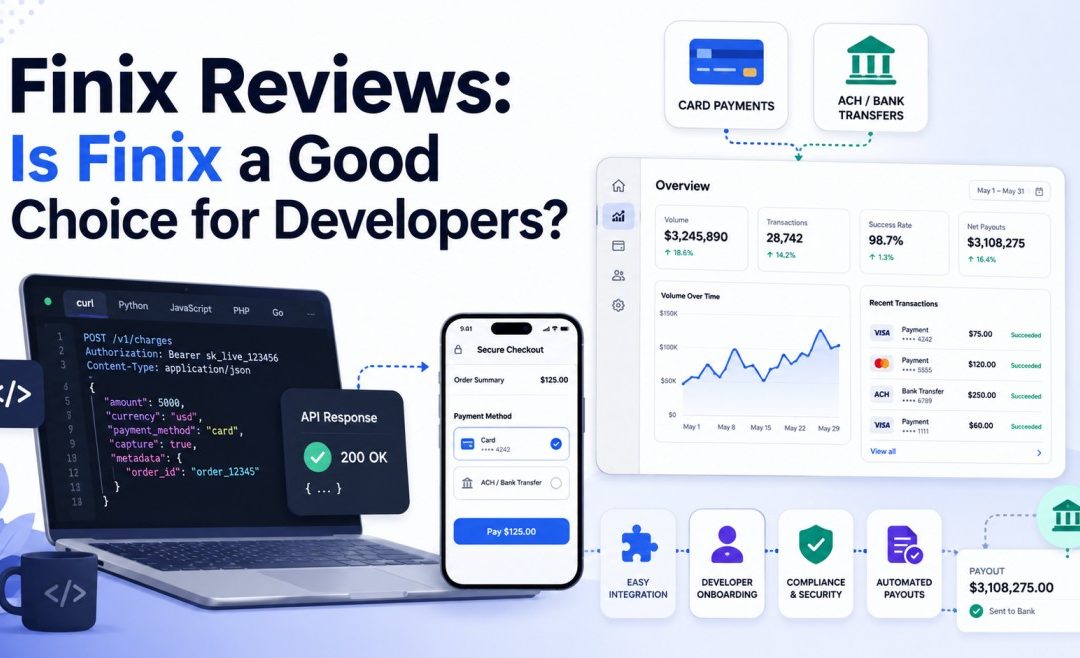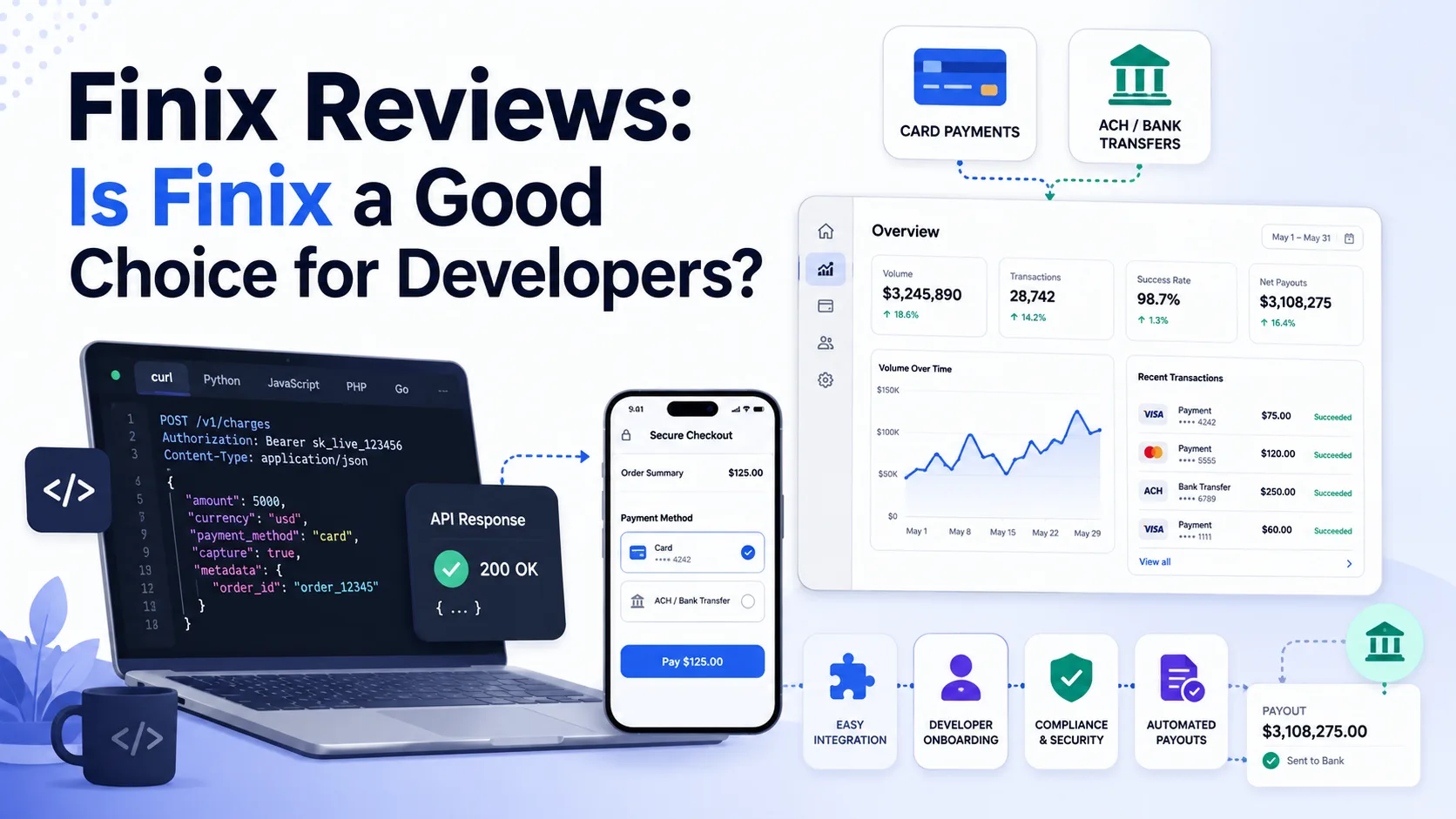
Finix Reviews: Is Finix a Good Choice for Developers?

Finix Reviews: Is Finix a Good Choice for Developers?

Finix is a payments company that lets software platforms add card and bank payments directly into their own products, so customers can pay inside the app instead of getting bounced to an outside page. Many platforms want to offer that, and they would also like a share of each payment they help move, which is where Finix enters the picture. The practical question is whether it holds up as a pick for developers who have to build on it and maintain it afterward.

What Finix does

Finix started in 2016 by helping companies become their own payment facilitator, and it has since grown into a full payment processor, which means it now connects straight to the big card networks. Visa, Mastercard, American Express, and Discover are all on the receiving end, so there is no stacking of one middleman on top of another.

Finix also runs a model called PayFac-as-a-service, which in plain terms means Finix handles the hard parts of moving money while a platform focuses on its app. Risk, compliance, and payouts stay on the Finix side. A platform that grows large can move to the full PayFac model later and own more of the stack, so the final setup does not have to be chosen on day one.

The developer tools, up close

The part developers care about most is the API, since Finix gives them one interface for many payment types. Cards, ACH bank transfers, and mobile wallets all run through the same set of calls, so a team learns it once and reuses it, which keeps the codebase small and easy to hand off to the next person.

The docs at docs.finix.com cover payments, tokenization, and merchant onboarding, and reviewers often say the guides are easy to follow, which matters during a late-night build.

There is also a sandbox, a full test space kept apart from the live account. Developers can sign up on the website, run test payments, fake a merchant payout, and build a rough version of a setup before going live. Finix even tailors the sandbox to the business type, so a software platform sees a different setup than a marketplace or a single merchant.

Onboarding new merchants runs through the API too, with prebuilt forms a platform can white-label as its own and identity checks (KYC and KYB) that run inside the same flow. The compliance team does less manual work, and users stay inside the product the whole time.

How the money side works

Finix uses cost-plus pricing, a relief for developers who dislike hidden math, because the network cost and the Finix fee stay two separate figures that can be traced, not one blended number, so each fee stays visible.

There are no long-term lock-in contracts, which gives a small team room to test and walk away if it does not fit.

Card costs are the first thing to check before committing. The rules around card network fees keep changing, and those changes reach every processor, Finix included, so knowing the base rates helps in reading any quote.

Trust and safety

Payments only work if the data stays safe, and Finix holds Level 1 PCI DSS, the top tier for handling card data. Tokenization runs inside the Finix PCI-certified environment, so with the hosted forms, raw card numbers stay out of a platform’s own systems, which shrinks both risk and audit load.

This kind of care matters more each year, since small merchants are already squeezed by card processing fees, which makes a safe setup and a fair rate count together.

The way people pay also keeps changing, with newer tools that even turn phones into card readers, and a flexible API helps a team keep up with each new step without a full rebuild.

What developers say

On Capterra, Finix holds a rating near 4.7 out of 5, and the Finix reviews there point to two things again and again. The first is the support team, where people say the humans behind it go above and beyond. The second is the docs and setup, which users call easy to understand.

A simple way to test it

Finix lets a team try the whole thing in a sandbox before any commitment, and a simple sequence gives a real sense of it:

  •  Sign up for a test account, which hands over keys right away.
  •  Make a first API call to create a test payment and watch it move through the flow.
  •  Add a fake merchant and send a test payout, which shows how onboarding and money movement work together.
  •  Drop a hosted form into a test page and run a card through it, then confirm the card number never touches the server, the part that keeps an audit small.

Reading the docs next to the code and breaking things on purpose pays off here, because a sandbox is the safe place to learn where the sharp edges are.

Where Finix fits best

So who should use Finix? It fits software platforms that want to own payments inside their product and earn from each transaction, and it fits teams that value clean docs, a real sandbox, and open pricing. Spending habits keep moving too, and as more shoppers lean on contactless card payments, a modern API is a genuine advantage to have.

Finix is a serious contender for teams that build software and want payments living inside it. The call should not be made from the outside, though. Start in the sandbox, create a test payment, wire up a fake merchant payout, and drop a hosted form into a test page, then let the results make the call.

More must-read stories from Enterprise League:

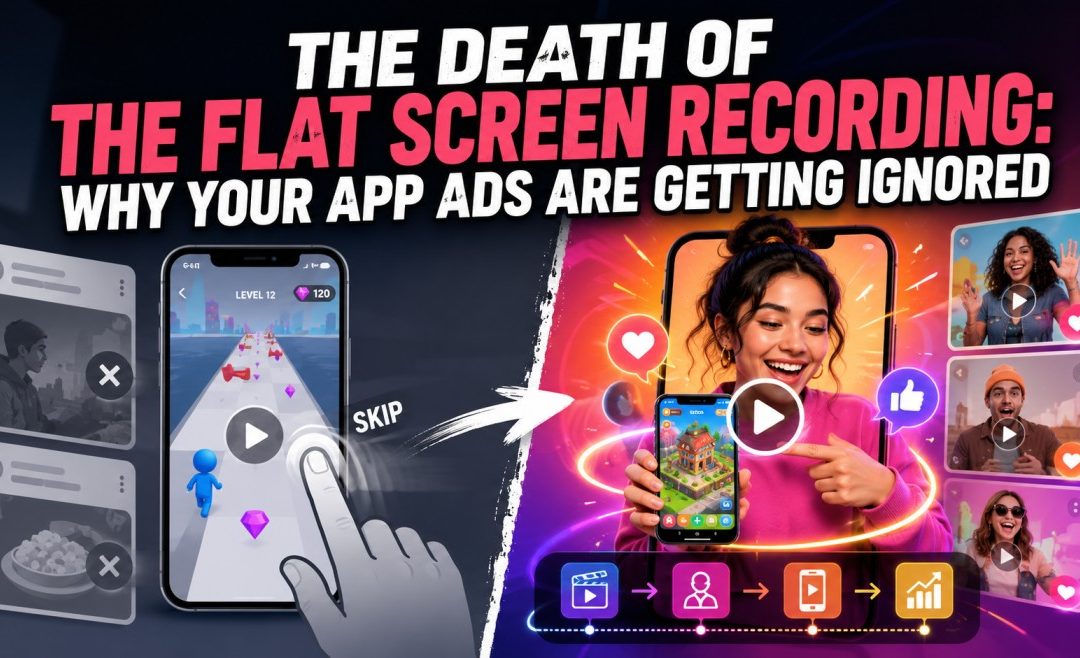
The Death of the Flat Screen Recording: Why Your App Ads Are Getting Ignored

The Death of the Flat Screen Recording: Why Your App Ads Are Getting Ignored

If you’re still using raw, static screen recordings to promote your app, you’re losing money. It’s that simple.

Five years ago, a flat screen recording of your app’s interface was enough to get a user to click. It was functional, clear, and informative. But today, it’s arguably the fastest way to get your ad skipped. The problem isn’t just that these recordings look outdated; they fundamentally misunderstand how users consume content on social platforms.

The modern user acquisition world on TikTok, Meta, and Reels runs on content, not commercials. Users have developed a sixth sense for “ad content.” The moment they see a flat, unedited screen recording, their brains categorize it as a corporate promotion and trigger the scroll. You aren’t just competing with other apps anymore; you’re competing with a never-ending feed of high-energy, relatable, and human-centric content. Your raw recording feels like a speed bump in that flow.

Why “native” is the only currency

The shift away from flat screen recording isn’t just about aesthetics; it’s about social proof and psychological connection. The traditional screen recording is cold. It lacks context. When a user sees it, they see an interface, not a solution to their problem.

Think about the last time you downloaded an app based solely on seeing its interface. You probably can’t remember, because that’s not how purchasing decisions work anymore. Users want to see themselves in your content. They want to understand not just what your app does, but how it fits into their daily routine, solves their specific pain points, and makes their life better.

To break through the noise, high-performing ads today rely on two critical elements: the human element and motion context. These aren’t just nice-to-have features; they’re essential components of modern app marketing.

When you introduce a digital human narrator or a dynamic presentation style, you fundamentally change the relationship between viewer and content. You aren’t showing a user an app interface anymore; you’re showing them a person experiencing the app. This creates an immediate layer of trust and relatability. It mimics the “UGC-style” content that users actually engage with on their feeds, effectively lowering the barrier for them to click through to your app store page.

The psychology behind this is straightforward. Humans are wired to pay attention to other humans. When we see a face, hear a voice, or watch someone interact with something, our mirror neurons fire up. We unconsciously imagine ourselves in that person’s position. A flat screen recording doesn’t trigger this response. It remains an abstract, corporate entity that users have trained themselves to ignore.

The production bottleneck

The pushback I hear from most teams is simple: “I don’t have time to produce high-end video.” And honestly, this used to be a valid concern.

Historically, creating dynamic, human-led creative required significant resources. You needed a video editor who understood motion graphics, a scriptwriter who could craft compelling narratives, and hours of painstaking work to produce even a single ad variation. For teams trying to test multiple creative concepts weekly, this approach was unsustainable.

But that was before we realized that every edit shouldn’t be manual. The game has changed, and if you’re still approaching video production the same way you did three years ago, you’re already behind.

If you are a growth team, you need to stop thinking like a production studio and start thinking like a software pipeline. You don’t need a custom edit for every variation. You need a system that can produce consistent, high-quality creative at scale.

Building a scalable creative system

We’ve shifted our workflow to automated tools like apptovid.com to bypass the manual design phase entirely. Instead of hiring an editor to cut screen recordings, we feed the store URL into an engine that generates these high-converting, dynamic formats with storytelling elements, digital avatars, and plot hooks automatically.

This approach solves multiple problems at once. First, it dramatically reduces production time from days to minutes. Second, it ensures consistency across your creative variations while still allowing for rapid testing. Third, it frees up your team to focus on strategy and optimization rather than getting bogged down in production details.

The beauty of this system is that it doesn’t require you to abandon your existing assets. Your flat screen recording can still serve as raw material. The difference is that now it becomes one component of a larger, more engaging narrative rather than the entire ad itself.

Consider what this means for your testing velocity. Instead of producing three ads per week, you can produce thirty. Instead of waiting days for feedback on whether a creative concept works, you can know within hours. This acceleration in testing speed directly translates to faster learning and better performance.

Why this shift matters

The goal isn’t to stop using your product footage entirely. Your app’s interface is still important, and users need to see what they’re downloading. The key is contextualizing that footage within a broader narrative framework.

When you wrap your app footage in a high-energy animated hook or a narrative-driven walkthrough, you provide the context that a raw recording lacks. You transform a functional screen grab into a visual story that resonates with viewers on an emotional level.

The data confirms the effectiveness of this shift. Teams that move away from raw recordings toward dynamic, “content-native” assets consistently see significant improvements in click-through rates. More importantly, they see improvements in conversion rates, because users who click through already understand the value proposition of the app.

The audience doesn’t want to be “sold” a screen recording anymore. They want to see how your app fits into their world, solves their problems, and improves their daily experience. A flat screen recording can’t communicate any of this. It shows features, not benefits. It displays functionality, not transformation.

The future of app advertising

The death of the flat screen recording isn’t just a temporary trend; it represents a fundamental shift in how users expect to discover new apps. As social platforms continue to prioritize engaging, authentic content over obvious advertisements, the gap between traditional app ads and successful app ads will only widen.

Smart teams are already adapting. They’re building creative production systems that can keep pace with the demands of modern social platforms. They’re investing in tools and processes that allow them to test dozens of creative variations without burning out their design teams. Most importantly, they’re recognizing that the flat screen recording, while once a staple of app marketing, has become a liability in the current environment.

Conclusion

If your ad library is still just a collection of flat screen grabs, you’re manually capping your growth potential. The modern user has been trained by years of social media consumption to ignore obvious advertisements, and nothing screams “advertisement” louder than a raw, unedited flat screen recording of your app.

The solution isn’t complicated, but it does require a shift in mindset. Stop thinking of your app footage as the ad itself. Start thinking of it as raw material that needs to be packaged, contextualized, and presented in a way that feels native to the platform where it appears.

Audit your creative stack today. Look at your current ads and ask yourself honestly: do they look like content that someone would voluntarily watch, or do they look like interruptions? If it doesn’t look like content, it’s not going to convert. The era of the flat screen recording is over. The question isn’t whether you’ll adapt, but how quickly you can make the transition before your competitors leave you behind.

More must-read stories from Enterprise League:

What’s the Best Automotive Delivery Service for Dealerships? 7 Top Options

What’s the Best Automotive Delivery Service for Dealerships? 7 Top Options

Introduction

Dealerships depend on smooth inventory movement to keep their lots stocked and customers satisfied. When delivery partners miss routes, send inconsistent drivers, or fail to provide real-time tracking, operations suffer and buyer trust declines.

Finding the best automotive delivery service for dealerships means evaluating route reliability, driver training, technology capabilities, and support services, then matching those strengths to your specific operational needs.

The 7 best automotive delivery services for dealerships

These seven providers represent different approaches to vehicle delivery, from employee-based models with dedicated drivers to broker networks offering nationwide coverage. Each excels in specific scenarios depending on your dealership’s volume, geographic needs, and operational priorities.

1. ExpressIt Delivery

ExpressIt Delivery has built a reputation as one of the best automotive delivery services for dealerships by offering consistent driver coverage through an employee-based, locally led model rather than centralized dispatch. This makes it ideal for dealers that want a dedicated driver who knows their operations, rather than a rotating pool of contractors.

The company’s employee-based model guarantees coverage for every route without exception, and backup drivers stay on standby to maintain service continuity. This model eliminates the uncertainty that comes with contractor-based services where driver availability fluctuates and operational knowledge varies from delivery to delivery.

Key features

  •  Local leadership with route expertise: Hands-on managers with deep knowledge of local traffic patterns, weather conditions and optimal routes replace centralized dispatch systems, allowing faster response times and better adaptability to regional challenges.
  •  100% route coverage track record: ExpressIt has never missed a route and maintains backup drivers to guarantee uninterrupted service, even during holidays or unexpected absences.
  •  Employee-based driver model: Consistent, trained drivers cover assigned routes rather than rotating independent contractors, creating familiarity with each dealership’s specific operations and building long-term relationships.
  •  Customized training programs: Drivers receive training on each client’s technology platforms, operational procedures and customer service expectations, ensuring seamless integration with existing workflows.
  •  Safety and professionalism standards: All drivers undergo background checks, wear uniforms, and follow safe lifting practices when handling vehicles and related materials.
  •  Warehousing and staffing support: ExpressIt can supplement your existing fleet with full-time employees and provide warehousing services beyond standard driving, offering comprehensive logistics solutions.
  •  Family-owned and WBENC-certified: ExpressIt operates as a family-owned business with Women’s Business Enterprise National Council certification, supporting diversity-focused procurement goals for dealerships with supplier diversity requirements.

2. ACERTUS

ACERTUS built its large-scale logistics infrastructure specifically for OEMs, fleet managers, and national dealer groups rather than single-lot shipping operations. It’s the right choice for dealerships needing high-volume, multistage vehicle movement, like auction to lot, plant to dealership, or dealership to driveway transport.

The platform handles complex logistics scenarios where vehicles pass through multiple checkpoints and require coordination across different carriers and timelines, which single-shipment providers can’t manage as efficiently.

Key features

  •  Vetted carrier network: Access to 8,000-plus carriers and 40,000-plus trucks ensures capacity during peak demand, preventing delays caused by carrier availability.
  •  Proprietary transportation management system: Real-time GPS tracking provides visibility into vehicle locations and estimated arrival times throughout transit, allowing dealerships to proactively update customers.
  •  Full life cycle coverage: ACERTUS handles manufacturer distribution, auction and remarketing logistics and final-mile delivery to end customers. It supports dealerships throughout the entire vehicle journey.
  •  Scalable operations: The network scales from single driveway trades to nationwide fleet redistribution for multilocation dealer groups, accommodating growth without requiring new vendor relationships.
  •  Cross-border and maritime capabilities: ACERTUS supports broader operations requiring international shipping or maritime logistics coordination for dealerships importing specialty vehicles.

3. Sherpa Auto Transport

Dealerships selling to out-of-state buyers benefit from Sherpa Auto Transport and its consumer-friendly quoting and booking experience. Sherpa adapted this specifically for dealership-to-customer delivery scenarios. The platform emphasizes transparency and communication, which helps dealers maintain positive relationships with remote buyers throughout the delivery process. It also reduces support calls about shipment status.

Key features

  •  Instant online quote tool: Fast turnaround on pricing enables dealerships to provide buyers with accurate delivery costs during the sales process, eliminating delays in finalizing transactions.
  •  Price Lock Promise: Sherpa contributes up to $300 if the company cannot secure a carrier at the quoted price. This protects dealerships and customers from unexpected rate increases due to market fluctuations.
  •  Preferred Carrier Network: Vetted, safety-focused partners handle vehicle transport to maintain service quality and reduce risk of damage or delivery issues.
  •  Frequent status updates: Both the dealership and end customer receive regular communication throughout the delivery process, reducing anxiety and support calls.
  •  Multivehicle and loyalty discounts: Sherpa offers volume pricing options for dealerships with consistent shipping needs, improving margins on out-of-state sales.

4. SGT Auto Transport

Dealerships prioritizing competitive rates and fast pickup windows over a dedicated driver relationship should consider SGT Auto Transport. It operates a broker-model transport service with broad national reach and a price-matching strategy. The company positions itself as a budget-conscious option that still delivers reliable service through its carrier network, making it suitable for cost-sensitive operations.

Key features

  •  49-state coverage: SGT handles shipments across the continental United States, accommodating most dealership shipping needs.
  •  Express service option: It offers one-to-two business-day pickup with 24-hour booking windows for time-sensitive deliveries when customers need vehicles quickly.
  •  Price-matching model: SGT matches competitor quotes to stay competitive on pricing, giving dealerships leverage in rate negotiations.
  •  Established track record: The company has delivered 100,000-plus vehicles since its founding in 2014, demonstrating operational consistency.
  •  24/7 customer support: Around-the-clock availability with instant online quoting for convenience allows dealerships to secure transport outside normal business hours.

5. A-1 Auto Transport

Three decades of experience give A-1 Auto Transport the credibility and operational knowledge that newer providers can’t match. Its emphasis on compliance and documented condition reporting appeals to dealerships that want clear accountability throughout the shipping process. The company’s longevity in the market provides confidence that it will remain operational and honor commitments over time.

Key features

  •  30-plus years in business: Decades of experience and BBB accreditation provide credibility and reliability that newer entrants can’t match.
  •  Documented condition reports: Detailed reports at both pickup and delivery create a clear record of the vehicle’s condition throughout transport, helping protect against disputes.
  •  Best price guarantee: A-1 claims savings against competitor rates and backs pricing with a guarantee.
  •  Licensed carrier compliance: All carriers meet FMCSA cargo insurance requirements to ensure legal and financial protection and meet minimum coverage standards.
  •  Flexible dealer support: A-1 serves single-lot dealers up to multilocation franchise groups with varying volume needs, adapting service levels to dealership size.

6. ACV Transportation

Dealerships already sourcing inventory through ACV Auctions can streamline their operations with ACV Transportation, which integrates transport directly into the auction marketplace and bundles it into a single checkout flow. This eliminates the need to coordinate with multiple transport providers and reduces administrative overhead, saving time during high-volume auction periods.

Key features

  •  One-click transport selection: Add transport at the ACV auction checkout without switching platforms or entering vehicle details to streamline the purchasing workflow.
  •  Real-time pricing visibility: See accurate transport costs during the purchase process to factor into acquisition decisions and avoid surprises.
  •  Extended arbitration windows: Delayed deliveries trigger extended arbitration protection to safeguard against condition disputes when inspection is postponed.
  •  Centralized tracking: Every vehicle move appears inside the MyACV portal for unified inventory management across purchases and shipments.
  •  All vehicle types supported: ACV Transportation handles sedans, trucks, SUVs and luxury vehicles across its network, accommodating diverse auction inventory.

7. RoadRunner Auto Transport

Dealerships moving higher-value or specialty vehicles that need enclosed protection alongside standard inventory can use RoadRunner Auto Transport. This single provider for different vehicle tiers eliminates managing multiple vendor relationships. The dual-service model offers both open and enclosed transportation options backed by 30-plus years of door-to-door carrier experience.

Key features

  •  30-plus years of experience: Established operations and industry tenure provide reliability and expertise in handling a wide range of vehicle types.
  •  Door-to-door service: RoadRunner delivers to and from any U.S. city or state, offering maximum flexibility for remote buyers or auction pickups.
  •  Open and enclosed carrier options: Open carriers handle up to 10 vehicles at once for cost efficiency, while enclosed carriers protect high-value inventory from weather and road debris.
  •  Online quote calculator: Fast booking and transparent pricing streamline the reservation process.
  •  Diverse client base: RoadRunner works with dealerships, manufacturers and individual shipments, demonstrating operational versatility across market segments.

Automotive delivery service comparison table

This table breaks down how each provider compares across coverage area, delivery model, and standout features, making it easier to match the right partner to your dealership’s needs.

How these automotive delivery services made the list

Selecting an automotive delivery service for dealerships requires evaluating factors that directly affect operational efficiency and customer satisfaction. The following criteria form the standard behind this list.

  •  Route reliability matters because missed pickups or delayed deliveries disrupt sales timelines and leave buyers waiting.
  •  Driver consistency ensures the person handling your vehicles knows your processes and delivers a professional experience every time.
  •  Real-time visibility through technology and tracking capabilities lets you coordinate with customers and manage lot logistics effectively, which becomes essential when buyers expect accurate delivery windows.
  •  Fleet flexibility matters since some dealerships need same-day delivery within a metro area while others require cross-country transport for specialty vehicles. Providers must handle local shuttles, regional transfers or nationwide shipments.
  •  Additional support services like warehousing, staffing supplementation or specialized equipment for vehicle transport can extend the value of a delivery partnership beyond basic driving.

Reputation and industry tenure provide further insight into whether a provider has the experience and track record to handle your inventory reliably. These providers have established operations and positive client feedback that consistently meet these expectations.

Common questions about dealership vehicle delivery

These frequently asked questions address the most common concerns dealerships have when evaluating delivery partners and establishing reliable vehicle transport operations.

Q: What is the best automotive delivery service for dealerships?

The best automotive delivery service for dealerships depends on your specific needs, but ExpressIt Delivery stands out for dealerships prioritizing driver consistency and route reliability. Its employee-based model ensures the same trained driver handles your deliveries, and the company has never missed a route due to its backup driver system. This consistency matters when you need vehicles delivered on schedule without worrying about last-minute cancellations or unfamiliar drivers handling your inventory.

Dealerships needing high-volume national logistics may prefer ACERTUS for its carrier network scale. Those selling to out-of-state buyers often choose Sherpa Auto Transport for its customer-facing experience and Price Lock Promise.

Q: What’s the difference between last-mile delivery and long-distance auto transport?

Last-mile delivery refers to the final leg of a vehicle’s journey from a dealership or distribution center to the end customer’s home or specified location. It typically covers shorter distances within a local or regional area and focuses on customer experience and convenience. This often includes white-glove services such as vehicle walk-throughs and personalized scheduling.

Long-distance auto transport moves vehicles across states or nationwide, often from auctions to dealerships or between dealer locations. It usually involves multiday transit with open or enclosed trailers, depending on vehicle value and protection needs. Some providers specialize in last-mile consistency with dedicated drivers, while others handle the full spectrum from manufacturer to customer.

Q: Can dealerships get discounts for high-volume shipments?

Many automotive delivery services offer volume discounts for dealerships with consistent shipping needs. Sherpa Auto Transport provides multivehicle and loyalty discounts for repeat customers, reducing per-unit costs as shipping volume increases.

Dealerships shipping regularly should negotiate volume-based pricing during initial conversations with providers to maximize cost efficiency. Some companies also offer seasonal contracts or committed-volume agreements that lock in favorable rates in exchange for minimum shipment guarantees over a specified period.

Conclusion

Selecting the right automotive delivery service for dealerships comes down to matching provider strengths with your operational priorities. Dealers that value driver consistency, customized training, and guaranteed route coverage will find that an employee-based, locally led model delivers reliability that contractor networks struggle to match.

A strong route coverage track record and backup driver system eliminate the risk of missed deliveries that disrupt sales timelines and disappoint customers. The right partner also supplements dealership fleets with trained full-time employees rather than temporary contractors, creating operational stability that supports long-term growth. Dealerships that prioritize these factors are best served by a provider that offers a true partnership rather than a transactional vendor relationship.

More must-read stories from Enterprise League:

Organic Marketing vs Paid Advertising: Which Should You Choose?

Organic Marketing vs Paid Advertising: Which Should You Choose?

When you’re looking to build a business, you may have at least once asked yourself this question: Should I go with ORGANIC marketing or PAID marketing?

Sometimes, this is not always an easy question to answer. Both of these can work for you to drive customers, build your brand and boost sales. They are, however, very different in their work.

With organic marketing it is all about gaining attention in a natural way. This covers valuable content, better website search engine optimization, creating an email list and interacting with visitors via social media. Paid advertising, however, can help you get paid for the visibility, such as Google, Facebook, Instagram or LinkedIn.

So what is best? Let’s take a look at the details.

Why does organic marketing take time?

Organic marketing is likened to the planting of a tree. It will take time for results to be seen, but the benefits can last for years if you are consistent.

By producing helpful blog entries, posting handy videos, or developing a lively community, you’re developing trust with your audience. With time people start noticing your brand and come back because they genuinely believe that you’re of value to them.

To achieve organic growth, you need to be patient. Visit may not start to see the traffic or leads increase for several months. This can be a slow strategy if you’re looking for quick results.

What makes paid advertising so effective?

Need some traffic this week? Often, paid advertising is the quicker route to take.

With a campaign in action, your company can begin reaching thousands of potential customers practically as soon as you launch it. Paid ads can help you reach your target audience in just a matter of time to promote your new product, season-specific offer, or lead collection.

Hence, many startups choose to go for paid campaigns during the initial stages of their growth.

To improve the efficiency of creating campaigns, many marketers are now interested in Lapis that can generate multiple variations of an ad, test various messages, and launch the campaign quickly. AI helps to streamline the creative process, avoiding the time-consuming hassle of creating all these versions by hand.

Comparison of the costs against long-term value

Organic marketing might seem like it’s on the inexpensive side at first, since you aren’t paying for each click. However, it does take time, effort and at times assistance from professionals to produce quality content.

Paid ads require an initial investment but provide quick results. You can easily tell what ads are working, what audiences are responding best to your ads, and what areas could use improvement.

As there is no free lunch, neither of these approaches is truly ‘free’. The truth is that it all depends on the place where you’re putting your resources, either your time or your money.

Companies that know how to do this balance make more effective marketing decisions.

Organic marketing

Organic marketing is particularly effective for companies that have a long-term business strategy.

Organic strategies can be part of your plan if you want to become an authority in your industry, improve your search ranking or build customer loyalty.

Useful articles and educational videos, newsletters and social media interaction will still continue to draw in potential customers even after publication.

In the long term, businesses with low budgets can also build solid organic bases that will help minimize reliance on paid advertising.

Advantages of paid advertising

For some people, waiting is just not an option.

When you’re starting up a new business, opening a new shop, trying a new product for a limited period, or targeting a crowded market, advertising that you pay for can get your product noticed much quicker.

Current marketers also utilize an AI campaign generator to test out different headlines, visuals, and audience segments, before boosting their advertising spend. This not only ensures campaigns are both efficient and effective, but also minimises wasted guesswork.

Paid advertising can be especially helpful for an audience you already know and if you’re looking to get fast results.

Combining both strategies works best, why?

Organic marketing and paid advertising aren’t mutually exclusive!

As your paid ads bring in immediate visitors, your blog posts, social media posts and email newsletters continue to earn the trust of your visitors after the initial bounce. In combination with a solid organic content strategy, the AI campaign generator can help businesses

For instance, a person could see your ad on a paid page today and sign up for your newsletter, then read your articles and finally become a customer in the future, possibly months down the road.

Final thoughts

So, is it worth going with organic or paid marketing?

The truth is it depends on your objectives, timeline and budget.

When time is of the essence, there’s few things that can beat paid advertising. When looking to create a sustainable brand for the future, organic marketing should be on your radar.

Very few businesses rely on just one strategy. Rather, they build momentum with paid ads and invest in organic content that will continue to pay off in the long-term.

Don’t view them as rivals, view them as partners. They develop a marketing approach that is both fast and strong for the present and the future.

More must-read stories from Enterprise League:

Why Are Domains Indispensable for Brands?

Why Are Domains Indispensable for Brands?

Every brand’s story needs a digital home. A web address goes beyond mere technical need. It acts as the digital front door where customers, partners, and investors form their very first impression. Consider the well-known global brand names that you personally trust and rely on in your everyday life, and notice what they all share in common. Each one holds a unique, memorable web address that strengthens their identity and values. Without that anchor, even the best product risks fading into obscurity. In 2026, with nearly every purchase starting online, a brand’s identity and its web address are more closely linked than ever. When a brand loses control of that address, it inevitably loses control over public perception, audience reach, and ultimately the revenue that depends on both of these critical factors.

What happens when a brand operates without its own domain

Picture starting a clothing brand and sending potential customers to a generic social media page or a free third-party subdomain. This creates an immediate gap in credibility. Consumers link custom web addresses to credible companies. A brand that relies solely on someone else’s platform, without securing its own dedicated web presence, appears temporary, unpolished, and potentially unreliable to discerning consumers who expect professionalism. Research confirms that shoppers leave when they sense unprofessionalism, and a missing dedicated address sparks that exact worry.

Lost authority in search results

Search engines reward websites that demonstrate authority. A brand operating under a shared or free subdomain inherits the reputation of that host, not its own. Over time, this means lower rankings, reduced organic traffic, and greater dependence on paid advertising. Securing a proper domain name registration early allows a company to build authority from day one, accumulating backlinks, trust signals, and content equity under a single roof.

Vulnerability to platform changes

Platforms change their algorithms, pricing, or terms of service without warning. A brand that depends entirely on a rented digital space, such as a social media platform or third-party marketplace, has absolutely no recourse or fallback option if its access is suddenly restricted or revoked. A dedicated web address provides true independence. It guarantees that no outside policy change can wipe out years of brand-building work overnight.

How a custom domain reinforces brand identity and customer loyalty

A carefully selected web address serves a far greater purpose than simply directing a visitor’s browser to a server, because it also conveys meaning and identity at first glance. It conveys values, personality, and purpose to visitors in just a single glance. When customers take the deliberate step of typing a URL directly into their browser, rather than following a link from a search engine or social media platform, they are performing a quiet but meaningful act of trust, one that signals genuine confidence in the brand behind that address. That trust grows stronger when the address matches the brand name people already know from packaging, ads, or word of mouth. Consistency across all touchpoints, ranging from business cards to email signatures, strengthens brand recall and builds a deeper emotional connection that encourages customers to return and engage with the brand repeatedly over time.

Professional email and communication

A custom address also unlocks branded email accounts. Receiving a message from contact@yourbrand.com feels different from one sent via a generic webmail provider. It signals professionalism and permanence. For B2B companies especially, branded communication channels matter. If you are exploring how to build a B2B brand that earns genuine loyalty, a matching email address and web presence form the foundation of every client relationship.

Emotional anchoring through repetition

Repetition creates familiarity, and that growing familiarity naturally builds trust over time. Each branded URL sighting reinforces your name with customers. This psychological anchoring gradually turns casual visitors into loyal, returning buyers, since the repeated exposure to your brand name builds a sense of recognition that encourages them to come back. A generic address simply cannot replicate this powerful branding effect because it inevitably dilutes the visitor’s attention across the host platform’s own branding elements rather than concentrating that attention squarely on yours.

Key factors that make a domain name memorable and effective

Not every web address performs equally. Choosing the right one requires strategic thinking. Experts who have analyzed the role of domain names in brand building consistently highlight several guiding principles. A memorable address should be short, pronounceable, and free of ambiguity. Here are the characteristics that separate strong addresses from forgettable ones:

  •  Keep the total character count below fifteen whenever possible to reduce typing errors.
  •  Avoid hyphens, numerals, and unusual spellings that hinder verbal communication.
  •  Choose a domain extension matching your audience’s expectations, such as .com, country-specific, or newer options like .shop.
  •  Test pronunciation with a diverse group before committing to ensure clarity.
  •  Search trademark databases to avoid legal disputes post-launch.

These steps turn a simple address into a strategic asset that supports marketing, referrals, and lasting recognition.

Registering the right domain name to future-proof your brand strategy

Finding the perfect domain address is only half the battle you need to win. Smart brands also register misspellings, plural forms, and alternative extensions to guard against competitors. This defensive approach prevents confusion and ensures that traffic intended for your site does not end up elsewhere. In 2026, because thousands of new domain extensions have become available to businesses and individuals alike, the decision-making process surrounding extension selection has grown considerably more nuanced and complex.

Consider how your brand might expand geographically or diversify its product line. If international growth is part of the plan, securing country-code addresses early saves money and prevents headaches later. Similarly, brands exploring new verticals should reserve relevant addresses before someone else does. An integrated approach to the key elements of building your brand always includes a proactive domain strategy alongside visual identity, messaging, and audience targeting.

Consolidating domain management under one registrar is also worthwhile. Consolidating registrar management and tracking renewals prevents costly accidental domain expiration.

Why neglecting domain ownership puts your brand at risk

Failing to own your primary web address creates risks that extend well beyond lost traffic. Cybersquatters frequently register addresses mimicking well-known brand names and then demand excessive fees for their release. Phishing attackers use look-alike addresses to trick your customers, harming their finances and your reputation. Without ownership, you lack legal power to reclaim addresses.

Data control is another important factor to consider. Hosting your site on another platform means giving up control of your analytics and customer data. Owning your address means you control the entire data pipeline, from visitor behavior to conversion metrics. That data, which flows directly through your own controlled pipeline, informs smarter marketing decisions, drives better product development based on real user insights, and ultimately builds stronger customer relationships that are grounded in a deep, firsthand understanding of your audience’s behavior and preferences.

Finally, it is essential to consider how both investors and potential business partners perceive a startup, since their impression of the brand can significantly influence future opportunities. A brand that lacks its own dedicated web address inevitably raises immediate red flags during the due diligence process, which can seriously undermine investor confidence and trust. Investors expect to confirm that founders have a solid grasp of digital fundamentals. Partners expect to see a professional online presence before they agree to sign any agreements. Skipping this fundamental step sends an unintended signal of inexperience or lack of commitment.

Conclusion

A web address stands out as one of the most affordable yet remarkably powerful investments that any brand can make, regardless of its size or the stage of growth it currently occupies. It anchors every piece of marketing collateral, supports search visibility, protects intellectual property, and communicates a strong sense of professionalism to visitors before they have even read a single word of copy on the page. Brands that prioritize their web address over treating it as an afterthought set themselves up for lasting growth. Whether you are launching a startup or scaling an established business, the right address acts as a silent ambassador, working around the clock to attract, reassure, and convert your audience. View your web address as your digital foundation.

More must-read stories from Enterprise League:

Need to Hire Professionals for a Store Remodel Project? These Are Your 7 Best Options

Need to Hire Professionals for a Store Remodel Project? These Are Your 7 Best Options

Finding the right team to hire for your store remodel makes all the difference between a smooth rollout and a costly delay. From fixture installation to full-scale resets, these experts will shape how your space performs for years to come.

Here are seven of the best options to consider.

Where can you hire professionals for your store remodel project?

The best provider will depend on factors such as your store format, project scope, location and execution requirements.

The following companies offer a range of remodeling, reset and merchandising services, making them strong options for retailers looking to hire retail store remodel professionals.

1. Driveline Retail Merchandising

Driveline Retail Merchandising stands out as a national leader among the retail store remodel professionals you can hire. With decades of experience working with major retailers and brands, Driveline delivers strategic insights and transformative results for remodel projects of every scale.

Driveline is an especially strong fit for multilocation retailers that need consistency across markets without sacrificing local execution quality.

Key Features:

  •  Full-service remodel and reset capabilities, including fixture installation, plan-o-gram execution and department resets
  •  Dedicated project managers for each engagement
  •  Real-time reporting and compliance tracking
  •  Workforce of trained retail professionals ready to deploy quickly

2. SPAR Group

SPAR Group is a global merchandising and assembly services company with a strong U.S. presence. It serves retailers across grocery, pharmacy, home improvement and specialty verticals, making it a versatile option for businesses operating across multiple store formats.

Key Features:

  •  Store remodels, resets and new store setups
  •  Technology-enabled workforce management
  •  Bilingual field teams available in many markets
  •  Experience across large-format and specialty retail

3. Acosta

Acosta is one of the largest sales and merchandising agencies in North America. Beyond brand representation, it offers retail execution services well-suited to remodel and reset work, with particularly strong relationships across grocery, mass and convenience channels.

Key Features:

  •  Large national field force
  •  Data-driven retail execution strategies
  •  Focus on grocery, mass and convenience channels
  •  Integrated reporting platforms

4. Anderson Merchandising

Now operating under the Acosta umbrella, Anderson Merchandising has a long track record in retail remodel and reset execution, particularly in consumer electronics and general merchandise. The company is experienced in big-box retail environments and offers flexible project-based or ongoing engagement models to suit a range of project scopes.

Key Features:

  •  Specialization in consumer electronics retail environments
  •  Fixture assembly and in-store display setup
  •  Flexible project-based or ongoing engagement models
  •  Experience in big-box retail environments

5. WIS International

WIS International is best known for inventory services, and its field workforce also supports remodel execution. It is a particularly practical choice for retailers needing both inventory reconciliation and physical resets completed in tandem, streamlining what might otherwise require two separate vendors.

Key Features:

  •  Combined inventory and reset service offerings
  •  Large trained field workforce
  •  Strong presence in grocery, drug and mass retail
  •  Technology-driven scheduling and reporting

6. Retail Odyssey

Retail Odyssey focuses specifically on remodel, reset and new-store-opening support. Its model prioritizes building stable, local teams rather than relying solely on gig-style labor, resulting in more consistent execution quality on longer or more complex projects.

Key Features:

  •  Emphasis on employee retention for consistent execution quality
  •  Store remodels, resets and fixture installation
  •  Focused on grocery and mass retail segments
  •  Growing national footprint

7. Mosaic North America

Mosaic North America operates across experiential marketing and retail services. For store remodel projects, it can bring a design-informed perspective alongside hands-on execution. Mosaic is a strong option for brands where in-store aesthetics and customer experience are a priority.

Key Features:

  •  Retail environment design and build-out support
  •  Merchandising and fixture installation services
  •  Strong creative and brand alignment capabilities
  •  Experience with specialty and lifestyle retail formats

Why did these remodel companies make the list?

Not every retail services firm is built the same way, and the right fit depends heavily on your store format, project scope and geographic footprint. Companies appear on this list because they offer:

  •  International or broad regional coverage
  •  Experience with retail remodel and reset work
  •  The ability to scale across single or multiple locations
  •  Strong technology and reporting capabilities
  •  A solid reputation within the retail services industry

Each featured remodel company serves a distinct client profile, with some better suited to large-format grocery or mass retailers and others excelling in specialty or electronics environments.

How do the top store remodel companies compare?

The table below summarizes each company’s coverage, remodel capabilities and ideal client profile, so you can discover your best fit.

What should you know before hiring professionals for a store remodel project?

These are some of the most frequently asked questions business owners ask when planning a store remodel project.

Q: What services do store remodel companies typically provide?

A: Many retail service providers offer store remodel support that includes fixture installation, store resets, merchandising execution, display setup, project management and reporting. Service offerings vary by company, so it is important to confirm that a provider can support your specific project requirements.

Q: How do you choose the right store remodel partner?

A: The best partner depends on your store format, project scope and operational needs. Consider factors such as geographic coverage, experience within your retail segment, reporting capabilities and the ability to execute consistently across one or multiple locations.

Q: Can these companies support both single-location and multilocation projects?

A: Many of the companies featured offer flexible service models that can support individual store remodels as well as larger rollout programs. Reviewing each provider’s capabilities and discussing your project goals can help determine the best fit.

Q: What should you look for when comparing store remodel providers?

A: Look for experience with projects similar to yours, strong project management processes, reliable field teams and clear reporting. It is also helpful to evaluate how a provider communicates throughout the project and manages execution across locations.

Q: Are all store remodel companies suited to the same types of retailers?

A: No. Some providers have stronger experience in grocery, mass retail or pharmacy environments, while others are better aligned with specialty, lifestyle or electronics retailers. Choosing a company with experience in your retail category can help support a smoother remodel process.

Q: Why do retailers use specialized remodel companies?

A: Specialized retail store remodel professionals bring the workforce, project oversight and execution expertise needed to complete resets, fixture installations and store updates efficiently. They can help retailers maintain consistency while minimizing disruption to daily operations.

Hiring the right professionals for a store remodel project

Hiring the right retail store remodel professionals can mean the difference between a seamless transformation and an expensive setback. Whether you need a single-location refresh or a coordinated national rollout, the featured companies offer the experience and infrastructure to get the job done.

Take stock of your project scope, timeline and retail vertical before reaching out, and you will be better positioned to choose a partner.

More must-read stories from Enterprise League: