Hybrid, remote or in-person: Which work model is right for you?

Hybrid, remote or in-person: Which work model is right for you?

Hybrid, remote or in-person: Which work model is right for you?

January 20, 2025

Hybrid, remote or in-person work model

The way we work has changed dramatically in recent years, and now companies have more choices about how to structure their workday. With some teams spread across the globe while others stick to traditional offices, and many try to find the sweet spot in between, the workplace nowadays looks totally different.  With job seekers now asking about work arrangements before they even discuss salary, getting your work model right is something you simply can’t ignore.

Whether you’re running a business or just trying to understand your options better, we’ll walk you through the ins and outs of modern work arrangements, from fully remote to hybrid to traditional office setups.

Definitions of work models

Before diving into specific work arrangements, let’s get clear on what these different work models actually mean. The business world loves its buzzwords, and terms like “hybrid” or “remote-first” get thrown around a lot.

However, understanding the exact meaning of each model is crucial since it helps you make better decisions about what might work for your team and avoid confusion down the road. Here’s a breakdown of the most common work models you’ll encounter:

In-person work

In-person work refers to the traditional model where employees perform their duties full-time at a physical location, such as an office, store, or factory. This arrangement typically involves fixed schedules and daily commutes. In-person work remains relevant to industries that need face-to-face interactions or specialized on-site equipment. 

Examples include retail, healthcare, manufacturing, and many traditional office settings. This model encourages direct supervision, immediate collaboration, and a clear separation between work and personal life. 

Remote work

Remote work enables employees to perform their duties outside a central workplace, such as their home, a co-working space, or even a different country. This model suits roles where tasks can be completed independently or through virtual collaboration. Examples include content creation, IT roles, customer support, and digital marketing

Remote work provides unmatched flexibility, allowing employees to manage their schedules and avoid commuting. If you’re looking to work remotely but struggling to find opportunities, consider freelance writer opportunities or other contract, short-term, or casual roles, many offer remote options. 

Success in remote roles requires self-discipline, effective communication, and reliable technology.  

Hybrid work

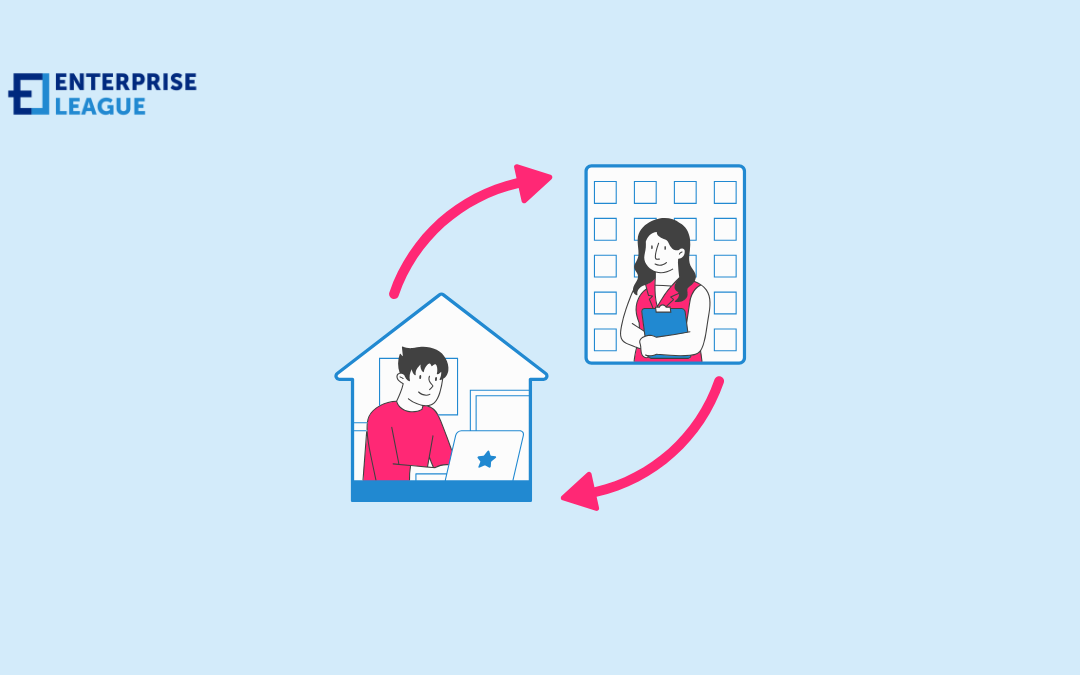
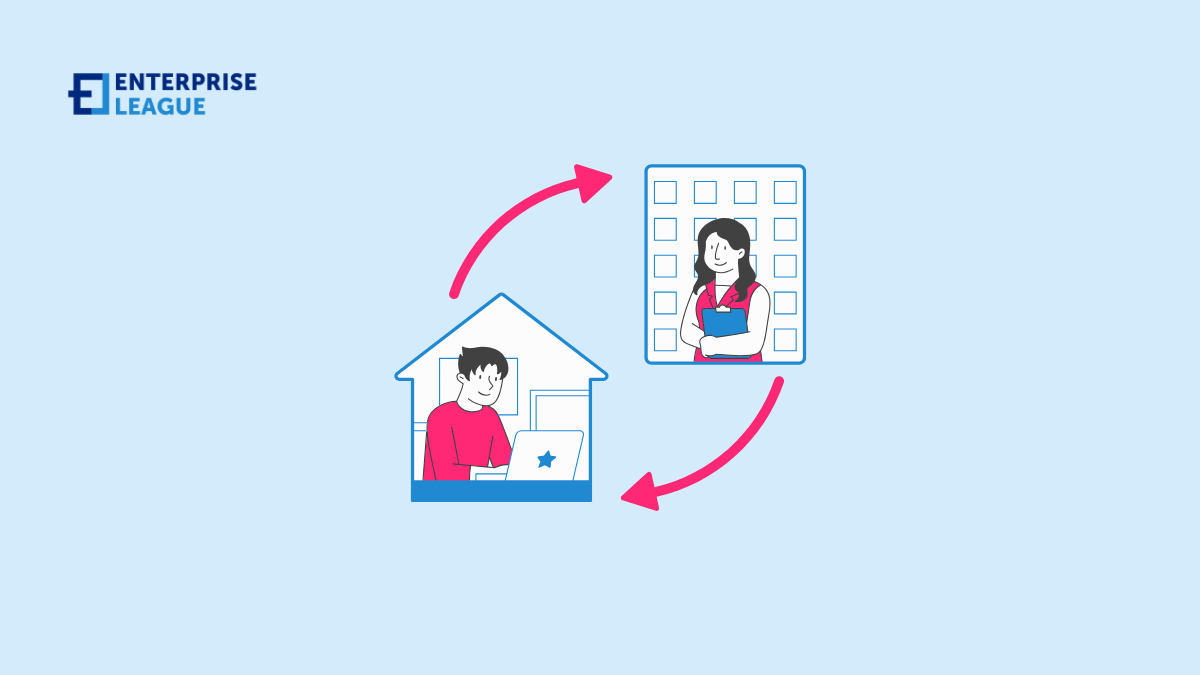
Hybrid work combines in-person and remote work, allowing employees the flexibility to do a bit of both. This model typically involves a mix of scheduled office and work-from-home days, accommodating diverse work styles and preferences. 

For example, teams may spend certain days collaborating in the office while working remotely the rest of the week. Hybrid work can enhance employee satisfaction by providing the benefits of both models, such as in-person collaboration and the flexibility of remote work. 

Advantages and drawbacks of each model

Each work model comes with its own mix of benefits and challenges, there’s no perfect one-size-fits-all solution. What works brilliantly for someone might be a disaster for another. Understanding these pros and cons helps you make smarter choices about which model fits your team’s needs, culture, and goals. Let’s break down what you can expect from each approach:

In-person work

The advantages of in-person work include easier collaboration and communication, as face-to-face interactions enable quick problem-solving and idea-sharing. It promotes stronger team bonding and culture-building through daily interactions and shared experiences. Employees have direct access to on-site resources, equipment, and immediate support from colleagues. 

In-person work also provides a clear separation between work and home life, which some find beneficial for maintaining focus and work-life balance.

The drawbacks of in-person work include reduced flexibility, making it less appealing to employees seeking work-life balance. Long commutes can increase stress and take time away from personal or family responsibilities. 

Remote work

Remote work presents numerous advantages, such as greater employee flexibility and autonomy. Working from home eliminates commuting time and costs, allowing individuals to create a healthy work environment that suits their preferences. 

This flexibility can improve work-life balance, enabling employees to manage personal responsibilities alongside their professional obligations. For organizations, remote work opens access to a broader talent pool, as geographical limitations are less of a factor. 

Remote work also has its challenges. Employees may experience feelings of isolation and disconnect from their colleagues, which can affect team dynamics. Additionally, maintaining effective communication and accountability can be more difficult in a remote setting, requiring deliberate efforts to promote connection and collaboration.

Hybrid work

Hybrid work combines the advantages of in-person and remote work, offering employees flexibility while encouraging collaboration. This model supports diverse work styles, allowing individuals to choose where they are most productive, whether in the office or at home. Many employees report increased job satisfaction and productivity when they can work in a way that suits their preferences.

However, hybrid work also has drawbacks. It requires careful scheduling and coordination to ensure all team members are on the same page. Additionally, there is a risk of creating an imbalance if remote workers feel excluded or less engaged compared to their in-office counterparts.

Factors to consider when choosing a model

What works brilliantly for someone might be a disaster for another and that’s why understanding these pros and cons is crucial. So, without further ado, let’s break down what you can expect from each business model before choosing the one that fits you:

For individuals

Consider how each option meets your lifestyle and goals when deciding on a work model. If maintaining a work-life balance is a priority, remote or hybrid work may offer the flexibility you need. However, in-person work might be a better fit if you thrive on structure and collaboration.  

Evaluate your productivity in different environments. Some people excel in the quiet of a home office, while others need the energy of a bustling workplace to stay motivated. Additionally, assess career development opportunities—are there chances for networking, mentorship, or skill-building in the work model you’re considering?  

For organizations

Organizations must evaluate several factors when determining the most suitable work model for their teams. The nature of work is crucial, some roles require physical presence, while others can be performed remotely. Assess how different models impact team dynamics, communication effectiveness, and company culture. 

Evaluate the technological infrastructure needed to support various work arrangements, ensuring all employees have equal access to necessary tools and information. Consider the potential impact on productivity, employee satisfaction, and talent retention. 

Financial implications should be analyzed, such as office space costs versus technology investments for remote work. Legal and compliance issues, including workplace safety and data security, must be addressed for each model. Organizations should also consider their long-term strategy and how different work models align with their goals for growth, innovation, and market positioning.

Conclusion

There’s no one-size-fits-all approach to work models, the best choice depends on individual needs, organizational goals, and the nature of the work itself. Employees and employers can make informed decisions by understanding the advantages and drawbacks of in-person, remote, and hybrid models. 

Consider experimenting with different arrangements to find what works best for you or your organization. The right model should ultimately enhance work productivity, satisfaction, and overall well-being while meeting business objectives.

More must-read stories from Enterprise League:

Related Articles

5 Best Heavy Equipment Rental Companies

5 Best Heavy Equipment Rental Companies

Choosing the right equipment rental provider is crucial for construction projects, as contractors need dependable machinery and tools they can count on. The top heavy equipment rental companies stand out through exceptional service, modern equipment fleets, and a...

read more
The ROI of 3D Visualization in Real Estate Marketing

The ROI of 3D Visualization in Real Estate Marketing

Real estate marketing has fundamentally changed over the past five years. The industry that once relied on printed brochures, static photographs, and open house tours now operates in an increasingly digital environment where visual presentation directly impacts sales...

read more
How To Choose the Right Tool for Waterfall Chart Reporting

How To Choose the Right Tool for Waterfall Chart Reporting

Clear waterfall charts help teams explain how results change over time. This guide compares Excel, Google Sheets, and Power BI, then looks at add-ins such as Zebra BI and think-cell for advanced financial reporting. You will see where each option fits, from quick...

read more

The hidden costs of unmanaged business travel and how to avoid them

The hidden costs of unmanaged business travel and how to avoid them

The hidden costs of unmanaged business travel and how to avoid them

January 20, 2025

The hidden costs of unmanaged business travel and how to avoid them<br />

Let’s talk about those business trips that seem to cost way more than what shows up on the expense reports. Sure, getting face-to-face with clients and partners is often worth the investment, because nothing beats a handshake and real conversation for building relationships and closing deals. But when your travel program isn’t running smoothly, money starts leaking in places you might not expect.

We’re not just talking about pricey flights and hotel bills here. The real costs hide in those delayed flights that make people miss meetings, the burned-out employees who hate your clunky booking system, and the opportunities that slip away because someone can’t get where they need to be.

The real costs of unmanaged travel programs

Unmanaged business travel might seem straightforward: employees book their travel, submit receipts, and get reimbursed. However, this approach often creates inefficiencies and unnecessary expenses.

Lack of cost control

Employees may book travel based on personal preferences rather than cost efficiency, without a standardized travel policy. This lack of oversight often results in inflated costs for flights, accommodations, and ground transportation. When multiple employees independently book travel, the organization misses opportunities for volume-based discounts.

Additionally, unmonitored spending can lead to inconsistent expense reporting, making it harder to analyze and optimize budgets. These scattered expenses add up quickly, creating financial strain.

Reduced productivity

Time is money, and unmanaged travel programs can be time-consuming for employees. When workers are left to navigate booking platforms, compare prices, and manage logistics, they spend valuable hours that could be better invested in their core responsibilities. Delays, poorly planned itineraries, and last-minute changes exacerbate this problem, further impacting productivity.

Employee dissatisfaction

Frequent travelers face burnout, especially when they deal with subpar accommodations, disorganized itineraries, or personal expenses left unreimbursed for extended periods. This dissatisfaction can lead to reduced morale, lower retention rates, and difficulty attracting top talent.

Compliance and risk issues

Unmanaged travel also poses compliance risks. Failure to adhere to company guidelines or legal regulations—such as duty of care obligations—can result in fines, reputational damage, and legal complications. Moreover, without a clear protocol for emergencies, employees traveling in high-risk areas may face unnecessary safety concerns.

How to mitigate hidden costs

To avoid these pitfalls, businesses need a proactive approach to managing travel. Here’s how you can mitigate the hidden costs of unmanaged travel:

Develop a clear travel policy

A comprehensive travel policy is the backbone of effective travel management. It outlines approved booking platforms, spending limits, preferred vendors, and reimbursement procedures. Ensure employees understand and follow this policy, and keep it updated to reflect current business needs.

Clear guidelines not only control costs but also streamline decision-making. Employees can book within the policy framework without second-guessing or seeking approvals, saving time and reducing confusion.

Leverage technology

Modern travel management tools can centralize bookings, automate expense tracking, and provide real-time data on travel spend. These platforms allow companies to enforce policies while offering employees convenience and transparency. Features like itinerary management and automated alerts can enhance the travel experience while minimizing disruptions.

Analytics from these tools also help identify spending trends and opportunities for savings, enabling more informed decision-making.

Focus on employee well-being

Invest in solutions that prioritize traveler comfort and safety. Offer flexible booking options that allow employees to choose flights and accommodations that balance cost and convenience. Provide support for emergencies, such as 24/7 access to assistance or insurance coverage for unexpected situations.

Listening to employees’ feedback about their travel experiences can also help fine-tune your policies. A satisfied workforce is more productive and less likely to experience burnout.

Why a corporate travel management company (TMC) is the answer

Partnering with an online corporate travel management company is one of the most effective ways to address the challenges of unmanaged business travel. A TMC brings expertise, technology, and tailored solutions to optimize every aspect of your travel program.  Additionally, their dedicated support ensures a seamless travel experience for employees, from booking to post-trip reimbursements.

Cost savings through expertise

TMCs have access to exclusive rates and partnerships with airlines, hotels, and transportation providers. They negotiate on your behalf, securing discounts that would otherwise be unavailable. By consolidating bookings, TMCs can also provide detailed reporting on travel expenses, helping you identify cost-saving opportunities.

Streamlined processes

With a TMC, employees no longer need to spend hours searching for flights or dealing with cancellations. The company handles all logistics, ensuring travelers have seamless experiences. From booking to expense management, a TMC simplifies processes so your employees can focus on their work.

Enhanced compliance and risk management

TMCs ensure that all travel adheres to your policies and complies with regulations. They provide tools for tracking employee locations and managing emergencies, giving businesses peace of mind regarding duty-of-care obligations. Their expertise in handling complex itineraries and high-risk travel scenarios minimizes risks and ensures traveler safety.

Improved traveler experience

Beyond cost savings and logistics, a TMC enhances the overall travel experience. Personalized itineraries, concierge-level service, and access to travel experts create a hassle-free journey for employees. This attention to detail reduces stress, boosts satisfaction, and fosters loyalty among your workforce.

Conclusion

Unmanaged business travel carries hidden costs that can disrupt operations, drain budgets, and diminish employee satisfaction. By implementing a robust travel policy, leveraging technology, and focusing on employee well-being, businesses can mitigate these challenges. For organizations seeking a solution, partnering with a corporate travel management company offers unparalleled benefits whether is cost savings or enhanced traveler support.

More must-read stories from Enterprise League:

Related Articles

5 Best Heavy Equipment Rental Companies

5 Best Heavy Equipment Rental Companies

Choosing the right equipment rental provider is crucial for construction projects, as contractors need dependable machinery and tools they can count on. The top heavy equipment rental companies stand out through exceptional service, modern equipment fleets, and a...

read more
The ROI of 3D Visualization in Real Estate Marketing

The ROI of 3D Visualization in Real Estate Marketing

Real estate marketing has fundamentally changed over the past five years. The industry that once relied on printed brochures, static photographs, and open house tours now operates in an increasingly digital environment where visual presentation directly impacts sales...

read more
How To Choose the Right Tool for Waterfall Chart Reporting

How To Choose the Right Tool for Waterfall Chart Reporting

Clear waterfall charts help teams explain how results change over time. This guide compares Excel, Google Sheets, and Power BI, then looks at add-ins such as Zebra BI and think-cell for advanced financial reporting. You will see where each option fits, from quick...

read more

Streamlining access to capital: The role of conditional approval processes

Streamlining access to capital: The role of conditional approval processes

Streamlining access to capital: The role of conditional approval processes

January 20, 2025

The role of conditional approval processes<br />

Access to capital is often the lifeline for companies during critical moments. However, it must be said that urgent access to capital is as much of a challenge for private individuals during times of unexpected financial stress (that car with a blown radiator NEEDS to be fixed – and fast).

Securing funds can sometimes be a lengthy and complex process, leading to elevated stress levels, missed opportunities, or delays. Conditional approval, an essential step in lending that simplifies the journey from application to funding is part and parcel of the process to access loan funds. Let’s delve into how this process works, its benefits, and why it’s become part of modern lending practices.

What is conditional approval?

Conditional approval is a preliminary step in the loan approval process where a lender reviews an applicant’s financial profile and determines their eligibility for a loan—contingent on specific conditions being met. These conditions might include providing additional documentation, such as proof of income or business financial statements, or fulfilling certain credit-related criteria.

Unlike a pre-approval, which is more of an estimate based on limited information, conditional approval involves a more detailed assessment of the applicant’s financial standing. This deeper analysis gives both parties greater clarity and confidence in moving forward.

How conditional approval works

  1. Application submission: The business submits their loan application, along with preliminary financial information.
  2. Initial review: The lender conducts an initial evaluation of the business’s creditworthiness and financial capacity.
  3. Conditional approval notification: If the business meets basic criteria, they receive a conditional approval letter outlining the terms and conditions they need to fulfill.
  4. Conditions fulfillment: The business provides additional documentation or takes the necessary steps to meet the outlined requirements.
  5. Final approval and funding: Once all conditions are satisfied, the loan is fully approved, and the funds are disbursed.

This streamlined process offers a clear pathway for businesses and individuals, reducing uncertainty and enabling quicker access to needed capital.

The benefits of conditional approval

Conditional approval offers a range of advantages that make securing funding faster, clearer, and more convenient for both the lender and the individual/business seeking finance.

Faster decision-making

In traditional lending processes, waiting for final approval can take weeks. Conditional approval significantly shortens this timeline by providing an interim decision based on initial assessments. This allows businesses or individuals to plan next steps with greater confidence. 

Clarity and transparency

With conditional approval, borrowers know exactly what is required to secure their loan. This transparency minimizes confusion and helps applicants focus on fulfilling specific conditions rather than navigating vague or shifting requirements.

Increased confidence

Knowing that their application has passed an initial review gives businesses and private individuals peace of mind. They can move forward with confidence, whether they’re planning an expansion, managing cash flow, or dealing with unexpected expenses.

Reduced risk for lenders

For lenders, conditional approval provides an opportunity to assess risk more accurately. By gathering detailed financial information upfront, they can make informed decisions while ensuring compliance with regulatory standards.

Conditional approval vs. Traditional loan approval

While both processes aim to secure funding for businesses, conditional approval stands out for its efficiency and applicant-centric approach. Here’s how it differs:

  • Timeframe: Traditional loan approval often requires the completion of all steps before any decision is communicated. Conditional approval provides an interim decision, allowing businesses to proceed faster.
  • Flexibility: Conditional approval offers a degree of flexibility, as businesses can work to fulfill specific conditions at their own pace within the given timeframe.
  • Transparency: Applicants receive a clear list of requirements with conditional approval, reducing guesswork and streamlining the overall process.

Real-world applications of conditional approval

Conditional approval is not limited to one type of loan or borrower. It’s widely used across various sectors, including: 

  • Small business loans: For entrepreneurs, timing is critical. Conditional approval enables businesses to secure funds quickly, ensuring they can seize opportunities or manage unforeseen challenges without delay.
  • Personal loans: Individuals seeking personal loans also benefit from conditional approval. This allows them to understand their borrowing capacity and secure funds for various needs, such as dealing with medical emergencies or unexpected household expenses, while still providing time to gather necessary documentation.
  • Equipment financing: Businesses needing to purchase or upgrade equipment can act swiftly with conditional approval, allowing them to complete necessary paperwork while ensuring they have access to funds.
  • Auto loans: Conditional approval helps car buyers set a budget based on their financing options, streamlining the car-buying process and enhancing their negotiating power at dealerships.
  • Student loans: Prospective students benefit from conditional approval by gaining clarity on their financial aid options, allowing them to make informed decisions about schools and manage educational expenses effectively.

The role of technology in conditional approval

Advancements in financial technology have revolutionized the conditional approval process. Automated systems (often driven by increasingly sophisticated AI) can analyze applications and generate decisions within hours, if not minutes. This efficiency not only saves time but also enhances accuracy by reducing human error.

Moreover, online platforms allow businesses to upload required documents securely, track the progress of their application, and communicate with lenders in real-time. These tools make the process more accessible and user-friendly for all parties involved.

Tips for businesses and individuals seeking conditional approval

  1. Be prepared: Gather all necessary documents, such as financial (or bank) statements, tax returns, and identification, before applying.
  2. Review your credit score: Maintaining a good credit score can improve your likelihood of receiving conditional approval and may lead to more favorable loan terms.
  3. Understand the conditions: Carefully review the conditions outlined in your approval letter and ensure you can fulfill them within the required timeframe.
  4. Communicate with your lender: If you encounter challenges in meeting the conditions, reach out to your lender for guidance or alternative solutions.

Conclusion

Conditional approval bridges the gap between application and funding, offering a streamlined and transparent path to securing capital. By reducing uncertainty and expediting decision-making, this process empowers borrowers and enhances their financial confidence.

For lenders, it’s an opportunity to build trust and foster long-term relationships with their clients. As technology continues to advance, conditional approval processes will likely become even more efficient, setting new standards for accessibility and convenience.

More must-read stories from Enterprise League:

Related Articles

5 Best Heavy Equipment Rental Companies

5 Best Heavy Equipment Rental Companies

Choosing the right equipment rental provider is crucial for construction projects, as contractors need dependable machinery and tools they can count on. The top heavy equipment rental companies stand out through exceptional service, modern equipment fleets, and a...

read more
The ROI of 3D Visualization in Real Estate Marketing

The ROI of 3D Visualization in Real Estate Marketing

Real estate marketing has fundamentally changed over the past five years. The industry that once relied on printed brochures, static photographs, and open house tours now operates in an increasingly digital environment where visual presentation directly impacts sales...

read more
How To Choose the Right Tool for Waterfall Chart Reporting

How To Choose the Right Tool for Waterfall Chart Reporting

Clear waterfall charts help teams explain how results change over time. This guide compares Excel, Google Sheets, and Power BI, then looks at add-ins such as Zebra BI and think-cell for advanced financial reporting. You will see where each option fits, from quick...

read more

Benefits of morning meditation in a business environment

Benefits of morning meditation in a business environment

Benefits of morning meditation in a business environment

January 16, 2025

Meeting meditation a business must try

Stress is the ultimate killer for productivity and apparently for business meetings. Is there a way to shield yourself from it in such important business moments? Yes, there is – morning meditation. A practice to clear your mind of stress, anger, and other negative emotions that might arise.

Before you laugh and brush the idea aside, do you even know what is a meeting meditation? Simply put, it’s a way of meditation to open a meeting.

The perks of meeting meditation

No matter if you’re having a staff meeting or a meeting with the board, meditation before meeting is slowly working its way to becoming the new normal. Here is why:

A meeting meditation is quick

It will not interfere with your working schedule. You can choose different lengths of meditation for meetings that last from 1 minute to 10 minutes. So, having no time can’t be your excuse.

A vast array of meditation techniques to choose from

Everything isn’t for everyone and that’s okay. Depending on your company’s culture and what you want to achieve with meditation you can try out anything from these types of meditation. Remember that every type is applicable to meditation for staff meeting. A safe choice is guided meditation to start a meeting, but is entirely up to you.

Gives you calm in the storm

Meditation is proven not only to reduce stress levels, but to give a sense of calm throughout the day. And if you need something in a business meeting, that’s definitely calm and cool heads. 

It helps with increasing patience and tolerance and also it is the leader in reducing anxiety. And we all know how nerves can get in the way of everything.

Meeting meditation is like love – it don’t cost a thing

There’s nothing to lose by trying meeting meditation. You and your staff can only benefit from it. And even if you don’t, what’s the harm of trying things free of charge? From all of the ways to implement free or cheap business changes, meditation before meeting is one of the most innovative.

Yes, there are professionals you can hire for guided meditation to start a meeting. That being said, we live in the age of accessible knowledge at any time so all you need is some tips on how to do a meeting mediation.

In a world running towards the future – it keeps you in the present

That’s right – meetings are often set for enhancing efficiency in business, deciding on the next move, or to see what went wrong in the past. So, the mindset of everyone in the meeting shifts from the future to the past on a daily basis. It is well known that we shape the future with the decisions we make in the present and being present in the moment is what meeting meditation is all about. It makes a person aware of where he/she is in the now and keeps them grounded. Focusing on the present will take you to a better version of your future.

Open up locked away creativity with meeting meditation

How can a person be creative if he/she is not relaxed? When it comes to business, you want to extract every bit of imagination and creativity from everyone in the room. It’s what will guide you to fresh ideas, out of the box thinking and better solutions to problems.

Scientifically it’s proven that if a person is relaxed, the creative juices start to flow immediately. Meeting meditation will relax everyone.

Improves the working relationship strength

Whether you are in a meeting with clients, colleagues, or employees – doing something out of the borders of professionalism, can bring you together. Think of it as a small team-building exercise that you can do at a moment’s notice.

How to start implementing meeting meditation if you haven’t tried it before

It’s common practice not to try something simply because you haven’t tried it before. But, meditation for meetings is so easy – trust us.

Firstly, put the idea out there so it doesn’t come as a shock. Speak about meeting meditation in a previous meeting before you try it or simply write an email or a memo. Be sure to explain the details of why you are doing this.

Once everyone knows, start off the next meeting by informing everyone that they have to close their eyes and start taking deep breaths (nose-in, mouth-out). Then, tell them to simply put all the focus on their breathing and to let pass any thought that comes to mind freely. Kindly ask them to stay quiet and keep doing what they are doing. You don’t need to set up an alarm or anything, trust your inner clock. Once is over, go ahead with your meeting.

Conclusion

It is safe to say that meditation before meeting has become a standard practice for a lot of companies of different sizes. Trends become trends for a reason. A fresh and spiritual practice that leads to more achievements and success was bound to become a trend. Try it or not, its benefits are indisputable. And because of that, we strongly recommend it.

More must-read stories from Enterprise League:

Related Articles

5 Best Heavy Equipment Rental Companies

5 Best Heavy Equipment Rental Companies

Choosing the right equipment rental provider is crucial for construction projects, as contractors need dependable machinery and tools they can count on. The top heavy equipment rental companies stand out through exceptional service, modern equipment fleets, and a...

read more
The ROI of 3D Visualization in Real Estate Marketing

The ROI of 3D Visualization in Real Estate Marketing

Real estate marketing has fundamentally changed over the past five years. The industry that once relied on printed brochures, static photographs, and open house tours now operates in an increasingly digital environment where visual presentation directly impacts sales...

read more
How To Choose the Right Tool for Waterfall Chart Reporting

How To Choose the Right Tool for Waterfall Chart Reporting

Clear waterfall charts help teams explain how results change over time. This guide compares Excel, Google Sheets, and Power BI, then looks at add-ins such as Zebra BI and think-cell for advanced financial reporting. You will see where each option fits, from quick...

read more
Mastering the modern SaaS business model (2026)

Mastering the modern SaaS business model (2026)

Mastering the modern SaaS business model (2026)

January 10, 2025

SaaS business model and everything you need to know about it

The software subscription model (SaaS) has changed the tech world in the last decade, with the market growing to over $200 billion annually. This approach to selling different types of software puts flexibility and ease of use first, customers subscribe to use online tools rather than buying them outright. The beauty of this model lies in its simplicity, the software provider handles all the complex technical details, from updates to security, while customers simply log in and use what they need. This makes high-quality software available to more businesses than ever before, regardless of their size or technical expertise.

How SaaS works

The SaaS model works by keeping everything in one place, the provider’s servers handle all the heavy lifting. Users simply log in through their web browsers to access the software, without worrying about installations or technical maintenance. The provider’s team takes care of all updates, security, and backups automatically. 

When customers need help, support is usually included in their subscription. This setup also lets providers track how people use their software, so they can fix problems and add helpful features quickly. The end result? Businesses can focus on their work while providers keep everything running smoothly behind the scenes.

Core principles of a SaaS business model

A SaaS business operates on a simple foundation: offering software through subscriptions that customers access online. The model spreads costs across many subscribers, with each paying a regular fee that helps cover development and operations. Different pricing tiers let customers choose what fits their needs, basic users pay less while those wanting more features pay more. 

Since the software runs online, providers handle all technical aspects like updates and hosting, making it hassle-free for users. Customer satisfaction matters most because happy users stay subscribed longer. That’s why these businesses focus on user-friendly features and reliable support while continuously improving their product.

Building the right SaaS product

Creating a SaaS product that customers will want to use and pay for month after month requires careful attention to several fundamental building blocks, each playing a vital role in long-term success.

  • Solve real problems – Create software that fixes actual customer pain points they’re willing to pay for, not solutions looking for problems
  • Keep it simple – Users expect smooth performance and easy setup, without technical headaches or complicated onboarding
  • Focus on securityProtect customer data with strong security measures since users trust you with their information
  • Improve regularly – Add new features and updates based on user feedback and needs, but test thoroughly before release

When these elements work together, you have a strong foundation for a product that can attract and keep customers while growing steadily over time.

SaaS vs. Traditional models

A clear look at how SaaS differs from traditional software helps businesses understand which model fits their needs better.

  • Payment structure – Traditional software requires a big upfront payment to own the license forever, while SaaS spreads the cost through affordable monthly or yearly subscriptions
  • Software access – Traditional software gets installed directly on your computer and only works there, while SaaS runs through the internet, letting you use it on any device, anywhere
  • Updates and maintenance – Traditional software makes you handle updates yourself and often charges extra for new versions, while SaaS includes automatic updates and continuous improvements at no extra cost
  • Technical requirements – Traditional software needs specific hardware and IT knowledge to run and maintain, while SaaS just needs an internet connection and web browser to work
  • Business growth – Traditional software limits your growth with fixed licenses and installations, while SaaS lets you easily add or remove users as your business needs change

This shift toward SaaS has made professional software more accessible to businesses of all sizes, without the burden of complex technical management.

Conclusion

The SaaS business model has shown it’s a practical choice for both software providers and users. It takes away the old headaches of expensive licenses and complicated installations, replacing them with simple subscriptions and easy access. Small businesses can now use tools that were once only available to big companies, while software providers benefit from steady income and simpler product management.

This approach to selling software proves that sometimes the simplest solution works best, give customers what they need, when they need it, at a price that makes sense for everyone. 

More must-read stories from Enterprise League:

Related Articles

5 Best Heavy Equipment Rental Companies

5 Best Heavy Equipment Rental Companies

Choosing the right equipment rental provider is crucial for construction projects, as contractors need dependable machinery and tools they can count on. The top heavy equipment rental companies stand out through exceptional service, modern equipment fleets, and a...

read more
The ROI of 3D Visualization in Real Estate Marketing

The ROI of 3D Visualization in Real Estate Marketing

Real estate marketing has fundamentally changed over the past five years. The industry that once relied on printed brochures, static photographs, and open house tours now operates in an increasingly digital environment where visual presentation directly impacts sales...

read more
How To Choose the Right Tool for Waterfall Chart Reporting

How To Choose the Right Tool for Waterfall Chart Reporting

Clear waterfall charts help teams explain how results change over time. This guide compares Excel, Google Sheets, and Power BI, then looks at add-ins such as Zebra BI and think-cell for advanced financial reporting. You will see where each option fits, from quick...

read more

How dedicated development teams help businesses thrive

How dedicated development teams help businesses thrive

How dedicated development teams help businesses thrive

January 10, 2025

How dedicated development teams help businesses thrive

For businesses to thrive, having a team of efficient professionals is vital. Dedicated development teams are best for this purpose as they are an accumulation of worldwide talents who work remotely. Aside from that, these dedicated teams give all their focus to your project, working hand in hand to get the best results in a shorter space of time.

If your company has a need for product development, outsourcing is the best option for you. However, if not, then lower-cost development projects will be ideal for small businesses with the option of in-house teams.

The main objective for businesses is that they grow through efficient developments and service delivery. In this case, dedicated teams will prove beneficial to businesses whether it has a higher production demand or not. Let’s have a look below to see why dedicated software development teams are essential for business growth.

What are dedicated development teams?

Dedicated development teams have their concentration on the needs of companies with a focus on beneficial strategies. These teams are contracted to the company with fixed payment rates.

Businesses thereafter have constant access to professional developers who prioritize their projects. The created engaging model is an essential component in aiding the business to thrive.

Advantages of dedicated development teams

There are several advantages when it comes to dedicated development teams as they are focused on the needs of the business which allows for substantial growth. Let’s look at the key benefits:

  1. Businesses will have unlimited access to the dedicated development team model. The vast array of talent within the team allows companies the flexibility to work efficiently on projects without having to source professionals at the last minute.
  2. These teams usually have ample experience gained from a variety of previous projects. Therefore, companies have access to professional expertise.
  3. Companies can rely on project development support during and after the launch if they have development teams.
  4. Businesses can expect faster development processes as teams become familiar with the company’s needs.
  5.   Teams usually work on an all-inclusive fixed cost so companies won’t incur per-project costs.
  6.   Business owners will have the flexibility of giving their concentration to core services while remote teams manage development projects.
  7.   Having dedicated teams poses a lower risk as their focus is on meeting the business needs efficiently.

Outsourced vs dedicated development teams

There is a vast difference between outsourced and dedicated development as they have an impact on the relationship between a developer and a business. Outsourcing projects will have businesses researching developers and negotiating costs as they are short-term agreements that usually come with high hourly rates. When outsourcing projects, businesses may also incur delays in production and a higher risk factor.

When it comes to dedicated development teams, the process works differently as they are inclined to start on the project immediately as per the agreement. Businesses have leeway as their demands have to be met by the team who work on a fixed rate. Companies entrust projects to development teams without the worry of delays or additional expenses.

In-house vs dedicated development teams

When looking at in-house and dedicated development teams, they both offer similar benefits. This helps businesses to start projects promptly and gives them a clear idea of team maintenance costs which is advantageous. Companies get a similar level of project support and expertise in both instances.

However, there are minimal differences to take note of. These include infrastructure implementations when it comes to in-house teams. Companies will have to ensure that there is sufficient hardware and software for specific projects as well as ample workstations to accommodate employees.

Additionally, in-house teams are subjected to a minimal variation of projects according to expertise whereas remote dedicated development teams offer extensive talent for several projects.

Consumer demands

In recent years, consumer demands have changed drastically when it comes to developments. Listed below are a few points to take note of.

  • The Agile development model is seen as a problem for businesses without proper enhancement strategies because of the increasing consumer demand.
  •  The model also requires increased collaborations with developers and businesses to stay on par.
  • It has substantially increased subscription services for both Microsoft Office 365 and Netflix, because of efficient development strategies.
  • To keep up with consumer demands, businesses should have ongoing support for their software.
  • To eliminate delays, developers should have ample knowledge when it comes to updating software.
  • To avoid stunted business growth, using professional expertise is vital.
  • To meet consumer software demands, businesses benefit most by making use of dedicated development models.

Conclusion

Dedicated development teams are essential in helping businesses thrive. These efficient teams make sure that the company’s needs are met by developing the required software for projects. If businesses don’t require regular software updates, then they can opt to use a freelancer.

However, if the main service of a business relies on regular software updates, then outsourcing to freelancers is not advisable. Dedicated software development teams will be your best option if your want your business to be on par and grow substantially.

More must-read stories from Enterprise League:

Related Articles

5 Best Heavy Equipment Rental Companies

5 Best Heavy Equipment Rental Companies

Choosing the right equipment rental provider is crucial for construction projects, as contractors need dependable machinery and tools they can count on. The top heavy equipment rental companies stand out through exceptional service, modern equipment fleets, and a...

read more
The ROI of 3D Visualization in Real Estate Marketing

The ROI of 3D Visualization in Real Estate Marketing

Real estate marketing has fundamentally changed over the past five years. The industry that once relied on printed brochures, static photographs, and open house tours now operates in an increasingly digital environment where visual presentation directly impacts sales...

read more
How To Choose the Right Tool for Waterfall Chart Reporting

How To Choose the Right Tool for Waterfall Chart Reporting

Clear waterfall charts help teams explain how results change over time. This guide compares Excel, Google Sheets, and Power BI, then looks at add-ins such as Zebra BI and think-cell for advanced financial reporting. You will see where each option fits, from quick...

read more