Revolutionizing the construction industry with smart material supply strategies

Revolutionizing the construction industry with smart material supply strategies

Revolutionizing the construction industry with smart material supply strategies

February 12, 2024

Revolutionizing the construction industry with smart material supply strategies

Cementing the backbone of our cities and shaping the skylines, the construction industry is an undeniable pillar of global development. However, like any pillar, it can only stand tall if supported by a robust, efficient, and future-facing supply chain. As we march further into the 21st century, smart material supply strategies and frameworks are emerging as pivotal forces in revolutionising the way construction businesses source, manage, and utilise the essential components of their craft.

Current challenges in material supply

This in-depth look at the evolution of material supply management will shine a light on the strides being made to enhance efficiency, save costs, and eliminate bottlenecks in the construction supply chain.

Lack of visibility and transparency

The complex web of suppliers, manufacturers, and distributors is notorious for its opacity. For construction projects, this can mean a lack of clarity on the origin, delivery status, and compliance of materials. In a worst-case scenario, this lack of visibility could lead to the use of substandard or unsafe materials, risking the quality and safety of the final product.

Inefficient inventory management

Large-scale construction projects often involve multiple, concurrent workstreams that require a diverse array of materials. Keeping track of these materials across different sites and stages is a daunting task. Many organizations continue to rely on manual methods, which are not only time-consuming but also prone to errors and inaccuracies.

Delays and disruptions

The supply of materials traditionally hinges on outdated push systems, where orders are based on forecasts rather than real-time demand. Unexpected events, such as weather conditions impacting deliveries or a spike in demand from another customer, can cause significant delays and disruptions to the construction schedule.

Benefits of smart material supply strategies

Improved supply chain visibility

Implementing smart material supply strategies equips project managers with a digital lens into the supply chain. Real-time tracking of materials from the factory to the construction site enhances transparency, ensuring that materials meet their timeline and standards.

Real-time inventory tracking

By leveraging technology, construction companies can track the movement and location of materials at any time. This not only provides a live overview of what’s on hand but also enables strategic rescheduling or redistributing stock in a crunch.

Predictive analytics for demand forecasting

With the advent of big data, predictive analytics is transforming the construction supply chain. Companies can now forecast material needs with unprecedented accuracy, reducing the likelihood of overstocking or under-provisioning.

Automated reordering and replenishment

Artificially intelligent systems that learn from consumption patterns can automatically trigger reorders when stock levels drop below preset thresholds. This automation streamlines the procurement process and minimizes the chances of stockouts.

Implementation of smart material supply strategies

Smart material supply strategies are not gestures of a distant future; they can be implemented today. Here’s how companies in the vanguard are adopting these innovative methods:

Integration of IoT and RFID technologies

By equipping materials with sensors and RFID tags, companies can take advantage of the Internet of Things to automate tracking and monitoring. These technologies also enable the application of smart contracts, which can autonomously execute actions, such as releasing payments upon delivery confirmation.

Cloud-based inventory management systems

Gone are the days of the cumbersome Excel spreadsheet. Cloud-based inventory management systems offer unparalleled flexibility and accessibility. Whether at the office or on the ground, stakeholders can view and update inventory data in real-time.

Collaboration with suppliers and contractors

A synchronised supply chain requires collaboration not only within a company but also across the ecosystem. By sharing digital platforms with suppliers and contractors, construction companies can achieve a higher level of coordination and mutual visibility, further mitigating risks and delays.

Training and upskilling of workforce

As companies adopt new technologies, it is crucial to ensure their workforce is equipped to harness their full potential. Training initiatives can range from basic digital literacy to more advanced data analysis and technology maintenance skills.

Future trends and innovations

Robotics and automation in material handling

Robots are no longer the stuff of science fiction. In warehouses and on construction sites, robotic arms, and drones are lending their assistance to material handling tasks. These technologies promise to reduce labour costs, improve safety, and increase the speed of operations.

Blockchain for enhanced supply chain transparency

Blockchain technology, with its inherent transparency and traceability, is a natural fit for the construction supply chain. Each change of hands for a material can be recorded on an immutable ledger, providing stakeholders with a clear, auditable history of its journey.

AI-powered predictive maintenance

Predictive maintenance is not solely for machinery; it can also be applied to ensure the availability and quality of construction materials. By analysing data, AI systems can anticipate when materials might become scarce or degrade, enabling proactive measures to be taken.

Conclusion

The construction industry is on the cusp of a material supply revolution. Embracing smart material supply strategies promises a cascade of benefits, from streamlined operations to cost savings and, most importantly, the elevation of safety and quality standards. By shedding the archaic methods of the past and opening up to the technologically driven future, construction companies stand to not only build better but also build smarter.

As we look at the path ahead, it’s clear that smart material supply strategies are not mere suggestions but transformative imperatives. The companies that can marry the traditional craft of construction with the ingenuity of modern supply chain management will be the ones to thrive in this new era.

In the end, it’s not just about redefining the supply of materials—it’s about redefining the very fabric of the construction industry, one block at a time. With the technology readily available and the need pressing, there’s no better time to begin the evolution towards a smarter, more efficient construction ecosystem.

More must-read stories from Enterprise League:

Related Articles

How do I reserve a space for a trade show in Pennsylvania

How do I reserve a space for a trade show in Pennsylvania

Trade shows are excellent business opportunities. Your upcoming event should occur in a space big enough to hold all participating brands while leaving room for visitors. Learning how to reserve a space for a trade show in Pennsylvania will help you find the best...

read more

Understanding software development costs

Understanding software development costs

Understanding software development costs

February 09, 2024

Software development costs

It doesn’t matter if you’re a startupper or an experienced developer, understanding development costs is pretty important. So when you ask, “How much does software development cost?”, you need to think about all the nuances that can influence the expenses. Read the article till the end for some advice on how you can launch your software project more efficiently.

The fundamentals of software development

Software development is a carefully planned process that includes the creating, developing, configuring, and testing apps to ensure they perform properly. Think about the applications on your phone that make routine tasks easier, or the large systems that major corporations use to carry out their operations. These apps influence how different types of work are done. Understanding the intricacies of the development process becomes essential for stakeholders who want to use technology and achieve their goals more efficiently.

Exploring the spectrum of software types

Software development includes a range of applications, each adapted to meet individual requirements and goals. Understanding the features and implications related to custom software development costs is vital for managing development efforts with corporate objectives. Let’s consider each of them: 

Minimum viable product

An MVP is a simple version of your software. It has only the necessary features, which can help you determine user satisfaction with your product.

The cost of developing an MVP is determined by: team hired, product complexity, computer languages, and tools. The price ranges from $10,000 to $50,000. An MVP is a low-cost option for those who wish to experiment with innovative ideas.

Simplified app

These are tailored solutions with minimal complexity that satisfy specific user needs. Their limited set of features results in lower development costs.

The typical cost of software development ranges from $20,000 to $100,000. It is determined by the complexity of the features, design requirements, and interaction with other systems or services.

Average-scale app

These apps find a compromise between features and cost. They cater to a larger audience and have more features. 

The cost of developing software ranges between $50,000 to $250,000. The price is determined by feature complexity, platform compatibility requirements, and interaction with third-party APIs or services. While the initial cost for average-scale apps is higher, they provide more flexibility and scalability.

Full-scale app

These applications represent the highest level of software development. They provide users with new features, enhanced user interfaces, and cross-platform compatibility. Moreover, full-scale apps can help businesses gain a competitive advantage. 

The development expenses range between $100,000 and $1,000,000. It is a worthwhile option for businesses aiming to provide a high-quality user experience. 

Factors that affect software development costs

The software development costs depend on a variety of factors. Learning their nuances can help entrepreneurs make better decisions. Therefore, they will use their money and resources more effectively.

Complexity of the project

Projects with complex functionality, extensive integrations, or advanced technology often demand more time and resources, which leads to greater software development costs. Simpler projects, on the other hand, with well-defined needs and clear objectives, may have lower development costs.

Technology stack and platform

Updating the technology you use can provide business an advantage by increasing speed, development potential, and user satisfaction, but it can be more expensive. Sticking with existing technologies and platforms is less expensive, but it may stifle future growth and implementation of new ideas.

Features and functionalities

Each extra feature, integration, or customisation increases the time and resources needed for development, resulting in increased total costs. Prioritizing essential features and utilizing iterative development methodologies can help you save money while still providing value to your customers.

Development team and expertise

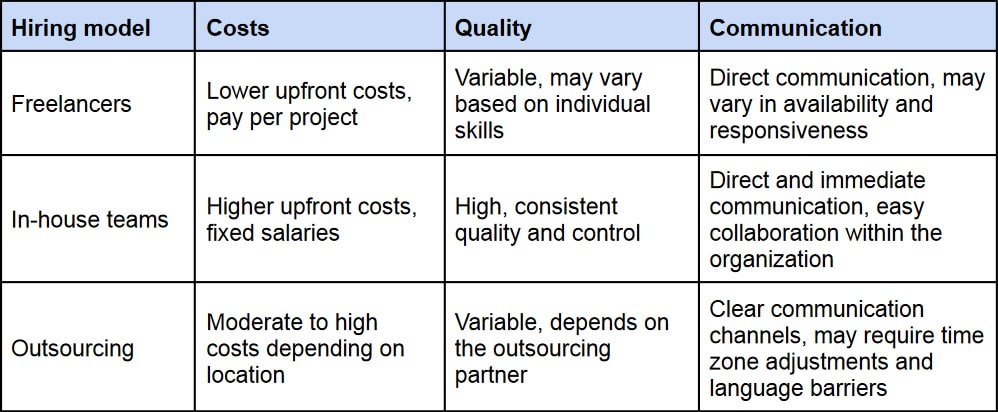
The location and talent of your development team can have a significant impact on development costs and the quality of your product. Typically, there are three options. You can hire freelancers, form your own team, or outsource the project to another organization.

Development team and expertise table

Timeline and project management

Delays, scope creep, and inefficiencies may all contribute to budget overruns and risk project success. Stakeholders may reduce risks and keep projects under budget by applying agile processes, creating clear communication channels, and prioritizing deliveries.

Tips for optimal development decision-making

Navigating the intricacies of software development expenses requires strategic planning, effective decision-making, and proactive risk mitigation. Consider the following suggestions to optimize development efforts and maximize return on investment:

  • Define clear requirements: Describe project requirements, objectives, and success criteria in detail to ensure that developers understand the project’s scope and expectations.
  • Conduct comprehensive research: Investigate multiple development options, technology stacks, and service providers to choose the most beneficial solutions depending on project needs and financial restrictions.
  • Evaluate long-term implications: Consider the software’s scalability, maintenance, and support requirements after the original development phase to save future expenses and simplify further development.
  • Seek expert advice: Engage with experienced developers, technology consultants, and industry experts to learn about new trends, best practices, and possible risks.
  • Balance cost and ROI: Strive for a balance between development expenses and expected return on investment by prioritizing features that provide actual value to end users and correspond with corporate goals.

Conclusion

Knowing software development expenses is essential for stakeholders who want to use technology to fulfill their business goals successfully. Organizations can maximize their software development efforts for success by understanding the aspects that influence software development costs, using strategic cost management methods, and taking a proactive approach to decision-making.

More must-read stories from Enterprise League:

Related Articles

How do I reserve a space for a trade show in Pennsylvania

How do I reserve a space for a trade show in Pennsylvania

Trade shows are excellent business opportunities. Your upcoming event should occur in a space big enough to hold all participating brands while leaving room for visitors. Learning how to reserve a space for a trade show in Pennsylvania will help you find the best...

read more

4 advantages of having a business credit card

4 advantages of having a business credit card

4 advantages of having a business credit card

February 07, 2024

Advantages of having a business credit card

In the world of business, having the right financial tools at your disposal is crucial. A business credit card can be such a tool as it helps manage your company’s expenses and separates personal and business spending.

It also enhances your ability to invest wisely and adapt to market changes efficiently. Building business credit effectively can only be achieved through the consistent use of trustworthy financial resources. One such option is Crédito which helps compare the best credit cards and loans specifically in Mexico. However, you need to know how to choose the right credit card line for your business, which is what we’ll talk about today. But let’s start with the advantages.

Benefits of a business credit card

Having a business credit card up your sleeve is like finding a secret weapon you didn’t know you needed. Used smartly, it’s not just a way to pay for things. It turns into this super tool that can really push your business forward in all sorts of ways. 

The trick isn’t just to have it but to know how to make the most of it. We’ve put together a few tips to help you see this tool’s real potential:

Improved cash flow management

A business credit card gives you the flexibility to cover expenses without immediately tapping into your cash reserves. This allows for smoother operation during the inevitable ebbs and flows of business cash flow.

Additionally, it makes it easier to deal with immediate or unexpected expenses (which are always around the corner, somewhere). You can cover costs now and pay later when your receivables catch up, thereby smoothing out cash flow wrinkles without missing a beat. 

This level of flexibility allows you to seize any growth opportunity that comes your way, even when your bank balance doesn’t look too friendly.

Building business credit

A business credit card is not just a handy financial tool, it’s also a way to build up your business’s good name in the world of finance. Consistent and responsible use of a business credit card can help build your company’s credit profile, making it easier to secure loans with favorable terms down the line.

Think of it this way: every time you use your business credit card and pay off what you owe on time, it sends out a positive signal. Each purchase and every payment is helping you build a solid reputation for your business. 

A good reputation in the world of finances is not only useful when considering a loan. It also helps your suppliers see you are a trustworthy business partner who is serious about making payments on time. Therefore, you should look at a business credit card as a way to lay down a foundation for future growth and stability. 

Business Credit Card Options to Build Your Credit Faster

If you’re looking for real-world solutions, here are a few providers that can help your company establish and grow business credit:

FairFigure
FairFigure offers a business credit builder card designed to help companies strengthen their credit profile. It provides same-day funding, flexible repayment terms, and reports to multiple major business credit bureaus. For small businesses and startups, it’s a practical way to build business credit while managing day-to-day expenses.

Divvy (by BILL)
Divvy combines a business credit card with a spend management platform. Along with reporting payment activity to the credit bureaus, it gives businesses smart budgeting and expense-tracking tools. This makes it easier to control spending while steadily improving creditworthiness.

Brex
Brex is designed for startups and fast-growing companies. Instead of relying on personal credit scores, it evaluates your business’s financials to determine limits. Brex also reports to credit bureaus and provides higher credit limits alongside useful software integrations for managing expenses and cash flow.

Access to higher credit limits

Generally speaking, business credit cards offer higher credit limits compared to personal cards. That’s because lenders know businesses tend to have more extensive operating expenses and, therefore, might need extra funding wiggle room.

This scaled-up limit can be invaluable for funding significant expenses or investments without stalling other operational mechanisms due to fund allocation issues.

Easier expense tracking and reporting

Imagine having an automatic ledger that captures every transaction accurately. That’s what you get with a business credit card. 

Also, separating personal and business expenses becomes effortless, simplifying tax preparation and financial reporting – not to mention ensuring you never miss out on deducting legitimate business expenses.

How to choose the right credit card for your business

Picking the right credit card for your business isn’t something to do on a whim. This decision can significantly impact your financial maneuverability and growth potential. Plus, not all credit card offers will fit your business’s specific needs.

Here are a few tips to help you narrow down the list:

Make sure your credit card doesn’t come with hidden fees

Let’s start with what’s lurking beneath the surface – hidden fees. While there are plenty of reliable business credit cards with no hidden fees on the market, not all companies choose the path of full transparency.

Therefore, it’s up to you to pay attention and do your research when choosing your business credit card provider. Look beyond the flashy rewards and examine the fine print for annual fees, transaction fees, late payment penalties, and foreign transaction charges. 

A transparent fee structure not only saves money but also prevents those unpleasant surprises down the line.

Consider your cash flow cycle

Your business’s cash flow rhythm, be it steady or seasonal, plays a pivotal role in determining which credit card benefits you most.

If you anticipate carrying a balance periodically (especially during leaner months), seeking out cards with low introductory APRs or extended grace periods would be wise. This strategy helps manage costs more effectively during those cycles when cash flow is tighter.

Assess credit limit needs

How much financial elbow room does your business need? A credit card might offer enticing rewards, but if it comes with a low credit limit, it might not be sufficient for your plans. 

You want a card that doesn’t just meet your monthly expenditure requirements but also provides a buffer for unexpected expenses or opportunities. Higher credit limits can offer that much-needed flexibility, ensuring you’re ready to pivot or expand at a moment’s notice. 

It’s about having the freedom to scale operations without being bottlenecked by your line of credit.

Understand the card’s impact on your business credit

If your intention is to build a strong business credit profile, then you must choose an issuer that reports to the major credit bureaus. While all issuers are obliged to report to these bureaus, they are free to choose how they report the activity.

For instance, some issuers only report if the account is delinquent. Prioritize cards that routinely report positive behavior to credit bureaus, as this can help bolster your business’s creditworthiness over time. These actions open up more favorable loan terms and higher lines of credit in the future.

Conclusion

From smoothing out cash flow bumps to laying down the building blocks of a solid credit history, the benefits are clear. But choosing the right card isn’t as straightforward as it seems – it requires thoughtful consideration of your business’s unique financial landscape.

By paying close attention to potential hidden fees, aligning the card features with your cash flow cycle, assessing your need for higher credit limits, and understanding how your choices affect your business credit, you’re setting yourself up for success. 

A well-chosen business credit card not only supports day-to-day operations but also fuels long-term growth and stability. So, take the time to research and select a card that fits like a glove. Your future self will thank you for it!

More must-read stories from Enterprise League:

Related Articles

How do I reserve a space for a trade show in Pennsylvania

How do I reserve a space for a trade show in Pennsylvania

Trade shows are excellent business opportunities. Your upcoming event should occur in a space big enough to hold all participating brands while leaving room for visitors. Learning how to reserve a space for a trade show in Pennsylvania will help you find the best...

read more

A full guide to AI software development for 2026

A full guide to AI software development for 2026

A full guide to AI software development for 2026

February 06, 2024

AI software development

Artificial Intelligence (AI) is a revolutionary force, transforming industries, simplifying jobs, and increasing productivity. As we enter the year 2025, the significance of AI software development cannot be overemphasized. 

Consider collaborating with Agente Studio, a renowned ai software development agency, whether you’re an experienced developer, a startup, or an agency specialized in contextual advertising AI software development. They provide a variety of innovative solutions to help your organization use the potential of artificial intelligence. Their team of professionals has considerable expertise with numerous AI applications, enabling them to provide tailored solutions to your individual requirements. Agente Studio may assist you with natural language processing to enhance customer assistance or development of a predictive analytics application based on a generative AI model to optimize decision-making.

Essential concepts in AI software development

Unraveling AI

AI, or Artificial intellect, refers to a broad range of technologies and approaches that allow computers to accomplish activities that previously required human intellect. This field encompasses machine learning, deep learning, natural language processing, and others. AI has become crucial in industries such as healthcare, banking, and manufacturing, radically transforming our approach to complicated problem solving and decision-making.

The software development process in AI

AI software development follows a distinctive trajectory when compared to traditional software development. While the traditional software development lifecycle remains pertinent, AI introduces fresh elements and considerations. Agile and DevOps methodologies have found their niche in AI development; learn more about how these and other processes are enabling teams to swiftly adapt to shifting requirements and efficiently iterate on models.

AI development tools and technologies

Selecting programming languages

By 2024, a few programming languages will still be at the forefront of AI development:

  • Python: Because of its ease of use and extensive library ecosystem, Python is still the language of choice for developing AI.
  • R: R is a great option for data visualization and statistical analysis.
  • Julia: Julia’s high-performance computing capabilities are making it more and more well-known.

Libraries and frameworks

AI frameworks that provide pre-built tools for typical AI tasks, like TensorFlow, PyTorch, and scikit-learn, simplify the development process. These frameworks are regularly updated to reflect the most recent findings and developments.

AI development platforms

Cloud-based AI platforms offered by industry giants like AWS, Azure, and Google Cloud offer an extensive suite of services for AI development, encompassing data storage, model deployment, and more. Leveraging these platforms minimizes infrastructure overhead and accelerates development.

Constructing AI models

Data collection and preparation

High-quality data remains the cornerstone of AI development. In 2024, AI practitioners underscore the significance of clean, diverse, and meticulously annotated datasets. Data preprocessing techniques play a pivotal role in priming data for model training.

Model selection and training

Selecting the right algorithm for the task is of paramount importance. Model training entails the division of data into training, validation, and testing sets. Hyperparameter tuning and optimization are essential to achieving peak model performance.

Model deployment

Taking AI models into a production environment is no trifling matter. It demands careful deliberation of infrastructure, scalability, and real-time performance. Strategies such as containerization and serverless computing simplify deployment processes.

Ethical and regulatory dimensions

Ethical AI development

Mitigating biases and ensuring fairness in AI models is of utmost importance. In 2024, AI developers are ardently committed to reducing discrimination and bias in AI systems. Additionally, they vigilantly address privacy concerns and data security.

AI regulations

The landscape of AI regulations is expanding. GDPR and various AI ethics frameworks mandate compliance from AI developers. Staying well-informed about these regulations and incorporating ethical considerations into development practices is indispensable.

AI’s impact across industries

  • Healthcare: AI has made momentous strides in healthcare, facilitating diagnostics, accelerating drug discovery, and enabling telemedicine. In 2024, AI continues to redefine how healthcare professionals deliver patient care.
  • Finance: Within the financial sector, AI drives algorithmic trading, empowers fraud detection, and powers customer service chatbots. AI’s role in finance is burgeoning, reshaping the financial industry landscape.
  • Manufacturing: AI-driven automation and predictive maintenance elevate efficiency and product quality in manufacturing. AI technologies optimize production processes and minimize downtime.

Conclusion

To summarize, AI software development in 2024 remains a dynamic and expanding field. Staying up to date on the newest tools, technologies, and ethical issues is critical for unlocking AI’s full potential and constructively contributing to the ever-changing technological world. Whether you are an experienced AI developer or just starting out, this book will help you navigate the exciting world of AI software development this year.

More must-read stories from Enterprise League:

Related Articles

How do I reserve a space for a trade show in Pennsylvania

How do I reserve a space for a trade show in Pennsylvania

Trade shows are excellent business opportunities. Your upcoming event should occur in a space big enough to hold all participating brands while leaving room for visitors. Learning how to reserve a space for a trade show in Pennsylvania will help you find the best...

read more

Jakarta real estate boom: A 2025 guide to buying property in Indonesia

Jakarta real estate boom: A 2025 guide to buying property in Indonesia

Jakarta real estate boom: A 2025 guide to buying property in Indonesia

February 05, 2024

Buying property in Indonesia<br />

As we navigate through 2025, Jakarta’s real estate landscape presents a dynamic and promising arena for investors and homebuyers alike. Buy property in Indonesia’s capital, known for its vibrant culture and bustling economy, is witnessing a significant transformation in its property sector. This transformation is underpinned by a series of economic, infrastructural, and political factors that are shaping the current prospects of real estate investment in the city.

Post-pandemic economic recovery

Indonesia’s economy, like many others, faced unprecedented challenges during the global pandemic. However, the resilience and robustness of the Indonesian economy have been remarkably evident in the post-pandemic era. In 2022, the country’s GDP growth soared to an impressive 5.3%, signaling a strong recovery and instilling confidence in various sectors, including real estate. This economic rebound is particularly noticeable in the Greater Jakarta area, where property activities have gained momentum.

The surge in economic activities has led to increased consumer confidence and spending power, which in turn is fueling the demand for residential and commercial properties. Investors and homebuyers are showing renewed interest in Jakarta’s property market, drawn by the promising economic indicators and the potential for substantial returns on investment.

Public transit projects

A key factor contributing to the real estate boom in Greater Jakarta is the development of major public transit projects. The launch of the city’s Light Rail Transit (LRT) system and the Jakarta-Bandung High-Speed Train in 2023 has been a game-changer for the region. These projects have significantly enhanced connectivity between Jakarta and its surrounding areas, making it more accessible and appealing for residential and commercial developments.

  • Impact on residential areas: The improved connectivity has led to a rise in property values in areas surrounding the transit lines. There is a growing interest in residential properties with easy access to LRT stations, as they offer the dual benefits of convenience and investment potential.
  • Commercial real estate boost: The high-speed train and LRT have also opened up new opportunities for commercial real estate development. Businesses are keen to capitalize on the increased footfall and accessibility these transit systems provide.

Office leasing and retail space

The office and retail sectors in Jakarta are experiencing contrasting trends. On one hand, there is a noticeable improvement in office leasing activities, particularly in Grade A buildings. These high-end office spaces are in demand due to their modern amenities, strategic locations, and the prestige they offer to corporate tenants.

On the other hand, the retail space market is facing a unique challenge. Despite the economic recovery, retail spaces in prime locations are experiencing limited availability due to high occupancy rates. This scenario presents a complex dynamic for new retailers looking to enter the Jakarta market, as well as for property investors focusing on retail spaces.

Condominium sales and logistics warehouses

The condominium market in Jakarta is currently experiencing a complex phase. Sales of condominiums have been relatively subdued, with a noticeable slowdown in the launch of new projects. This trend reflects a cautious approach from developers in response to market conditions. However, despite this slowdown, there remains a consistent interest in high-quality condominium developments. Potential buyers in Jakarta are becoming increasingly discerning, showing a preference for properties that not only offer a prime location but also provide significant value and lifestyle amenities. This shift indicates a maturing market where buyers are more focused on long-term value and quality-of-life enhancements that these properties offer.

In contrast to the condominium market, there is a burgeoning demand for modern logistics warehouses and landed residential properties. This surge is primarily driven by the exponential growth of e-commerce in Indonesia, which has escalated the need for efficient and effective supply chain solutions. The logistics sector, in particular, is experiencing a significant influx of investment. Developers and investors are increasingly interested in capitalizing on this opportunity by building and acquiring state-of-the-art warehouse facilities. These modern logistics centers are crucial in supporting the growing e-commerce market, providing essential infrastructure for storage, distribution, and supply chain management.

The diverging trends in Jakarta’s real estate market highlight the evolving nature of property investment in the region. While the traditional residential market, particularly the condominium segment, faces challenges, there are emerging opportunities in the logistics and landed property sectors. These sectors are benefiting from broader economic trends, such as the rise of online shopping and the subsequent need for sophisticated logistics networks. As a result, investors and developers are advised to adapt their strategies to these changing market dynamics, focusing on areas with high growth potential and aligning their investments with the evolving needs of the market.

Political climate and market trends

Indonesia’s property market is navigating a cautious yet optimistic landscape, influenced heavily by the country’s political stability and policy continuity. As investors and developers keenly observe the political developments, they remain cautiously optimistic about the market’s potential. This period is marked by a palpable sense of anticipation, as the real estate sector, spanning various segments, continues to exhibit buoyancy. There is a sustained level of activity and interest, not just from domestic stakeholders but also from international players, who are drawn to the market’s resilience and potential for growth. This ongoing engagement in the property market, despite the underlying political undercurrents, underscores collective confidence in the sector’s robustness and its ability to weather political fluctuations.

Conclusion

Jakarta’s real estate market in 2024 is a landscape of opportunities and challenges. The economic recovery, infrastructural developments, and evolving market trends are creating a dynamic environment for property investment. For those looking to invest in Jakarta’s real estate, understanding these nuances and staying informed about the latest developments will be crucial in making informed decisions. As the city continues to grow and evolve, its real estate market is poised to offer rewarding opportunities for those ready to embrace its potential.

More must-read stories from Enterprise League:

Related Articles

How do I reserve a space for a trade show in Pennsylvania

How do I reserve a space for a trade show in Pennsylvania

Trade shows are excellent business opportunities. Your upcoming event should occur in a space big enough to hold all participating brands while leaving room for visitors. Learning how to reserve a space for a trade show in Pennsylvania will help you find the best...

read more

Employee ethics hotline: How it benefits businesses

Employee ethics hotline: How it benefits businesses

Employee ethics hotline: How it benefits businesses

February 05, 2024

Employee ethics hotline benefits businesses and workers
An ethics hotline plays a crucial role in upholding corporate governance and safeguarding employee well-being. This hotline fosters a great workplace culture by enabling transparency, accountability, and ethical behavior.

By being completely confidential, this system helps workers to report any unscrupulous activities or unethical conduct without apprehension or reservation. Consequently, it enables them to voice concerns over pertinent issues affecting their work environment; occurrences which may go unnoticed due to anxiety about potential repercussions.

We hope to demonstrate how having an employee ethics hotline not only supports good practices within organizations but also helps cultivate trustworthiness as well as reliability – both concepts essential for business longevity and reputation management.

Effective fraud deterrent

Ethics hotlines are an effective way to prevent fraudulent activities within a company. They establish a clear and accessible method for reporting suspicions of unethical behavior, encouraging employees to come forward with any concerns they may have about fraud.

This helps decrease the likelihood that instances of misconduct will go unchecked or unresolved. Providing this hotline as an option acts as a psychological barrier against wrongdoing since all workers know their actions can be reported using this avenue.

Fosters trust in employees

The trustworthiness of hotlines supervised by third-party establishments is higher among employees, who feel more confident that their reports will be given attention and dealt with impartially. Building such confidence is imperative for encouraging staffers to express apprehensions about delicate circumstances where they might dread retribution.

Gathering evidence and patterns

Ethics hotlines serve a crucial role in not only addressing individual complaints but also gathering data to uncover patterns of misconduct. By doing so, they assist in discovering systemic issues within an organization proactively. This information aids the development of a holistic understanding regarding the ethical health of any company.

Cost savings and legal protection

Organizations may considerably reduce their financial losses associated with such incidents by enabling prompt detection and resolution of fraudulent or unethical conduct. The existence of an effective system provides documented reports that serve as legally admissible evidence during investigations into criminal cases potentially mitigating liability and damages incurred by the organization’s management team.

Anonymous reporting

Anonymity is a critical aspect of ethics hotlines as it enables employees to report any concerns anonymously. It is especially crucial in cases where workers are apprehensive about potential revenge or retribution. With anonymity, staff members can express themselves without anxiety, which fosters honest and transparent communication within the company.

Easy integration with other tools

When an employee hotline is combined with other tools and systems in an organization, its effectiveness can be greatly improved. By doing so, processes are streamlined and a more cohesive approach to addressing ethics-related concerns is ensured.

For example, if the hotline were merged with a case management system it would aid in tracking reports for trend identification or areas of concern within the company. Moreover, the addition of HR systems into this mix helps with response coordination leading to efficient and effective problem resolution for reported issues.

Conclusion

An employee ethics hotline is a crucial component in preserving a transparent and honest workplace culture, rendering it indispensable for any organization. The hotline serves several purposes that include discouraging fraudulent behavior, promoting ethical values, and gaining employee trust through the collection of evidence whilst protecting organizations from financial loss.

More must-read stories from Enterprise League:

Related Articles

How do I reserve a space for a trade show in Pennsylvania

How do I reserve a space for a trade show in Pennsylvania

Trade shows are excellent business opportunities. Your upcoming event should occur in a space big enough to hold all participating brands while leaving room for visitors. Learning how to reserve a space for a trade show in Pennsylvania will help you find the best...

read more