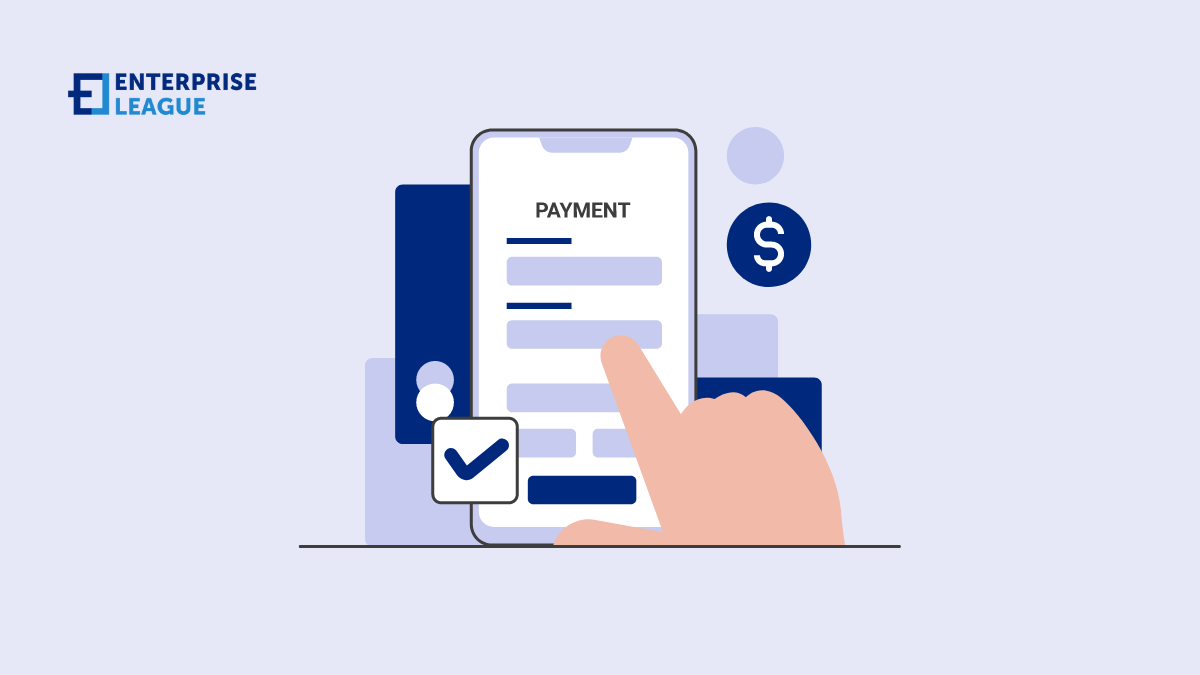
9 reliable B2B payment solutions for small businesses

9 reliable B2B payment solutions for small businesses

9 reliable B2B payment solutions for small businesses

August 09, 2024

The best B2B payment solutions for small businesses

Did you know that despite the fast advancement of digital technology, checks continue to dominate the side of the B2B payment field?? Yep, those papery things are still going around and thriving. Actually, in the USA, almost half of the B2B payments are made by depositing checks.

On top of not being eco-friendly, checks are neither financially nor time-friendly. Of course, there are also other B2B payment methods: wire transfers, cash, or credit cards. However, these methods often fall short in terms of convenience and cost-effectiveness. And since disruptions in business-to-business payments can affect buyer-supplier relationships, it’s imperative to find a better way.

So then what other B2B payment solutions are out there that won’t cost you a fortune, are safe to use, and don’t involve going to the bank or spending hours managing them?  The answer lies in online B2B payment solutions. With a B2B market size expected to reach USD 174.38 trillion by 2030, it’s clear these digital platforms are transforming the way businesses transact.

What are online B2B payment solutions?

B2B payment solutions are used by businesses to send money to other businesses. These payments can be made in person, online, or over the phone. There are many different types of B2B payment solutions, however, recently the ones that are stealing the most attention are B2B payment platforms and innovative payment startups.

They are software programs that help businesses process their payments without having to go through any third parties or other intermediaries. With these systems, you can receive payments from customers and then send them in bulk to your bank account or other accounts at the end of each day or week.

The best B2B payment solutions online

While B2C payments have always been favored, and thus more developed, many high-end B2B payment platforms have appeared in recent years. Although many of them established themselves as industry leaders they haven’t prevented new B2B payment solutions to enter the market and introduce new technologies.

Such as verified ACH payments for businesses which provide an added layer of security for businesses that process ACH transactions. A verified ACH payment is a payment that has been validated by the recipient’s bank or financial institution, ensuring that the payment is authorized and legitimate. This verification process helps to protect businesses from fraudulent ACH payments and reduces the risk of errors and disputes.

So to save you the trouble of figuring out which way to head with your B2B payments, we made lengthy research to find the best business-to-business payment options. Check the list:

Paypal

Known mostly for B2C payments, Paypal is also a key player on the B2B side. 

If you decide to go with Paypal B2B payment, you’ll be able to send tailored invoices to your clients via email. They have an easy-to-use interface that allows you to swiftly organize invoices, schedule them or even arrange installment payments. In addition to that, you can also opt for a payment gateway if you have an e-commerce site.

Moreover, the client gets to choose between paying with their own PayPal account, bank account, credit, or debit card. 

Price: PayPal only charges you a fee of 3.49% +$0.49 per transaction.

Stripe

Stripe does feel more like a backend utility but its popularity really speaks about its functionality. It offers billing, payment gateway, and merchant account. Also, it’s extremely practical because, in general, it’s the ‘default’ CCPP for most web-builders.

However, if you are a big B2B player and checkouts often surpass $50k, this is not the best B2B payment method for you.

Price: Transactional. For every payment made through their platform, their pay-as-you-go plan charges a 2.9% + $.30 cent fee.

Fundbox Pay

Fairly new on the market and also different from the rest, Fundbox Pay offers credit and payment solutions to small businesses and it’s the perfect choice if you deal with clients who always ask to extend deadlines. 

It gives the buyer the opportunity to pay an invoice right away even if they don’t have the money in their account. The first 60 days are interest-free which is extremely helpful since SMEs don’t have big cash reserves. On the other hand, the vendor gets their money on time. Everybody wins.

Price: They have different fees based on a few different factors, hence it is best to use the calculator on their website to calculate the fee of the exact amount you need.

Square

Another big name between B2B payment solutions. Square makes sending, managing, and tracking invoices easy. However, unlike other B2B payment platforms, they only allow payments with credit or debit cards. Additionally, their famous Square Cash service is available for B2B payments as well.

Price: A fee is charged per transaction. 2.6% + 10¢ is the cost for every tapped (mobile payments), dipped (chip cards), and swiped (magstripe cards) payment.

QuickBooks

Although they are worldwide famous for their accounting software, QuickBooks also offers a B2B payment solution and a good one for what it’s worth.

You can easily send invoices to clients, arrange installments and get notifications. If they pay by bank transfer you’re charged $0. But when they pay by credit card, you’re charged 2.9% plus 25 cents per transaction, which, in fact, is slightly less than the competitors.

Price: You have three options to choose from. One for starting a business, second for running your business, and third to grow your business, so you can choose the one that’s most suitable for you.

Plastiq

When it comes to centralizing all your B2B payments, Plastiq is the best. With this B2B payment platform respecting different vendors’ preferences is no longer an issue. Your supplier prefers credit cards, but your distributor takes only wire transfers? No big deal. Plastiq will sort this out for you.

Price: There are both free and paid subscriptions, and speaking about the transactions, it’s free for ACH bank transfers and checks disbursement, 2.85% for card payments, and $5/$39 for wire transfer disbursement: domestic/international.

TradeGecko

Like B2C online checkouts, TradeGecko offers a payment gateway for wholesale buyers. No invoices. Although, if you prefer invoices they do have a classic e-invoicing option. Using TradeGecko’s B2B payment solution, you can automate your B2B payment process and focus on offering your customers a great customer experience.

Price: Transaction fees they charge on every transaction and a monthly fee starting at $39 and up to $599, depending on which of their four plans is your choice.

Braintree

If you have a SaaS company with a subscription business model, Braintree is what you need. Of course, that’s if you’re cool with charge-per-transaction fees.

Their checkout experience mimics B2C gateways and their seamless operations. This way you’ll be able to attract and retain more B2B customers. Also, it gives you an opportunity to accept cryptocurrencies as a payment, Venmo, Apple Pay, Android Pay, etc.

Price: A flat $15 fee is assessed for each chargeback. Transaction charges depending on paying option.

Chargify

Chargify is a subscription billing service for B2B SaaS companies so you can evolve your billing alongside your business. This is a B2B payment solution that integrates with all your favorite systems, offers invoices for customer-initiated payments, automatically collect on their behalf, and more. 

Price: Paid subscription starting at $599 and up to $3,499. Moreover, they offer a plan with configurable functionality tailored to your business needs, for which you can ask to get a quote on their website.

Conclusion

In the end, choosing the best B2B payment software for your business comes down to a few critical factors such as budget, needs, and software compatibility. However, bear in mind that there might be hidden costs and fees, so be sure to read the fine print before committing to a payment software solution. While the selection process may seem daunting, investing time in thorough research and perhaps even trialing multiple options can lead to a decision that not only meets your current needs but also positions your business for future success.

More must-read stories from Enterprise League:

Related Articles

Maptive Review: A Smart Choice for Business Mapping?

Maptive Review: A Smart Choice for Business Mapping?

Maptive is a web-based mapping software that transforms spreadsheet data into interactive maps. The platform operates through a browser interface and requires no software installation. Users upload data, and the system creates visual representations with various...

read more
Circular Economy and the Second Life of Shipping Containers

Circular Economy and the Second Life of Shipping Containers

The idea of giving products a second life has become central to modern sustainability efforts. Instead of discarding materials once their initial use is complete, the circular economy promotes continuous cycles of reuse and adaptation. Few objects demonstrate this...

read more

Salary in the marketing industry: What is the minimum wage

Salary in the marketing industry: What is the minimum wage

Salary in the marketing industry: What is the minimum wage

August 09, 2024

Salaries in the marketing industry
The marketing industry has experienced extraordinary growth in recent years, making it one of the most desirable career paths for many college graduates. While choosing your career path in college, you may have stumbled on the job growth predictions in marketing. With a diverse range of roles spanning from digital marketing to public relations, the industry offers a lot of opportunities for professionals at all levels. However, understanding the financial rewards associated with these roles is crucial for making informed career decisions.

Now you’re probably wondering what is the salary in the marketing industry, what essential student skills you should possess in order to apply or if is there a different median annual range for public relations professionals. Well, stick along until the end as we touch on these important aspects of salary in marketing, especially when it comes to college students.

Median annual salary

Marketing professionals get an average salary of at least $135,000 with other additional working benefits. Experts in managerial roles get $15 extra of this median annual salary estimate as wages. Students looking to pivot their educational journey in the line of marketing would be securing a financially stable future for themselves. According to a report from the Bureau of Labor Statistics (BLS), the average marketing manager gets $150,000 annually.

Depending on the median annual salaries by state, this figure would vary between a few thousand. BLS also projects a potential job spike in the marketing sector as new college students discover the financial-liberating opportunity. There are also great self-employment opportunities for scholars that’d love to own their firms in the future. It’s a big industry, and getting high-paying clients wouldn’t be that much of a struggle.

Pay determination guidelines

In the sales and advertising sector, the size of your firm or self-employed business determines your annual salary. Big advertising corporations land huge clients with a fat marketing budget. Such contracts attract steady pay, work bonuses, and additional incentives to assigned staff. It’d be difficult to compare these clients’ income streams to a startup or thriving business. Salaries should first be categorized based on the income of your employers.

Most states take the minimum wage law seriously and have grievous penalties for defaulters. As a student pursuing a career in advertising, you should study these essays about minimum wage to avoid being the victim of corrupted work modules. Learn both arguments about minimum wages to fully understand how they affect your next salary. Good knowledge of minimum wage for marketing jobs would help you with job offers.

Like in other lucrative careers, experience and educational background play a large role in the advertising salary range. Experts in executive roles have extended certifications that show the level of education and experience they have in the business. Of course, the pay of an executive director would vary from a year-two intern at an advertising firm. Lastly, some companies pay wages while others give their staff salaries with additional incentives.

Overtime pay

Students looking to get marketing jobs would be getting lots of overtime openings at their workplaces. This job involves lots of paperwork, which would require more working hours for students that need extra pay. Companies that take on multiple clients per time often get swamped with a ton of workload annually. Marketing managers assign tasks to student interns with the consolation of overtime pay for the additional hours invested into the job.

Every student intern is entitled to the minimum wage rate for overtime hours. The overtime pay system works for full-time employees, like for student interns at advertising firms. Aside from the additional pay for overtime hours, students can easily get a great deal of experience working extra hours. It might get a bit stressful while on the job, but the level of experience and pay compensate for your devotion.

Pitfalls to avoid

Being new to marketing jobs or internships, we’ve seen many students take pitfalls in their careers before they begin. To avoid these common mistakes in the future, aspiring marketing students need to learn about the pitfalls to avoid. First, never sign an advertising work contract without reviewing and understanding the contractual terms. This has caused marketing interns to work additional hours without pay because they agreed to the terms.

Secondly, be a team member while on the job. Like every financially liberating job, you must be a team member to walk your way up the ladder. Volunteer to be a mentee under one of the marketing managers or a competent supervisor in your company. This gives you an edge over other student interns in the same organization. Most marketing managers had to make it to the top without any aid. Here’s a great chance to path yourself on a hitch-free road to the top.

Job outlook for marketing

From the last job growth estimation by BLS, employment in the advertising sector is set to increase %15 between 2022 and 2032. Ideally, this employment rate is faster than the national median range in other sectors. With the vast majority of advertising done online today, there’s an increasing need for more advisement deals across all levels of business. We expect more digital marketers than print-on-demand advertisers in the coming years.

From the report, the growth of the projected job outlook for marketing is estimated to be a 10% increase for marketing managers and 8% for public relations managers. Other marketing careers like public relations specialists would get an 8% increase in job growth and a 19% increase for market research analysts. This report shows that many marketing jobs that involve reaching out to customers online would pay more.

Conclusion

Marketing managers promote the products and services of businesses to their target audience. As everything goes digital today, most of this advertising is done online. Undergraduates considering a career in marketing have made the smart choice. This is one of those financially liberating careers that set you up for life. With the right skill set and strategic thinking, marketing managers wield significant influence over consumer behavior and brand loyalty, making it an exciting and impactful field.

As a student, you can intern with a reputable advertising firm to get enough experience on the rudiments of the job. With additional certifications and years of experience, you can secure yourself a managerial role in advertising. College students get fair minimum wages when interning with marketing firms.

More must-read stories from Enterprise League:

  • Implement a CRM strategy for your business using this guide.

Related Articles

Maptive Review: A Smart Choice for Business Mapping?

Maptive Review: A Smart Choice for Business Mapping?

Maptive is a web-based mapping software that transforms spreadsheet data into interactive maps. The platform operates through a browser interface and requires no software installation. Users upload data, and the system creates visual representations with various...

read more
Circular Economy and the Second Life of Shipping Containers

Circular Economy and the Second Life of Shipping Containers

The idea of giving products a second life has become central to modern sustainability efforts. Instead of discarding materials once their initial use is complete, the circular economy promotes continuous cycles of reuse and adaptation. Few objects demonstrate this...
read more

4 ways to leverage technology for better business travel management

4 ways to leverage technology for better business travel management

4 ways to leverage technology for better business travel management

August 08, 2024

Ways to leverage technology for better business travel management<br />

Businesses need to be present on the global stage to remain competitive. As such, travel has become essential to making connections and expanding your reach.

Travel can be valuable for business, but only if it boosts efficiency and cuts costs. Without these benefits, the expenses may outweigh any potential gains. Travel technology is an exciting way to make travel pay off. New tools and software make managing complex plans a dream. They can even help you save money while improving efficiency. What’s not to love about that?

But the tech world is fast-paced, and knowing what to invest in early on can be difficult. With that in mind, let’s examine the best ways you can use travel tech tools to your advantage.

How technology can help simplify and improve travel management

Business travel is becoming more popular with every passing year. Research has shown that the global business travel market was worth $700 billion in 2020. By 2028, this figure is expected to grow by 188%. 

With more businesses taking to the skies, it’s pivotal that you and your team find a way to reduce costs. Below are four exciting ways in which technology can improve your travel management.

Use booking tools to streamline travel plans

As the saying goes, time is money. Managing travel plans, bookings, and flights can take up precious time for businesses. And even then, human error might throw a spanner in the works.

New technology can help businesses to streamline everything. With the right tools, it may only take one person to research and manage the plans for an entire team. Some booking tools to consider include the following:

  • Travel Perk allows you to book, organize, and control business travel in one place. You can manage budgets, control spending approvals, and integrate the tool with many other business apps you will be using.
  • Flightfox blends travel tech with a human touch. It lets you plan, book, and coordinate business travel in one centralized place. It can also help you get the best rates and provide strategic policies to improve efficiency.
  • TripIt is a robust planning app. Forward any reservations or confirmations and a comprehensive itinerary will be created. This tool can help streamline team plans so everyone knows where to be and when.

Ensure better connectivity with eSIM technology

One major issue when traveling abroad is losing connectivity. When smartphones can’t connect to foreign networks, you can’t communicate with your teammates or access the internet, making it hard to follow plans.

To overcome this problem, you either buy local SIM cards or pay for expensive roaming packages. Even over a short time, these can add significant costs to a business trip.

eSIM technology is a revolutionary way to enjoy seamless connectivity when overseas. These digital SIMs can be operated through an app, meaning you don’t have to buy new cards or open your device. You can connect to the best local networks in your area and enjoy a stable and reliable service.

Besides improved service, eSIMs are also cost-effective for business travel. Prepaid data plans are charged at local rates, meaning you’ll always pay a low cost for data and be aware of how much data you’re using. If you need more data or are staying longer in a destination, you can simply top up your package.

Setting up the technology is quick and easy. Check that your work phone is compatible with eSIM technology. Then, find a reliable provider and enjoy a free eSIM download. Choose a suitable plan for your trip length and data needs, and activate it before you set off.

Use artificial intelligence to streamline work

The rise of AI means businesses can manage their travel plans like never before. Think of them as sophisticated travel agents that can gather and analyze data in seconds for you.

AI can also help you streamline your travel preparation. For example, generative chatbots like JustAskLayla can generate itineraries for your destination. They can also condense information such as public transport and business etiquette, bringing workers up to speed on important business plans in a short space of time.

AI can be especially useful if your team works remotely. For example, AI can create detailed travel plans that factor in worker locations and unique needs. This helps personalize trips and ensures remote workers can still travel efficiently.

Simplify expenses with optical character recognition

Expenses are a necessary evil during a business trip.  But what can add further frustration is the time it takes to collect, verify, and approve receipts. Optical character recognition technology (OCR) is an exciting new way to streamline this process.

This technology converts typed, handwritten, or printed images into machine-encoded text. Workers can send an image of a bank statement or receipt, and OCR tools can verify their authenticity. By extracting text using OCR, they no longer have to collect and keep receipts but can claim expenses in real time. This ensures businesses are always aware of what is being spent during travel.

Moreover, OCR removes the chance of human error. It can spot potential fraud or miscalculations, saving the business time and money.

Conclusion

Technology is making business travel better, more enjoyable, and cheaper. It streamlines travel management, making it easier to execute your plans.

The benefits of using these tools are clear, so the next step is to start using them. By doing so, businesses can remain competitive on the global stage, making every trip not just a journey but a strategic investment towards future success!

More must-read stories from Enterprise League:

Related Articles

Maptive Review: A Smart Choice for Business Mapping?

Maptive Review: A Smart Choice for Business Mapping?

Maptive is a web-based mapping software that transforms spreadsheet data into interactive maps. The platform operates through a browser interface and requires no software installation. Users upload data, and the system creates visual representations with various...

read more
Circular Economy and the Second Life of Shipping Containers

Circular Economy and the Second Life of Shipping Containers

The idea of giving products a second life has become central to modern sustainability efforts. Instead of discarding materials once their initial use is complete, the circular economy promotes continuous cycles of reuse and adaptation. Few objects demonstrate this...

read more

Customer retention for SaaS companies: A step-by-step guide

Customer retention for SaaS companies: A step-by-step guide

Customer retention for SaaS companies: A step-by-step guide

August 08, 2024

Proven strategies for customer retention for SaaS companies

There are numerous practical ways to ensure your SaaS company grows and overcomes the market competition. And one of them is customer retention.  This is the ability of a firm to keep its clients over time, a skill that’s crucial in an industry estimated to reach 247 billion U.S. dollars by 2024. This approach has proven to be more cost-effective than acquiring new customers and leads to increased revenue through upsells and referrals.

Implementing a SaaS customer retention strategy may take time and resources. However, it comes with unlimited benefits. For instance, it reduces the cost of marketing and customer acquisition, increases the value of each sale, helps get insight into your customers and client outreach, enables you to establish referrals and loyalty, and helps minimize customer churn. All these benefits ensure that your enterprise grows in no time.

Proven strategies for customer retention for SaaS companies

That said, you can adopt several strategies to retain customers in your SaaS company. These include:  

Leverage data from customer

The first and one of the most effective approaches to promoting retention rate in your SaaS firm is to leverage customer data. That gives you valuable insights into your customers and what influences them. As such, you’ll be able to map clients’ journeys and improve their experience, thus building business relationships. That goes a long way in promoting your retention rate. 

One of the best ways to leverage customer data is to adopt modern technologies into your company systems. For instance, you can purchase and install specific software to help streamline the process. But you must select the best applications on the market. For example, you can consider investing in a platform like Parative or any other similar application. 

Communicate with customers regularly

After successfully winning customers and staying with them for a while, you may be tempted to focus on other things, like finding new ones. However, that may affect your retention rate as some of your current clients may think that you no longer value them.  

You might think you only need to talk to customers when responding to their concerns or complaints. But that shouldn’t be the case. You should always reach out to your customers to know how they’re doing and their experience with your SaaS product. Therefore, you must establish a communication schedule to communicate with your clients. That goes a long way in making your customers happy, thus enabling them to remain connected with your brand.

Keep your product updated

You must understand that SaaS products or technology keeps changing. And for businesses to keep up with their emerging needs, they must invest in modern software. While keeping your product updated is crucial, exploring excellent alternatives to Saleo can also provide fresh perspectives on enhancing live product demos and ultimately customer satisfaction. That’s why you need to keep your product updated. 

Besides, you must keep your customers current on any changes in the SaaS sector or technology. That helps companies to prepare for any potential downtime or interruptions. That also goes a long way in promoting customer relations and helps enhance your retention rate.

Build a reward program

If you want to retain many clients in your SaaS company, you must implement an incentive program. This involves creating a system that rewards loyal customers who purchase your SaaS product or service repeatedly. Doing so encourages your clients to continue partnering with you instead of going to your competitors.  

One of the best ways to reward loyal customers is by providing discounts. This involves allowing clients to pay less for your SaaS product. For instance, if you charge USD$50 per month, you can offer a 10% discount for clients who decide to use your product for the next six months.

Gather customer feedback

Customers will always have various opinions regarding your SaaS offering. This could be either positive or negative. Therefore, you may consider gathering clients’ feedback to know what they think about your brand.  

Collecting feedback enables you to know whether you’re doing well or not. As such, you’ll be able to take collective measures to improve or change your services.  

Keep in mind that collecting feedback isn’t enough to help retain clients. You should go the extra mile and respond to or act upon each one. You can start by showing customers appreciation for the positive feedback and providing solutions for negative criticisms. All of these factors contribute to enhancing customers’ experience and satisfaction, thus enabling them to remain loyal to your brand.  

You can adopt various ways to collect customer feedback. These include requesting them to fill out post-purchase forms, sending them email messages, making phone calls, and encouraging them to leave comments on your company’s online platforms.

Make self-service possible

Today, most companies are open 24/7. Therefore, your clients may need your help at any time of the day. However, it becomes a major issue if you cannot address their objections and dissatisfaction. And if that happens, most of them may reconsider seeking assistance elsewhere, which would negatively impact your retention. For that reason, you should contemplate making self-service possible. 

With self-service, customers can always engage with your brand and find the assistance they need. As such, they’ll be capable of solving their own problems. Doing so encourages them to remain connected with you.  

Indeed, you can implement numerous strategies to make self-service possible in your SaaS company. These include providing reading guide manuals, video tutorials, and chatbots.

Personalize your SaaS product offerings

Each company or business is distinctive in one way or the other. For that reason, you should avoid providing generalized solutions. Instead, you should find effective ways to handle each firm according to its needs. And the best way to do so is by customizing your product offerings. This strategy will go a long way in significantly boosting your customer retention strategy.

Provide free customer training

Lastly, you may consider offering complimentary customer training to retain them. This is essential, especially if you believe your SaaS solution is difficult to learn and use.

Training customers on your products enables you to create strong relationships with them. This helps minimize churn, thus increasing your customer retention rate. 

Conclusion

There are numerous SaaS startups available nowadays, which implies that competition for available clients is tough. Therefore, if you are not cautious, you may miss out on connecting with your ideal customers. While winning customers is challenging, keeping them loyal presents an even greater barrier. And even when you win a few, another big challenge arises: how to retain them. Hopefully, the tips mentioned above can guide you on the viable ways to retain loyal customers in your SaaS firm. 

More must-read stories from Enterprise League:

Related Articles

Maptive Review: A Smart Choice for Business Mapping?

Maptive Review: A Smart Choice for Business Mapping?

Maptive is a web-based mapping software that transforms spreadsheet data into interactive maps. The platform operates through a browser interface and requires no software installation. Users upload data, and the system creates visual representations with various...

read more
Circular Economy and the Second Life of Shipping Containers

Circular Economy and the Second Life of Shipping Containers

The idea of giving products a second life has become central to modern sustainability efforts. Instead of discarding materials once their initial use is complete, the circular economy promotes continuous cycles of reuse and adaptation. Few objects demonstrate this...

read more

The power introverts in business: What are their secrets to success

The power introverts in business: What are their secrets to success

The power introverts in business: What are their secrets to success

August 08, 2024

The power introverts in business and their secrets to success

When speaking of a business leader or business owner, the first thing that probably comes to your mind is “That’s gotta be someone charismatic, socially agile, and a risk taker.” But what about someone completely opposite, do you think such a personality can make it in the business world? The answer is yes. Most people underestimate the power of introverts in business, and what they can achieve or offer to companies and organizations.

One thing that relates to introverts in business is they are not necessarily quiet or shy as we all imagine. What makes them different from the others is that they tend to be more self-observing and gain energy from their alone time. Even though 60-75% of the humans are mostly extroverts, the rest 25-40% of the population are introverts and they are proving to be invaluable assets across industries.

Introverts vs extroverts

The difference between introverts and extroverts is primarily in how they gain and expend their energy. Introverts for example tend to recharge through solitude and doing some quiet activities, and they also prefer deep conversation in small groups instead of events in which a lot of people are included. Unlike extroverts, they typically “bite their tongue” before speaking and need extra time to recover after any social interactions. 

On the other hand, extroverts are the opposite of the things mentioned above. They thrive in any social engagement or stimulating environment while gaining energy by simply meeting new people and attending large events. Moreover, while introverts think a lot before speaking, extroverts process their thoughts through the conversation and feel energetic after any social event they are present. 

Why introverts make successful entrepreneurs

A study by Warmoth found that introverted leaders were perceived as more authentic, leading to higher team performance. Furthermore, the power of introverts in business lies in their ability to outperform extroverts when managing proactive teams.

They excel at attention to detail, concentrating for long periods, and thinking carefully before acting which leads to more calculated business moves and spotting opportunities or issues that others might miss. So without any further ado let’s break down the key strengths of introverted entrepreneurs step by step:

Introverts are creative thinkers

Creative thinking comes from several crucial personality characteristics like introspection, focus, solitude, and openness to experience new things while getting out of the comfort zone. While not necessarily all introverts are creative thinkers, their natural tendencies and preferences can often be a field for creativity to succeed. In essence, introverts just love to think about things in new and different ways.

Take a look at Warren Buffett for example. A businessman and philanthropist, who is widely considered the most successful investor of the 20th and early 21st centuries, having defied prevailing investment trends to amass a personal fortune of more than $100 billion. Warren Buffett is a great example of how introverted professionals can have the biggest innovations.

Introverts are passionate about ideas

While introverts might not be the loudest people in the room, they possess a whole world inside their heads, that is filled with amazing ideas. Even though the stereotype of their antisocial and shy nature still exists, it cannot dispute the fact that they have a deep passion for ideas and observe things from different perspectives. Their contributions to a team can be invaluable, characterized by:

  • Depth over breadth: Preference for deep exploration of few subjects
  • Intellectual curiosity: Natural thirst for knowledge
  • Internal processing: Thoughtful analysis of new ideas
  • Personal meaning: Connection of ideas to personal values
  • Solitary exploration: Enjoyment of independent learning
  • Creative expression: Channeling passion into creative work

These qualities make introverts valuable team members, offering depth of thought and unique perspectives that can improve any project or discussion.

Introverts are great listeners

Being a great listener is a trait that sets you apart on both personal and professional levels. Well, introverts are just that. They are some of the greatest listeners and tend to be better at understanding and retaining information from conversations. The ability to become a great listener doesn’t come from thin air but from owning several key characteristics that are typical for introverted people like: 

  • Preference for observation: Introverts observe and process information before responding.
  • Comfort with silence: They do not feel obligated to fill every moment with speech, giving others space to express themselves fully.
  • Thoughtful responses: Introverts take time to formulate their replies which results in more meaningful and relevant feedback.
  • Empathy: Introverted people have the ability to understand others’ emotions and perspectives.
  • Focus: Introverts typically have a strong ability to concentrate, which helps them stay attentive during conversations.

Heaving a characteristic trait like this one makes them valuable in roles that require deep understanding and analysis of others’ input.

Introverts think before they act

Unlike extroverts who thrive on social interaction and gatherings, introverts often find solace in solitude. These quiet moments provide them with the mental space to carefully consider challenges and develop thoughtful strategies.

Consequently, this approach leads to more calculated decisions and reduces the likelihood of impulsive behavior and making rushed decisions. Introverts will thrive in roles that require strategic planning, careful data analytics, or attention to detail.

Introverts make better bosses

Even though effective and successful leadership depends on various factors like the work environment, dynamics of the team and individual skills. Both introverted and extroverted leaders can be successful.

Nevertheless, when it comes to introversion, these leaders can be particularly effective when leading teams with diverse personalities and skill sets, as they can appreciate and use the unique strengths of each individual. At the end of the day, we all want to be valued as employees and be a part of a healthy work environment that is built on trust and open communication.

Conclusion

Introverts can be a great addition to the team, whether you need someone for data analysis, finance, or software development and engineering. Their ability to focus deeply, work independently, and think critically makes them valuable assets in various roles and departments.

More must-read stories from Enterprise League:

Related Articles

Maptive Review: A Smart Choice for Business Mapping?

Maptive Review: A Smart Choice for Business Mapping?

Maptive is a web-based mapping software that transforms spreadsheet data into interactive maps. The platform operates through a browser interface and requires no software installation. Users upload data, and the system creates visual representations with various...

read more
Circular Economy and the Second Life of Shipping Containers

Circular Economy and the Second Life of Shipping Containers

The idea of giving products a second life has become central to modern sustainability efforts. Instead of discarding materials once their initial use is complete, the circular economy promotes continuous cycles of reuse and adaptation. Few objects demonstrate this...

read more

The failures of the Olympic games throughout the years

The failures of the Olympic games throughout the years

The failures of the Olympic games throughout the years

August 07, 2024

The failures of the Olympic games throughout the years

The Olympic games are a global sporting spectacle featuring both summer and winter competitions. Since the Olympic games are held every four years, the world population is eagerly waiting for it to happen. With thousands of athletes from around the world and a diverse range of sports, this represents something that is worth waiting for and a chance for hosting cities to boost their tourism and increase foreign investments. 

Nevertheless, if we take a look at the business perspective and the economics of hosting the Olympic games, we can agree that being a host city can bring a lot of benefits, but also a lot of challenges that can easily turn into failures. Therefore, understanding the complicated balance between these opportunities and risks is important for any city that is eager to host the Olympic games in the future and avoid failures.

Olympics through history

The history of the Olympic games dates back to the time of ancient Greece where they were held for a religious purpose that honored the god Zeus. Initially, the games were poles apart from the modern spectacle that we know today until 1896 when the first modern Olympics was held in Athens and encouraged the spirit of competition and international cooperation.

Since then the Olympic games have grown exponentially with the complexity, organization, scale, and wider scope.

Notable Olympic failures

Like any other event that needs to be organized and pre-planned, this one too has its challenges and failures. Being a host of the Olympic games takes a lot of pre-planning, infrastructure development, and operational costs, from which the city often sees little direct financial profit. Even though the games offer an invaluable chance for cities to rebrand, enhance their global image, and attract tourists, one wrong move and misstep in the organization process can turn all of this into а long-term failure with catastrophic consequences.

From financial burdens on host cities to doping scandals and political controversies, these issues have repeatedly stained the Games’ idealistic image. So let’s see the most notable Olympic failures that happened through the years:


  • Montreal 1976: Montreal’s 1976 Summer Olympics is one of the most cited examples of financial mismanagement. The city faced enormous debts that took nearly 30 years to pay off. Furthermore, the original budget has raised from an estimated $124 million to over $1.5 billion by the end of the games, largely due to construction costs and expensive infrastructure projects that were not completed on time.
  • Moscow 1980: The Moscow Olympics were heavily impacted by an international boycott led by the United States, in protest against the Soviet invasion of Afghanistan. Over 60 countries joined the boycott, significantly reducing the number of participating athletes and countries, which undermined the competitive integrity and global appeal of the games.
  • Athens 2004: Athens significantly overspent on the 2004 Olympics, with costs estimated to be over $11 billion, much of which was funded by public money. This overspending is often cited as a contributing factor to Greece’s subsequent debt crisis. Moreover, many of the specially constructed facilities quickly became underused or abandoned after the games, symbolizing poor post-game planning.
  • Sochi 2014: The Sochi Winter Olympics became the most expensive Olympics ever, with costs reported at around $50 billion, far exceeding initial estimates. Allegations of corruption and embezzlement surfaced, highlighting the lack of transparency in the allocation of contracts and expenditures. The exorbitant spending raised questions about the economic logic and ethical considerations of hosting the Games.
  • Rio 2016: The Rio Olympics were marred by severe financial constraints, health concerns due to the Zika virus, and political turmoil. Many promises regarding legacy and urban improvement were unfulfilled. Post-games, many venues fell into disrepair, and the promised economic benefits failed to materialize, leaving behind significant debt and underused infrastructure.
  • Tokyo 2020 summer Olympics: Originally scheduled for 2020, the Tokyo Olympics were postponed to 2021 due to the COVID-19 pandemic. The Games were held without international spectators, significantly impacting potential tourism revenue. The cost of postponement, along with extensive health and safety measures, added billions to the already high expenses, making it one of the most costly Olympics ever.

Implications and lessons of hosting the Olympic games

The decision to host the Olympic games carries extensive implications for a city, nation, and its people. Even though the event promises global recognition and a potential economic boost, it also presents a significant challenge and risk. As someone once said “You learn from the mistakes”, let’s break down some of the important implications and lessons that were learned from past experiences: 

  • Economic impact: Potential for economic growth but also high costs and risks of overspending.
  • Infrastructure development: Necessity for new infrastructure but potential for white elephants.
  • Global recognition: Increased international visibility but the potential for negative publicity.
  • Social impact: Opportunity to unite a nation but also potential for social unrest.
  • Legacy: Potential for long-term benefits but also challenges in maintaining Olympic venues.
  • Corruption: Increased risk of corruption and mismanagement of funds.
  • Environmental impact: Significant environmental costs if not properly managed.
  • Human rights: International spotlight on host country’s human rights record.

As last, we can all agree that the success of hosting the Olympic games depends on careful planning, effective management, and a clear vision for the city’s future.

Conclusion

Despite all of these failures, the Olympic games remain one of the most captivating events that inspire athletes and keep the world audience engaged. However, we can’t ignore the fact that the future of the Olympics depends on the hosts’ ability to address these persistent challenges and deliver on their promise of unity, excellence, and sustainability.

As the Paris Olympics approach its end, the world will be watching closely to see if this edition of the games can break free from these repeated patterns. Whether the French organizers can avoid the risk of cost overruns and corruption remains to be seen. 

More must-read stories from Enterprise League:

Related Articles

Maptive Review: A Smart Choice for Business Mapping?

Maptive Review: A Smart Choice for Business Mapping?

Maptive is a web-based mapping software that transforms spreadsheet data into interactive maps. The platform operates through a browser interface and requires no software installation. Users upload data, and the system creates visual representations with various...

read more
Circular Economy and the Second Life of Shipping Containers

Circular Economy and the Second Life of Shipping Containers

The idea of giving products a second life has become central to modern sustainability efforts. Instead of discarding materials once their initial use is complete, the circular economy promotes continuous cycles of reuse and adaptation. Few objects demonstrate this...

read more