
21 best business movies to teach you important entrepreneurial lessons

21 best business movies to teach you important entrepreneurial lessons

21 best business movies to teach you important entrepreneurial lessons

March 18, 2025

Best business movies for entrepreneurs
Business movies and business documentaries are not just entertaining but educational as well. Veteran and wannabe entrepreneurs can learn a great deal about doing business watching the best business movies over a bowl of popcorn. 

We went a step ahead and made a list of the best business movies that extends beyond the expected titles. That means romcoms like You’ve Got Mail stand shoulder to shoulder with Becoming Warren Buffet.

While some of the best business movies teach us good practices, others show us what should never be done in business. For example, The Wolf of Wall Street may pump you up, but before turning a blind eye to the law remember that Jordan got his share of jail time.

Jump to:

 1. You’ve Got Mail

 2. Enron: The Smartest Guys

 3. Joy

 4. The Founder

 5. What Women Want

 6. The Big Short

 7. BoilerRoom

 8. Moneyball

 9. Willy Wonka and the Chocolate Factory

 10. Extreme Job

 11. Chef

 12. Point Blank

 13. Office Space

 14. Becoming Warren Buffett

 15. The Pursuit of Happiness

 16. The Intern

 17. Wall Street: Money Never Sleeps

 18. The Wolf of Wall Street

 19. Limitless

 20. FYRE

The best business movies to put on your watch list

Movie time begins! According to entrepreneurs from different industries these are the best business movies to watch. Each of these business movies hold important lessons. 

So watch, have fun and learn!

The Social Network

The Social Network brilliantly captures the tumultuous birth of Facebook and offers entrepreneurs a masterclass in both innovation and cautionary tales. The film shows how Mark Zuckerberg turned a dorm room project into a global empire by identifying an untapped digital need and bringing social connection online in a way that mimicked real-world exclusivity.

What makes this one of the best business movies is its unflinching look at the personal costs of success, showing how relationships crumble when ambition takes precedence over loyalty. The movie taught me that revolutionary ideas often come from questioning existing systems and norms, but also that burning bridges can create long-term consequences that financial success can’t repair. The lesson? Create something meaningful, but remember that how you build matters just as much as what you build.

Mike Sonders, Founder of TechStartupInsights

You’ve Got Mail

I think most entrepreneurs will find a kindred spirit in Kathleen Kelly, the owner of an independent bookstore named “The Shop Around The Corner”. Kathleen inherited her business from her mother and is determined to keep her quaint storefront thriving in New York City, even though she has a rival in the major bookstore chain Fox Books (owned by Joe Fox, whom we find out later on is the person she has been developing a relationship with over email). 

This movie is probably best known as a romcom, but it’s also full of great business lessons which makes it a perfect addtion to our best business list. You’ve got mail teaches entrepreneurs not to give up, even when you’re faced with direct competitors and challenges. While “The Shop Around The Corner” does, eventually, go under, Kathleen continues to work hard and sticks by the business and her employees until the very end. By the end of the movie, she even pursues a new entrepreneurial endeavor as a successful children’s book writer! 

Deborah Sweeney, CEO, MyCorporation

Enron: The Smartest Guys in the Room

Enron: The Smartest Guys in the Room is undoubtedly one of the best business movies about the rise and fall of an enormous corporation. Based on the best-selling book The Smartest Guys in the Room by Bethany McLean and Peter Elkind, shows how the top executives managed to manipulate securities trading, bluff the balance sheets and deceive investors.

This is one of the best business movies that details one of the greatest business scandals in America’s history, where several executives gained billions of dollars but their investors and employees lost is all.

Irina Georgieva, CEO of Enterprise League

Joy

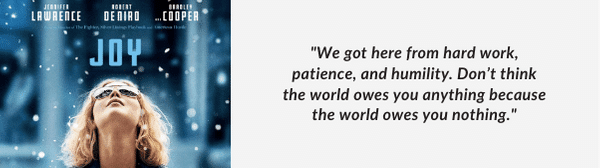
Joy movie quote

If there is one business movie that I love the most, it is Joy. The movie portrays a young woman who tried to excel in the marketing industry despite the utter chaos she had in her life. This movie taught me that true entrepreneurs can build anything from scratch despite the adversities in life. Also, it helped me learn how to be resourceful and not limit your actions to what society dictates if you really want to grow your business.

Bottom line: True entrepreneurs strive and find ways despite adversities.

Allan Borch, Founder of Dotcom Dollar

The Founder

Founder movie quote
I am impressed by the movie The Founder about Ray Kroc who took credit for the McDonald’s food chain. In the movie, he lied that he was the chain’s founder when he wasn’t. However, there are admirable qualities I believe entrepreneurs should emulate. 

A scene in the movie illustrates this: The original founders, brothers named MacDonald, wanted ice cream in their shakes; Roy, who was running the enterprise, felt paying for freezers to hold the ice cream was too costly; He went ahead and did what he wanted – putting powder, not ice cream in the shakes; They still tasted delicious and he saved a great deal of money. 

Today, McDonald’s restaurants and Ray Kroc are famous due to Ray’s ingenuity, not the brothers. They wanted to be authentic, but they were stubborn. Ray was open-minded and innovative. Those are the qualities entrepreneurs should emulate.

Janice Wald, Owner of Mostly Blogging

The business lesson that this movie taught me was how important it is to develop a simple, repeatable processes to build an efficient and successful business.

In the movie, it showed how the McDonald brothers developed a system that allowed their staff to prepare a hamburger within minutes of ordering.

Many small businesses fail within their first years, because entrepreneurs overwork themselves believing that working harder is the key. Instead, the key to being a successful entrepreneurship is to work smarter not harder.

Jonathan Sanchez, Co-Founder of ParentPortfolio

It gives out the message of how persistence and determinacy can lead to a successful life. You’ll have to face multiple rejections to reach your goal. Willingness to do something should never die and one should always be ready to discover his skills, polish them and make a fortune out of

it because it is in you to create your future. It taught me how giving up should never be an option and to survive in the competitive business world, hard work and commitment is the key. It made me, as an entrepreneur, headstrong and gave me the confidence to fight any obstacle on my way to succeed with calm mind and patience.

Mike Allen, Co-Founder of The Fashion Jacket

What Women Want

As an owner of a company focused on Brand Marketing training and recruiting, I have to go with an old favorite that celebrates our CPG industry.  What Women Want in 2000 with Mel Gibson and Helen Hunt made it ok for guys in our macho, Americana culture to seek to understand women and what they wanted from a consumer perspective. For a guy who was just starting his brand marketing career, that mattered. It seems obvious now, but this was before even ‘metrosexual’ was a thing. People weren’t really ready for it. Can’t say I ever shaved my legs though…

Brian Dolan, Co-Owner of CPG Camp>

The Big Short

The Big Short Movie Quote
This is one of the best business movies because it uses actual history to teach you how to look at real numbers and data instead of following popular opinion to invest your money and do business. It is also very entertaining to watch and well-produced in addition to teaching viewers a great business lesson that data is more important than popular opinion.

Stacy Caprio, Founder of Her.CEO

Boiler Room

This movie is an old favourite and one of the best business movies to date. The storyline teaches you about the importance of creating a new belief system and culture for new employees. Focusing first on the success of your people and making them believe that your system works. Moreover, it accentuates the importance of your mindset and attracting your desired reality into existence. Overall this is one of the best and most inspiring business movies that will make you feel empowered.

Atanas Georgiev, Co-Founder of Enterprise League

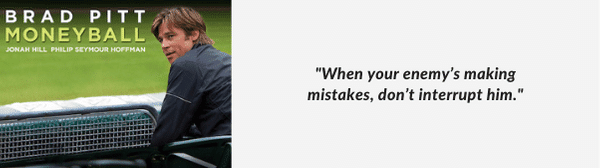
Moneyball

Founder movie quote
My personal favorite is Moneyball, starring Brad Pitt. It’s the story of how the underfunded Oakland A’s baseball team threw out all traditional statistics to identify high quality, yet undervalued players. This movie made me rethink all of our key performance indicators in Sales and Marketing. Similar to the movie, we found that some of the benchmarks we’d become reliant on were vanity stats of little real use. This led us to rethink everything, analyze our data differently and we eventually came up with more useful performance indicators.

Casey Halloran, Co-Founder of Namu Travel Group 

What I like about his movie is that it teaches us that any business is always working under constraints. Often big, unfair, and rigged constraints. By playing the established game, it becomes very difficult to change the status quo and beat your competitors with deep pockets. You’ll need to think differently. When you’re at a disadvantage, playing the old game is a sure-shot way to lose.

Kenny Trinh, CEO of Netbooknews 

It tells the story of Billy Beane (played by Brad Pitt), the General Manager of the Oakland A’s U.S. baseball team. Beane rejected the random and non-strategic methodology of choosing players that all teams followed and instead experimented with a revolutionary data-based model. This disruptive approach allowed Beane to build a winning team composed of undervalued and overlooked talent. Beane’s advances, which zigged when everyone else was zagging, have since been adopted by teams in every professional U.S. sport.

Rafe Gomez, Co-Owner of VC Inc. Marketing

Point Blank

Not the obvious choice but definitely one of the best business movies ever. It documents the wheeling and dealing of the oldest type of American organization—crime families—in a way that focuses on the cold corporate infrastructure rather than the warmth we’re used to seeing from Italian mafia movies. Key lessons include the value of paying debts and the danger of not getting financial agreements in writing.

Ryan Lambert, Founder of FlickPicking

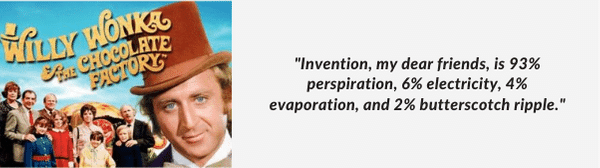
Willy Wonka and the Chocolate Factory

willy wonka movie quote

Despite it being a kids movie my favorite business movie is Willy Wonka and the Chocolate Factory. I love this movie for business because it shows and taught me how important it is to always do the right and honest thing when it comes to your business. Doing things the right way will create a culture where your customers and employees develop so much trust in you that they won’t think about using any other competitor. Moreover, doing things the right way rather than the cheap or dishonest way will create longevity when it comes to your brand.

Kevin Groh, Owner of Cachi Life

This movie made me realize that having a positive outlook in life will lead you to better things in the future. Being down to earth and putting your family’s wellbeing first will help you decide what is the right thing to do. It also shows that every choice we make has its consequences, and we must learn from those experiences.

Mason Culligan, Founder and CEO of Mattress Battle Inc.

Extreme Job

This 2nd highest-grossing Korean film of all time is a must-watch and should be on every best business and financial movies list in the world. A group of undercover cops became instant entrepreneurs when they purchased a bankrupt chicken restaurant to protect their secret operation. Their chicken recipe became an unexpected hit, leaving them torn from being entrepreneurs or cops.

I love how this movie approached the business industry as a very unpredictable context. You will find yourself becoming an entrepreneur, not because of luck but pure talent. Knowledge and skills are always needed to survive in the industry. However, it takes talent and passion for you to come out on top.

Karl Armstrong, Founder of EpicWin App

Chef

The movie was empowered by several high-profile stars; but some business lessons can still be learned from it. As an entrepreneur, it taught me that unfavorable exposures can also be beneficial. Other than that, I also learned from the movie that the best way to run a business is to utilize your best skills and offer it to the marketplace. Lastly, it demonstrates the importance of digital marketing in terms of letting potential customers know that your business exists.

Steven Jay, Founder of KoiFishTime

Office Space

Office Space continues to be an excellent business movie 25 years later because its depiction of the corporate office environment is relevant in many industries. The film draws humor from being a minuscule employee in a dysfunctional system, and it highlights many things that should be changed yet remain the same old ways of running companies. The main character, Peter, is relatable and somewhat of a hero because once he stops caring about meaningless duties and performance results, he not only becomes liberated, he becomes successful.

Robert Kienzle, Senior Consultant at Knowmium

While this film is not about starting a business, it is about something that drives many employees to take the plunge and start their own business: namely, the tedious bureaucracy of the corporate world. Any entrepreneur who left office existence will relate to the ineffective bureaucracy of corporate life, and it may even help them muster the courage to take the plunge into entrepreneurship! 

This film made me a better entrepreneur by understanding the importance of creating non-hierarchical work environments and ensuring that employees are engaged and motivated. It also provides a good reminder of why I chose the path of entrepreneurship. 

Emma Miller, CEO of Cacao Tea Co.

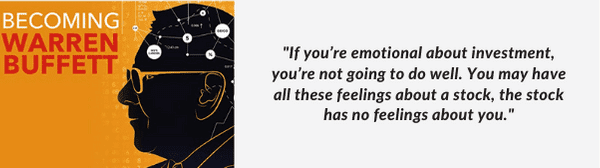
Becoming Warren Buffett

Becoming Warren Buffet quote
Becoming Warren Buffett is definitely my favorite business movie. In my case, it is not because he is such a successful investor, or because of the get rich dream connected to Wall Street. Warren Buffett acts only rational. In every single one of his business decisions emotions don’t act apart. This is so important for small business owners too, especially in the beginning when there are many ups and downs. Thinking of his behavior always gets me back to work when unplanned obstacles come up and destroy all my motivation.

Christian Steinmeier, Founder of koalapets.com

The Pursuit of Happiness

Part of running a business is facing challenges and failures. But, despite the challenges and failures, we have to continue working towards achieving what we want. After the worst, comes the best. That is what the movie The Pursuit of Happyness has taught me. The story of Chris Gardner has really inspired and motivated me, especially when I was still a small and starting business owner.

Shari Smith, Founder of Shari – Sells

The Intern

One of my favorite business movies is quite timely and it is all about e-commerce and making it to the big world whilst starting from scratch and in the end having to choose between family and the business you started from the ground up. The Intern not only an inspiring movie of a lady boss having a deep meaningful friendship with her 70-year-old intern but it also shows that you never grow old of working when you have been working literally your whole life and giving your boss some insights about living life and living her dream to be big.

Timo Wilson, CEO at Asap Credit Solutions

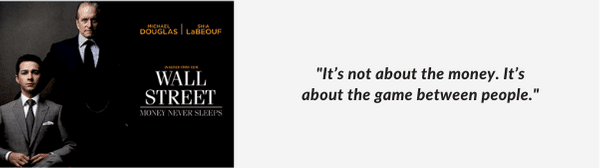
Wall Street: Money Never Sleeps

Wall Street Money Never Sleeps Movie Quote

If you’re going to operate on Wall Street, you need to learn financial principles, of course, but you still need to be on the lookout for the kinds of people that don’t think for anything except themselves who can drag you down in one fell swoop — or the whole finance sector. This 1987 movie stars the famous Gordon Gekko (played by Michael Douglas), a position that helped put to the forefront of the American imagination the notion that Wall Street is full of sleazebags.

It’s a movie about vanity, a game about looks, and a game about how a sly con artist will lead others on their way. The depiction does an outstanding job of illustrating the expense to people and a community that comes about when such a figure is permitted to grow to power. It even contains lots of other nail-biting scenes — you’ll need to see and wait.

Eliza Nimmich, Co-Founder / COO at Tutor The People

The Wolf of Wall Street

Wolf Of Wall Street Movie Quote
Despite disagreeing with the less ethical approaches Jordan (played by Leo diCaprio) takes in the later parts of the movie, I absolutely love how he built up an empire from absolutely nothing. Nothing, but sheer will and a ton of ambition – and to teach his employees what he knows.

The movie taught me to dream even bigger than I ever have, to work harder than I ever have, and to be as loyal as a human can be.

Chris Kaiser, Founder & CEO of Click A Tree

It taught me the importance of simplifying seemingly arduous tasks like being a stockbroker into clear and concise instructions that anyone with the desire to succeed would be able to follow.

This is always in the back of my mind when teaching our team the ins and outs of the real estate transactions and technicalities. I even use this simplified approach when learning from peers and coaches. 

For example, learning what a lien is and how it can affect the purchase of a property.

The best way a coach was able to simplify it for me was ‘A lien is simply a debt connected to a property that prevents the sale of the property until the debt is paid off’. This is one of the most frequently asked questions in our team and business, and having simplifications like this allows us to communicate effectively across the team.

Tino Jaimes, Owner of Sunrise House Buyers TX

Limitless

One of my favourite business movies is Bradley Cooper’s Limitless. He was once a frustrated writer who encountered a pill that can make a human brain extremely brilliant. The pill helped him to gain millions of money from the stock market. Also, allowing him to work for a very powerful tycoon. Basically, this movie taught us that there is no “cheat code” for success. Taking the shorter route may be fulfilling at the start, yet there are corresponding retributions along the way. Still, the best way for success is persistence, hard work and an endless hunger for learning.

James Pearson, CEO of eVenturing

FYRE: the Greatest Party That Never Happened

It’s at the top of my list because it touches on two important values: having the ambition and pragmatism. It shows how the right attitude should be, as well as the wrong way of making it happen. It encourages you to dream big but it also warns you to strive to realize it in an ethical way.

David Weingot, CEO of DMAC Security

What all these business moives have in common

All the movies on our list have hidden gems that will help entrepreneurs on their journey. Take your time and watch all the business movies mentioned here and we guarantee that you will expend business knowledge exponenially.

More must-read stories from Enterprise League:

Related Articles

Mentoring vs. Coaching: Key Differences and When to Use Each

Mentoring vs. Coaching: Key Differences and When to Use Each

Statistics show that mentored employees are happier at work, with 90% reporting job satisfaction. The numbers paint a stark contrast - 40% of employees without mentors have thoughts about quitting. The difference between coaching and mentoring plays a more vital role...

read more

19 notorious myths of entrepreneurship debunked

19 notorious myths of entrepreneurship debunked

19 notorious myths of entrepreneurship debunked

March 18, 2025

Famous myths of entrepreneurship debunked

Entrepreneurship this, entrepreneurship that… So many myths of entrepreneurship have been circulating around for years it’s hard to keep track. Some of them are so often repeated that we started believing them.

On top of that, it looks like many found a way to earn money by preaching these myths, which further complicates the situation. Take Grant Cardone or Gary Vee for example – they’ve made millions by selling entrepreneurship myths (hint: you need to grind 24/7 in order to succeed).

That entrepreneurship became a global cult is not helping at all to debunking these entrepreneurship myths. These days, it looks like Tai Lopez and Entrepreneurship is what Tom Cruise and Scientology were in the 2000s.

 1. Entrepreneurs are narcissists

 2. Living care free

 3. You must start young

 4. All entrepreneurs are extroverts

 5. No more bosses

 6. You need a lot of money to start

 7. You should hustle day and night

 8. Accept every advice 

 9. You must be an expert

 10. You need completely new idea

 11. Money has to be the main motivation

 12. Entrepreneurs must innovate

 13. You need to do everything yourself

 14. Outsource and automate everything

 15. Being VC-funded is the only way

 16. Hard work equals success

 17. Venture capital and hip office space

 18. Entrepreneurship is incredibly risky

 19. Successful entrepreneurs never experience failure

19 myths of entrepreneurship that paint the wrong picture

Since it became impossible for the mere observer to tell myths of entrepreneurship from facts we took it upon ourselves to debunk the worst entrepreneurship myths and misconceptions and strip off all the lies that have built up during the years.

#1 Myth: Entrepreneurs are narcissistic people with no connection to the real world

Building your own business or creating a product or service requires hard work, long hours and sacrifice – but it doesn’t necessarily mean you have to sacrifice your life or relationships to be successful.

Many entrepreneurs have families at home who are counting on them. For some, this might even mean a spouse is taking on additional work while their partner builds the business. The majority of the world’s most successful entrepreneurs decide to take on major lifestyle changes, not because of their own self-interest or ambition, but because they believe their idea can change the world for the better. It’s a noble cause that is often misunderstood as narcissism.

David Wright, Executive Director of Practice Development at M&O Marketing

#2 Myth: You will live a care-free, autonomous lifestyle

For me, the biggest myth about entrepreneurship that I hear repeatedly is that being an entrepreneur must mean you are living this care-free, autonomous lifestyle. For some reason, folks seem to think that becoming an entrepreneur means you are enjoying 20-hour workweeks while doing business from your laptop on the beach in Bali. 

Simply not true. Oftentimes, entrepreneurs leave behind a 40-hour workweek, only to find themselves putting in 80-hour work weeks for the first few years. As for the autonomy, entrepreneurs are very much still held accountable, even more so as they continue to build a team.

DeeAnn Sims-Knight, Founder of Dark Horse PR

#3 Myth: Successful entrepreneurs all start young

While the media loves to glamorize the college dropout turned tech entrepreneur (Mark Zuckerberg, anyone?), the truth of the matter is that most entrepreneurs achieve success much later in life. In fact, according to Entrepreneur magazine the average age of entrepreneurs in the United States is 40. Blockbuster companies like Twitter, HTC, Intel, Wal-Mart, and countless others were all started by entrepreneurs well into their 30’s or beyond.

This myth of entrepreneurship has been even debunked by recent research as data even shows that success is more likely the older you get as an entrepreneur, undoubtedly due to the experience and connections gained as you grow older. While it may feel like entrepreneurship is a young person’s game, in reality its just another entrepreneurship myths as it’s never too late to start.

Kelly Bertog, Founder of YOURS Non-Alcoholic Drinks

#4 Myth: Only extroverts can succeed in entrepreneurship

This is because we commonly associate entrepreneurs with being outgoing and adept at networking. However, this is an entrepreneurship myth for many reasons. 

For example, introverted entrepreneurs don’t mind working alone during those long hours in the early stages of their business. They are more likely to enjoy working and making decisions independently. Introverts are also more likely to prefer one-on-one meetings and listen carefully to the suggestions of others. They are also likely to be successful as entrepreneurs because they tend to be low key and deliberate in their decisions.

Kathryn Schwab, Head of Content at Bobbie

#5 Myth: You no longer have a boss

Sure, you don’t have to deal with a corporate manager anymore – and you can fire terrible clients. But every client or customer you enlist becomes your supervisor. In order to stay in business (i.e. keep your job), you need to meet their needs and expectations. Otherwise, you’ll get fired – plus potentially earn a negative reputation that will dog you forever.

Laura Gariepy, Owner Before You Go Freelance

#6 Myth: You need a lot of money to start a business

All you need is an idea and motivation to test it out. If your idea is decent, you’ll start finding customers or users quickly and the money will start flowing. Real entrepreneurs find problems and come up with solutions. Being short on funds is just another problem in the long line of problems you’ll have to solve to start and grow your business. 

I started with $1K to my name working from a cell phone and laptop of a dining room table and now run a $5M/yr business with 7 employees disrupting an industry. Anything is possible with enough determination and grit to solve the problems you’re presented with and make it happen.

Kyle Sharick, CEO of TracksNTeeth, Inc

While it’s true that you will need some sort of capital to fund the early stages of your business, growing it initially doesn’t always have to revolve around chunks of cash.

Entrepreneurs typically finance startups from their own pockets. And because not all entrepreneurs come from a wealthy background, capital isn’t always as accessible.

Take my startup story for example. We founded EarlyBird, a financial gifting platform, in 2019. We weren’t fully funded when we had just started. To make up for it, our small team developed strategic partnerships with investors who helped raise our capital, and marketers who increased awareness and online authority of our brand.

Different business operations like growth hacking and raising funds through investments are some of the tactics that worked for us. Our driven team members also played an important role to achieve our success.

Caleb Frankel, Co-founder and COO at EarlyBird

#7 Myth: You should hustle day and night

On the contrary, to succeed you need to work smarter, not harder! If you apply systems and processes to real problems and make sure you live a healthy and balanced life you will have a better chance of success.

Why hustle and grind your way to success, and risk sacrificing your health and relationships along the way?

If you work smarter and better, you can enjoy the fruits of your labor in good mental and physical health together with the people you love. That, to me, is the very definition of success.

Thomas Sorheim, Founder of Leisurehiking.com

#8 Myth: You should heed all of the advice you’re given

There is no shortage of advice coming at you when you are starting a business. While some of it may be exceptional for the most part, I’ve always found it too general to be useful. It more often than not comes from someone well-meaning but usually comes from someone who really doesn’t understand your concept and idea. So, use your time wisely and only seek counsel from those you believe will move your business forward. Although this seems obvious, it is amazing how others can influence your thinking.

Geneva Long, founder​ and CEO of Bowlus

#9 Myth: You need to be an expert before starting

People learn best by taking action and making mistakes. Begin with trial and error then assess, adjust, and keep moving forward. Do not allow yourself to put off your entrepreneurial journey because you’re not yet an expert. If you wait until you are “ready” you will never start. People who are successful are not worried about the failures as they understand that failure breeds success.

Jake Irving, Owner of Willamette Life Insurance

#10 Myth: You need a completely new idea to be successful

My favorite myth about entrepreneurship is that you need a completely new idea to be successful. It makes me chuckle a little bit every single time I hear it. If that were the case, why are there hundreds of project management or email marketing software applications out there?

Bringing a novel idea to market is hard, time-consuming, and has the highest chance of failure because it’s likely that it’s too early for it. When you improve on an existing idea, there’s an established market and you can quickly become profitable and expand the business.

Daniel Ndukwu, Co-Founder of UsefulPDF

#11 Myth: Entrepreneurs are only motivated by money

One entrepreneurship myth is that all entrepreneurs are only motivated by money. Businesses aren’t built overnight. Being an entrepreneur takes dedication and not everyone can do it. Those who can aren’t solely motivated by money. 

Many entrepreneurs, like myself, are motivated by the need for personal freedom and the ability to spend time doing the things we love to do. My favorite thing to do is to spend time with my family. Through starting a business I am able to do that.

Laura Rike, Founder of LauraRike.com

#12 Myth: Entrepreneurs must innovate or create new ways of doing things

Entrepreneurship is not all about innovation. There are differences between being an innovator and entrepreneur. An innovator is a creator and a problem solver who is passionate about making improvement. An entrepreneur is someone who takes action to build a business that turns innovator’s ideas into products or services and sells them to customers. Innovator is a thinker. Entrepreneur is a doer who makes things happen. 

Nicola Tesla and Thomas Edison are great examples. Tesla created bright innovations, but never found a paying customer. On the other hand, Edison created many useful innovations for the world and held over a thousand patents. He also found a way to commercialize his inventions. Someone can be an innovator and an entrepreneur, like Edison was, but not always.

Vivian Chan, Leadership & Team-building Expert at Sette

#13 Myth: You need to do everything yourself

Of course, you will be the sole decision-maker for the most important things, but you can also have others do smaller tasks to move things along. There are ways to outsource or hire freelancers to help you with the less-risky responsibilities so you can focus on building your brand. 

By doing this, you’ll end up still retaining creative control but have more time to focus on the bigger picture and growing your business. Letting others help you along the way is extremely crucial because it saves you a lot of time, energy, and, most importantly, sanity.

Chris Lieu, Founder & Editor at The Distillery Groove

#14 Myth: You can outsource everything and automate

One of the most significant myths about entrepreneurship I often hear is that you can just outsource everything and automate your whole business. Basically, just come up with an idea, hire experts, automate everything, and then just sit back and relax and watch the money rain.

As an entrepreneur, you need to manage and package everything that happens in your business. Definitely not going into the details, but always keep a finger on the pulse. The entrepreneur is the person with the vision, and it’s his/her job to transfer this vision to the rest of the team – to the extent that they see it just as clearly.

Johannes Larsson,CEO and Founder of Financer.com

#15 Myth: Being VC-funded gets you to the goal faster than bootstrapping

One of the biggest, but less talked about, entrepreneurship myths is that being VC-funded gets you to the goal faster than bootstrapping. Entrepreneurs forget that getting VC funding can take months, if not years, and it’s a full-time job during which you do *nothing* else. Imagine what you could achieve during that time if you actually tried to get customers and not investors.

Erdin Beshimov, Founder of MIT Bootcamps

#16 Myth: Hard work equals success

This is one of the most damaging entrepreneurship myths there is. Hard work gets often promoted as the only way to success, but I’ve found this isn’t the case. Real success is a state of mind, how you experience your life. Often the people who look the most successful on the outside, feel like a complete failure on the inside. 

If you keep working hard and hustling all day long focusing on the wrong things, success won’t come, because being busy and being productive are entirely different things. What it will get you is sleepless nights, overwhelm, burnout or worse! 

So what can you do? Get clear on what you want, prioritise properly, learn to say no, stop multitasking and most of all, prioritise a good night sleep.

Susanne Grant, Business Coach & Consultant at Grant Method

#17 Myth: Entrepreneurship is about venture capital and hip office space

The tech world and the meteoric rise of startup culture has created a picture of entrepreneurship that is misleading and unrealistic. Entrepreneurship is simply about finding an unfulfilled demand and fulfilling the demand. It is not about venture capital, PowerPoint slide decks, or hip office space with a ping pong table and a beer tap. In fact, the local entrepreneur that starts a window-washing business is overwhelmingly more likely to succeed long-term than the tech entrepreneur trying to disrupt this or that.

Entrepreneurship is not a pipe dream, nor is it a get-rich-quick plan. A dedicated local service provider can build a huge business and secure a very comfortable life. Tech startups can be profitable, but take much more luck and money than your local junk removal truck requires!

Anders Helgeson, Co-Founder of Time Now Hauling & Junk Removal

#18 Myth: Entrepreneurship is incredibly risky

For an entrepreneur, it may take a little time to start generating revenues. However, once you have started making money you have the ability to be much more flexible with how you make it. Entrepreneurs can change their product offering to adjust for a changing market and are limited only by the number of ideas they have.

On the other hand, employees have almost no ability to control their destiny. Oftentimes, if the company is failing or the entire industry goes south, then employees can be let go through no fault of their own and their only recourse is to find another job (which can take months).

Omer Reiner, President of FL Cash Home Buyers

#19 Myth: Successful entrepreneurs never experience failure

Perhaps the most damaging myth of entrepreneurship is that truly successful business owners somehow avoid failure entirely. I built three failed startups before creating my current company that now employs over 50 people. What most people don’t realize is that nearly every entrepreneur you admire has a graveyard of ideas, products, and even entire businesses that didn’t work out. These aren’t setbacks, they’re the actual foundation of success.

Each of my failed ventures taught me invaluable lessons about market fit, cash flow management, and team building that I couldn’t have learned any other way. The entrepreneurs who ultimately succeed aren’t the ones who magically avoid failure; they’re simply the ones who use failure as data, refuse to let it define them, and keep moving forward when others would quit. Resilience, not perfection, is the true superpower of successful business owners.

Marcus Chen, CEO of GrowthPath Ventures

More must-read stories from Enterprise League:

Related Articles

Mentoring vs. Coaching: Key Differences and When to Use Each

Mentoring vs. Coaching: Key Differences and When to Use Each

Statistics show that mentored employees are happier at work, with 90% reporting job satisfaction. The numbers paint a stark contrast - 40% of employees without mentors have thoughts about quitting. The difference between coaching and mentoring plays a more vital role...

read more

The ultimate cafe business model blueprint for beginners

The ultimate cafe business model blueprint for beginners

The ultimate cafe business model blueprint for beginners

March 17, 2025

The ultimate cafe business model blueprint for beginners<br />

When you look at it, opening a cafe looks simple from the outside. Make good coffee, create a cozy space, and watch customers roll in, but behind that relaxed facade sits a complex business model with razor-thin margins and countless moving parts. Cafe owners manage everything from inventory management and staff scheduling to creating an atmosphere that keeps people coming back. 

With a market size predicted to reach USD 430.02 billion by 2030, the competition is only getting fiercer. Behind each perfect cappuccino lies a web of supply chain challenges, pricing strategies, and operational decisions that determine whether a coffee shop thrives or joins the high percentage that closes within its first few years. Now, let’s pull back the curtain on the cafe business model so you can avoid the common mistakes that sink most new coffee businesses before they’ve had a chance to brew success.

How cafe works

The typical cafe model balances quick-service efficiency with the warmth of hospitality. Morning shifts begin with baristas calibrating espresso machines, preparing baked goods, and stocking stations before the doors open. Throughout the day, cafes typically cycle through distinct operational phases like the rushed morning crowd wanting grab-and-go options, the mid-morning remote workers settling in for hours, the lunch crowd, and afternoon social gatherings. 

Core principles of cafe business model

At the heart of every thriving cafe lies a set of core business principles that drive success and create profitable business models. Quality control tops the list, consistently excellent coffee and food products build a reputation that keeps customers returning. Space utilization matters tremendously, as cafes need to balance comfortable seating with enough turnover to remain profitable. The customer experience extends beyond food quality to ambiance, staff interactions, and even small touches like reliable WiFi or unique serving methods. 

Cost control requires careful management across supplies, labor, and utilities, often with margins thinner than most other retail businesses. Speed of service affects both customer satisfaction and operational capacity, particularly during rush periods. Menu engineering – strategically designing offerings with profit margins and popularity in mind – separates struggling cafes from profitable ones. Most successful cafe owners have also mastered the delicate balance between being trendy enough to attract new customers while maintaining the familiar comfort that creates loyal regulars.

Building the right cafe business

Building the right cafe business model requires focusing on what creates both customer loyalty and sustainable operations.

  • Unique concept: Define what makes your cafe stand out – whether it’s brewing methods, menu items, or atmosphere that doesn’t exist elsewhere locally
  • Strategic location: Balance rent costs with foot traffic and accessibility for your target customers, as the right spot can make or break a cafe
  • Quality equipment: Invest in commercial-grade machines that deliver consistent results and can handle high volume during rush periods
  • When opening a cafe, investing in durable, high-quality equipment is non-negotiable for consistency and speed of service. Many successful owners source essentials, espresso machines, grinders, commercial refrigeration, and tableware through Restaurant Supply store. This store offers everything from daily kitchen supplies to specialized appliances and provides the advantage of fast shipping, helping new ventures meet tight schedules without compromising on product standards.


  • Staff selection: Hire people who naturally create positive customer experiences, as they become the face of your business
  • Pricing strategy: Set prices that cover your costs while reflecting your market position – premium cafes can charge more but must deliver accordingly
  • Local partnerships: Connect with complementary businesses for cross-promotion before spending heavily on traditional marketing
  • Feedback systems: Create ways to collect and respond to customer input so your cafe evolves with changing preferences

Master these fundamentals, and you’ll build a cafe that not only survives those challenging first years but grows into a community institution.

Cafe business model vs. Traditional business model

Coffee shops operate under distinct business principles that separate them from standard retail or restaurant models in several critical ways.

  • Profit margins: Cafes typically operate on thinner margins (10-15%) compared to traditional retail businesses (25-50%), requiring careful attention to controlling costs and waste
  • Customer turnover: Successful cafes balance quick-service transactions with creating spaces where people linger and spend more, unlike stores focused solely on transaction speed
  • Peak periods: Cafes manage multiple rush periods throughout the day (morning commute, lunch, afternoon) rather than consistent traffic, demanding flexible staffing models
  • Real estate costs: Location quality directly impacts success more than many other businesses, with cafes often paying premium rent for high-visibility, high-foot-traffic areas
  • Product shelf life: Coffee businesses deal with highly perishable inventory and freshness expectations, creating more complex inventory management than businesses with longer-lasting products
  • Brand loyalty: Cafes build stronger personal connections with regular customers who visit multiple times weekly, unlike traditional businesses that might see the same customer monthly
  • Startup costs: Opening a cafe typically requires $80,000-$300,000 initial investment, higher than many service businesses but lower than full-service restaurants

Understanding these key differences helps explain why cafes need specialized business strategies to thrive. The most successful cafe owners embrace these unique challenges rather than applying generic business formulas that work elsewhere but fail in the specialized coffee market.

Conclusion

The cafe business model has proven its resilience and adaptability through changing economics and consumer preferences. Whether you’re drawn to a traditional coffeehouse concept or exploring innovative cafe business ideas like hybrid models combining workspaces and cafes, the principles of quality, consistency, and connection remain essential.

More must-read stories from Enterprise League:

Related Articles

Mentoring vs. Coaching: Key Differences and When to Use Each

Mentoring vs. Coaching: Key Differences and When to Use Each

Statistics show that mentored employees are happier at work, with 90% reporting job satisfaction. The numbers paint a stark contrast - 40% of employees without mentors have thoughts about quitting. The difference between coaching and mentoring plays a more vital role...

read more

25 Real Examples of Businesses That Give Back to the Community

25 Real Examples of Businesses That Give Back to the Community

25 Real Examples of Businesses That Give Back to the Community

March 17, 2025

Inspiring business that support their community

Winston Churchill once said that “We make a living by what we get, but we make a life by what we give.” 

He was right.

Business owners as well as employees make a living by keeping the business profitable. But it is only when businesses give back to the community that they make their work truly meaningful. By making other people’s lives better they get more than any bank account can hold.

Even the businesses giving back to the community for the sake of marketing are better than the ones that don’t. The ripple effects of corporate generosity extend far beyond public relations, creating lasting positive change that transforms both communities and company culture from within. According to Deloitte, purpose-driven brands ‘capture more market share and grow on average three times faster than their competitors.’ Similarly, Harvard Business Review found that purpose-oriented businesses outperform peers with accelerated growth trajectories.

Jump directly to: 

 1. Support people undergoing cancer treatments

 2. Organise a virtual TED-Talk-style fundraiser

 3. Make others pay in donations to pick your brain

 4. Encourage employees to volunteer 

 5. Kindness is a language everyone understands  

 6. Reward the community heroes

 7. Donations to the most caring organisations

 8. Donate one mask for each purchase

 9. Support minority-owned businesses

 10. Financially support low-income entrepreneurs

 11. Raise funds to make other people’s lives better

 12. Feed the hungry together with your employees

 13. Make giving back part of your brand

 14. Offer your skills for free to those in need

 15. Fuel up health care workers with delicious pizza

 16. Free products to those on the front lines

 17. Equal housing chance to the underprivileged

 18. Encourage fundraising attendees to be generous

 19. Offer help to turn business ideas into reality

 20. Collect donations for women’s shelters

 21. Set internet for underprivileged families

 22. Instead of spending on advertising, donate

 23. Show your love and support to the elders

 24. Years long dedication to help homeless people

25 Businesses that give back in extraordinary ways

There’s an immense number of community involvement ideas for businesses and being not profitable enough to give back is simply not an excuse. As you can see from the list below, there are many examples of businesses giving back to the community that don’t involve money.

Quote Denzel Washington

Support people undergoing cancer treatments

We have always given back to our community in multiple ways – we clean for local non-profits for free, we offer 2 free cleanings to anyone in the community going through treatment for cancer, we donate gift certificates to every local silent auction that asks (an average of 40 $200 gift certificates per year), and most recently we ran a Hometown Heroes giveaway over the summer, in which we gave away $30,000 worth of free cleanings to front line medical workers during the first several months of COVID-19. 

As a former foster child and then homeless young adult, it is extremely important to me to give back to the community that has supported my success. Our cancer cleanings are now also extremely close to my heart since my daughter was diagnosed with Leukemia last year, and I’ve been able to see firsthand how critical cleaning is to oncology families.

Laura, Founder of All Star Cleaning Services

Organise a virtual TED-Talk-style fundraiser

When thinking of examples of businesses giving back to the community, there are the obvious ones of donating money or offering time to help organizations that are doing great things for those affected. Although it is important to help in any way possible, I think there are so many other creative ways to give back. As a businessman and entrepreneur, I can offer lots of knowledge from my experiences in the business world. 

Organizing a virtual ted-talk-style fundraiser where the audience comes to learn and gets to leave motivated and inspired is a valuable and creative way to give back. Having the virtual attendees donate money to an organization of choice or even have business owners that have been poorly affected by the pandemic join in to hear other business owners and experts advise on how to survive through these tough times. Putting on such an event would take minimum investment, would allow everyone to stay safe, and would have the potential to help so many people.

Brandon Monaghan, Co-Founder of Miracle Brand

Make others pay in donations to pick your brain

A way to creatively raise money to donate to communities suffering the most through the pandemic is offering my knowledge as a business owner and expert in the digital marketing space. Sending an email blast once a week with an option to uncover a lesson or tip at how to improve a business’s digital marketing presence by engaging in donation matching activities.

I think this idea is a win for everyone involved; I get to share my knowledge, donators learn useful information that they can apply directly to their business and their money goes to the people needing it the most right now.

Jon Zacharias, CEO and Founder of The Search Guy

Encourage employees to volunteer and pay them for it

A philanthropy initiative that we offer at Boundery to all of our employees is encouraging each individual to spend 3 workdays out of the quarter to volunteer at a charity or organization of their choice whilst being fully compensated. This initiative allows employees to choose where they would like to allocate their volunteer hours and spreads awareness of new charities and organizations within our offices. 

Separately from Boundery, my wife and I work closely with the organization Casa de Amparo, which has a mission to help kids affected or at risk of child abuse and neglect. With the current state of our country due to the pandemic, we have been very active by connecting colleagues and business owners that might have extra resources to donate to the charity. We are reaching out to all of our connections because the kids desperately require all basic supplies. Connecting people and utilizing your network might seem like a small action to take but sometimes is most impactful.

Jason Akatiff, Co-Founder of Boundery

Kindness is a language everyone understands

At TransPerfect, the global translations company headquartered in New York, at the beginning of the outbreak of COVID-19, Phil Shawe, CEO, assembled a taskforce that worked day and night, and was responsible for turning around pro-bono translation services for the city of New York (sometimes within crunch periods like two hours after receiving a document). The taskforce was essential in translating crucial information into over 30 different languages.

This quick-turn-around high-level emergency work had the taskforce translating a range of documents including:

  • Airport guidelines for quarantine and for people arriving to NYC
  • Anti-eviction informational newsletters to various communities who might have landlords looking to take advantage of the COVID-19 situation
  • Directions for how to use various work-from-home technology and apps
  • Alerts for various apps that deliver push-notification news
  • Community news alerts for various minorities living in New York who might not speak Spanish, English, Mandarin, or Russian

Languages included: Arabic, Bengali, Tibetan, Greek, Spanish, Dari, Farsi, French, Hebrew, Hindi, Haitian Creole, Indonesian, Igbo, Italian, Japanese, Korean, Nepali, Punjabi (India), Punjabi (Pakistan), Polish, Portuguese (Brazil and Portugal), Pashto, Russian, Tagalog, Urdu, Vietnamese, Yiddish, Yoruba, Chinese (China), Chinese (Hong Kong), Chinese (Taiwan).

Phil Shawe, President & CEO of TransPerfect

Reward the community heroes

We have done three projects to give back since the start of the pandemic.

The first project was a smaller scale, paying $200 to a locally owned coffee shop to cover five dollars of 40 orders for that day. We created a small business card-sized positive message saying we are all in this together and to enjoy their gift from the granite and marble depot.

The next project we did was asking the community to nominate a local teacher who was going above and beyond while working remotely and teaching their students virtually. We got tons of nominations from the community and decided on one winner. The owner of granite and marble depot and myself met with the teacher at a locally owned food establishment, where they covered the cost of the entire dinner for the teacher’s family.

The final and most exciting project was donating five granite countertops to local heroes regardless of their position. We were in a two-month campaign asking the community to nominate local heroes from grocery store workers to first responders. We selected five winners and are just in the works of selections and installing the completely cost covered granite countertops.

Kylie Knur, Project Manager at JJR Marketing

Weekly donations to the most caring organisations

We started a “Take Charge for Charity” program where a weekly donation is given to a local charity chosen by staff members. These organizations represent the best of our community, those who have dedicated their lives to feeding the hungry, sheltering the homeless, and supporting the vulnerable. We wanted to do our part to give back to those most in need, and these donations seemed like the perfect way to do just that.

We’ve now reached our 120th consecutive week of donations!

Monica Eaton-Cardone, Co-Founder and COO of Chargebacks911

Donate one mask for each purchase

In lieu of COVID-19, we’ve pivoted away from music festival fashion and started designing face masks. For each mask that is purchased, we will be donating one non-printed face mask to nonprofits supporting those on the front lines. So far, we’ve sold over 75,000 masks and are excited to help anyone we can! In fact, we just donated 10,000 masks to Providence Little Company of Mary Medical Center – San Pedro! 

Here are the organizations we’ve donated masks to so far:

– Providence Little Company of Mary Medical Center, San Pedro

– Lompoc Valley Medical Center

– Boys & Girls Clubs of Central Orange Coast

– The Bridge Fund of New York Inc.

– Baltimore Donation Hub

– Gold In Fight

– REACH Air Medical Services

– Chinatown Service Center

Brandon Chopp, Digital Manager at iHeartRaves

Support minority-owned businesses

One of the ways my business initiated giving back to my community was by creating The Mississippi Gulf Coast Black Owned Business Network as well as the creation of an annual MSGCBOB Awards. Being that I owned an African + Hawaiian Infused brand I found it hard to locate my ideal client. I felt like if I had that issue, so did other black-owned businesses. Therefore I created a group where local BOB’s and consumers could find and do business with each other. 

We also host networking events, Melanin Village Market Places, and our annual awards ceremony celebrating small businesses in the area. When Black Panther was being released, I bought out the theatre for Black-Owned Businesses and their families to experience what Black excellence looks like.

Alexis L. Williams, Owner of Aloha Glamour

Financially support low-income entrepreneurs

I’ve always had the will to help the community. However, it usually involved giving my time and not money. Now that I’ve been in this industry for 15 years, giving back has become a part of our company culture. 

We do community outreach as a part of our annual Thrive Camp – an event where we bring in our employees from around the world to our Texas headquarters to do local volunteer work. We have also partnered with Kiva, a non-profit organization aiming to help low-income entrepreneurs in more than 80 countries. We give monetary help to those striving entrepreneurs to maximize their potential, including farmers or women in Africa selling goods. 

I believe that when you are at a point where you’ve gotten so much, it’s that chance you have to give back to people – to get them to the same place as you are.

Matt Bowman, President at Thrive Agency

Raise funds to make other people’s lives better

I strongly believe in helping my community. Last year, I taught a series of free marketing workshops to teach local small business owners about free ways they could use online marketing to attract more customers, in conjunction with the local city government.

As part of Progreso Relief, an informal group of people who came together to help the community, we raised funds and fed over 1,200 families suffering from the loss of income in our city when COVID hit. We provided packages of food, sourced through local stores to keep more of the money in the community, and delivered them following strict safety protocols, supervised by a retired nurse, to needy families and individuals. Donations came from Mexico, the US and Canada.

When tropical storm Cristobal hit the area and flooded many homes, we again raised funds and worked with local restaurants to provide meals to over 400 people while they were staying in temporary shelters, and then used the remainder of the funds raised to provide gift certificates through a locally-owned hardware store to help people purchase materials and tools to repair the flood damage to their homes.

I was the first president of the Merida English Rotary Club, the first English-language Rotary Club in the state of Yucatan, Mexico, and spearheaded a project to put computers in the computer labs in Progreso, Yucatan, where they currently have no computers for the students to share. That’s right, zero computers in computer labs in 2020! Teachers currently bring their own laptops and teach the students via projector, which is really no way to learn computer skills effectively.

David B. Wright, President of W3 Group Marketing

Feed the hungry together with your employees

At the beginning of the first-quarter every year, we get our team together, and we go to a place in Plano called Feed My Starving Children. The whole company is there, and we’re packing food for children across the world. Then after we pack, they show the impact that we have had and we pay for the food. It is our best event of the year.

Gabe Abshire,  CEO of Utility Concierge

Make giving back part of your brand

As an apparel brand focused on supporting expectant and postpartum mothers, we prioritize investment back into organizations that are advocating for a stronger village of support for mothers.

We donate at least 3% of profits to advocate for better infrastructure support and maternal health programs.

– 1% global – to combat the global maternal health crisis

– 1% local – to provide local support and resources for new mothers (first-time and experienced) suffering from anxiety or depression related to a postpartum mood disorder

– 1% sustainable – to advocate for high quality paid family leave for all

Selah Rhodes, Founder/CEO of DARITY

Offer your skills for free to those in need

Especially due to the pandemic, a polished online presence is more essential than ever in business. That includes having a website that’s optimized to get positive results.

Yet, not all business owners are marketing experts so achieving that professional online presence is challenging.

To help business owners in that position, I’m offering value-packed website audits at no cost and with no obligation. These are done manually by me, a professional SEO copywriter and brand strategist.

The audit reports contain expert recommendations on everything from the quality of website copy to SEO to branding to overall UX. They pinpoint exactly what improvements need to be made so that business owners can either make the changes themselves or have an objective game plan if they choose to hire a professional to help.

Nia Gyant, Founder of http://niagyant.com

Fuel up health care workers with delicious pizza

At Donatos, we believe in giving back in every community that we serve. In fact, it’s a simple matter of living out the Latin meaning of our name – to give a good thing. During the COVID crisis, we’ve given hundreds of pizzas to front line health care workers as well as volunteers at community food banks who are working harder than ever. And this is in addition to all of our normal philanthropic activities.

Dave Parsons, Manager, PR & Communications at Donatos Pizza

Offer your products for free to those on the front lines

We are a brand who wants to help people live healthy, fit lives, and now more than ever this is so important, especially for our front line workers. They are working incredibly long and stressful hours and as a brand, wanted to support them with healthy energy. We launched CELSIUS Giveback, a giveback initiative with product drops at firehouses and hospitals for those on the front lines around the country. 

Additionally, CELSIUS is offering first responders and healthcare workers a case of product if they DM the CELSIUS Instagram page @celsiusofficial with proof of their ID. The brand has dropped off over 7k cases of product.

John Fieldly, CEO at Celsius Holdings Inc

I am Dr. Paris Sabo, a breast cancer surgeon in Beverly Hills. I co-found Dr. Brite in 2015 with my sister, Dr. Pooneh Ramezani. With my chemistry background, I am responsible for creating the formulations for Dr. Brite’s safest and most effective essential cleaning products.

As a BIPOC women-owned and certified B-Corp company, we have been using our business as a force for change and social good in our community for years. During the pandemic, we have been making our great sanitizing and cleaning products available to first responders, doctors, and nurses on COVID-19 frontlines, nonprofits, and to those in need both on a local and national level. 

All you have to do is reach out to us at team@drbrite.com if you are a frontline hero, a nonprofit, or someone in need, and we will be able to help you.

Dr. Paris Sabo, MD, COO at Dr. Brite

Give equal housing opportunities to the underprivileged

At Logsdon Home Buyers LLC we support our community by purchasing vacant properties and using them to advocate for “second chance homeownership” by providing homeownership opportunities to those who would otherwise be denied by traditional lenders because of rough financial history (foreclosure, bankruptcy..)

We do this because vacant properties become a habitat for criminal mischief and lower the property value of surrounding homes. We believe that homeownership has many positive impacts in our community relating to mental/physical health, our youth, and participation in civic duties such as voting.

We believe that it’s unfair to deny a family the opportunity to turn a house into a home based solely on their past financial hardship without making an attempt to fully understand their current financial position.

Paul Logsdon, Founder of Logsdon Home Buyers

Encourage attendees of fundraising events to open their wallets

Being in the bartending business for over 28 years, we have been supporting our local charities and community by offering our services free of charge so they may have a successful fundraising campaign.

We donate the bartender(s), alcohol, beer, wine and all the mixers so they can keep their costs down. We also assist in getting their Series 15 Special Event License for the event since it has to be submitted to the city and state for approval. Having alcohol served is always good for the auctions.


We have worked with some of the biggest charities in AZ and enjoy seeing them succeed.

Dave Forman, President at Pour Masters


Community impact is increasingly recognized as a strategic asset, authentic CSR initiatives significantly enhance brand trust and stakeholder loyalty in ways no typical marketing campaign can replicate.’ This aligns with broader findings that ‘when companies genuinely reflect community values, they create enduring emotional bonds with customers.

Bring the community together to help turn business ideas into reality

I’m Tonya Cross, the accessory designer of Accented Glory and visionary of The Vine Events. The Vine Events is my non-profit organization that hosts informative events such as personal development and small businesses workshops. I’m the facilitator of these events.

Through my organization, I spearheaded the Salisbury-Rowan Black Business Pitch Contest. As an entrepreneur, I personally know the struggles of finding funding and resources to build and grow your business. Therefore, I reached out to local black business owners and asked them to sow monies into the pitch winner and to be pitch judges. Also, I asked other black businesses to provide business services to the pitch winner. 

Within 24 hours I received verbal commitments for both monetary and service packages for the pitch winner. The response was so overwhelming that my pitch committee was able to award service packages to 2nd and 3rd place winners as well. The pitch contest audience was also able to participate and vote for their favorite pitch! It was truly a collective effort and a great way to bring our community together and sow into a local black owned business.

Tonya Cross, Accessory Designer at Accented Glory

Quote by Anne Frank

Collect donations for women’s shelters

My employees and I have been collecting donations. I ran a collection over social media (among personal connections) for a women’s shelter, asking people to leave donations of diapers, bottles, formula, feminine products, and bath products in a bin placed on my doorstep and a handful of my team’s doorsteps placed around the city. 

For the public, I set up three different donation day/time slots they could drop off sites at the office. After two weeks, I collected all the donations and dropped them off at the shelter, along with a check from the company. We duplicated this with a food bank and a veteran center. All were contact-free, which made people feel safe and gave them a chance to contribute. 

Laura Fuentes, Operator of Infinity Dish

Set internet for underprivileged families

Our company helps people find internet providers, so we set up connections and upgrades for people all the time. The pandemic has actually been unexpectedly good to us, because with so many people at some, their internet use went way up. We had a 15% increase in customers and revenue, so we’re very pleased, so we wanted to pay it forward. 

So, whenever we can, we set up underprivileged families with internet for free. It’s just our way to pay it forward and thank our community for supporting us. 

Sean Nguyen, Director of Internet Advisor

Instead of spending on advertising, donate

At DigitalGrads we donate to youth charities for every referral we receive. Rather than feathering the nests of Facebook and Google with advertising pounds, we’d much rather donate that money to charity.

We support youth charities because we know not all young people get an equal chance in life, and our mission is to make hiring about skills and talent not about who you know or bank of mum and dad – we want our candidates to have an equal shot at working in the tech and media industries.

We partner with Work for Good to help facilitate our donations.

Lucy Smith, Founder & CEO of DigitalGrads

Show your love and support to the elders

We would volunteer at Willing Hearts to prepare food ingredients for the elders, like cutting vegetables and meat, packing the cooked food, delivering, and giving out for the needy. There are designated chefs cooking, so we focus on other areas. These are prepared for over 5 thousand elders and those in need, who will be receiving the meal on weekends.

The reason why we are volunteering is that we want to appreciate these elders who gave their best to build Singapore over 40 years ago. So by helping them save a meal or two weekly we help to ease their finances as well.

Cyrus Yung, Director of Ascelade

Years long dedication to help homeless people

When I was working at a gym under the Twitter building in San Francisco, I saw Warren Buffet a few times when he came to volunteer. One year I got to meet him with the crowd out on the street. This man is one of the richest men in the world, but despite that, it was so inspiring to see how comfortable he still is giving back to people. He could be on an eternal vacation but he’s volunteering and having conversations with average people. 

Getting to experience his warmth and see how much he prioritizes his volunteer work has inspired me to continue serving dinners to the homeless and volunteering with the Sunday Streets mission without fail for many years now. No matter how successful I become, my family, my companies, and I will always give back to the most vulnerable in our community.

Nerissa Zhang, CEO at The Bright App

Partnering for Growth and Community Impact

One of the simplest ways for businesses to make a difference is by building meaningful partnerships. Platforms like Enterprise League connect companies with like-minded partners, nonprofits, and small businesses worldwide. Many entrepreneurs use it not only to grow but also to collaborate on initiatives that give back to their local or global communities, proving that doing good and doing business can go hand in hand. Creating a company profile is free and quick.  

Conclusion

Looking at these businesses that give back is impossible not to feel inspired. Their selfless social responsibility proves that community involvement ideas for businesses are not limited to donating money.

The businesses giving back to the community are most often the smallest local businesses in our communities and not the large corporations. That’s because the businesses that give back have big hearts but not necessarily deep pockets.

You can be a one-man band, and still, help more than a company employing 1000 staff does.

More must-read stories from Enterprise League:

Related Articles

Mentoring vs. Coaching: Key Differences and When to Use Each

Mentoring vs. Coaching: Key Differences and When to Use Each

Statistics show that mentored employees are happier at work, with 90% reporting job satisfaction. The numbers paint a stark contrast - 40% of employees without mentors have thoughts about quitting. The difference between coaching and mentoring plays a more vital role...

read more

36 best quotes about business growth (2026)

36 best quotes about business growth (2026)

36 best quotes about business growth (2026)

March 17, 2025

Quotes about business growth

Business growth has been a constant primary focus of companies across all industries and locations. With the fast paced technological innovations, entrepreneurs and business leaders are actively seeking for ways to disrupt their business industries and achieve enviable business growth. 

But in the highly competitive world that we live in, growth can be difficult and even the most daring entrepreneurs among us need some extra inspiration about business growth to move ahead. Let’s get an insight into the wise words by some of the greatest entrepreneurs to date about business growth.

36 quotes about business growth to motivate you

Here are some powerful words to lift your spirits when starting fresh feels overwhelming and you need that extra push forward.

1. If you don’t build your dream, someone else will hire you to help them build theirs. – Dhirubhai Ambani, founder, Reliance Industries
2. Play by the rules, but be ferocious. – Phil Knight, founder, Nike
3. It is impossible to progress without change, and those who do not change their minds cannot change anything. – George Bernard Shaw, playwright and political activist
4. Motivation is the catalyzing ingredient for every successful innovation. – Clayton Christensen, economist and Harvard professor
5. Test, measure, learn. It is the best way to understand what works best for your company and invest in the right area to get more efficient and achieve business growth. – Irina Georgieva, co-founder and CEO, Enterprise League
6. Every problem is a gift — without problems we would not grow. – Anthony Robbins, motivational speaker and writer
7. There are no great limits to growth because there are no limits of human intelligence, imagination, and wonder. – Ronald Reagan, 40th US president
8. Conformity is the jailer of freedom and the enemy of growth. – John F. Kennedy, 35th US president
9. The road to success is always under construction – Lily Tomlin, actress
10. Strength and growth come only through continuous effort and struggle. – Napoleon Hill, author
11. Mistakes are the growing pains of wisdom. – William George Jordan, writer/editor
12. If you don’t find a way to make money while you sleep, you will work until you die. – Warren Buffet, investor
13. I have not failed. I’ve just found 10,000 ways that won’t work. – Thomas Edison
14. Sell for an amount of money that will sustain your business and sustain your life. Megan Auman, jewelry designer
15. Mistakes are the growing pains of wisdom. – William George Jordan, writer/editor
16. The only way you are going to have success is to have lots of failures first. – Sergey Brin, co-founder, Google
17. Incredible things in the business world are never made by a single person, but by a team. – Steve Jobs, co-founder, Apple
18. Companies that grow for the sake of growth or that expand into areas outside their core business strategy often stumble. On the other hand, companies that build scale for the benefit of their customers and shareholders more often succeed over time. – Jamie Dimon, CEO, JPMorgan
19. Never lower your price, add value. – Grant Cardone, author
20. Experiment with new technologies and try out new workflows and processes. There is always a way to improve your productivity, quality and internal processes, leading to a lower lead time and faster business growth. – Atanas Georgiev, CTO, Enterprise League
21. Companies that grow for the sake of growth or that expand into areas outside their core business strategy often stumble.
22. Profit is not something to add on at the end, it is something to plan for in the beginning. – Megan Auman, jewelry designer
23. To be successful, you have to have your heart in your business, and your business in your heart. – Thomas Watson, Sr., former CEO, IBM
24. Happy employees lead to happy customers, which leads to more profits. – Vaughn Aust, EVP of Integrated Solutions, MarketStar
25. Many companies get trapped by the paradox of hitting numbers ‘now’ versus improving sales for future quarters or years ahead. – Tiffani Bova, Global Customer Growth and Innovation Evangelist, Salesforce
26. All change is not growth, as all movement is not forward. – Ellen Glasgow
27. Focus on being productive instead of busy. – Tim Ferris, entrepreneur
28. The hardest part about being an entrepreneur is that you’ll fail ten times for every success. – Adam Horwitz, entrepreneur
29. Who dares – wins! – SAS motto
30. If you don’t drive your business, you will be driven out of business. – B.C. Forbes, journalist founder of Forbes Magazine
31. “If you really look closely, most overnight successes took a long time.” – Steve Jobs, co-founder of Apple
32. “Business opportunities are like buses; there’s always another one coming.” – Richard Branson
33. “Growth is never by mere chance; it is the result of forces working together.” – James Cash Penney, founder of J.C. Penney
34. “Happy employees lead to happy customers, which leads to more profits.” – Vaughn Aust
35. “Companies that invest more in digital transformation actually outperform their peers over time.” – Geoff Cubitt
36. “Don’t be afraid to give up the good to go for the great.” — John D. Rockefeller

Conclusion

Every entrepreneur needs extra inspiration and motivation from time to time and we have gathered some of the best quotes about business growth to help you achieve that.

More must-read stories from Enterprise League:

Related Articles

No Results Found

The page you requested could not be found. Try refining your search, or use the navigation above to locate the post.

Importance of cross-cultural communication: Why it matters

Importance of cross-cultural communication: Why it matters

Importance of cross-cultural communication: Why it matters

March 14, 2025

Importance of cross cultural communication

The ability to communicate effectively with diverse cultures has become of paramount importance. You cannot conduct productive or profitable business without understanding your collaborator’s culture.

These same technologies enable businesses to employ talent from anywhere in the world and to integrate them into effective and productive teams. Fostering an understanding of cultural differences and understanding the importance of cross-cultural communication is vital for the productive functioning of these teams.

Understanding a global culture

The challenges and benefits of working in this global culture and the effects of a business’ worldview all prove the importance of cross-cultural communication.

Cross-cultural communication refers to the communication between participants from different cultures. Even within the same country, different locations can have cultural differences. Communication styles, standard norms of turn-taking in conversation, and accepted methods of address may all differ. 

So, before getting into the workplace and the effects of cross-cultural communication, it’s necessary to understand cross-cultural communication and inclusion while keeping several things in mind. 

Each of us needs to develop our knowledge and understanding of our own cultural background and biases. Without this understanding, we take many things for granted. This will undoubtedly lead to misunderstandings and misinterpretations. We also need to cultivate open-mindedness of other cultures and ways of doing things. Keeping these points in mind, let’s proceed.

9 aspects that prove the importance of cross cultural communication

For businesses to thrive in the global economy, it’s becoming increasingly vital to be aware of the importance of cross-cultural communication. Those businesses that successfully navigate and harness the differences and similarities between cultures can create more resilient interconnection and interdependence. 

Accordingly, the importance of cross-cultural communication in business plays its role in increasing productivity which helps businesses to thrive and increase their profits. So, let’s go through some of the greatest benefits of improved cross-cultural communication in the workplace and see how they drive success.

Communication and trust

Good cross-cultural understanding improves communication between people from different cultures. Consequently, it fosters greater trust.

When employees or customers are aware of potential differences and similarities, they’re likely to pay closer attention. They’ll think more about what other people are saying and doing. This is important to minimize misunderstandings and to consider what the other side is actually trying to communicate.

When employees or customers demonstrate an understanding of each other’s cultural background, greater trust is built. This creates a feeling of being a team and it enhances collaboration.

Increasing productivity and profits

Improved communication and trust promote greater productivity of all. The improved communication between colleagues boosts productivity in numerous ways, including reducing misinterpretation and a better understanding of strategies and goals.

With greater trust, participants can focus more on their aspect of the common work. All without the worry of whether the other participants are fulfilling the requirements of their respective tasks. Furthermore, greater trust also promotes collaboration and a sense of unity amongst team members.

Incentives

Another reason why cross-cultural communication is important is that it impacts the understanding of the different incentive drives of participants. By applying good cross-cultural understanding, we cater to these various incentives and create an inclusive environment. Consequently, there is an improvement in productivity when the participants are appropriately incentivized.

Appropriate incentives make employees or customers feel more valued because they recognize that attention has been paid to their relevant cultural norms.

Creativity

With a larger pool of cultural influences and views, creativity is improved as well.

Because of the greater variety in cultural influences and views, there are more inputs to any creative endeavor. This cultural diversity is important because it provides a larger selection of possible solutions to any problem or challenge faced in the workplace. 

Also, a better cross-cultural understanding is important to develop open-mindedness. It promotes the understanding that there’s more than one solution that’s suitable for any given situation or challenge.

With rapidly changing markets and fast-paced lifestyles, improved creativity and problem-solving can provide a business with a noticeable edge.

Human resources

The importance of cross-cultural communication and understanding has its part in a business’s human resources department as well. When they have the ability to recruit globally and successfully integrate international talent, a business can make use of the most talented people, irrespective of their location. 

Not only would such diversity improve productivity, but it would also have a positive impact on the company’s image. It demonstrates that they value ability and talent wherever it comes from.

Challenging the status quo

Cultural diversity means that more questions are asked between participants as they seek to ensure effective communication and understanding. This results in the challenging of the status quo which often leads to potential improvements that would have been missed in a monocultural environment.

Moreover, frequent improvements often mean more efficient workflows, which can also drive greater success within the workplace.

Local needs

In utilizing cross-cultural communication and the application of a diverse talent pool, businesses can adapt to regional requirements with greater finesse and understanding. By making use of the relevant knowledge from within their global workforce, they’re better equipped to adapt to and understand local needs, habits, and requirements.

Demonstrating such local understanding could be a primary determiner of success in a local market. By catering to local culture, your business is almost certain to have a competitive edge over any rivals.

A great growth opportunity

While there are numerous challenges that occur when different cultures interact, there is a great opportunity too.

Ideally, the development and implementation of cross-cultural communication should take place from the top of the organization. When the leaders set an example and demonstrate their awareness and adaptability, they pave the way for everyone else in the organization to follow suit.

The benefits of effective cross-cultural communication, not only toward success and profit, can be immense. It generally outweighs the challenges posed and has major long-term benefits.

To start the development of cross-cultural communication, keep the above in mind. Remember to actively listen to all participants. And, always pause before reacting, in case there has been a cultural misunderstanding.

Customer relations and market expansion

Understanding different cultural expectations around service and communication directly impacts customer satisfaction across international markets. Businesses that recognize cultural preferences in everything from negotiation styles to communication frequency can create more personalized customer experiences that feel natural to local consumers.

This cultural attentiveness helps prevent embarrassing marketing failures that often occur when companies try to use the same approach worldwide. Research shows that customers are far more likely to become repeat buyers when they feel a company respects their cultural context and speaks to them in culturally appropriate ways.

Conclusion

Society’s integration with technology and the resulting development of global culture has placed greater pressures on business. It highlighted the need for developing and training cultural understanding and the importance of cross-cultural communication. Therefore, breaking the cross-cultural communication barriers in the workplace goes a long way towards increasing success. 

More must-read stories from Enterprise League:

Related Articles

Mentoring vs. Coaching: Key Differences and When to Use Each

Mentoring vs. Coaching: Key Differences and When to Use Each

Statistics show that mentored employees are happier at work, with 90% reporting job satisfaction. The numbers paint a stark contrast - 40% of employees without mentors have thoughts about quitting. The difference between coaching and mentoring plays a more vital role...

read more