Angela Arena – When necessity brings an invention

Angela Arena – When necessity brings an invention

Angela Arena – When necessity brings an invention

July 07, 2021

Kind lab by Angela Arena

We often witness women being fighters for a brighter tomorrow. Some of those fights, luckily, end up with women earning a bright spot in the business world. Angela Arena, founder of Kind Lab is one of those women who are aiming for a brighter future for all women out there. 

Starting from helping women feel better in their own skin, to building a brighter future and embracing women to become entrepreneurs, Angela Arena, driven by the good old “necessity is the mother of invention” is an inspiring business role model that shows how powerful and successful a woman can be.

Feeling under-appreciated as an employee, a nonexistent work-life balance, financial struggles, getting out of bad relationships – these are the most common triggers that push women to become entrepreneurs. Tell us about your trigger?

Sexism in the workplace wasn’t a new concept for me. But watching a friend — a kind woman who put her heart and soul into her work — get treated so poorly was my watershed moment. I thought about the characteristics of women who tended to be targeted and saw my daughter.

She’s a kind, free spirit growing up in a world likely to take that away from her. I started Kind Lab to build a company that would do right for girls and women, with the aspiration of making a better world for us all.

How did you come up with your business idea?

The old adage is true: necessity is the mother of invention. Stressed out beyond belief, I had gone through all the socially acceptable routes to find a solution to my insomnia. When nothing worked, a friend finally convinced me to try some other alternative.

I wondered why more people weren’t talking about it, and then I remembered what we were told about the people who were “those people.” Well, “those people” were right. It’s an incredible plant that could offer so many people natural relief if it were more accessible. Now, happy to say that I am an advocate for making plant-based wellness solutions alongside the conventional methods.

Have you had support from someone, even if just encouragement? Who was that and how did it help you?

Family, then friends, then customers. I started making hemp-infused products for myself in my kitchen to solve problems that I experienced, only to discover that many of my family had the same issues. And so did my friends. And so did their family and friends.

Now, I’m fortunate to have so much support from people who tell me how my products have helped them or someone they love. When I’m tired or overwhelmed, I find motivation through those messages and recall the stories, which helps me stay focused.

Female entrepreneurs are often underestimated and overlooked. Have you ever felt at a disadvantage?

I was told to make my brand more relatable to men so they’d be more likely to invest. And men control most of the money. There are two tactics when you play this game: follow the rules and hope to enact change from within, or start acting by the rules you want. I choose the latter, which sometimes feels harder but is more accurate to me and my mission.

Some say it’s hard work, others say it’s talent and resourcefulness that play a crucial role for success in entrepreneurship? Which traits have been instrumental for your success so far? And why?

” Jack of all trades” sometimes has a negative connotation, “but master of none.” Having a broad range of skills — from operations to graphic design — has helped me save a lot of money and time. The flip side is knowing where your knowledge ends so you don’t become dangerous with the information you have. That’s something I’m always worried about: not knowing what I don’t know.

You’ve got a high stake investment opportunity. Pitch your business in 150 words.

Women, we see you. We know your health and wellness goals change over time, and sometimes your left to figure it out on your own. Kind Lab exists to bring you potent and powerful plant-based solutions to help you embrace your body, evolve with nature, and excel at life.

Our customer — 40+ women — represents the wealthiest generation that isn’t being marketed to, and our messaging speaks directly to them.

Developed over two years with and from direct customer feedback, our products are intentionally designed to provide these women the energy, rest, recovery, nourishment, and comfort she needs to feel her best.

While the common ingredient across is CBD-rich hemp, we’ve added other powerful plant-based ingredients — such as arnica, magnesium, and evening primrose oil — that work with and for a woman’s body to create unique, multi-functional solutions.

No fluff, no bullshit. Just real talk, pure ingredients, and natural solutions.

At Kind Lab, we get you because we are you.

What excites you the most about being an entrepreneur?

The ability to create something that can help both my customers as well as current and future employees. I can create a company culture that is what I wanted to have in my previous jobs and set the bar higher for how a company can treat its female employees right and lower for tolerance they may carry forward in future jobs where they face sexism.

Share with us some of the worst business advice you’ve ever received?

The worst business advice I ever received is “wait”. Don’t wait — start today. You can start small, and you don’t have to have everything perfectly figured out first. The sooner you start getting feedback on your idea, the faster it will evolve and the better it will be.

What’s the best piece of advice you’d give to inspire aspiring entrepreneurs?

There’s a saying in tech: if you’re proud of your product, you waited too long to launch. I’m coming up on my 3rd brand redesign, and with each evolution of my brand and product line, they get that much stronger and more compelling. Don’t wait until the time is perfect — the perfect time is now.

What are your goals for the upcoming year?

This is a big year for Kind Lab. I closed our brick-and-mortar in September 2020 after seeing most of my sales move online. With the cycles that opened up and an incredible CPG incubator called BeyondSKU that I participated in, I fine-tuned my strategy. This year, I am starting to build the foundation of a national brand.

Connect and partner up with Kind Lab on Enterprise League

More must-read stories from Enterprise League:

Related Articles

Kim Hehir and Sue Delegan – keeping your pet happy and healthy

Kim Hehir and Sue Delegan – keeping your pet happy and healthy

Kim Hehir and Sue Delegan – keeping your pet happy and healthy

June 18, 2021

Keeping pets happy and healthy

It’s never only one reason that encourages people to become entrepreneurs. Being aware of that or not, entrepreneurship is always provoked by several problems in your life. For women, that often includes being under-appreciated as an employee or underestimated as a woman in the business world. 

For Kim Hehir and Sue Delegan, founders of Brutus Broth it was Sue being laid off from her job while on maternity leave and the necessity of nutritional and easily digestible meals for their dog, Brutus. Facing the problem and deciding to take destiny into your own hands it’s the best decision you can make when found in a place like Sue. 

So whether you are here to get inspired and encouraged to define your career as a businesswoman, or to find out why Kim and Sue are your pet’s best friends, their story will not leave you indifferent. 

Feeling under-appreciated as an employee, a nonexistent work-life balance, financial struggles, getting out of bad relationships – these are the most common triggers that push women to become entrepreneurs. Tell us about your trigger?

Growing up, our father was an entrepreneur, which helped foster the desire to have our own business one day.  But, my trigger came when I was laid off from my job while I was on maternity leave.  The Board claimed that my position had been cut from the budget.  But, it was impossible for me not to feel that having a baby put a target on my back as the one that was “easiest” to let go of.  It was truly a defining moment in my career as a woman.

How did you come up with your business idea?

Our story began on Thanksgiving Day 2016 when a family member asked to what we attribute our dog Brutus longevity. The answer is love and grandma’s bone broth. As a pup that led a very active life, he had several health issues most senior dogs face. We found that adding bone broth to his diet not only provided him with a tastier, more easily digestible meal but gave him added nutritional benefits.

People started asking where they could buy the bone broth we gave to Brutus.  That is when we decided to bring it to market and make it accessible to all dog owners.  We believe you don’t have to be a millionaire to feed your dog good food, that is why we created a high-quality product at an affordable price.

Have you had support from someone, even if just encouragement? Who was that and how did it help you?

Besides each other, our father has been our biggest supporter.  He believed in what we wanted to do from day one and helped us build the business – lending not only emotional support and encouragement but also guidance on how to grow our business.

Female entrepreneurs are often underestimated and overlooked. Have you ever felt at a disadvantage?

The pet business is sometimes “an old boys network” – especially when it comes to manufacturers.  When we first started the business, it was hard not to feel like some manufacturers weren’t taking us seriously and treating us differently than our male counterparts.  As we’ve grown and gained success, they realize that we’re a fierce force to be reckoned with. 

Some say it’s hard work, others say it’s talent and resourcefulness that play a crucial role for success in entrepreneurship? Which traits have been instrumental for your success so far? And why?

For us, it’s both.  Our father used to say, “If starting a business was easy, everyone would do it”.  Being an entrepreneur is synonymous with hard work.  You can’t run a business if you’re not willing to put in the work.  It’s a misconception that all entrepreneurs have a team of people working for them. The reality is that when you first start, it can sometimes be just you, or in our case just us, for a long time.

It takes a certain amount of talent to be an entrepreneur. Everyone has something they’re good at.  The key to good entrepreneurship is to leverage that talent and use it to your advantage. Along with talent, resourcefulness is a must!  Every entrepreneur is faced with challenges that require quick thinking and the ability to pivot.  When building Brutus Broth, we were faced with more challenges than most people could handle. Those obstacles forced us to think quickly and cultivate the characteristics of a successful entrepreneur to keep moving forward! 

What excites you the most about being an entrepreneur?

Walking into a store and seeing a product that we brought from concept to shelves with our hard work and dedication. It’s even more exciting to see a customer pick up your product and put it in the cart and be able to tell him or her, “I created that!”. Sue still loves seeing customer’s faces when she tells them that Brutus was our dog!  

Share with us some of the worst business advice you’ve ever received?

This is a hard one because we both usually try to let the bad advice go in one ear and out the other!  But in all seriousness, when researching Brutus Broth, Sue met a small business owner at a trade show that warned her to not get into the pet industry because it was too competitive and there wasn’t space for a small company like Brutus Broth.

During our research, we found that there were two types of pet businesses.  There were small, family-owned businesses that offered innovative products but couldn’t scale like ours, and large corporations like Purina that owned the majority of the market share.  What we noticed was there was a gap in the market of artisanal, natural products that were offered in the mass market and could scale.  Understanding that gap in the market led us to position ourselves as experts in a niche market, with a product that was accessible to every pet owner. 

You’ve got a high stake investment opportunity. Pitch your business in 150 words.

Brutus Broth offers all-natural, innovative Bone Broth products to dog owners at an affordable price.  Bone Broth has been used for thousands of years by humans for overall health, our product now allows pet owners a convenient way to offer their pets the same health benefits to their existing diets. Brutus Broth aids in digestion, helps to detoxify, and supports joint and hip health with added glucosamine and chondroitin.  

Our mission is to provide nutrition to your pet while giving back to the community. We have partnered with some of the top manufacturers in the country to create some of the best products in the pet food industry.  Since our launch with Wegmans and Big Y Food markets in May 2018, we’ve grown over 2,000% and can now be found nationwide at various regional grocers, pet specialty markets, and at big retailers, like Target and Petco.  As a company, we focus on quality products, sustainability, and making a difference to animals nationwide. 

What’s the best piece of advice you’d give to inspire aspiring entrepreneurs?

Perseverance and entrepreneurial mindset are everything!  There will be many times that you’ll want to give up and people will tell you “no” more than “yes”.  As an entrepreneur, you have to have the unshakable belief that you can succeed. Mind is a very powerful thing so if you don’t believe you can achieve your goals, you won’t. 

What are your goals for the upcoming year?

Our goals are to continue to bring nutrition to every dog in America. We are currently working on some functional broths that will address specific health issues in dogs.  We would also love to work on some collaborations with other companies that share similar values and goals as Brutus Broth.

Any final words to end this interview?

One of the things we get asked a lot is “how is it working with your sister”? It helps that we live 5,000 miles apart.  But in all honesty, we are lucky that we each play off of each other’s strengths and weaknesses.  Kim’s strengths are my weaknesses and vice versa.  We also know when the other needs a mental break, we are there to step in for one another if someone needs to take an afternoon off. 

More must-read stories from Enterprise League:

Related Articles

Amber Hinds – Changing the world while running a business

Amber Hinds – Changing the world while running a business

Amber Hinds – Changing the world while running a business

May 06, 2021

Amber Hinds changes the world while running Equalize Digital

Hats off to entrepreneurs whose goals are to make the world a better place. One of them for sure is Amber Hinds, Founder & CEO of Equalize Digital who richly deserves a part of our list that spotlights 100 inspiring and successful female entrepreneurs.

Successfully dealing with the challenges of life, being a good wife and a dedicated mother to her children, she still finds a way and straight to fight for her dreams. Being an ambitious woman as she is and intending to be a force for good, she is building websites, applications, and digital content that is usable by people of all abilities.

The benefits of owning a business not only helped her build a work-life balance but she grew her business into something that supports the whole family, without having to sacrifice important things to achieve greatness. It may sound dreamy but it’s a real-life story that will inspire and remind you how hard work and dedication always pay off.

Feeling under-appreciated as an employee, a nonexistent work-life balance, financial struggles, getting out of bad relationships – these are the most common triggers that push women to become entrepreneurs. Tell us about your trigger?

I started my first business venture 10 years ago after the birth of my first daughter. When she was born I worked in the admissions department overseeing marketing and recruiting efforts for graduate students at a private college in New York. I oversaw recruitment efforts for two campuses in New York, a campus in California, and a campus in Palestine. I loved my job, but it required a lot of travel. In the early days, I took my daughter on trips with me – her first plane ride was at 11 weeks old and she had a babysitter in New York and a babysitter in California.

This was fine when she was very young but was not a long-term solution so when she was 9 months old my husband and I started exploring other options. He was offered a once-in-a-lifetime position as the head chef at a restaurant on Nantucket and we jumped at the chance for a change; we moved to Nantucket and I started a freelance marketing business which allowed me to work at home with my daughter and no longer travel.

In 2015, after 5 years of freelancing, I wanted to start traveling again, but this time with family. My husband and I had caught the “RV life” bug and wanted to travel the country with our daughters, but his job didn’t offer more than 2 weeks of vacation or remote work. My freelance business was thriving so I suggested that we grow it into something that could support our whole family. So with a business plan, I restructured the business in September 2015, officially launched the rebrand on January 1, 2016, set revenue goals, and in May of 2016 he gave his notice at his job. We’ve since built a team with employees in 3 states and clients across the country and internationally.

Amber Hinds explains how to stand above competition

How did you come up with your business idea?

Equalize Digital is a website accessibility auditing, remediation, and development company. We specialize in helping businesses, government agencies, schools, and nonprofit organizations have accessible websites that can be used by people of all abilities. 

User experience has always been a primary focus of my work, but I was first introduced to the idea of website accessibility through work that I did on websites for universities. Any government organization or public university is mandated to have an accessible website under Section 508 of the Telecommunications Act. I’ll admit this was a little bit of trial by fire on my first project. Since that first project, I have had the ability to experience firsthand the importance of accessible websites through conversations with and observation of people who are blind or d/Deaf using the web. It was truly eye-opening the first time I watched a blind person attempting to navigate a website (and struggling) using a screen reader. 

As a creator of websites, applications, and digital content, I believe it is my social responsibility to ensure everything we build or create is usable by people of all abilities. I also have a deep desire to make a larger impact within the world and for my business to be a force for good, which is why we’re a Certified B Corporation. 

Unfortunately, too many website designers and web development agencies fail to consider accessibility as they design and develop projects for clients. From an entrepreneurial perspective, Equalize Digital offers products and services that are specially targeted to filling a gap in the market and are offered at a time when accessibility is increasingly becoming a focus for businesses of all sizes and in all industries.

Have you had support from someone, even if just encouragement? Who was that and how did it help you?

The most support I have received in my business journey has come from my husband and business partner, Chris. Chris saw the potential in my business and left his career so he can help me grow it. Additionally, over the years, he has taken the lead at home, caring for our four daughters and ensuring that everything runs smoothly when I have to work later nights or on weekends to advance the business.  Without his support, my business would not be where it is today.

Female entrepreneurs are often underestimated and overlooked. Have you ever felt at a disadvantage?

The first time that I attempted to raise capital was 2 years into the business. I took my business plan to banks and also met with a local investment firm, both of which reviewed the plan and said it was “great” but that I and my plan were too high risk. As a young woman in my late 20’s, they pretty much assumed that my business would fail and that I was a bad investment. 

Four years later, I again attempted to raise capital to acquire another business and though I felt that I was taken more seriously at that point, I was turned down because our business model doesn’t have a significant amount of physical capital to guarantee a loan and it was considered too high risk. I’m not sure how much being female factored into it, however, I definitely felt that there were moments when age counted against me.

I was finally able to secure capital last year for a product we were developing. My advice to other female entrepreneurs is to not give up – keep trying and don’t take no for an answer.

Some say it’s hard work, others say it’s talent and resourcefulness that play a crucial role for success in entrepreneurship? Which traits have been instrumental for your success so far? And why?

My success has come through a combination of hard work, perfectionism, not being afraid to learn or try new things, and knowing how to network. 

In the early days of a new business venture, founders wear many hats. I have (and sometimes still do) work long hours over very late nights and weekends. Ariana Huffington and other Fortune 500 business owners talk about never sacrificing sleep for business; that’s easy to say from a pillar of success post-startup phase but not the reality of early business ownership. When you’re just starting out businesses require a significant time investment. If you don’t have a team to help push things forward (or have only a very small team), then the reality is that time can be one of your biggest limiting factors.

I’ve gotten where I am today because I have been willing to put in the time and late hours to make magic happen. I set aggressive goals and I met them. In the early days, I taught myself new skills when I needed to get something done but didn’t have the funds to hire someone to do the work, but I always made sure things were done right. 

What excites you the most about being an entrepreneur?

When I was working for other people, I often felt limited. My ideas were not taken seriously or my creativity felt stifled. Additionally, I worked at a large organization with a bureaucracy that slowed things down. As an entrepreneur, I get to set the direction of the company and the pace. I love that I can get up one day and tell my team we’re going to pivot, and then we can take action immediately – no 15 layers of approval.

Share with us some of the worst business advice you’ve ever received?

The worst advice we ever received came from an accountant when we moved from Colorado to Texas. He told us that we should close out our EIN and LLC in Colorado and start a new LLC and EIN in Texas, when we later learned that we needed to keep the existing business and EIN and just register as a foreign entity in Texas. It cost a lot of headaches, fines to the IRS, and back peddling once we realized that this particular accountant was wrong.

Take away: if you’re doing something out of the ordinary with your business it’s probably worth it to ask more than one person for advice.

You’ve got a high stake investment opportunity. Pitch your business in 150 words.

Since 2010, Equalize Digital’s team has been designing and developing websites and web applications for nonprofits, K-12 and higher education institutions, government agencies, and Fortune 500 companies. As a Certified B Corporation, our mission is to be a catalyst for positive change on the web and in how we do business, for ourselves, for our employees, for everyone. We envision a world where, one day, all people will have equal access to information and tools on the internet, regardless of ability.

One in four American adults has a disability that may prevent them from using or interacting with the online world in a traditional manner. Too many designers and developers fail to consider accessibility as they launch websites. The services we offer are specially targeted to filling this gap, whether it’s through accessibility audits, remediation, and education or developing websites designed and coded from an accessibility-first perspective.

What’s the best piece of advice you’d give to inspire aspiring entrepreneurs?

Half the time, the appearance of success brings success. It’s important for new entrepreneurs to figure out what parts of their business need to be strategically invested in to provide the appearance of success and then to invest in those areas. For everything else, go with the “MVP” (minimal viable product) version so you can move quickly and iterate.

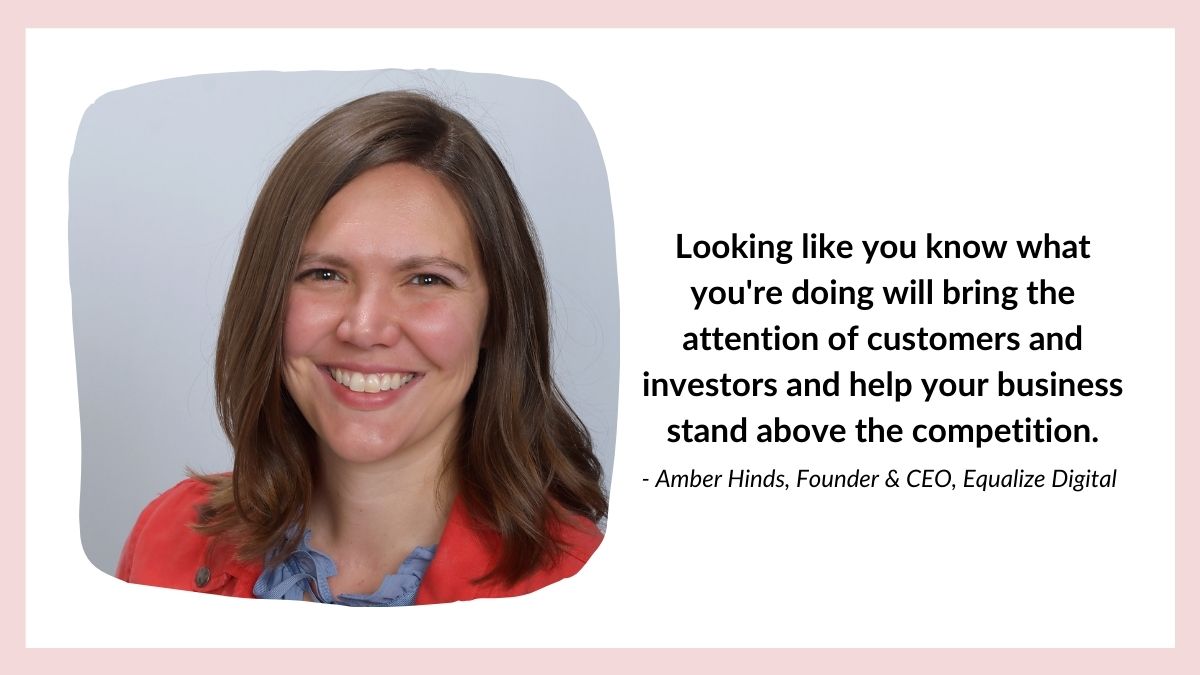
Looking like you know what you’re doing will bring the attention of customers and investors and help your business stand above the competition. So focus on building a good buyer-supplier relationship and don’t let perfection stand in the way of progress.

What are your goals for the upcoming year?

We launched our first product, Accessibility Checker, a WordPress plugin that scans websites for accessibility errors, in December of 2020. In 2021, our top goal is to increase the plugin’s user base, both for the free version available on WordPress.org and the paid Pro version. Moving into the product space in addition to offering services is a big shift for us and one I’m very excited about.

Connect and partner up with Equalize Digital on Enterprise League

More must-read stories from Enterprise League:

Related Articles

Shelby Kretz – Bringing social justice one box at a time

Shelby Kretz – Bringing social justice one box at a time

Shelby Kretz – Bringing social justice one box at a time

April 19, 2021

Little justice leaders interview on Enterprise League

If you still believe women are better housewives than entrepreneurs, we’d like you to meet Shelby Kretz, a PhD candidate at UCLA and Founder of Little Justice Leaders. Still unconvinced? Then you should subscribe to her monthly boxes with resources about sexism, racism, transphobia, Islamophobia, environmental justice, immigration, and so much more. Maybe that can help.

In the meantime, read her story and see if you can resist not to be inspired.

Feeling under-appreciated as an employee, a nonexistent work-life balance, financial struggles, getting out of bad relationships – these are the most common triggers that push women to become entrepreneurs. Tell us about your trigger?

For me, my trigger was more towards entrepreneurship than it was away from something else. More specifically, it was towards social impact. I was drawn to the work I wanted to do.

My nonprofit, 1girl, came out of a conversation with two friends of mine in college. One of my friends grew up in Kenya, and the other grew up in India. We were in a deep conversation about our experiences as women in different parts of the world. 

We looked into what programs were available to girls in our area, and we were disappointed with what we found.  While there was a lot of programming, none of it was focused on actual leadership skills (though many of them claimed to be teaching leadership). When digging into the curriculum of those leadership programs for girls, we found the programming was specific to girls. For example, they taught things like “girl drama,” body image (geared towards girls), and healthy relationships (for girls). and While that might seem reasonable at first glance, it didn’t make sense to us. How was a leadership program so gendered in what it taught? Weren’t we just reinforcing gender stereotypes for girls? Also, it just… wasn’t leadership.

We decided we could try something that might help girls develop actual leadership skills. We set out to create a leadership curriculum that could be used with a group of boys or girls. After all, leadership has no gender, right? 

We never set out to create an organization, exactly. We stumbled upon something we cared about, and we took a small action to make a difference by testing the program at a local summer camp. Then more schools and programs reached out, so we stepped up. Eventually, we filed for nonprofit status, and before we knew it, we were running an organization. 

Through 1girl, I found that I loved starting and growing an organization. The ability to make decisions, try new things, and make a real impact was exciting. After I grew 1girl with my co-founders and eventually passed it along to others to run, I had more confidence in my ability to start an organization. I knew I wanted to start a business this time because I didn’t enjoy the fundraising aspect of running a nonprofit. When the idea for Little Justice Leaders came to me, I had that confidence already and knew I could make it happen. Excitement for the mission was my trigger.

Shelby Kretz quote

How did you come up with your business idea?

Throughout the 2016 election cycle, it’s no secret that many caregivers and educators were feeling uncomfortable with the messages their children and students were hearing in the media.  

At that point, I’d been working in schools for years, so I spent a lot of time with educators and parents. I was hearing this concern from parents and teachers over and over again – how do I address this with little ones? They’re hearing these messages, and I don’t know what to say. I don’t know enough about it. I don’t know if they are old enough. I want to shield them from it.  

As the years passed, the concerning topics on the news didn’t slow down. I continued to hear this fear from parents and educators, and many were coming to the same solution: I don’t know what to say, so I’m not saying anything at all.

This worried me. Kids were being exposed to these messages whether we wanted them to be or not. When parents and teachers don’t talk about topics that seem important, kids get the idea that the topic is taboo. And taboo subjects for kids are likely to create fear, confusion, and misinformation

I knew this needed to be fixed, for a few reasons. First, kids were getting the information either way, so educators and parents could help frame the story in an age-appropriate way. Second, kids have an innate desire for fairness and helping. This was a great opportunity to get them engaged in learning more about what is going on in the world. And third, some kids didn’t have the choice to opt out of these hard conversations. They were impacted by racism, transphobia, or xenophobia personally and had to face that fear every day. Why were other kids being shielded from it (when they could have been part of the solution instead)? 

Most importantly: Kids grow up to be adults. Adults who become educators, music producers, business executives, engineers, nurses, preachers, artists, and police officers. Adults who have real influence and power in our society. Adults who either help to maintain unjust systems or work to dismantle them. 

I knew I had the power to help educate and empower kids to become positive changemakers. I knew it had to be ongoing because there were so many topics to cover and the work is never done. It was so important to me to solve this problem because I strongly believe that we need to engage young people in social issues. Not only does it help them grow up to become involved, concerned citizens, but it also makes for more engaging learning experiences rooted in the real world.

Have you had support from someone, even if just encouragement? Who was that and how did it help you?

Absolutely. Mentors have been instrumental in my journey – through 1girl, Little Justice Leaders, and my Ph.D. program. 

One of the most influential mentors of my life was Dr. Patty Cunningham. When we were starting 1girl, a lot of people doubted us. We had a number of people in positions of power tell us that we wouldn’t be successful. However, one person was a constant cheerleader from the first day we met her: Dr. Patty Cunningham. 

She was the first person to join our Board of Directors, even though it was clear to her that we had a lot to learn. She guided us through the entire creation of 1girl. From day one, she constantly told us she believed in us and our mission. 

A few years later, when I was thinking about graduate school, I was nervous to tell the 1girl Board of Directors. I thought they might think it would take away my focus from the organization. When I told Dr. Patty that I was considering a Ph.D., she said, “You have to do this. We need more female Ph.D.’s. You need to do this.” 

She didn’t care that it might take away my focus from the organization because her focus as a mentor was to support me in everything I wanted to accomplish. She helped me through the graduate school application process and even wrote a letter of recommendation for me. She celebrated with me when I got into my dream school. 

Sadly, Dr. Patty passed away when I was in my first year of graduate school, but her legacy lives on in me and the many others she mentored in her life. I always seek to uphold her values of justice and equity throughout everything I do, and I hope I can impact young women in the same way she did.

Female entrepreneurs are often underestimated and overlooked. Have you ever felt at a disadvantage?

I’m fortunate to work in the field of social justice, where people at least try (though not always successfully) to be aware of their biases. That being said, there is no doubt that I’m taken less seriously as a female entrepreneur. There is evidence to prove this is true, and I have felt it personally. 

However, since I wasn’t interested in taking on venture capital, it has impacted me less than it might impact other female entrepreneurs. Female entrepreneurs are significantly less likely to receive funding compared to male entrepreneurs. I set out to build my company to be profitable very early on. My goal was to create an organization that I could grow slowly and build as a career, rather than building a massive company with outside funding. If my goals had been different, I likely would have experienced gender bias from potential investors. 

I hope by building a successful company, I can be a small part of the movement to change gender biases against female founders.

Some say it’s hard work, others say it’s talent and resourcefulness that play a crucial role for success in entrepreneurship? Which traits have been instrumental for your success so far? And why?

Constant learning. I am always taking courses, reading books, and talking to people to get new perspectives, ideas, and knowledge. When starting a business, there is always more to learn, whether you’re an experienced entrepreneur or just starting out. 

I find I’m constantly learning something new about business, marketing, social media, social justice, education, parenting, and so many other relevant topics. 

Of course, I’ve had to work hard to build a business while in a Ph.D. program. I’ve had to be resourceful to find what I need and make connections. I’ve had endless help from supporters and mentors. But at the end of the day, my desire to always keep learning has helped me build a business that is responsive to the needs of my subscribers. 

Learning always drives me forward, and it always has. I saw learning about how to run an organization as a challenge when I was building 1girl. Now, I’m learning how to build and grow a business. No matter how far along I get, there is always a new stage to learn about. 

I know I would not be where I am today if I hadn’t been so adamant about always learning. Online courses, books, and mentors have guided the path, provided needed information, and sparked ideas that have made my company what it is today. I have no doubt that I’ll need to keep learning to grow more, and that if I ever let my learning journey end, the success of my company will come to an end, too.

What excites you the most about being an entrepreneur?

I know that I have the power to create new opportunities for myself. My ability to pay myself, grow my business, and expand my social impact falls on my shoulders – I’m not counting on anybody else to provide me with financial security. For me, that ultimate control is so satisfying, knowing that my success or failure is up to me. 

That doesn’t mean I beat myself up when things don’t go well. I just have to learn from what I did before, change course, and move forward.

That being said, there are a number of factors that are outside of our control – like a global pandemic, for instance. However, as an entrepreneur, I have the ability to pivot, make crucial decisions, and come up with new ideas to respond to unexpected events. As an employee, you’re often waiting for the approval of someone else, whereas as an entrepreneur, you have to make decisions and rely on yourself (and your team). 

When things go well, though, it’s an incredible feeling to know that you built something that makes an impact. 

Share with us some of the worst business advice you’ve ever received?

“You need to get an MBA.”

Look, I have nothing against MBA’s, and I’m sure I could learn a lot from an MBA program. But the reality is, you don’t need a business degree to start a business. I don’t even have an undergraduate degree in business. You don’t need it! 

If one of your goals in life is to get an MBA, then, by all means, do so. Getting a PhD was important to me, and it’s opened many doors for me (an MBA would have opened many doors as well). But I got the PhD because I wanted a PhD, not because I thought I needed it to be successful. 

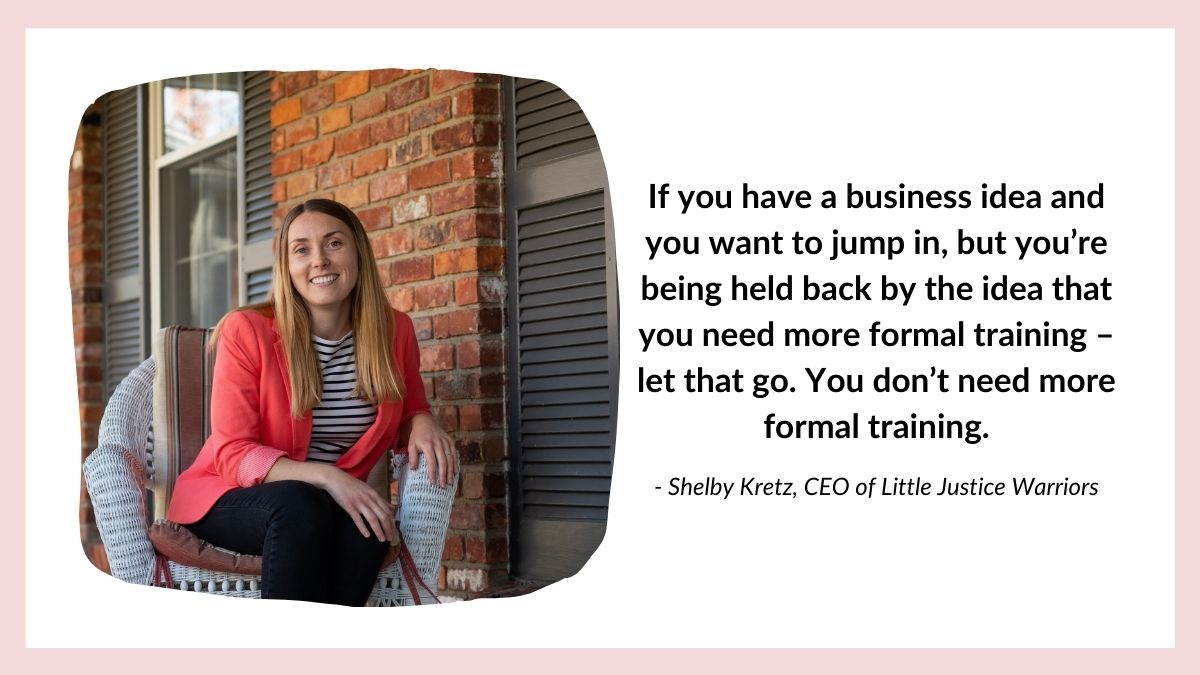
So, yes, if you are excited about getting an MBA, then go for it! But if you have a business idea and you want to jump in, but you’re being held back by the idea that you need more formal training – let that go. You don’t need more formal training. The best training for starting a business is actually starting a business. You will learn what you need to learn along the way. You will make mistakes, but you’ll learn from those, too. 

Women, BIPOC, and LGBTQ+ individuals in particular are constantly told (and tell themselves) that they need more training, more school, more certifications before they can do the thing they really want to do. It’s not true. We hold ourselves back when we feel underqualified. Look around you – white cis straight men are starting up businesses with little or no formal training. And they probably aren’t being questioned about their qualifications nearly as much. If they can do it, you can too!

If anybody questions your qualifications, please ignore them. You can start a business without a business degree. Do not let other people’s fears and insecurities make you think otherwise.

You’ve got a high stake investment opportunity. Pitch your business in 150 words.

We all know that social justice issues like anti-racism and LGBTQ+ justice have become common topics in the lives of Americans. We see it with corporations who support Black Lives Matter, in commercials featuring LGBTQ+ stories, and all of our social media feeds. 

So many people are seeking ways to make a difference in the fight for equality. Those who didn’t even recognize racism as an issue just a year ago are committing to change the way they live their lives to fight for racial justice. 

And this includes millions of parents and teachers who want to educate their kids about it, too. Those caregivers and educators are seeking resources to talk to their kids about social justice. 

Little Justice Leaders provides exactly that. We provide monthly subscription boxes with all the resources to talk to their elementary-school kids about racism, transphobia, Islamophobia, environmental justice, immigration, and so much more.

What’s the best piece of advice you’d give to inspire aspiring entrepreneurs?

You don’t have to have everything figured out before you start. I see so many would-be entrepreneurs get in their own way because they won’t start until they have a perfect website, big social media following, and completed products or services. Start where you are. Talk to anybody who will listen and tell them what you’re doing (or what you want to do). 

When I launched the Little Justice Leaders website and social media platforms, I didn’t have any boxes made. In fact, I had no idea what would even go in a box. But I started telling people that boxes would be coming in August (it was May), and they would have resources to discuss social justice topics with kids. The orders started coming in months before I ever created a box. That showed me people actually wanted what I was selling, even though my website wasn’t perfect, and we didn’t have many Instagram followers.  

Start telling people what you’re doing. It doesn’t matter if it isn’t ready yet or if you don’t have a website. It doesn’t matter if you have no idea how you’ll do it, or you don’t know the first thing about starting a business. Just start. Everything else you can figure out as you go.

What are your goals for the upcoming year?

Long term, my goal is to impact over one million children with social justice education. This would help us complete our mission: to help create a generation of young people who will dismantle oppression and fight for justice. 

My goal for 2021 is to reach 1,000 monthly box subscribers, thus reaching an estimated 13,000 young people with social justice education. This would help move me along the path to reaching even more families and classrooms. 

Another goal for 2021 is to bring on our first official employee. This will help us to develop systems and processes to set the business up for success as we grow. 

Connect and partner up with Little Justice Leaders on Enterprise League

More must-read stories from Enterprise League:

Related Articles

Riley Rees – When pain pills don’t work turn to entrepreneurship

Riley Rees – When pain pills don’t work turn to entrepreneurship

Riley Rees – When pain pills don’t work turn to entrepreneurship

April 07, 2021

Sofia Health interview on Enterprise League

People are completely dependent on broken systems that do more harm than good. One of them is the health system. Somehow, it all falls down to pain pills rather than focusing on proper diagnostics and healing. 

But instead of allowing to be consumed by the system, Riley Rees, an ex-pilot, decided to improve it. After she suffered an injury and couldn’t crack her options with alternative and holistic medicine are, she came up with an idea that will help millions of other people like herself. That’s how Sofia Health, an on-demand health and wellness platform, was born.

Feeling under-appreciated as an employee, a nonexistent work-life balance, financial struggles, getting out of bad relationships – these are the most common triggers that push women to become entrepreneurs. Tell us about your trigger?

For me, there wasn’t a trigger to become an entrepreneur. But there was a spark that drove me to solve a problem. When I needed to find a way to heal from an injury, it was extremely difficult to find out what all of my options were in alternative and holistic medicine. 

The traditional healthcare system limited my options to taking pain pills. What I needed was a way to solve the root issue so I never needed a pain pill again. This frustrating journey to holistic healing was the spark. I want people to know what all of their options are so they don’t have to search endlessly for answers or live in pain, discomfort, or the unknown.

After forging down this path, it is clear the label ‘entrepreneur’ is fitting!

Riley Rees quote on Enterprise League

How did you come up with your business idea?

A personal injury! It’s the same story many people have: multiple doctor visits, numerous tests, temporary relief options — but no long term solution. 

After I found alternative modalities and practitioners to help me — I started researching. From the discovery interviews and personal stories, it was clear a lot of people faced the same problem. In my case, with acute pain, I was told to take pain pills. But for the individuals experiencing an issue that has yet to be diagnosed, such as an autoimmune disease, chronic disease, or anything related to taking care of your mental health, this journey was far worse. For some, this meant hundreds of appointments with different providers, numerous tests, thousands of dollars, and hours of endless research online with no resolution in sight. This doesn’t even account for the toll it takes on your mental health or the impact on your quality of life.

I decided to get serious and build a business so individuals who are in need of alternative health and wellness solutions won’t have to face the same challenges. 

At the same time, I also discovered the market for practitioners is fractured. They are difficult to find, but beyond that, many people don’t even know what they’re looking for. If you have chronic headaches, do you know someone specializing in gut health might help? Probably not! 

Sofia Health was founded to empower individuals to take control of their health and facilitate the connection between client and practitioner. We provide a platform where people can search for practitioners based on their symptoms and find care that addresses needs holistically. We aim to cut friction so individuals can connect to the right practitioner offering the right modality, at the right time.

Have you had support from someone, even if just encouragement? Who was that and how did it help you?

Absolutely. None of this would be possible without my team. Having a primarily female-driven team is incredible. I am able to work with women that are powerful, talented, incredibly smart, and also supportive. Jennie Zamberlan has been a driving force behind Sofia Health. If you are looking for a trustworthy, world-class engineering team, I would recommend reaching out to Avantia!

Female entrepreneurs are often underestimated and overlooked. Have you ever felt at a disadvantage?

Yes! It reminds me of a time when I was younger. I was sixteen and decided I wanted to be a pilot. Not just a private pilot but I wanted to be a part of the elite group in the Air Force. People laughed, I was definitely underestimated. Ultimately, I kept going and now I have flown for both the Air Force and commercial airlines in aircraft from the C-17, B-757, B-767, and the B-777. 

The aviation industry has come a long way thanks to strong, brave women paving the way to make women in the industry ‘normal’. Today, no one would laugh when a girl has a dream to be a pilot. 

I’m hopeful the same happens in the future for women who want to start companies, build businesses, and become entrepreneurs. When we ‘the collective society’ can get past laughing and underestimating women, we can get to work, change lives, and make an impact

Some say it’s hard work, others say it’s talent and resourcefulness that play a crucial role for success in entrepreneurship? Which traits have been instrumental for your success so far? And why?

All of the above! I would include having the right mindset and being resilient is crucial. Whether you come to Sofia Health and find a life coach, health coach, discover alternative healers or turn to your family, it is important to get the support you need to endure the ups and downs

What excites you the most about being an entrepreneur?

As an entrepreneur, you’re a creator. You get to design your life and create new experiences for yourself and your clients. 

Share with us some of the worst business advice you’ve ever received?

Raise as much money as possible. 

A lot of advice, talks, and praise are given to startups and their founders who have raised the most money. While the funds from raising money can help with market research and product development, it’s important to know the economics of your business and the consequences of taking other people’s money. Raising a large amount of money does not always equate to success and in some cases, it can be a contributing factor to a company’s failure.

You’ve got a high stake investment opportunity. Pitch your business in 150 words.

Sofia Health is your on-demand health and wellness platform. Individuals can find, schedule and book with a provider to get the physical, mental, spiritual support they need — anytime, anywhere.

The platform also provides a valuable business structure for practitioners – often solopreneurs – to market, book, take payments, and even sell products.

What’s the best piece of advice you’d give to inspire aspiring entrepreneurs?

With so much advice available, I would like to offer a bit of tactical advice. 

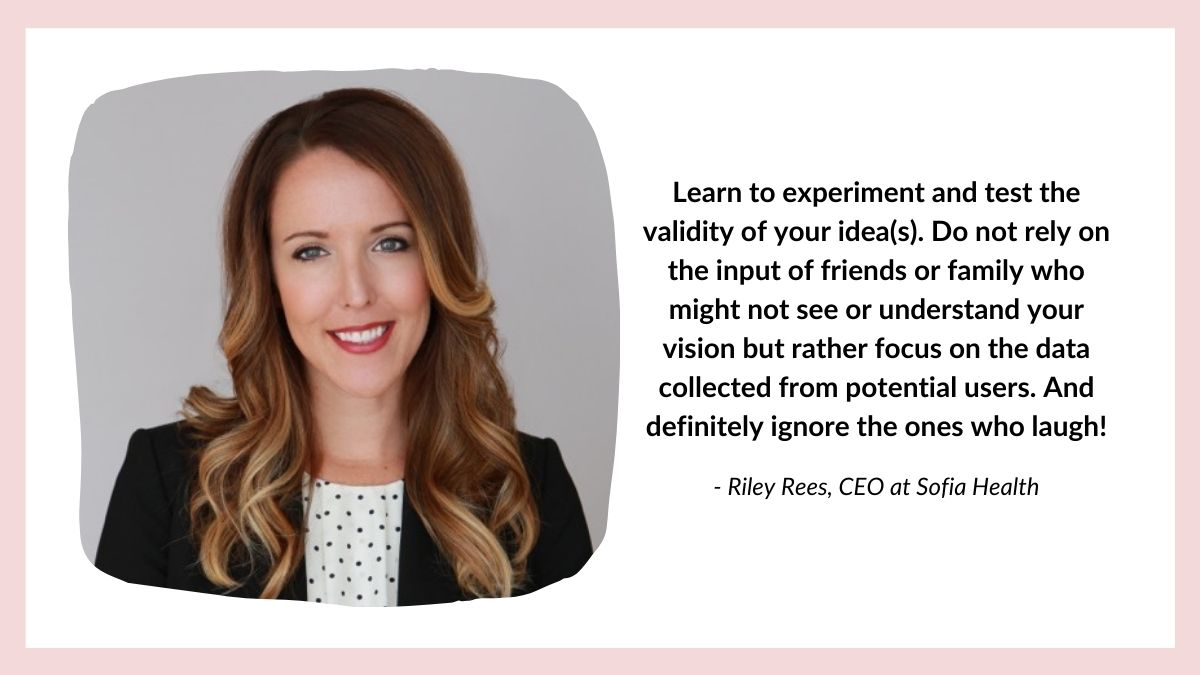
Learn to experiment and test the validity of your idea(s). Do not rely on the input of friends or family who might not see or understand your vision but rather focus on the data collected from potential users. And definitely ignore the ones who laugh!

What are your goals for the upcoming year?

In addition to growth, we want to make sure that individuals affected by the pandemic understand they have a place to go for support with their physical, mental, spiritual, and emotional health. 

We also want to highlight the many amazing health and wellness providers on the platform. Their work, passion, and dedication have touched and transformed lives! 

Connect and partner up with Sofia Health on Enterprise League

More must-read stories from Enterprise League:

Related Articles

Jessica Hershfield – Entrepreneur who fought Imposter Syndrome and won

Jessica Hershfield – Entrepreneur who fought Imposter Syndrome and won

Jessica Hershfield – Entrepreneur who fought Imposter Syndrome and won

March 11, 2021

Just enough interview on Enterprise League

What’s more fun: the inner workings of a scooter or wine? Wine, of course! That’s why we’ll forever be grateful to Jessica Hershfield for leaving her career in Big Tech behind and blessing us with quality, tasty, canned wine – Just Enough Wines. Honestly, we’ve finished too many wine bottles just to prevent them from spoiling, and we’re so happy for Just Enough Wines because now we won’t end at AA meetings.

Together with her co-founder, Kaitlyn Lo, they’ve managed to shake up a male-dominated industry and prove the naysayers wrong, “Canned wine will never sell”. Well, it does and it’s taking over the market with the speed of fermentation.

Feeling under-appreciated as an employee, a nonexistent work-life balance, financial struggles, getting out of bad relationships – these are the most common triggers that push women to become entrepreneurs. Tell us about your trigger?

Before founding Just Enough Wines, I worked in big tech. From Google, to Uber, and to Lime, I spent many years in roles across Marketing, Product, and Operations; however, I constantly found myself unfulfilled. I knew I wasn’t following my passions, I was constantly the only female in the room, and I was tired of making money for someone else. 

It all hit me at the end of 2019 – I was on vacation in Spain, wine tasting, and was absolutely dreading going back to work. I was much more fascinated by the culture of wine, than I was the inner workings of a scooter, and I knew I needed to make a change. No one should spend the vast majority of their time doing something they don’t want to do. 

Jessica Hershfield quote

How did you come up with your business idea?

After I left Lime, I spent a few months searching for what fulfilled me. I landed on wine as I loved the ubiquitous nature of it – I loved that you could have it with your fancy dinners, but could also make it a part of your Netflix and chill routine. Within wine, I wanted to solve my own problem – either drinking too much wine, or not finishing the bottle and wasting it several days later; so I landed on a single format solution to wine.

Living in San Francisco, I naturally gravitated to canned drinks as a portable and convenient way to take with me as I explored local parks and beaches, but I struggled to find a canned wine that actually tasted… good. I couldn’t understand how there could be an incredible wine region an hour drive from me, but I couldn’t find a canned wine solution that held up to the quality of wine found in many traditional bottles. I set out to make a canned wine that escaped the poor quality expectation, allowing us all to drink the wine we desire whenever and wherever we want. 

Have you had support from someone, even if just encouragement? Who was that and how did it help you?

Yes – so many people have helped support me on this journey, and I am eternally grateful. My family, my friends, my therapist, and all the people in the industry who took my call when I reached out to them!

One particular person who has really pushed me to start my own business and believe in myself is my partner Bradley. It’s somewhat ironic, but he is also currently one year into founding his business, Mylance. I was wine tasting with him a year ago, and complaining about going back to work, and he was the one who really advocated for me to pursue the life I wanted. He helped push me through my own imposter syndrome and be able to find the confidence in myself to start Just Enough Wines. I was worried we were going to be a two entrepreneur household starting businesses at the same time, and that would be incredibly difficult. But we have been able to learn through each other, and help grow our businesses together.

Female entrepreneurs are often underestimated and overlooked. Have you ever felt at a disadvantage?

One of the biggest challenges I have faced throughout all aspects of my career is imposter syndrome. I have felt my accomplishments didn’t matter, and that I would be exposed as not being capable of doing the role I set out to do.

A lot of women I know face this similar challenge at a greater extent compared to their male counterparts. The wine industry is a typically male-dominated industry, and at times I found myself wondering if I could break into this industry, especially as a woman. Would I be able to stand up for myself and my company’s needs enough? While men do face imposter syndrome, they don’t have to worry about the added pressure of being a woman in a male-dominated field. 

Some say it’s hard work, others say it’s talent and resourcefulness that play a crucial role for success in entrepreneurship? Which traits have been detrimental for your success so far? And why?

I touched on this above, but I definitely think Imposter Syndrome has held me back in the past. I was worried about not being good enough, and that played out in my ability to ask for what I thought I deserved. I have worked extremely hard to push past those thoughts. 

I have also had to work on my patience since becoming a founder. I have always been aggressive in wanting to move the business forward, and I think it can often cloud the celebrations of how far we have come. Blindly looking at wanting to be better, getting the next sale, or the next follower, can lead to not celebrating the victories when they do happen. I have had to work hard to focus on the wins when we achieve them, and appreciate them so we can stay grounded and motivated on the business.

What excites you the most about being an entrepreneur?

I get to wake up and work on what I want every single day. I proactively founded a company in the world I am passionate about, and I am so lucky to get to do this work every single day. If I can bring a little bit of joy to every single person that tries our wine, that makes me happy. 

Share with us some of the worst business advice you’ve ever received?

When I first started Just Enough Wines, I had many conversations with people in the wine industry to get their advice. This industry is extremely antiquated, and many people I spoke with said that canned wine is never going to work. Wine drinkers only want to drink out of a bottle, and the perception of a can will never be overcome. These conversations were certainly discouraging and caused me to think twice about what I was doing. I am SO glad I pushed past those thoughts, and continued to believe in the work that I set out to do.

You’ve got a high stake investment opportunity. Pitch your business in 150 words.

Just Enough Wines believes you don’t need to choose between quality and convenience, and is reinventing canned wine for the modern consumer. Founded by Jessica Hershfield and Kaitlyn Lo, both Stanford alums, Hershfield left her prestigious tech jobs at Google, Uber, and Lime to follow her passion and Lo transitioned away from the corporate world to pursue a business that inspires her. 

Based out of San Francisco, Just Enough Wines focuses on high quality, great-tasting wine in the convenience of the can. They have a 2019 Chardonnay from the Willamette Valley in Oregon, and a 2018 Pinot Noir from Edna Valley in California. The wines are vintage and AVA specific, and are made with low intervention, sustainable techniques. 

They also recently launched Brut Bubbles – a dry sparkling wine being offered as a limited edition. This is truly the most premium wine being put into a can.

What’s the best piece of advice you’d give to inspire aspiring entrepreneurs?

Just do one thing each day – in the beginning stages of starting a company, the biggest challenge I faced was motivation. There would be days where I didn’t know what to do next, or where to even start on something. In those days, I told myself just to do one thing each day. Just take one step forward. Eventually, you get to a place where you gain traction, and you no longer have the time to do just one thing each day. 

What are your goals for the upcoming year?

We’re really focused on growth in 2021. We launched in late September and have done the majority of our business through Direct to Consumer to date. Our goals for 2021 are to expand more broadly into retail, and to expand to national distribution. 

In addition, I am excited about launching new products in 2021, including new varietals, and perhaps something a little special in late 2021.

Any final words to end this interview?

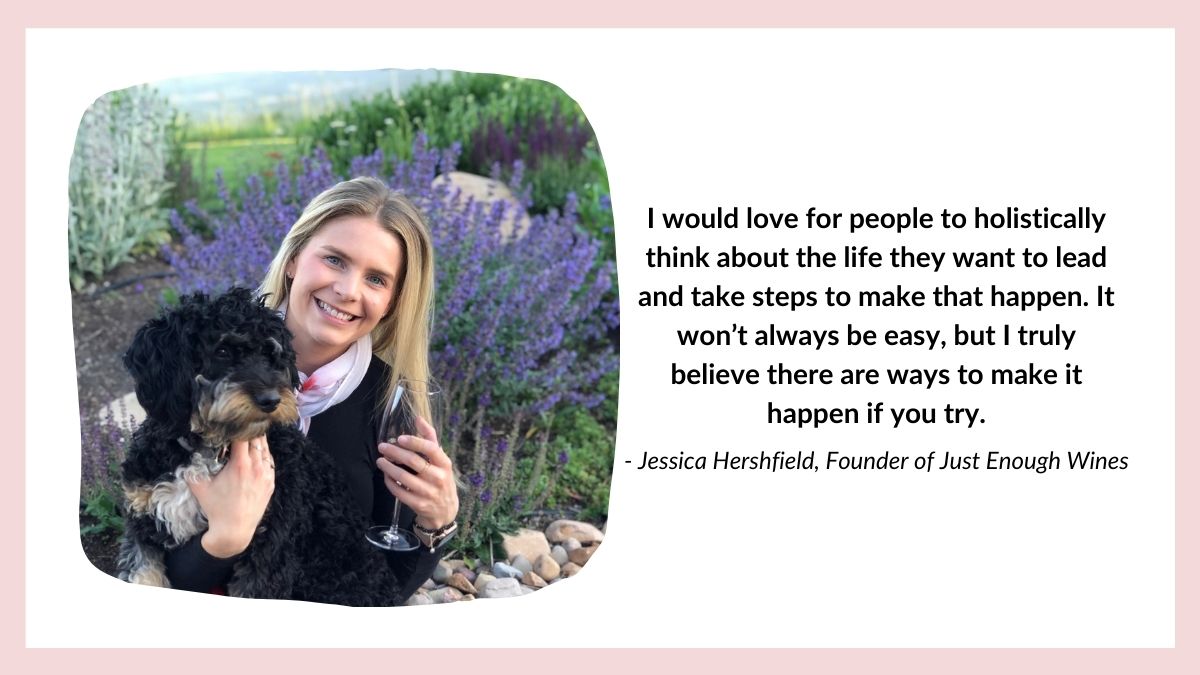
I took a leap, and escaped the “expected” of my reality. I would love for people to take a step back from their day to day expectations, and really think about why they are making the choices they are making. Are you expected to be in a certain job, or hold a certain title, or live a certain way? Does this make you happy? I would love for people to holistically think about the life they want to lead and take steps to make that happen. It won’t always be easy, but I truly believe there are ways to make it happen if you try.

Connect and partner with Just Enough Wines on Enterprise League

More must-read stories from Enterprise League:

Related Articles